
Modern bohemian style works through genuine material and texture variety — natural fibers, mixed vintage and new furniture, layered textiles — rather than any single specific color palette, which is why it reads as personal and collected rather than themed.
Below are 15 elements that build this look, with real costs and practical notes for each.
1. Layer Textured Area Rugs
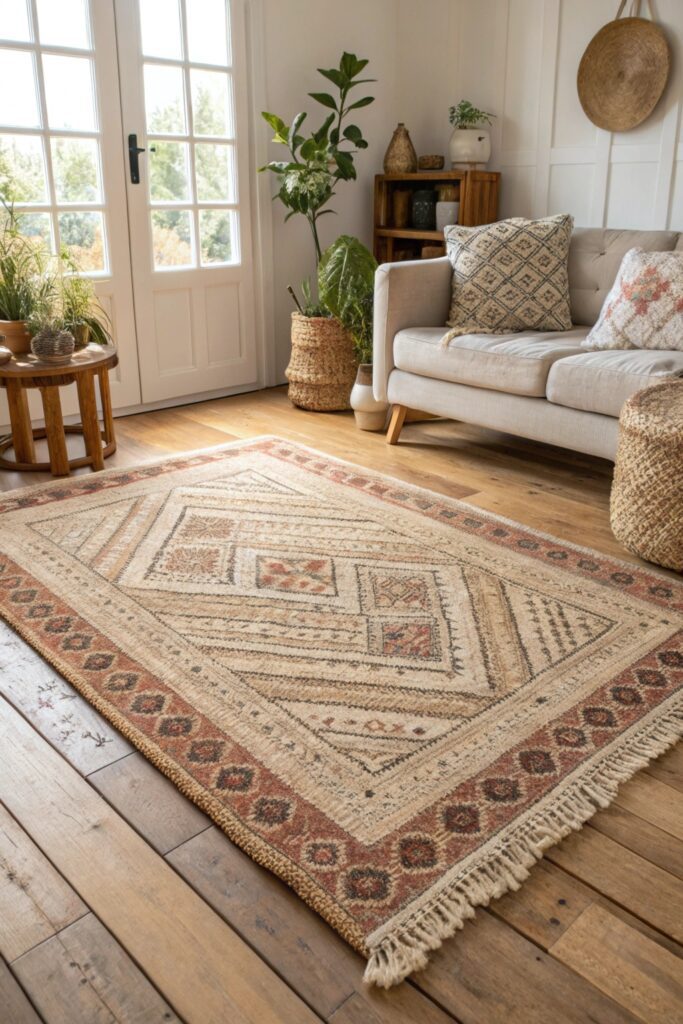
Placing a smaller patterned rug over a larger flat-weave base rug ($40-100 combined) adds the layered texture central to bohemian style, while also helping define a seating area within a larger room.
Choose a jute or sisal base rug specifically for the bottom layer, since its natural texture reads more authentically boho than a synthetic flat-weave alternative would.
2. Add a Rattan or Wicker Accent Chair
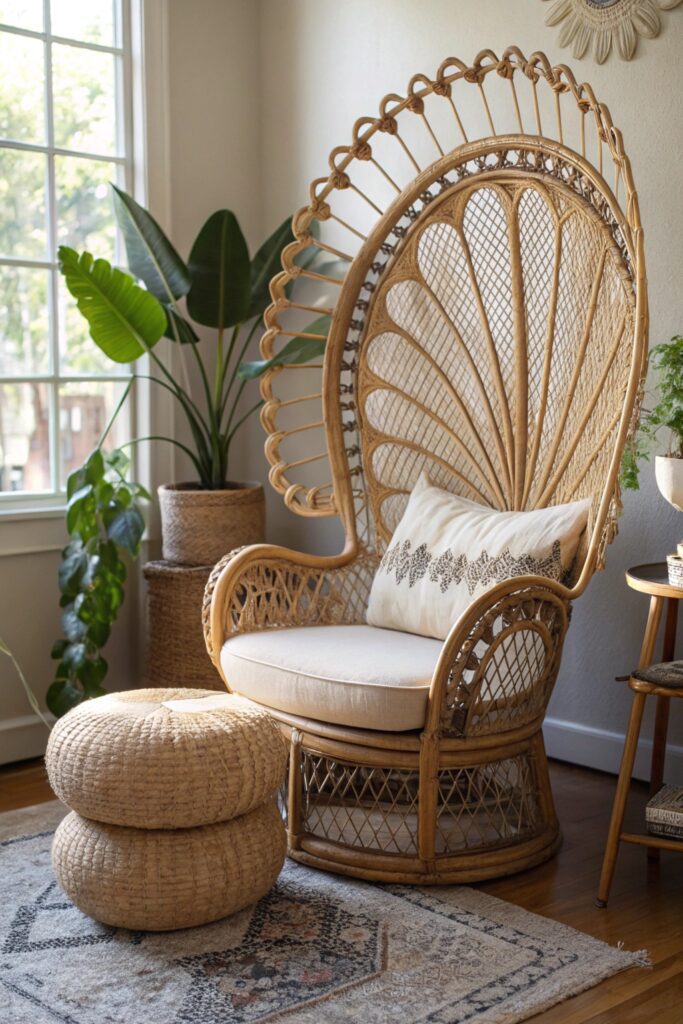
Rattan and wicker furniture ($150-350) brings genuine natural texture that’s foundational to the boho aesthetic, and the material’s inherently lighter visual weight keeps a room from feeling overly heavy despite the style’s layered approach.
Check the specific piece’s structural integrity carefully if buying vintage rattan, since older woven furniture can develop weak spots that aren’t always visible at a glance.
3. Incorporate Macramé Wall Hangings
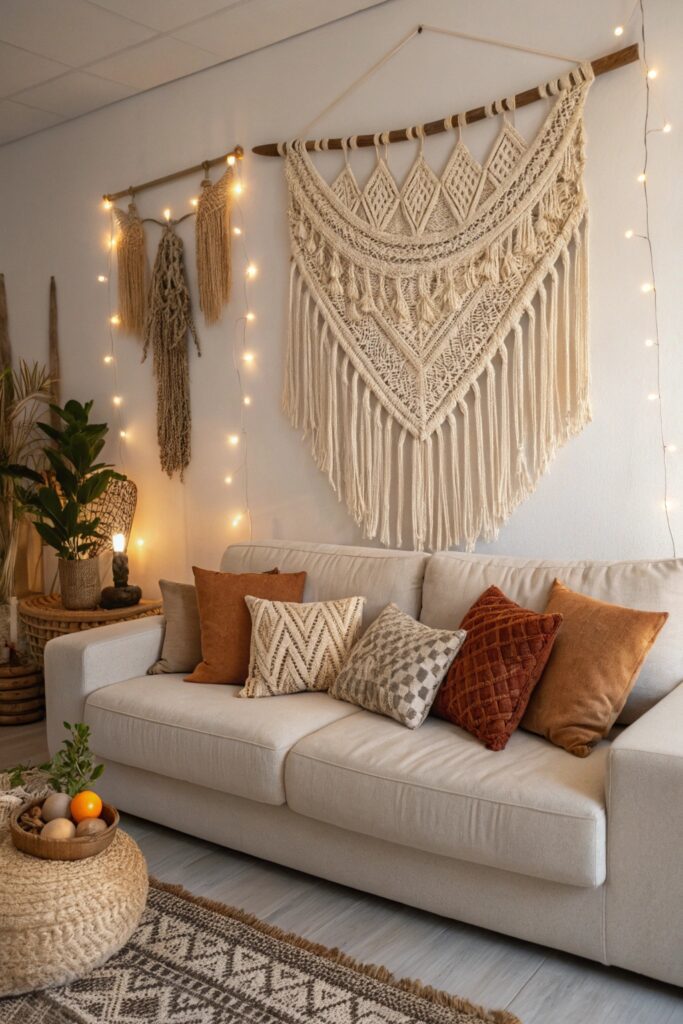
A macramé piece ($20-60) adds handmade texture and visual interest to a wall, working as a genuine alternative to framed art that’s specifically associated with the bohemian aesthetic’s handcrafted sensibility.
Look for pieces made from natural cotton or jute cord rather than synthetic rope, which holds its texture and color better over time and feels more consistent with the aesthetic’s natural material focus.
4. Mix Vintage and Modern Furniture
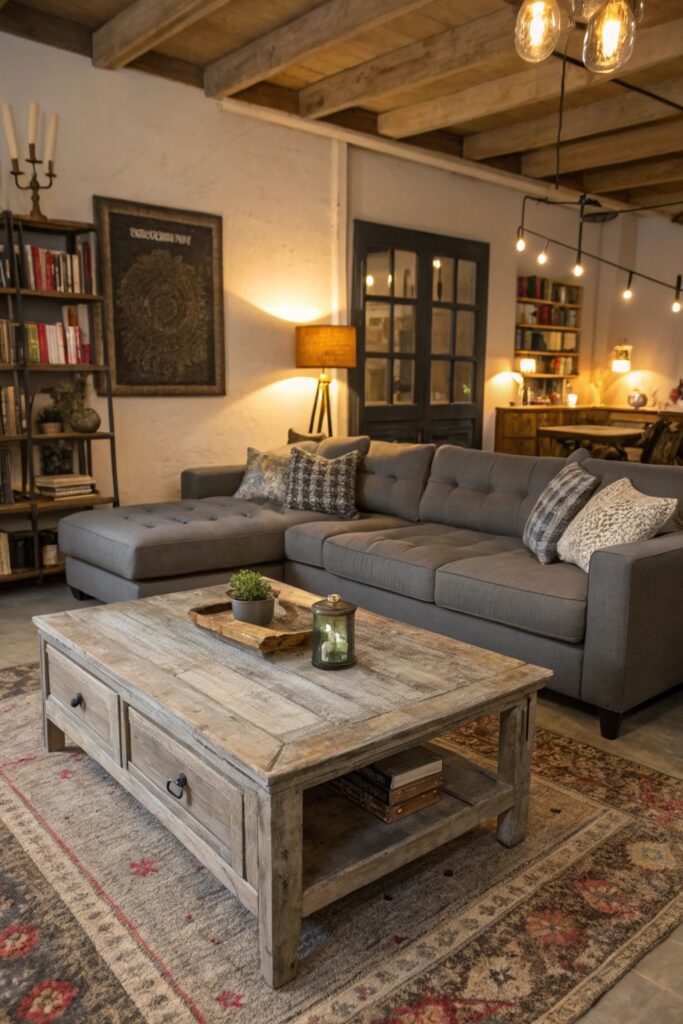
Pairing a vintage or secondhand piece with newer furniture creates the collected-over-time look central to boho style, avoiding the too-matched appearance a fully new furniture set can create.
Secondhand and thrifted pieces are worth prioritizing specifically for this mixing technique, since genuinely aged furniture reads more convincingly collected than new furniture styled to look vintage.
5. Use Layered Throw Pillows in Earthy Tones
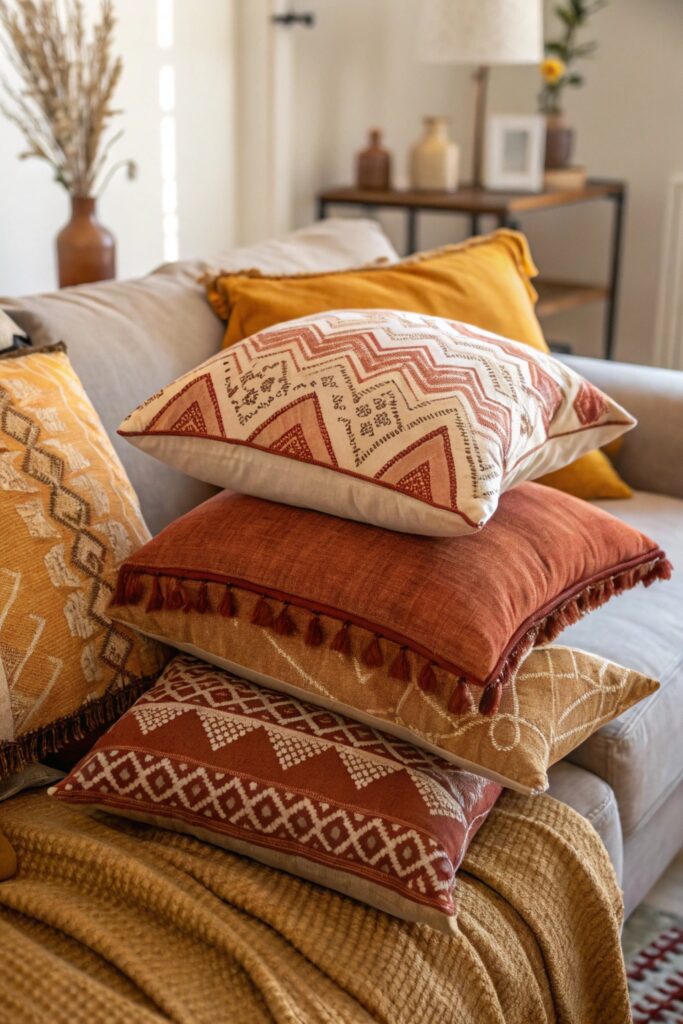
A mix of pillow textures and patterns in a coordinated earthy palette (terracotta, rust, sage, cream) adds richness without introducing colors outside the room’s overall warm, natural tone range.
Stick to 2-3 coordinated earthy tones rather than a wider color range, which keeps a heavily layered pillow arrangement from tipping into visual chaos.
6. Add Statement Plants
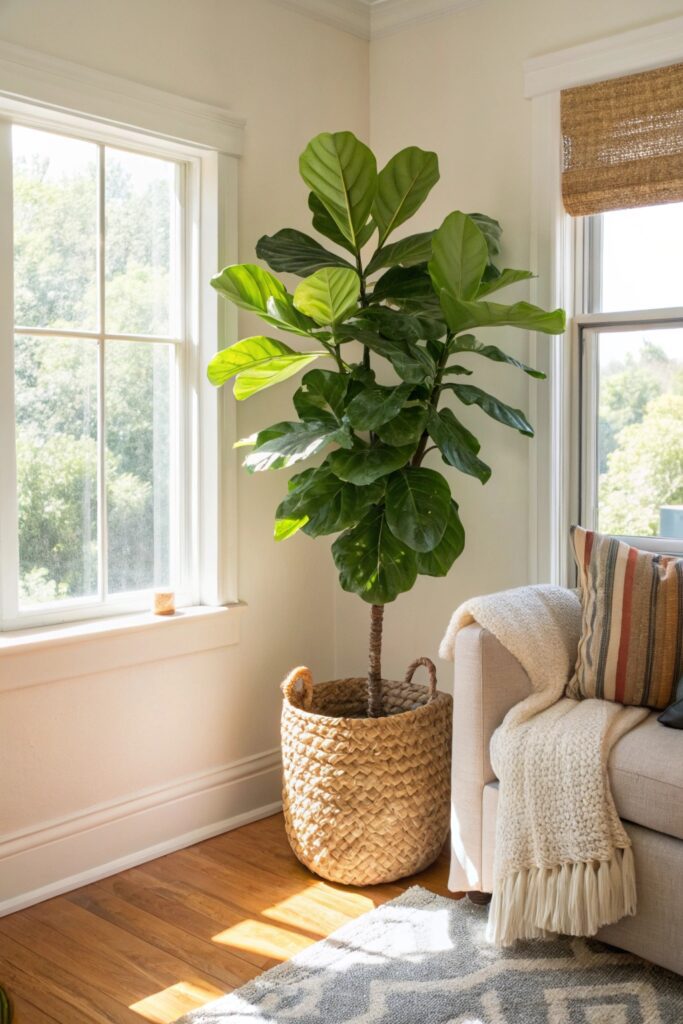
Large, architectural plants are practically a signature element of bohemian style, bringing genuine organic life that pairs naturally with the aesthetic’s overall nature-inspired material choices.
A single larger plant tends to make more visual impact than several small ones, particularly as a room’s main statement greenery piece.
7. Choose a Low-Profile Platform Sofa
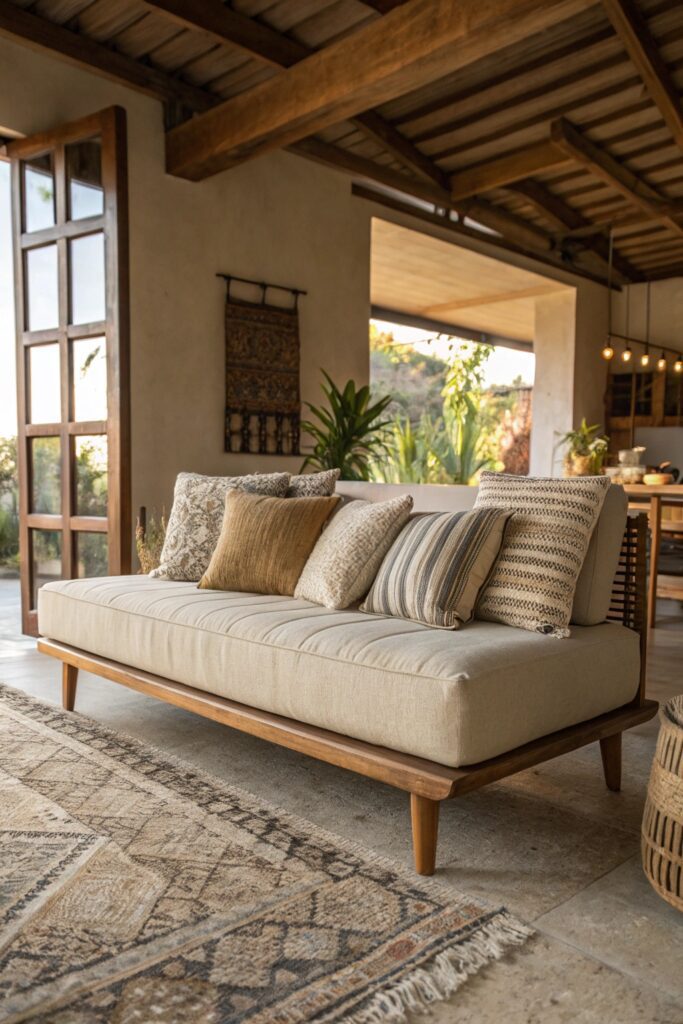
A low-slung sofa reads as more casual and grounded than a taller, more formal piece, aligning with boho’s relaxed, floor-oriented seating culture that also often includes floor cushions and low tables.
Pair a low sofa with a correspondingly low coffee table, which keeps the overall furniture proportions balanced rather than mismatched in height.
8. Add a Woven Pendant Light
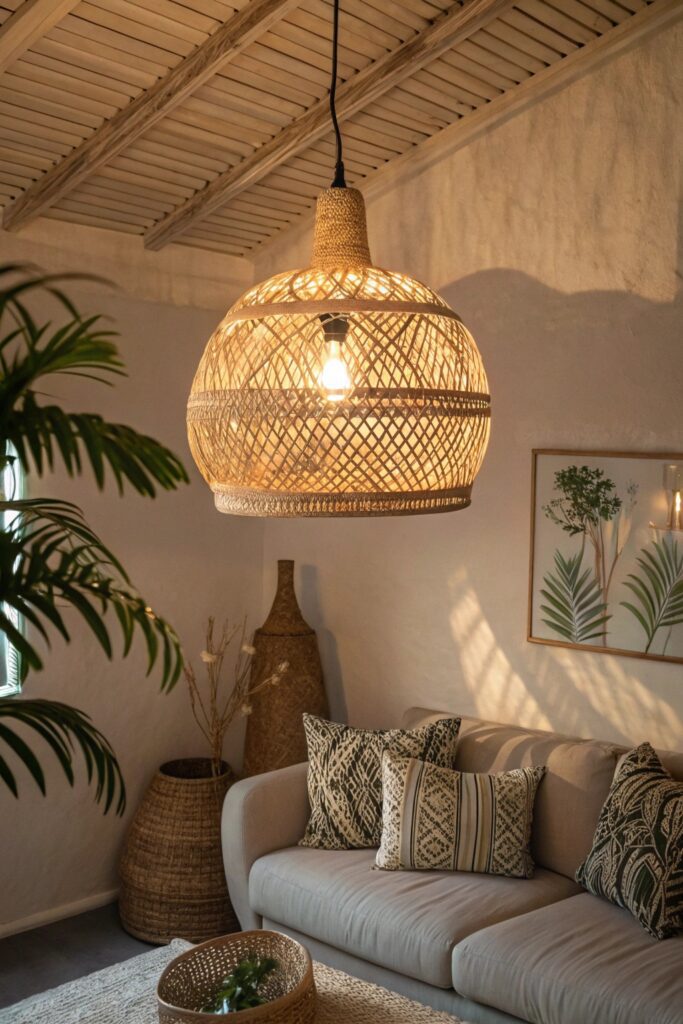
A rattan or woven-shade pendant fixture ($60-150) continues the natural material palette into the ceiling, and the woven texture creates interesting shadow patterns when lit that a solid shade doesn’t provide.
Position the pendant at a height where its woven texture and shadow pattern are actually visible from typical seating, rather than tucked too close to the ceiling.
9. Display a Gallery Wall with Eclectic Frames
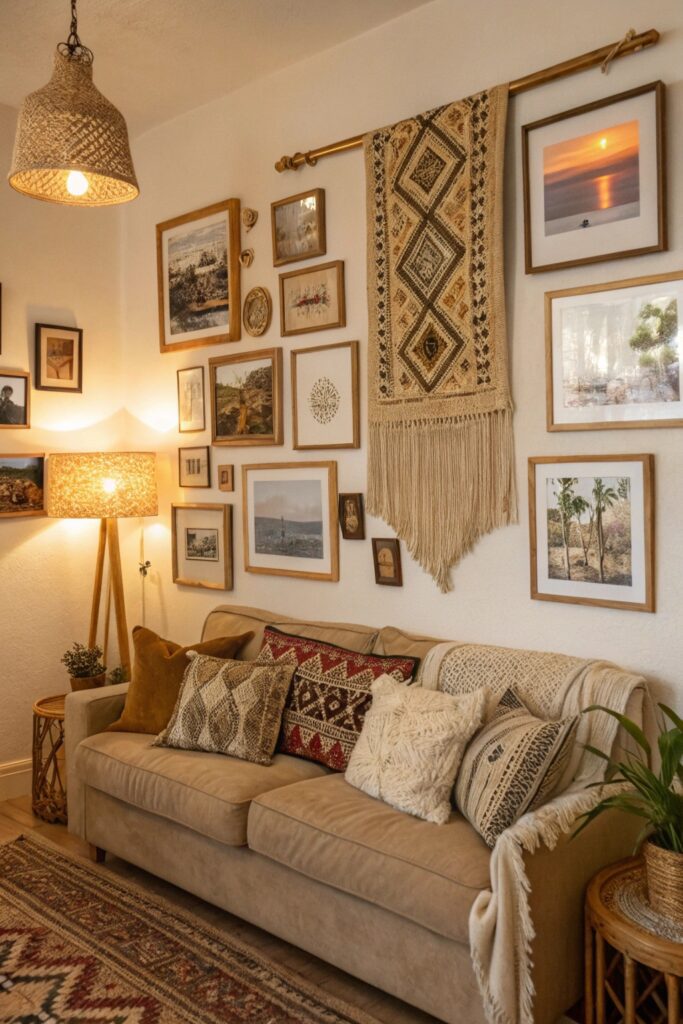
A cluster of art in intentionally mismatched frames — different materials, sizes, and finishes — captures the collected, personal quality central to boho style, working better here than the more coordinated frame approach other styles favor.
Include at least one or two genuinely personal pieces (a travel find, a family photo) among more purely decorative art, which is part of what makes a boho gallery wall feel collected rather than purchased as a themed set.
10. Use Floor Cushions for Extra Seating
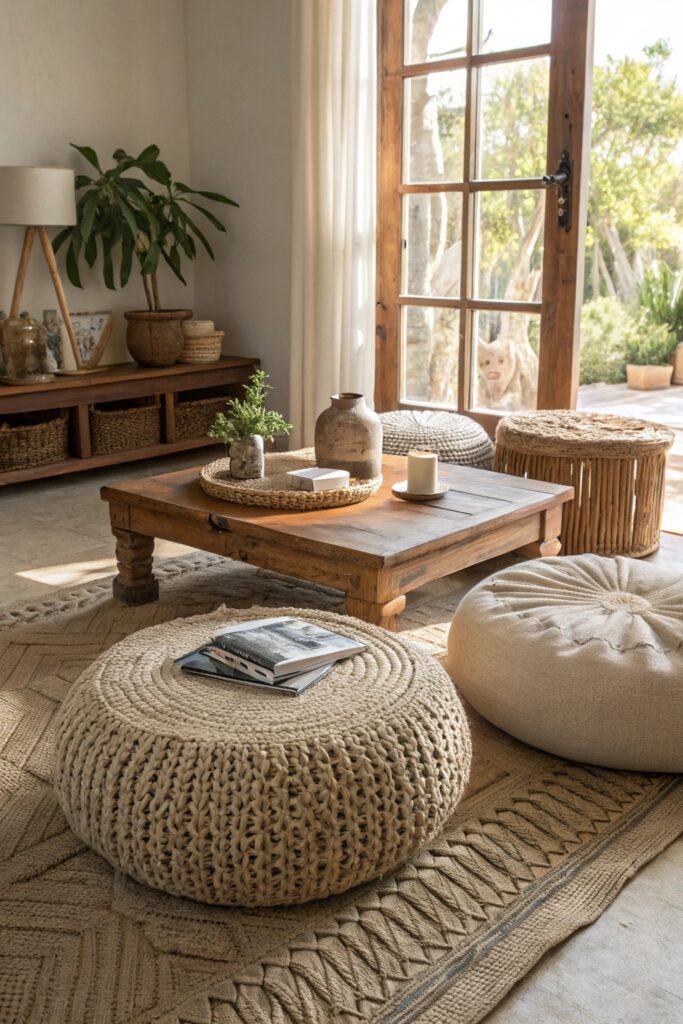
Floor cushions ($20-50 each) add flexible, casual seating that’s genuinely characteristic of bohemian style’s relaxed approach to furniture, and they’re easy to store away when not needed.
Choose floor cushions in a durable, easy-to-clean fabric if they’ll see regular use, since this seating style gets more direct floor-level wear than standard upholstered furniture.
11. Add Natural Wood Accents
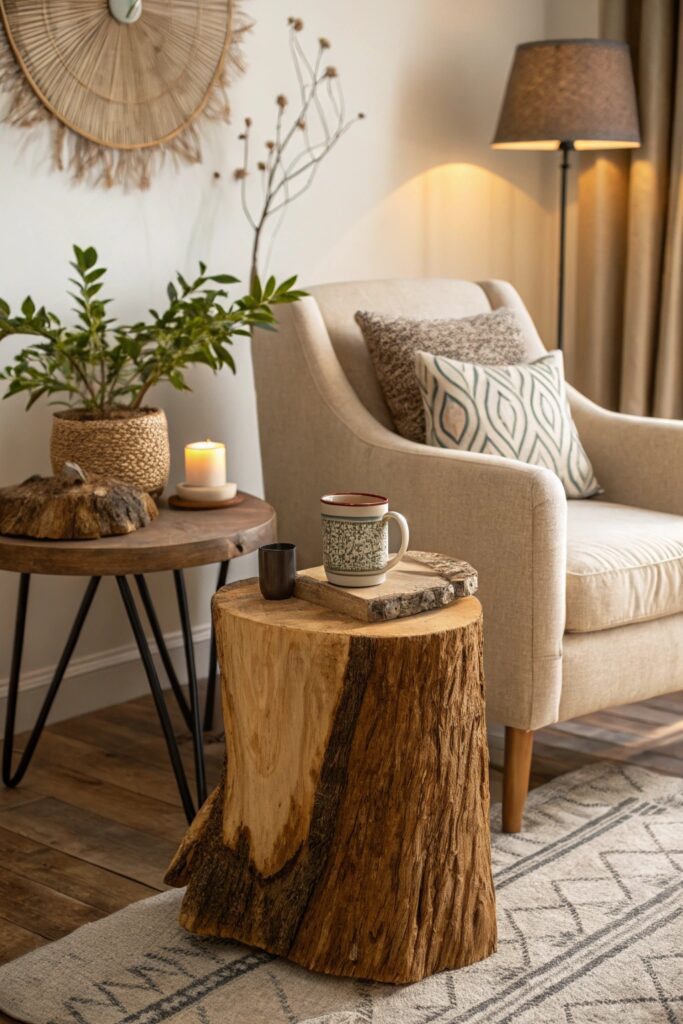
Unfinished or lightly finished wood furniture and accessories ground the space in genuine natural material, working alongside rattan and woven textures to build the aesthetic’s overall organic material palette.
Raw or live-edge wood pieces specifically lean into the aesthetic’s organic, unrefined quality more than heavily processed or painted wood furniture would.
12. Incorporate Vintage Textiles
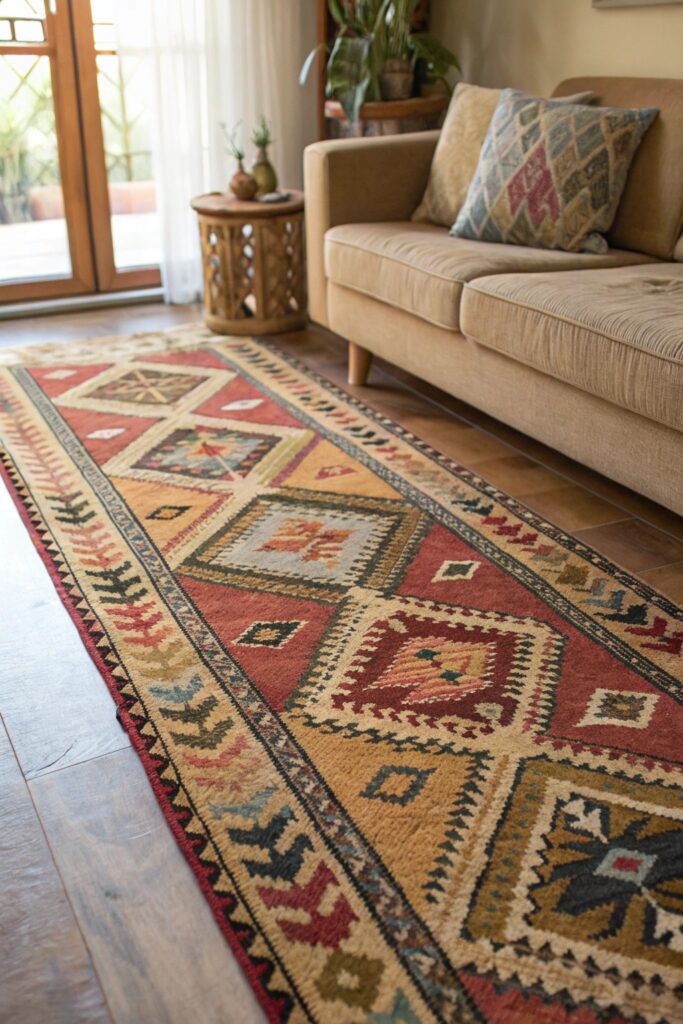
A vintage or vintage-style rug, throw, or wall textile ($30-100) brings authentic pattern and history that new, mass-produced textiles can’t fully replicate, particularly if sourced from an actual vintage or estate source.
A single well-chosen vintage textile, even just one piece, can anchor a room’s entire boho feel more effectively than several lower-quality new items attempting the same look.
13. Add a Canopy or Draped Fabric Accent
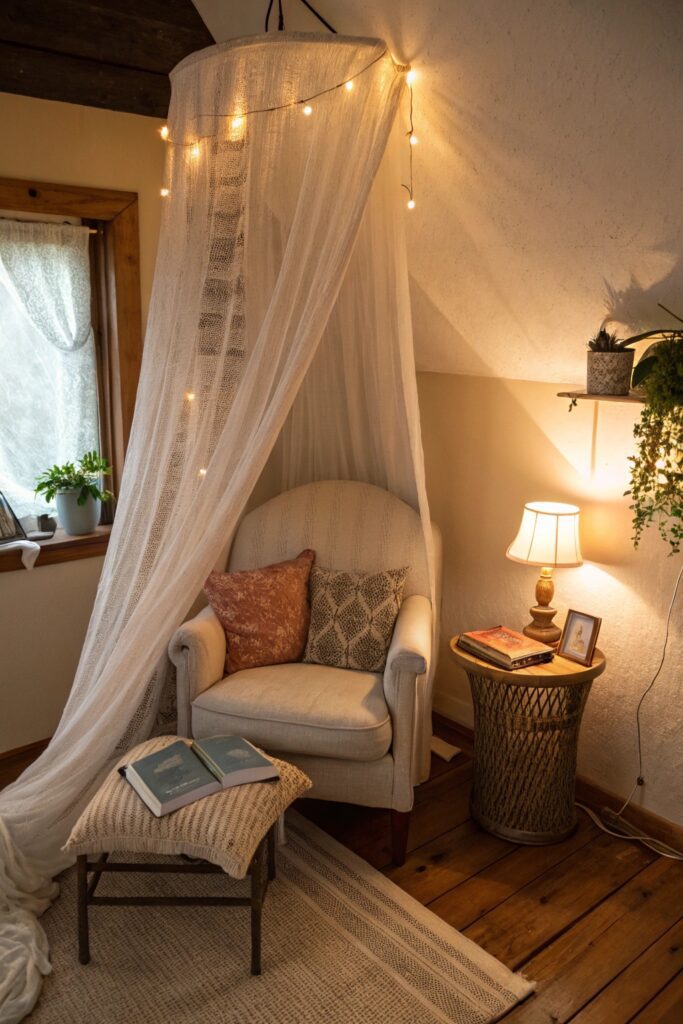
Sheer or lightweight fabric draped from the ceiling or around a specific seating area adds a dreamy, tent-like quality that’s a distinctly bohemian styling technique not commonly seen in other design aesthetics.
This technique works particularly well over a reading nook or a bed, creating a defined, intimate zone within a larger open room.
14. Mix Metallic and Natural Finishes
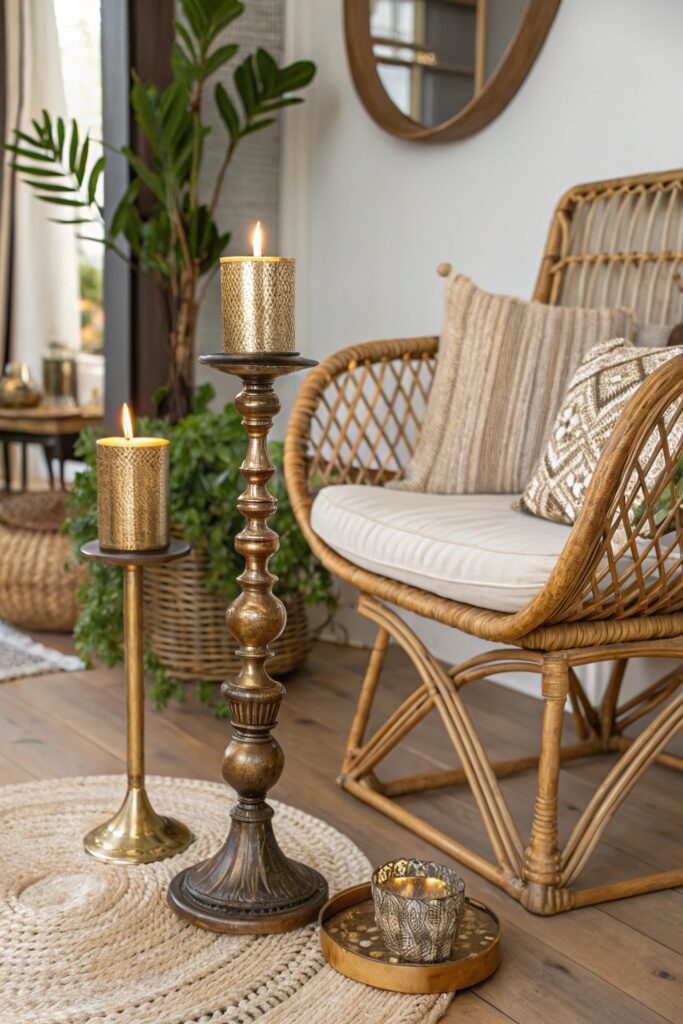
Small brass or gold accents paired with the room’s dominant natural materials (wood, rattan, woven textiles) add a touch of warmth and shine without disrupting the overall earthy, organic feel.
Keep the metallic accents to smaller objects — a mirror frame, small hardware — rather than large furniture pieces, which keeps the natural materials as the room’s dominant visual element.
15. Use Warm, Layered Lighting
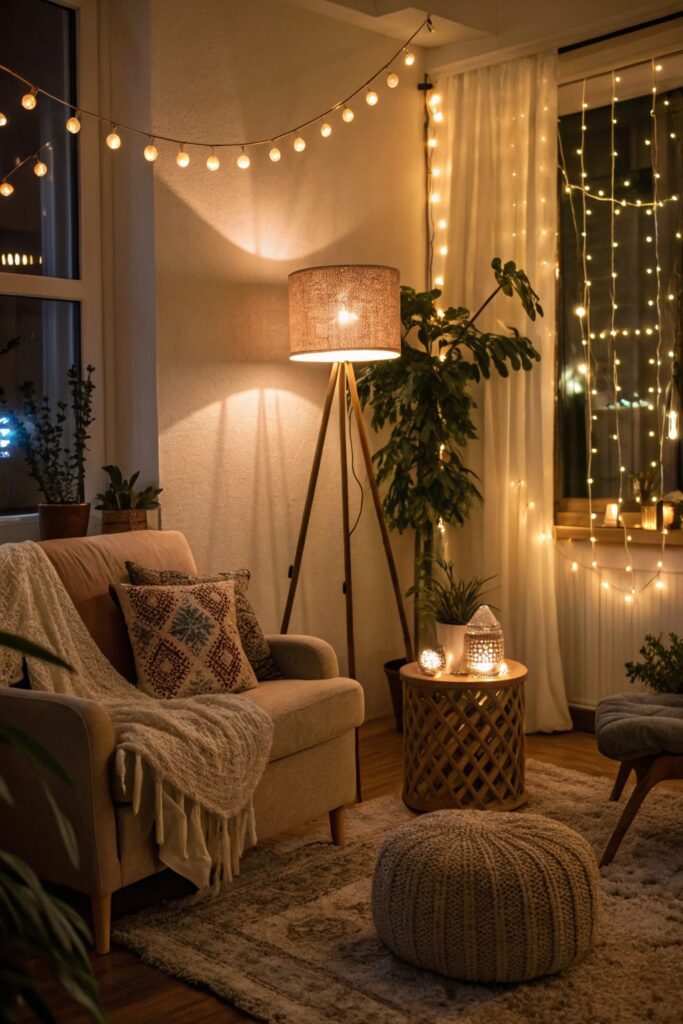
Multiple warm-toned light sources — string lights, a floor lamp, candles — matter as much in a boho room as in any cozy aesthetic, since warm ambient lighting is what keeps the layered textures and earthy palette from reading as flat under harsh overhead light.
Warm bulbs (2700K or lower) matter specifically here, since cooler light can make the earthy palette read as muddy rather than warm and inviting.
Final Thoughts
Layered texture matters more than any individual piece — a room with genuine variety in rugs, textiles, and natural materials will read as authentically bohemian even with a modest budget, while a room with expensive furniture but no textural layering won’t achieve the same effect. Warm lighting is worth prioritizing alongside texture, since it’s what keeps the earthy palette from feeling flat.