
A stiff recliner footrest is usually a maintenance issue rather than a sign the recliner is beyond saving — debris, dried-out lubrication, and loosened hardware account for the majority of cases, and most are fixable without professional help.
Below are 10 causes to check, starting with the simplest maintenance fixes before moving toward more involved mechanical issues.
1. Dirt and Debris Buildup in the Mechanism
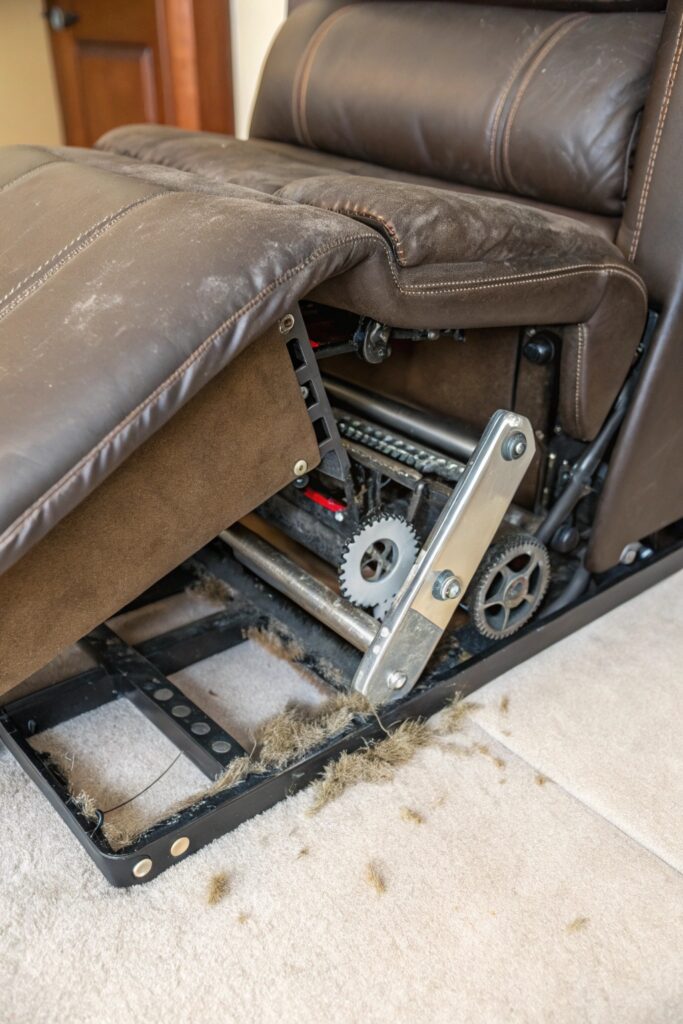
Dust, pet hair, and general debris accumulate inside a recliner’s mechanical linkage over years of use, gradually adding friction that makes the footrest progressively harder to close even though nothing is actually broken.
Tip the recliner back or lay it down (with help, given the weight) to access the mechanism underneath, and vacuum thoroughly with a crevice attachment before wiping visible components with a slightly damp cloth.
2. Lack of Lubrication on Metal Parts
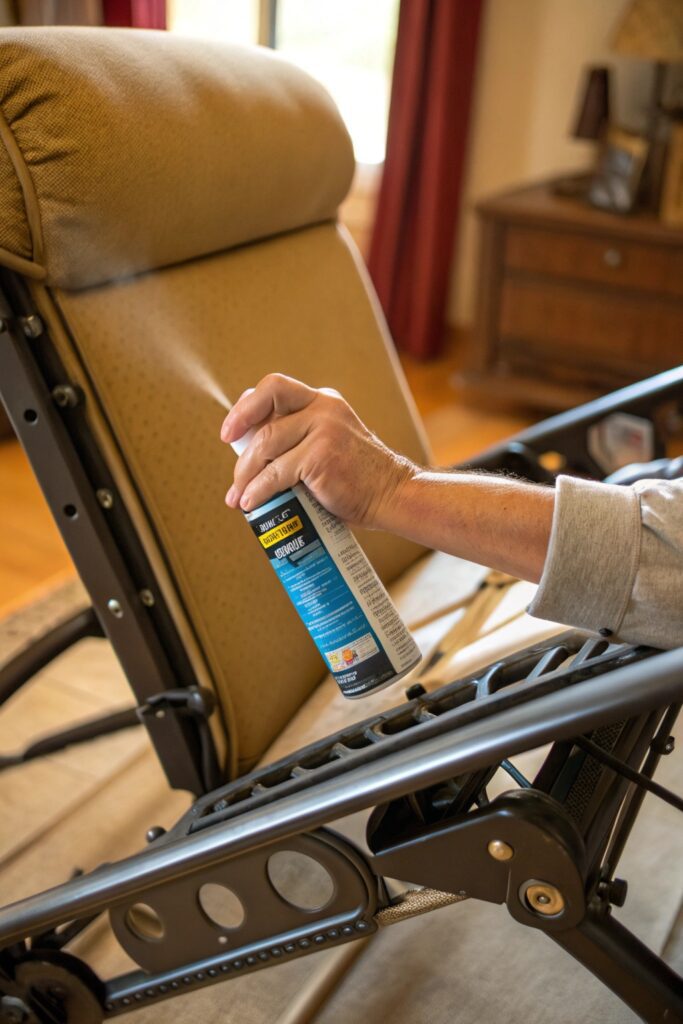
The metal linkage and pivot points in a recliner’s mechanism need periodic lubrication to move smoothly, and a mechanism that’s never been lubricated (or hasn’t been in years) develops increasing resistance as metal-on-metal friction builds up.
A silicone-based spray lubricant (rather than a heavier oil, which can attract more dust and grime) applied to visible pivot points and hinges typically restores smoother movement within a few uses as it works into the mechanism.
3. A Bent or Misaligned Footrest Bar
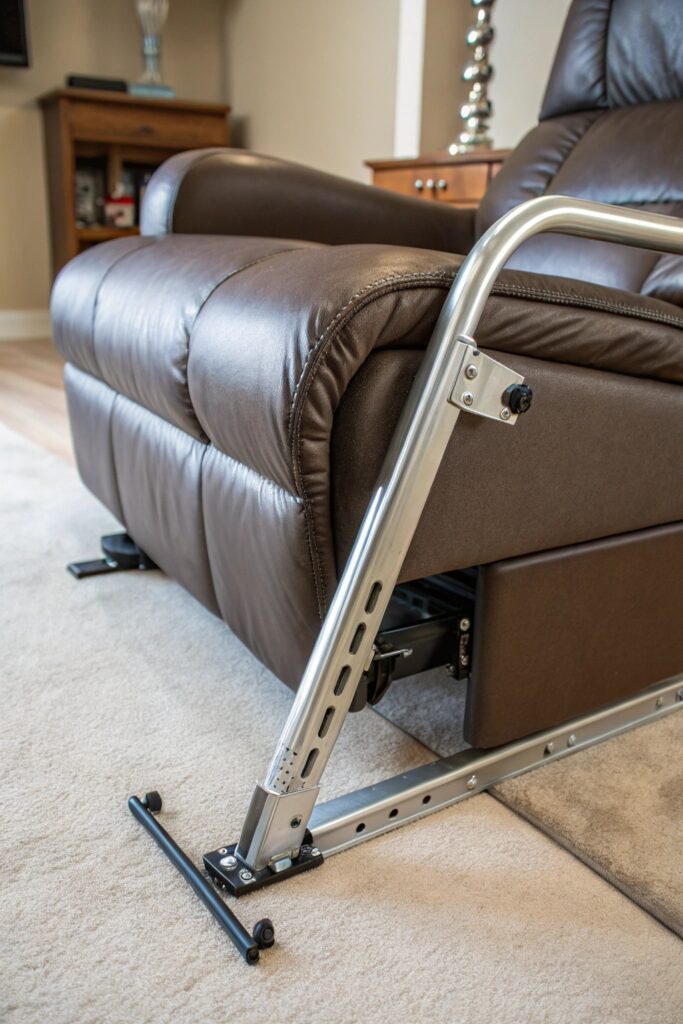
If the recliner has been sat on unevenly, had weight placed on the extended footrest, or been moved while partially reclined, the metal bar connecting to the footrest can bend slightly, throwing off the mechanism’s intended alignment and making closure harder.
Visually inspect the footrest bar for any visible bend or asymmetry compared to how it should sit — a bent bar may be gently correctable with firm, careful pressure, though significant bends often require professional repair or replacement.
4. Worn or Stretched Springs
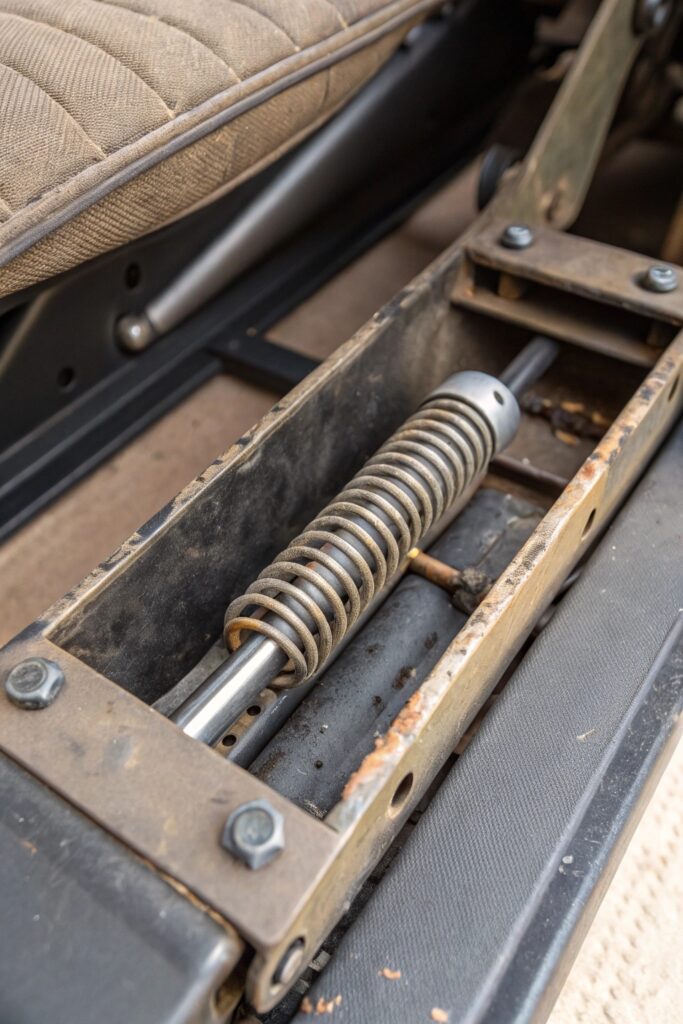
The springs that assist the footrest’s motion lose tension over years of regular use, and springs that have stretched or weakened no longer provide the assistance needed for smooth, easy closure, making the mechanism feel increasingly stiff.
Spring replacement kits are available for many recliner models ($15-30), though this repair requires accessing and understanding the specific mechanism’s spring configuration, making it a moderate rather than beginner DIY project.
5. Loose or Missing Bolts and Screws
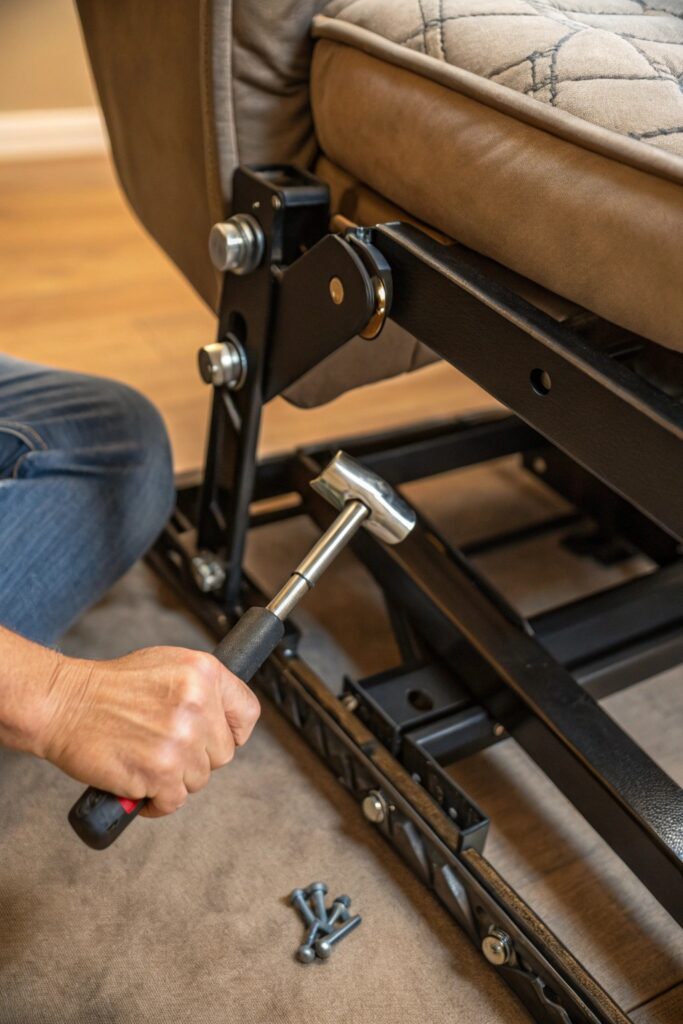
Recliner mechanisms rely on numerous bolts and screws holding the linkage together, and any that have loosened or fallen out over time can cause the whole mechanism to shift slightly out of its intended alignment, adding resistance to footrest movement.
Check all visible bolts and screws in the mechanism for tightness, and replace any missing hardware with matching size and thread — most hardware stores carry generic replacements if original parts aren’t available.
6. Fabric or Upholstery Caught in the Mechanism
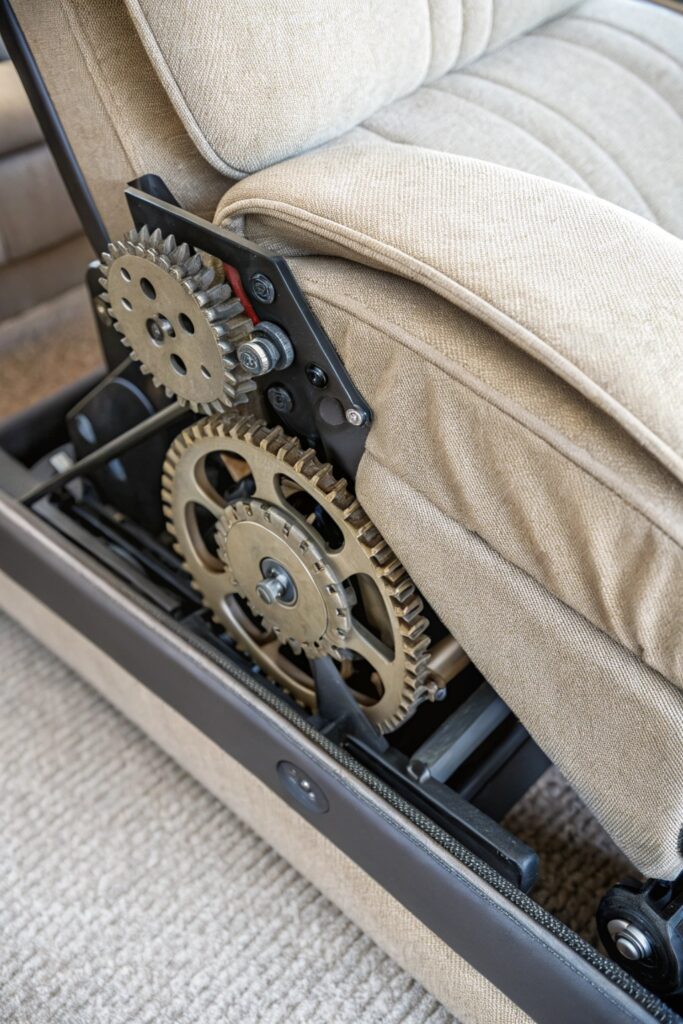
Loose fabric, a stray thread, or upholstery padding that’s shifted can get caught in the moving parts of the mechanism, physically obstructing smooth movement in a way that’s easy to overlook since it’s often hidden from direct view.
Carefully inspect the mechanism’s moving parts for any visible fabric or padding intrusion, gently freeing anything caught without forcing the mechanism, which could cause further damage if fabric is genuinely wedged in a moving joint.
7. Worn Rollers or Glides
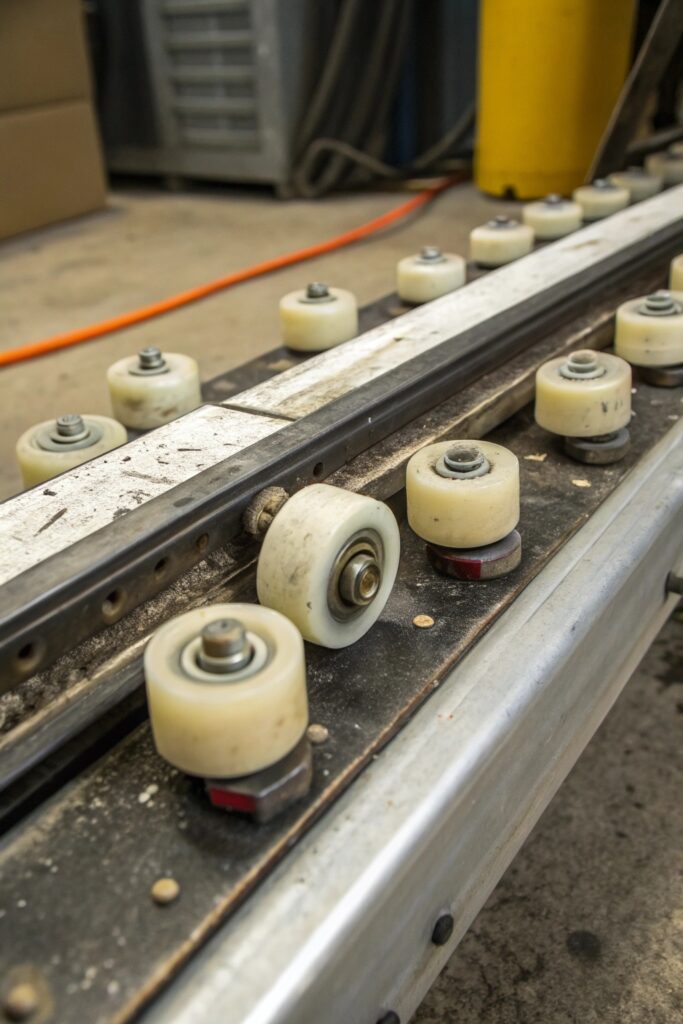
Many recliner mechanisms use small rollers or glides that facilitate smooth motion, and these components wear down with years of use, eventually creating enough friction to make the footrest noticeably harder to operate.
Rollers and glides are generally inexpensive replacement parts ($5-15) if you can identify the specific components in your recliner’s mechanism, though sourcing an exact match sometimes requires contacting the manufacturer directly.
8. Overloaded Weight Capacity
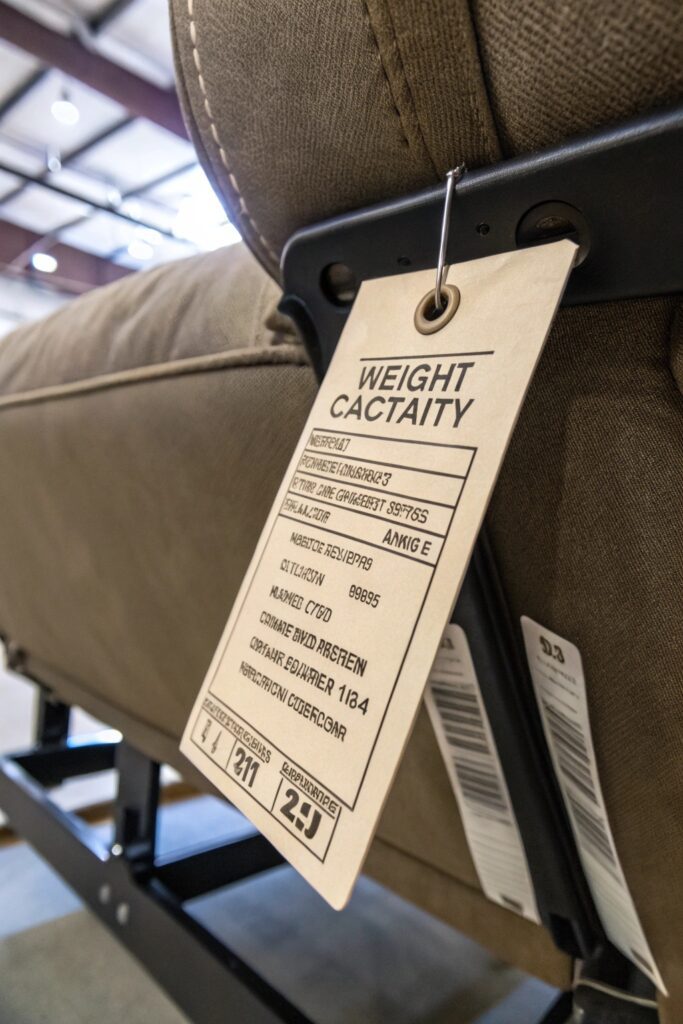
Recliners have a rated weight capacity, and consistent use beyond that rating puts additional strain on the mechanism’s springs and linkage, which can accelerate wear and make the footrest progressively harder to close over time.
Check your specific recliner’s weight rating (often on a tag underneath or in the original documentation) if this seems like a plausible contributing factor, since it affects how aggressively other wear-related fixes will actually help.
9. A Broken or Damaged Recliner Handle Mechanism
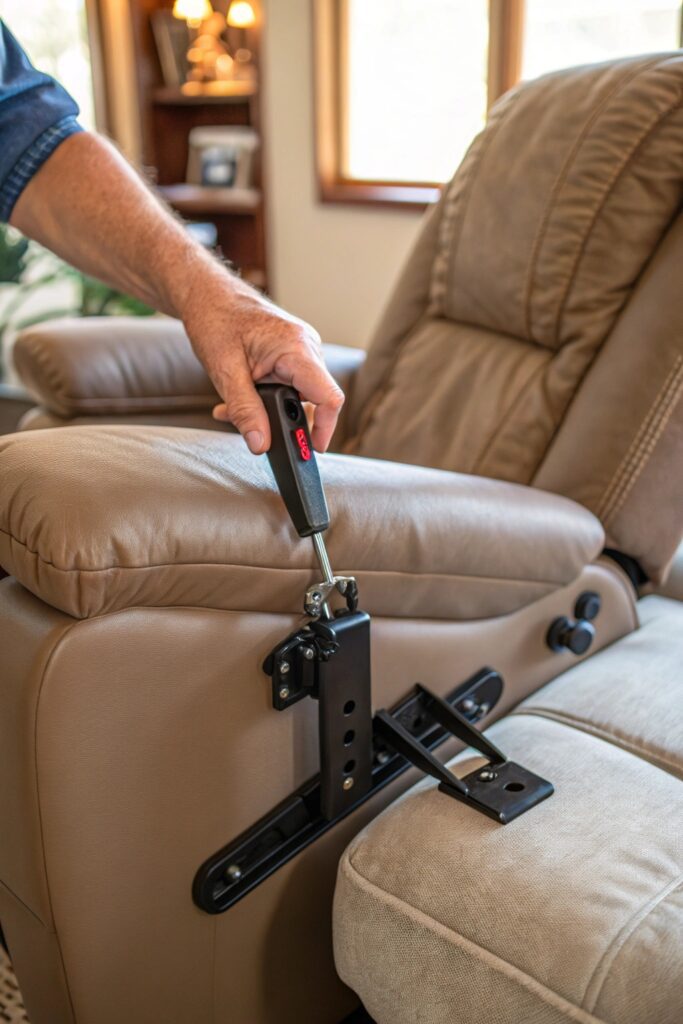
If your recliner uses a side lever or handle to control the footrest, a damaged or partially broken handle mechanism can create resistance that feels like a footrest issue but actually originates at the handle’s connection point to the main linkage.
Test the handle’s movement independently of the footrest — noticeable stiffness or grinding at the handle itself, rather than only when the footrest is engaged, points toward this specific component rather than the broader mechanism.
10. Age-Related Wear on the Frame
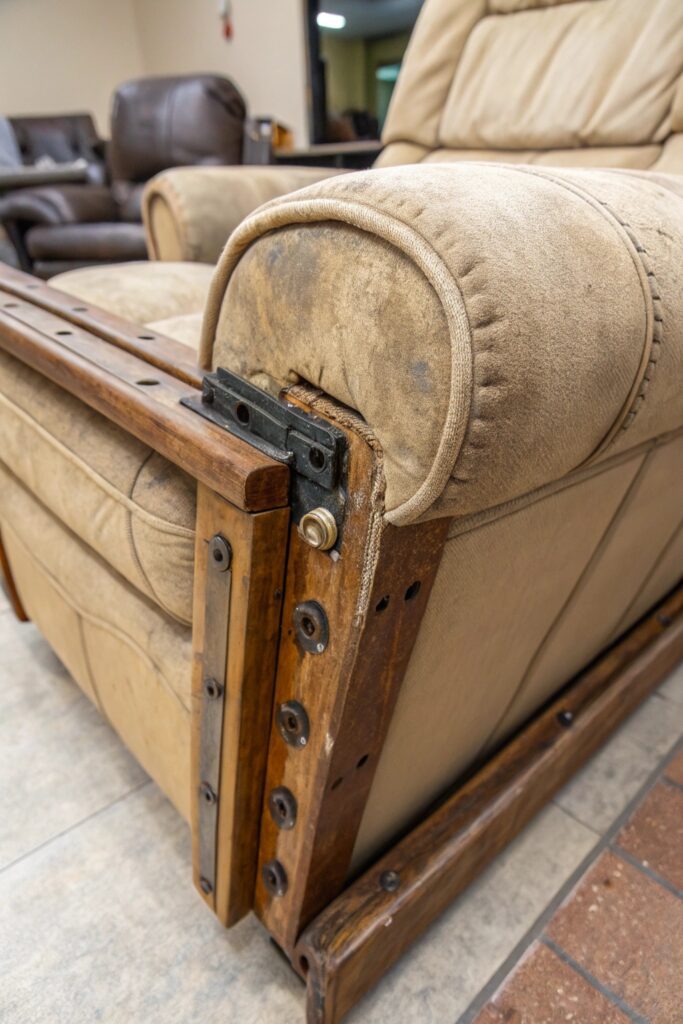
Recliners beyond 8-10 years old accumulate wear across multiple components simultaneously — springs, rollers, bolts, and frame joints all age together, and sometimes persistent stiffness is the combined result of several minor issues rather than one clear cause worth isolating.
If cleaning, lubrication, and hardware tightening don’t meaningfully improve movement on an older recliner, broader frame wear is likely at play, which is harder to fully resolve through targeted component repair.
When to Call a Professional (or Just Replace It)
If the footrest remains difficult to close after working through cleaning, lubrication, and hardware checks, and the recliner is more than a few years old, weigh professional repair cost against replacement — furniture repair technicians typically charge $75-150 for mechanism service calls, which can approach a meaningful fraction of a new recliner’s cost depending on the original piece’s value.
Wrapping It Up
Cleaning and lubricating the mechanism resolves the majority of stiff-footrest cases, since debris buildup and dried-out lubrication are the most common underlying causes after years of regular use. If that doesn’t help, checking hardware tightness and spring condition next covers most of the remaining common causes before you need to consider professional repair or replacement.