
Bamboo cutting boards are more mold-resistant than many other woods due to bamboo’s natural antimicrobial properties, but they’re not immune, especially with inconsistent drying or storage in a humid kitchen environment.
Below are 10 ways to address mold when it appears, plus prevention habits that keep it from coming back, since prevention is genuinely more effective than repeated treatment for this specific problem.
1. Scrub With Coarse Salt and a Lemon
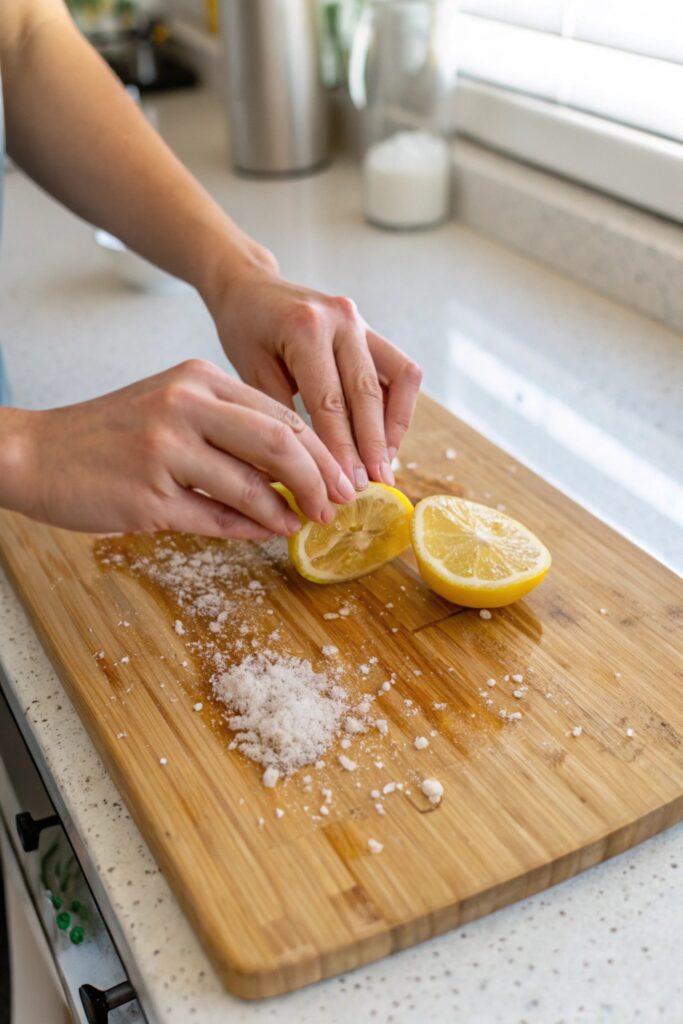
Sprinkle coarse salt generously across the moldy area, then scrub with the cut half of a lemon, using the salt as a mild abrasive and the lemon’s acidity to help break down surface mold. This works best on light, surface-level mold rather than mold that’s worked into the wood grain.
Let the salt and lemon juice sit on the board for 5-10 minutes before scrubbing, which gives the acid more time to work before you apply physical friction.
2. Use a White Vinegar Soak
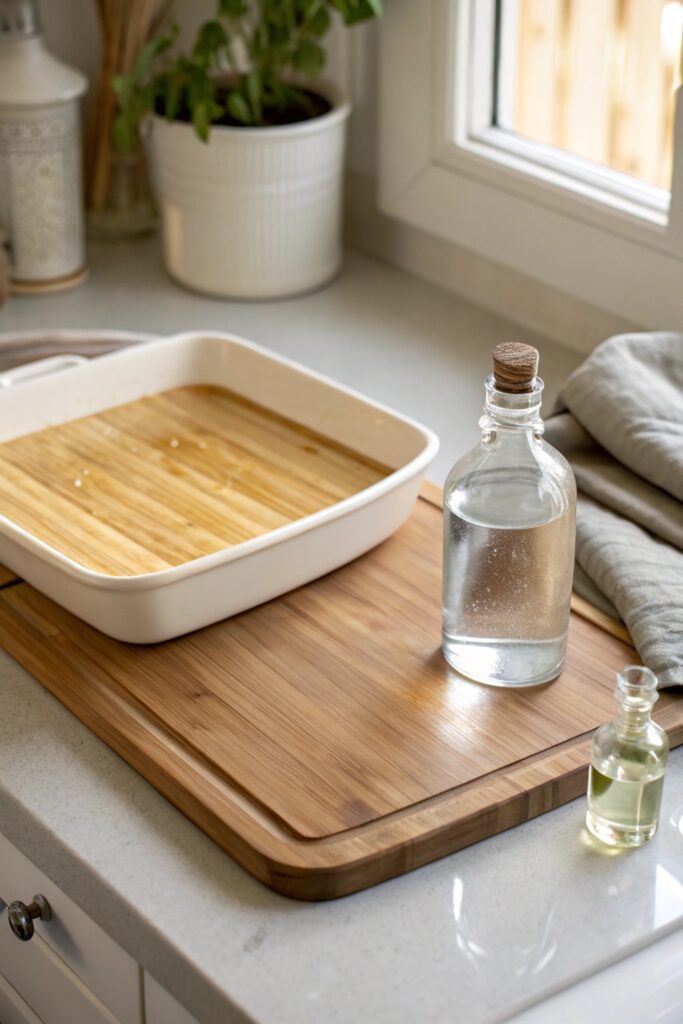
Undiluted white vinegar wiped or lightly soaked onto the affected area has genuine antifungal properties and is one of the more effective food-safe options for addressing mold on wood or bamboo surfaces without harsh chemicals.
Avoid fully submerging a bamboo board in vinegar or any liquid for extended periods, since bamboo (like wood) can absorb excess moisture and warp or crack over time with repeated soaking.
3. Try a Baking Soda Paste
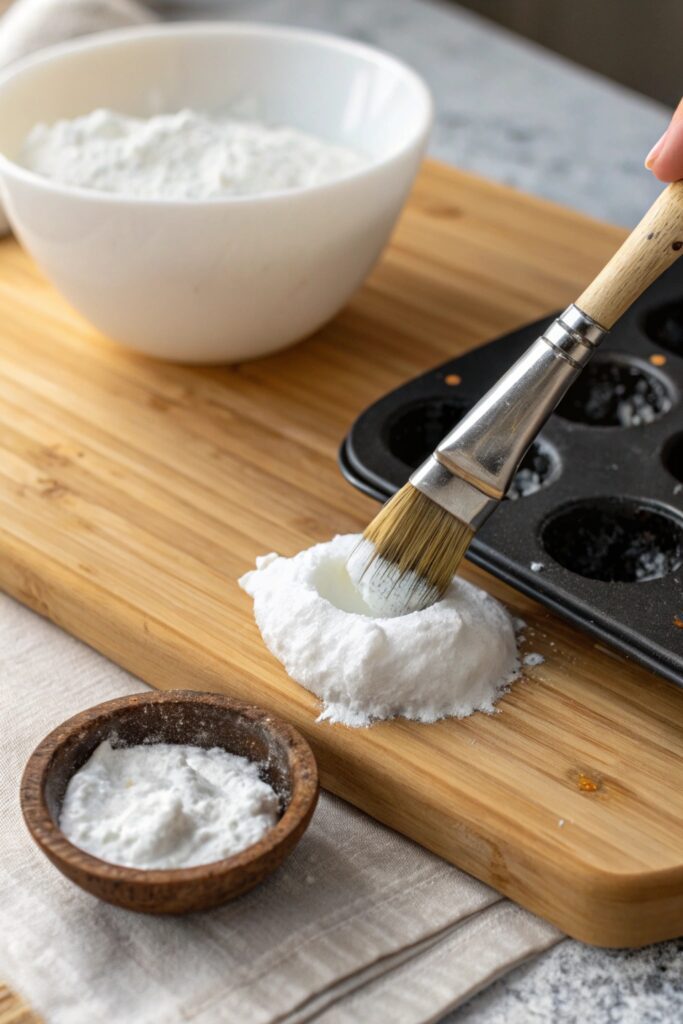
A thick paste of baking soda and a small amount of water, scrubbed into the moldy area with a stiff brush, offers mild abrasive cleaning combined with baking soda’s natural deodorizing properties, which helps with any lingering musty smell mold can leave behind.
Rinse thoroughly after scrubbing, since baking soda residue left on a cutting surface can affect the taste of food prepared on it afterward.
4. Apply Hydrogen Peroxide
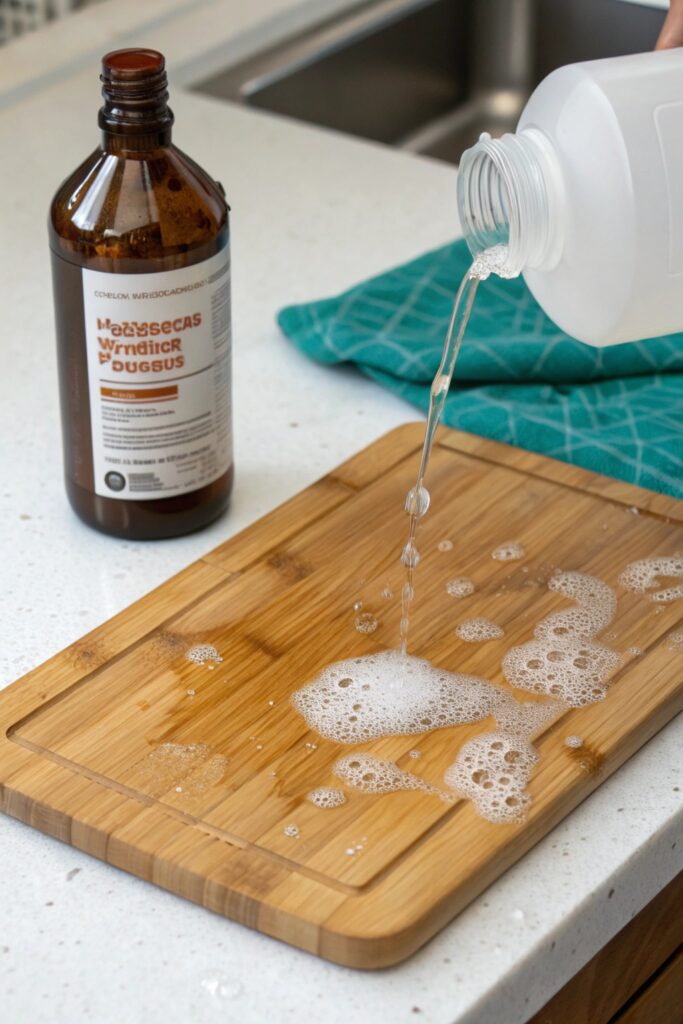
3% hydrogen peroxide (the standard concentration sold at most pharmacies) poured directly onto the moldy area and left to bubble for several minutes is effective at killing mold spores on the surface, and it breaks down into water and oxygen rather than leaving harmful residue behind.
Always rinse and fully dry the board after using peroxide, and avoid combining it with vinegar in the same application, since mixing the two creates a mild corrosive compound rather than a more effective cleaner.
5. Sand Down Deep-Set Mold Stains
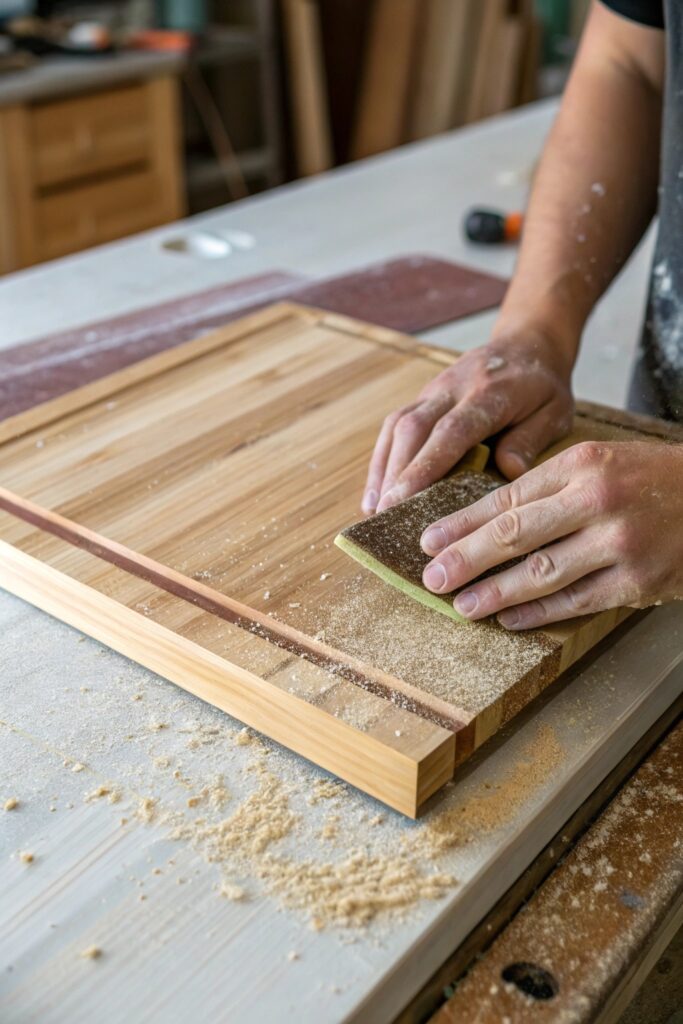
If mold has worked into scratches or knife grooves deep enough that surface cleaning doesn’t fully remove it, fine-grit sandpaper (220-grit or higher) can physically remove the affected top layer of bamboo entirely.
Sand in the direction of the grain, and follow up with food-safe mineral oil once the surface is smooth again, since sanding removes some of the board’s natural protective finish.
6. Disinfect With Diluted Bleach (Sparingly)
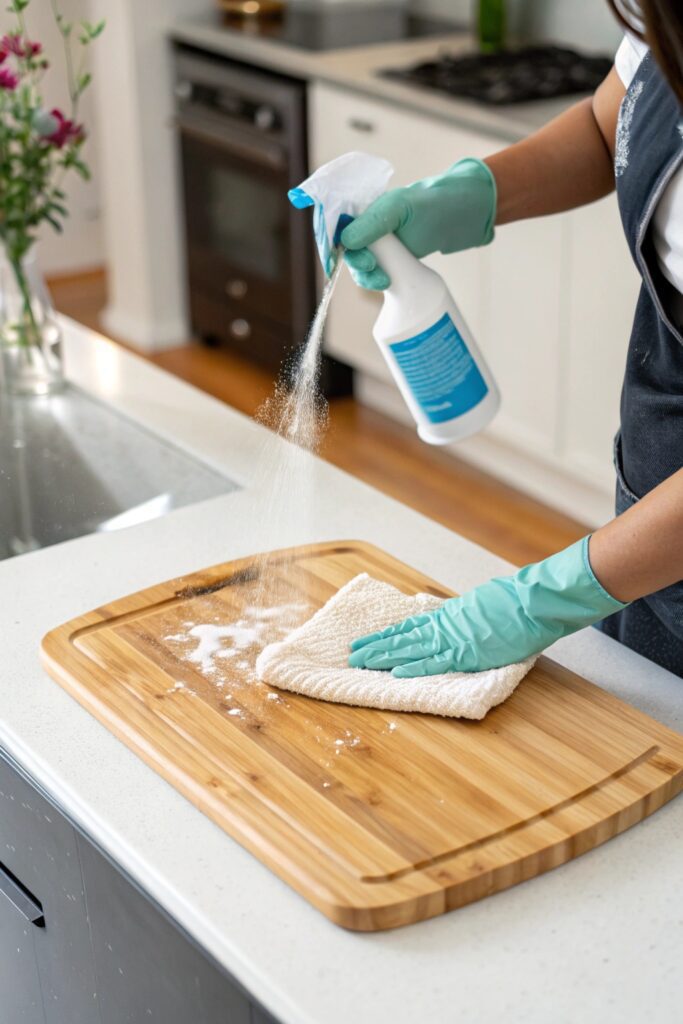
A solution of 1 tablespoon of bleach per gallon of water, applied briefly and rinsed thoroughly, is an effective last-resort disinfectant for stubborn mold, though it should be used sparingly on bamboo specifically since repeated bleach exposure can dry out and weaken the material over time.
Never use bleach at full strength or combine it with other cleaning products, and always rinse extensively and let the board dry completely before it contacts food again.
7. Use Coconut Oil for Post-Cleaning Care
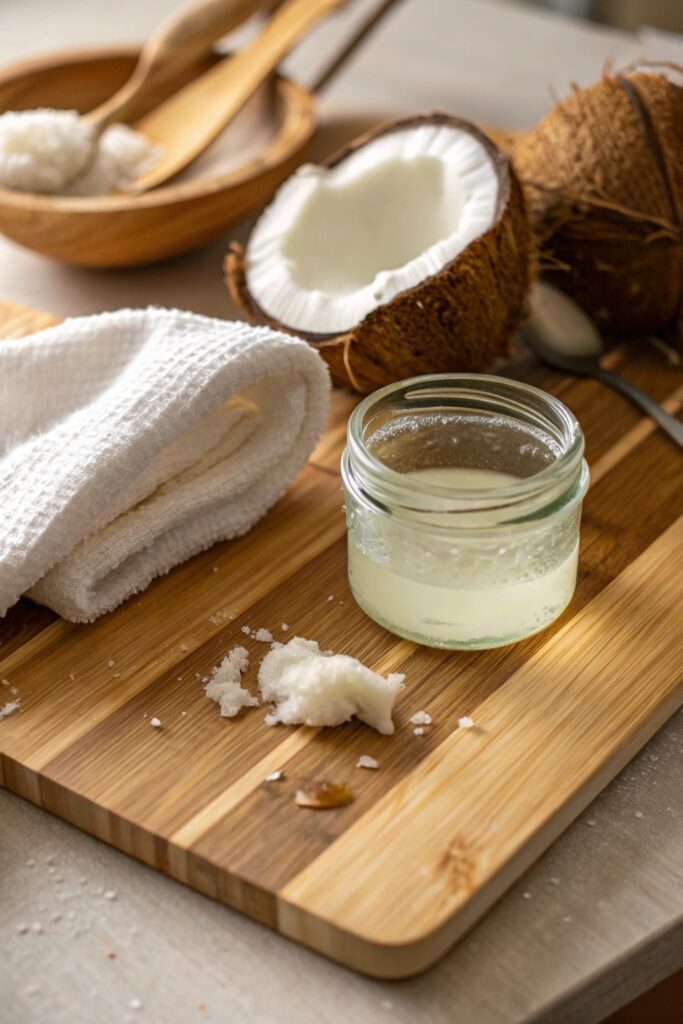
After thoroughly cleaning and drying a board, a light coat of food-safe mineral oil or fractionated coconut oil (specifically the fractionated type, which doesn’t go rancid like regular coconut oil) helps recondition the wood and creates a slightly less absorbent surface that resists future mold growth.
Apply oil to a completely dry board only, and let it absorb for several hours or overnight before wiping away any excess.
8. Dry the Board Completely (Every Single Time)
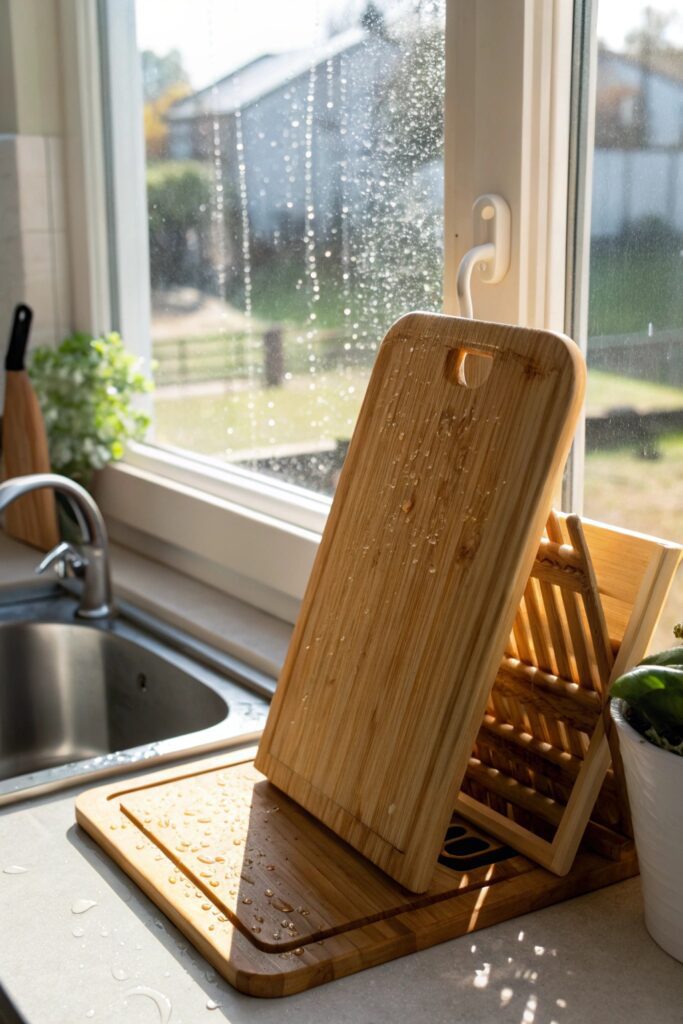
The single most effective mold-prevention habit is drying a bamboo board completely after every wash, standing it upright or on its edge rather than laying it flat, since flat storage traps moisture against the surface and creates ideal conditions for mold to develop.
A dish rack or a dedicated cutting board stand specifically designed for upright drying makes this habit easier to maintain consistently rather than relying on remembering to flip a flat-stored board.
9. Store It in a Well-Ventilated Area
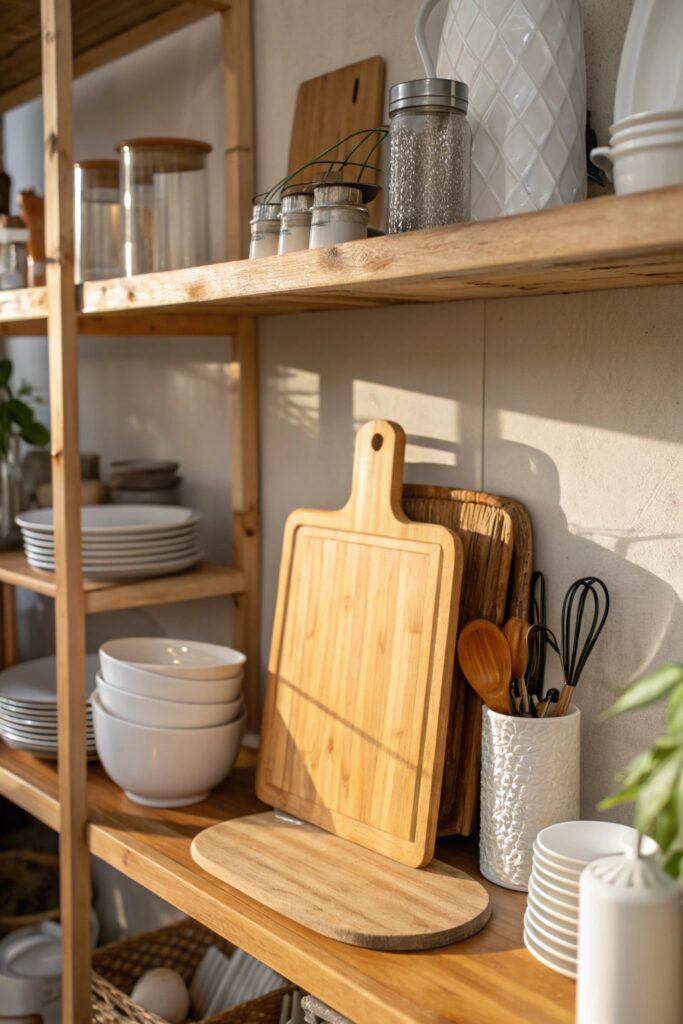
Storing a bamboo board in a closed cabinet or drawer, especially one without airflow, traps residual humidity even after the board feels dry to the touch, which contributes to mold developing over time in ways that aren’t immediately obvious.
A vertical slot in an open shelf or a hanging rack allows continuous air circulation around the board, which matters more for mold prevention than most people expect from a simple storage choice.
10. Replace the Board If Mold Keeps Coming Back
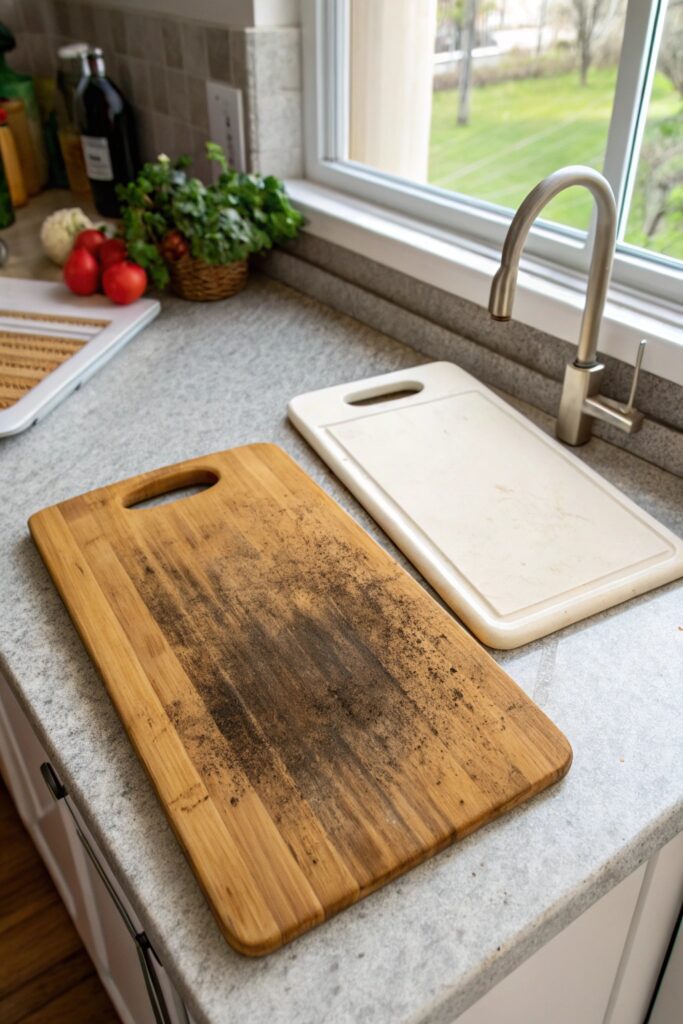
If mold returns repeatedly in the same spot despite thorough cleaning, it’s likely worked deep enough into the bamboo’s fibers that it can’t be fully removed without seriously compromising the board’s structure — at that point, replacement is the safer choice rather than continued treatment.
A quality bamboo cutting board typically costs $15-30, which is a reasonable expense relative to the food-safety risk of continuing to use a board with persistent, recurring mold contamination.
Final Thoughts
Vinegar and hydrogen peroxide are the two most effective food-safe treatments for active mold, but drying the board completely after every use is what actually prevents mold from returning in the first place. If mold keeps coming back in the same spot despite consistent cleaning and drying, that’s a sign the board has reached the end of its safe usable life.