
A nursery deserves a second safety pass beyond what any other room in the house requires, since the space’s occupant will eventually be mobile and exploring surfaces at close range in ways that simply don’t apply to adult-occupied rooms. The details below cover both the theme direction and these practical safety specifics for each.
Below are 12 baby boy nursery themes worth considering, with the specifics for each.
1. Classic Woodland Adventure
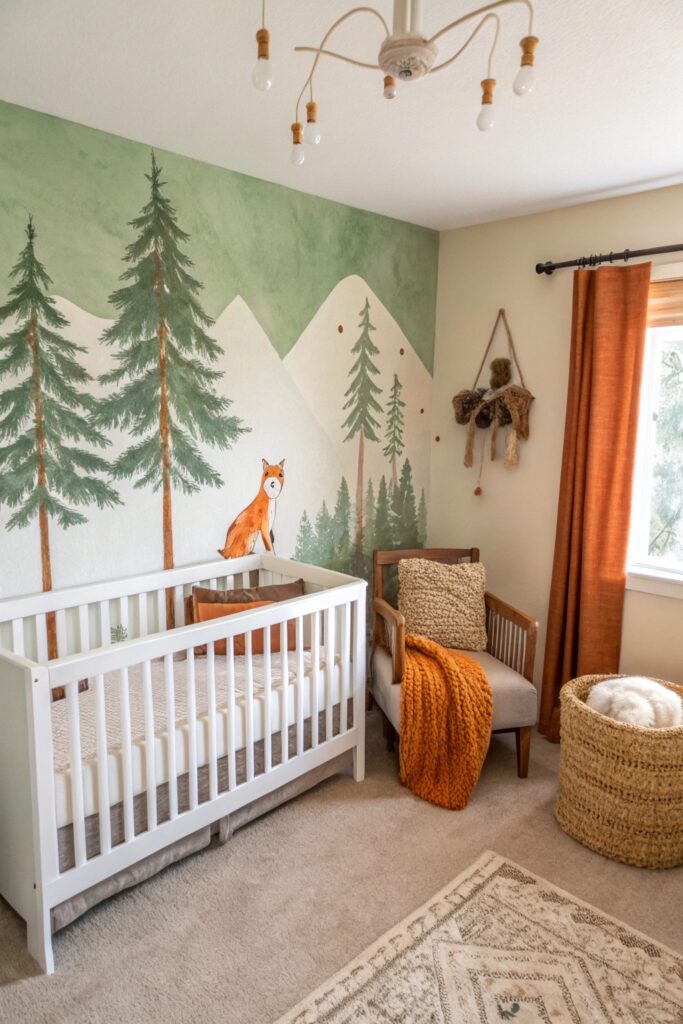
Choose wallpaper and paint with low-VOC certification specifically for this room, since a baby spends considerably more concentrated time here than in most other rooms of the house, and a large mural wall means more surface area of whatever material you choose.
2. Outer Space Explorer
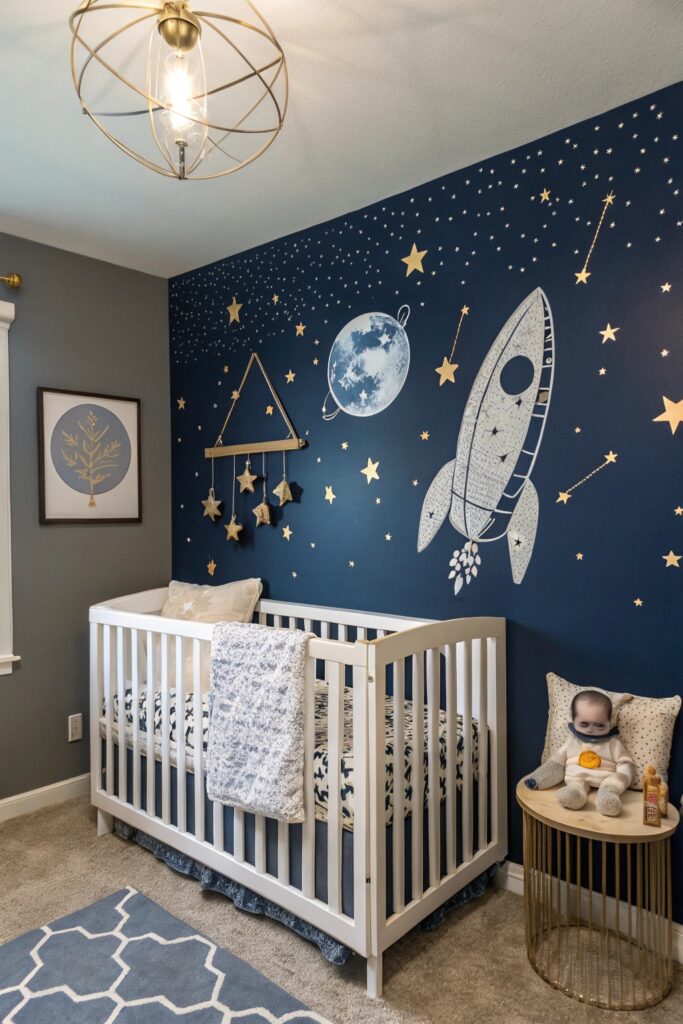
Keep glow-in-the-dark decals and stars positioned well outside crib reach, since these can become a choking hazard if a curious, increasingly mobile baby manages to pull one loose.
3. Safari & Jungle Animals
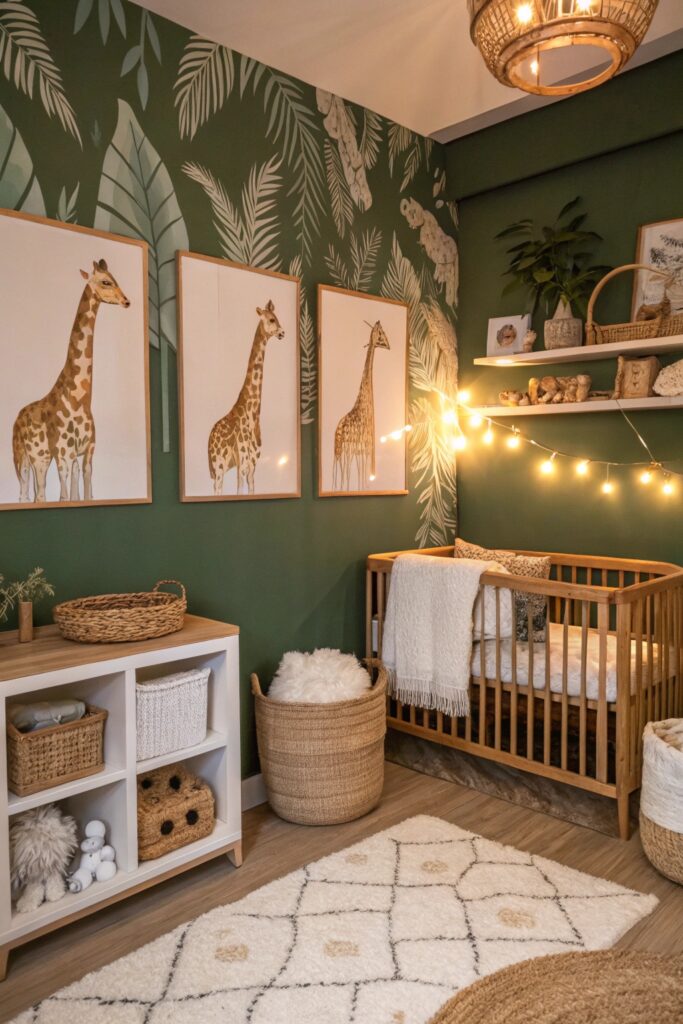
Keep plush jungle-themed decor out of the crib itself regardless of how well it fits the theme, following the same safe sleep guidance that applies to any soft item near where a baby sleeps.
4. Nautical & Ocean Adventure
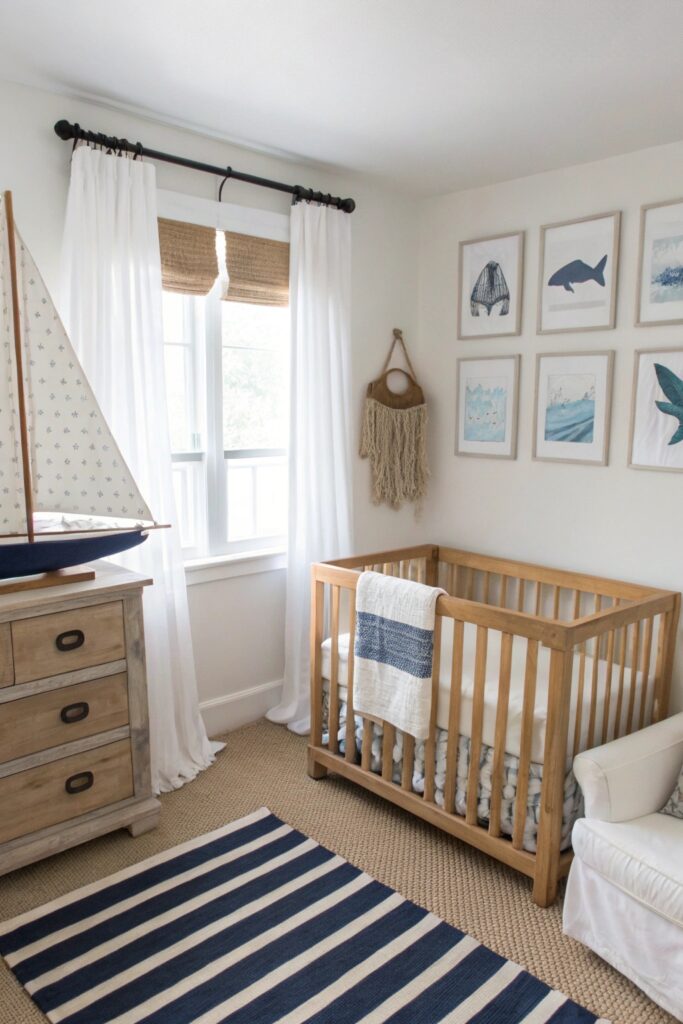
Rope details on furniture or decor need to stay well out of crib reach specifically, since rope-like material near a sleeping infant carries a real entanglement risk that’s worth taking seriously regardless of how charming it looks in photos.
5. Boho Rainbow
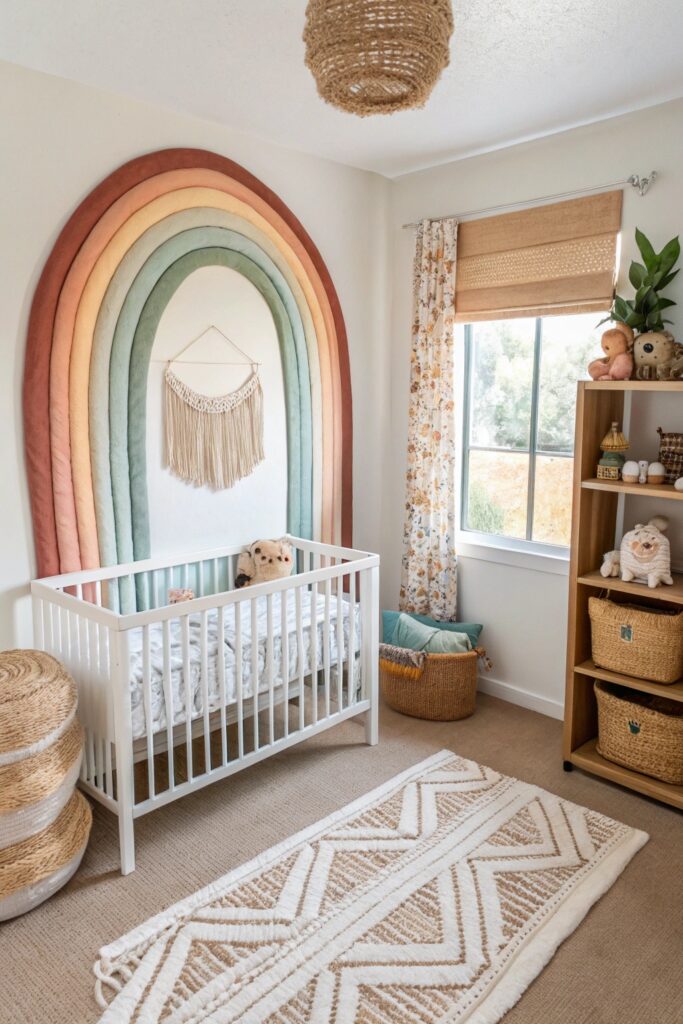
Macrame or woven wall hangings should be secured well above where a growing child can reach once standing, since the same entanglement concern that applies to rope details applies here too.
6. Dinosaur World
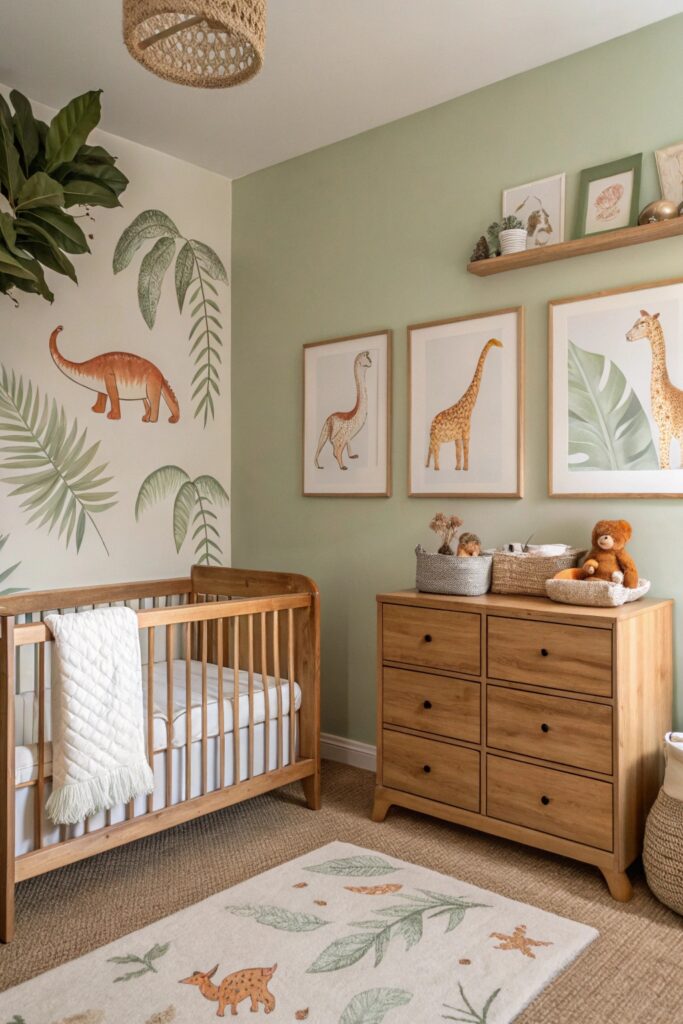
Dimensional or raised wall art needs secure mounting hardware, since a mobile toddler exploring the room later can turn textured decor into a pulling or climbing hazard that flat artwork doesn’t present.
7. Vintage Transportation
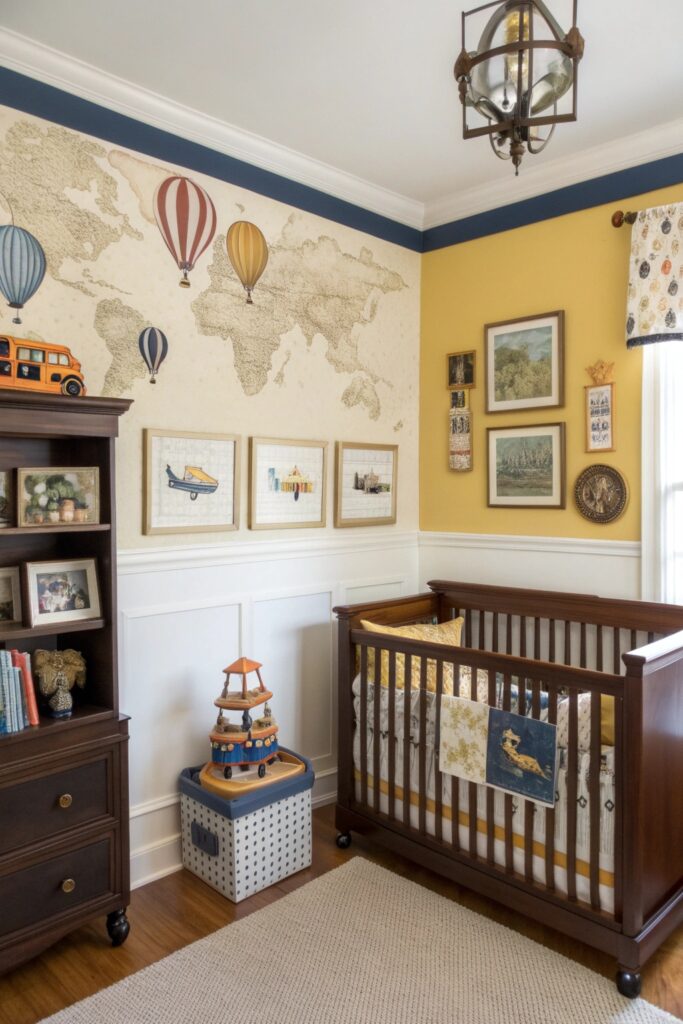
Even purely decorative vintage toy pieces should meet basic small-parts safety standards if they’ll be within a curious toddler’s reach as the child grows, since “just decor” doesn’t stay out of reach forever in a nursery.
8. Modern Minimalist
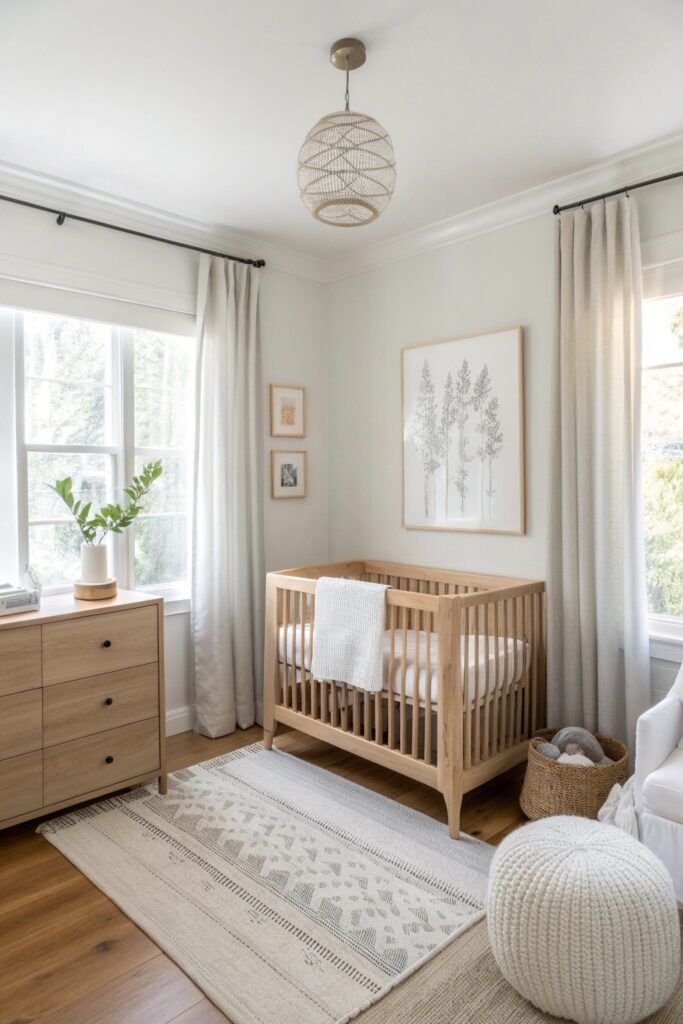
A higher light reflectance value palette bounces available light around the room more effectively, which matters in a nursery that often relies on softer, more limited lighting than other rooms in the house.
9. Celestial Moon & Stars
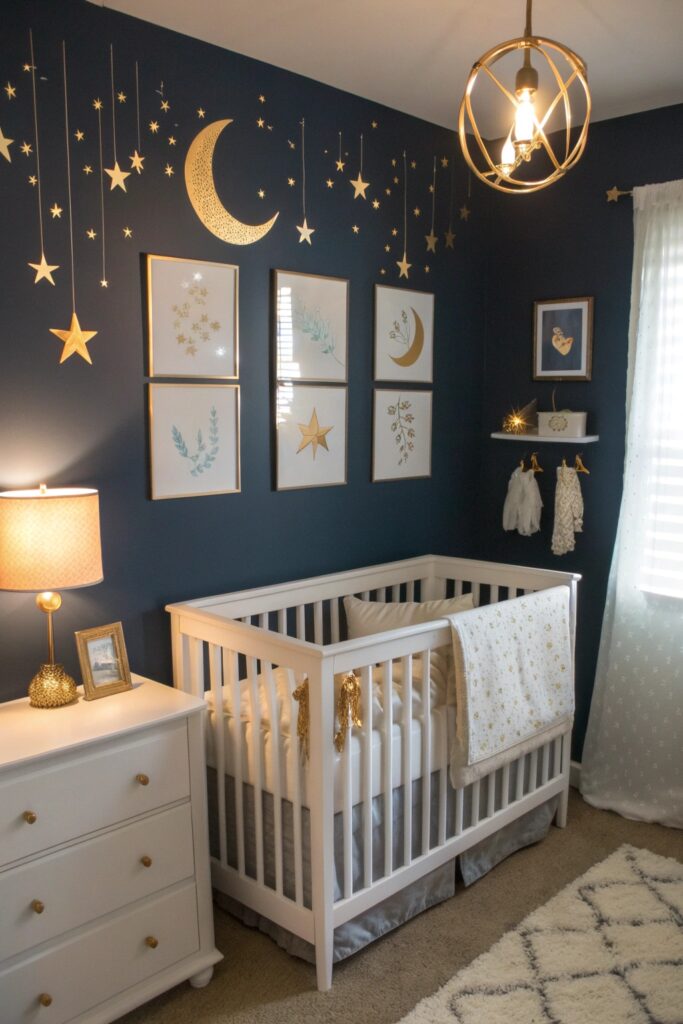
Position any nightlight away from bedding and curtains given the real, if low, heat consideration some nightlight types carry, and keep battery compartments on remote-controlled string lights secured and inaccessible to a curious child.
10. Little Farmer
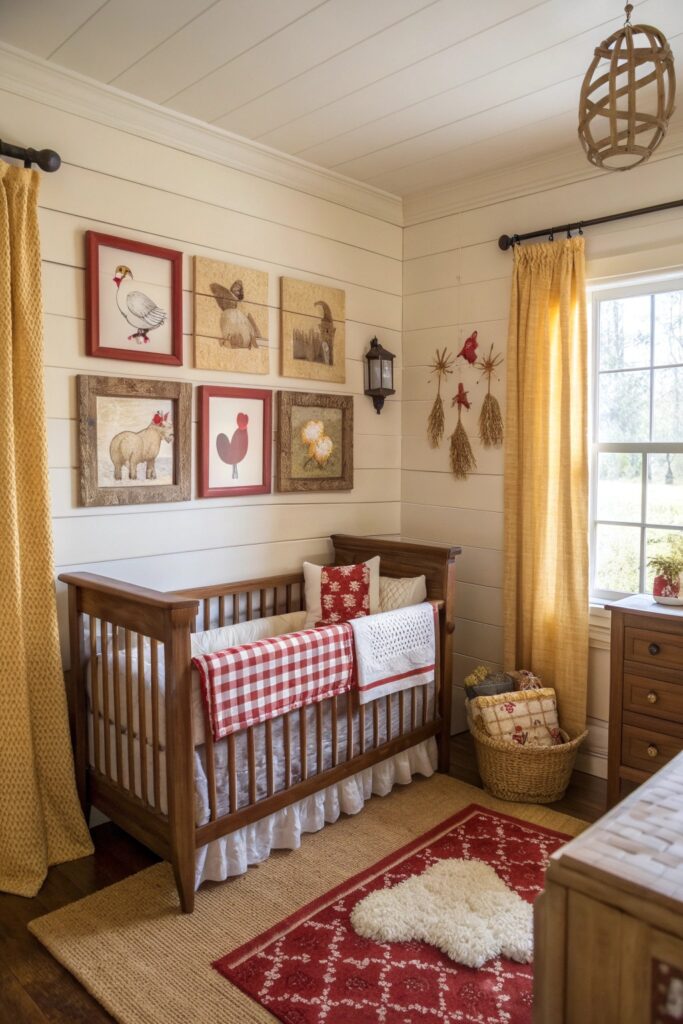
Layering different wood tones and warm neutrals throughout this theme works well, though matching the specific undertones between furniture pieces helps the room read as cohesive rather than mismatched.
11. Under the Sea
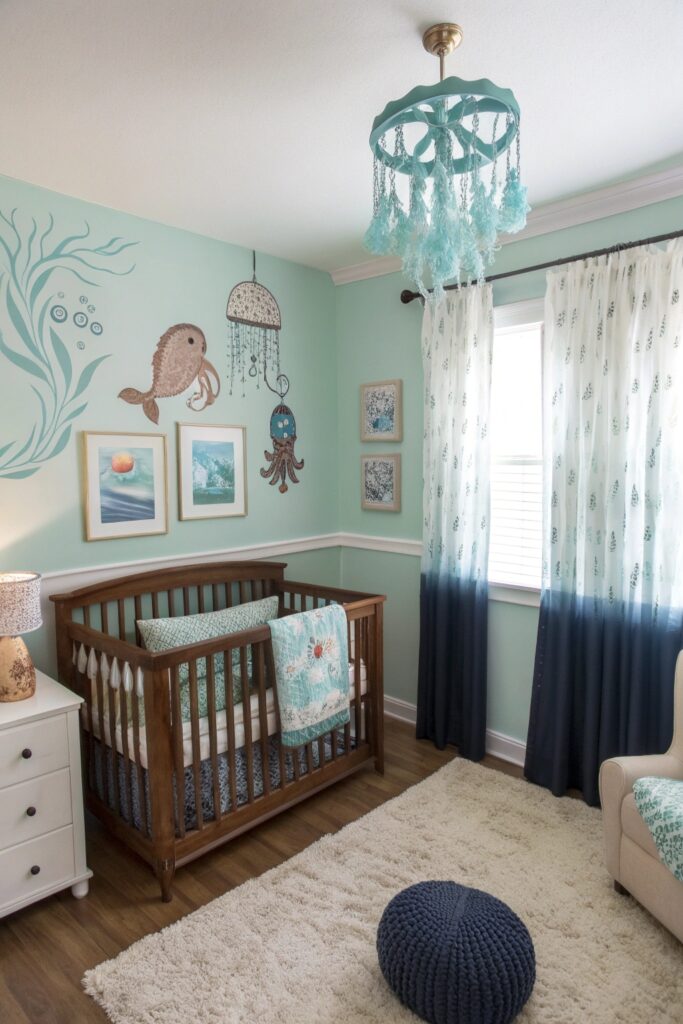
Choose BPA-free rated acrylic or plastic decorative accents for this theme specifically, even for wall-mounted, non-toy pieces, since a young child mouthing accessible surfaces is a genuine consideration in this room more than most others in the house.
12. Storybook & Fairytale
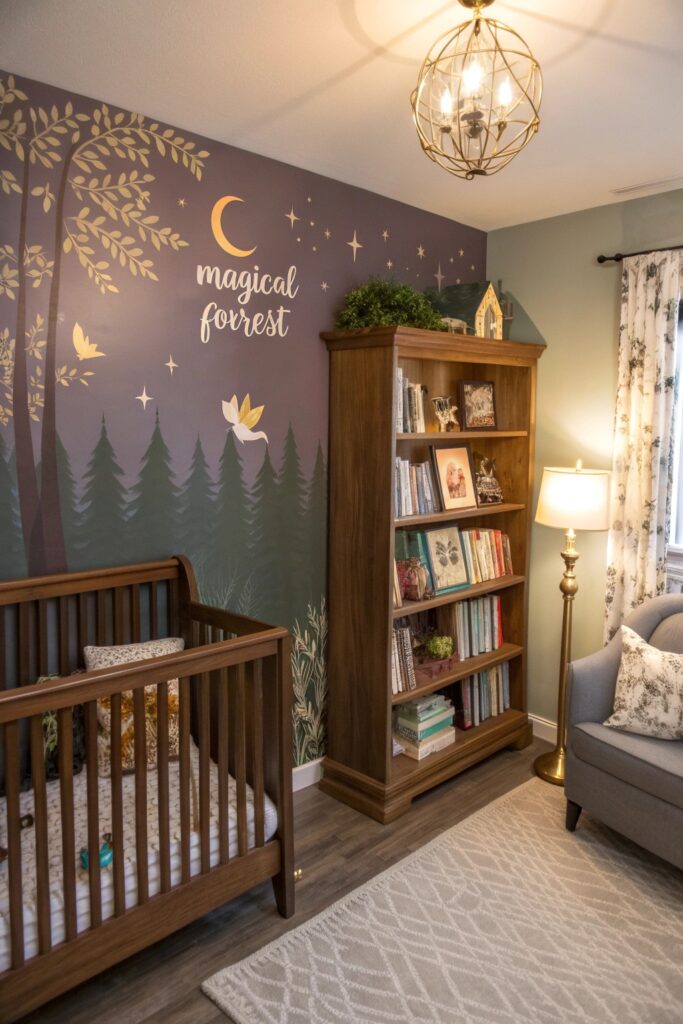
Layering a few different pattern scales — a larger floral alongside a smaller coordinating print — reads as more intentional than a single dominant pattern covering every surface in the room.
Choosing Furniture That Grows With the Theme
A convertible crib that transitions to a toddler bed lets you keep the room’s core furniture as your child grows, rather than needing a full furniture replacement once they outgrow an infant-specific crib.
Choosing theme elements that are easy to swap — bedding, wall art, a few accent pieces — while keeping larger furniture more neutral gives you room to update the aesthetic as your child’s own preferences develop, without needing to redo the entire room from scratch.
What a Themed Nursery Costs
A cosmetic theme update — bedding, wall art, and a few accent pieces — typically costs $200 to $600 depending on material quality.
A fuller room setup including furniture, flooring, and a statement wall runs considerably higher, often $2,000 to $6,000 or more depending on the scope.
Ventilation and Air Quality Matter Here
Fresh paint and new furniture can off-gas for a period after installation, so airing the room out well before your baby actually starts sleeping there — ideally several weeks in advance — reduces the concentration of any residual fumes in the space.
A quality air purifier isn’t strictly necessary, but it’s worth considering for a nursery specifically given how much time an infant spends in this one room compared to the rest of the house during the early months.
Involving other family members in choosing a theme, if the nursery is being shared or decorated collaboratively, tends to result in a room that feels considered from multiple perspectives rather than a single narrow vision that might not age as well as everyone’s needs evolve.
A nursery theme doesn’t need to be permanent or perfectly executed from day one — many parents find that the room evolves naturally over the first year as they figure out what actually works for their specific routines and their baby’s developing preferences.
Taking photos of the room as you complete each stage of decorating gives you a useful reference for what worked well and what you’d change, which is quite helpful if you end up decorating a second nursery down the line or want to make gradual updates as your child grows.
Whichever theme you choose, a nursery that balances genuine visual charm with careful attention to safety details tends to serve a family well through several stages of early childhood, not just the newborn phase most inspiration photos capture.
Budget flexibility matters here too, since some of the most memorable nursery details often come from small, inexpensive touches — a hand-painted sign, a framed print, a favorite storybook displayed on a shelf — rather than the larger furniture purchases that tend to dominate most decorating budgets.
If you’re working within a tighter timeline, prioritizing the functional and safety-critical elements first — the crib, safe storage, adequate lighting — and treating decorative flourishes as an ongoing project rather than a deadline-driven checklist tends to reduce stress during an already busy stretch of preparation.
Wrapping It All Up
Whichever theme resonates most, revisiting the room’s safety details every few months as your baby grows into a mobile toddler matters just as much as getting the initial styling right, since a nursery that was perfectly safe for a newborn isn’t automatically safe once that same child is standing, reaching, and exploring.
Checking the Consumer Product Safety Commission’s current recall list for any furniture or decor items you’re considering, particularly secondhand pieces, is worth the few minutes it takes before bringing something into this specific room.