
Summer dining table decor needs to balance visual appeal against real functionality during an actual meal — guests’ hands, sightlines, and spill risk all matter here in a way they don’t for a purely decorative display like a mantel. The details below cover both the styling direction and these practical specifics for each idea.
Below are 12 summer dining table ideas worth considering, with the specifics for each.
1. Go All-In with Fresh Citrus Centerpieces
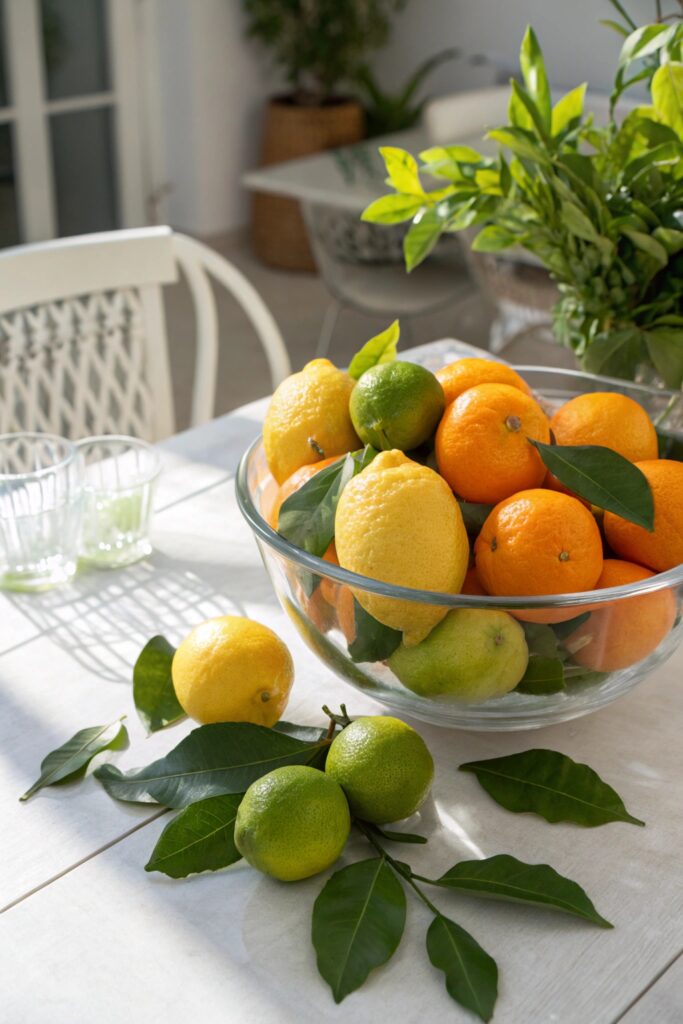
Treat real citrus as a short-term display piece rather than a week-long centerpiece, since fruit left out at room temperature for several days will soften and can attract fruit flies — faux citrus holds up considerably longer if you want the look for an extended stretch.
2. Lightweight Linen Table Runners
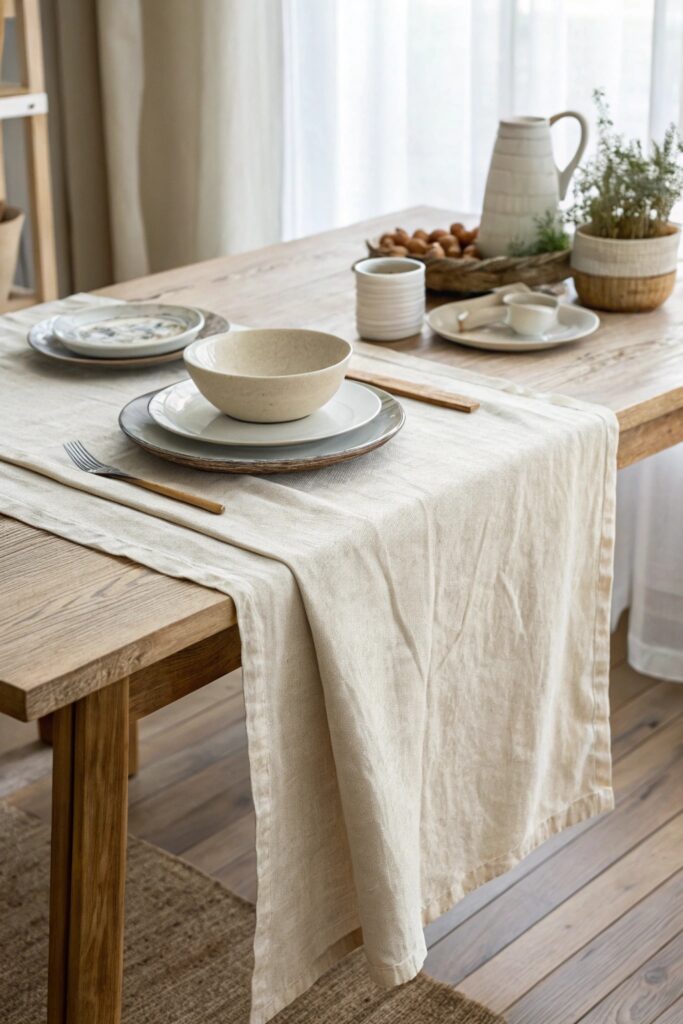
A linen-synthetic blend resists water rings and everyday wrinkling better than pure linen, which is worth choosing if this table sees regular daily use rather than occasional special-occasion styling.
3. Add Coastal-Inspired Decor Elements
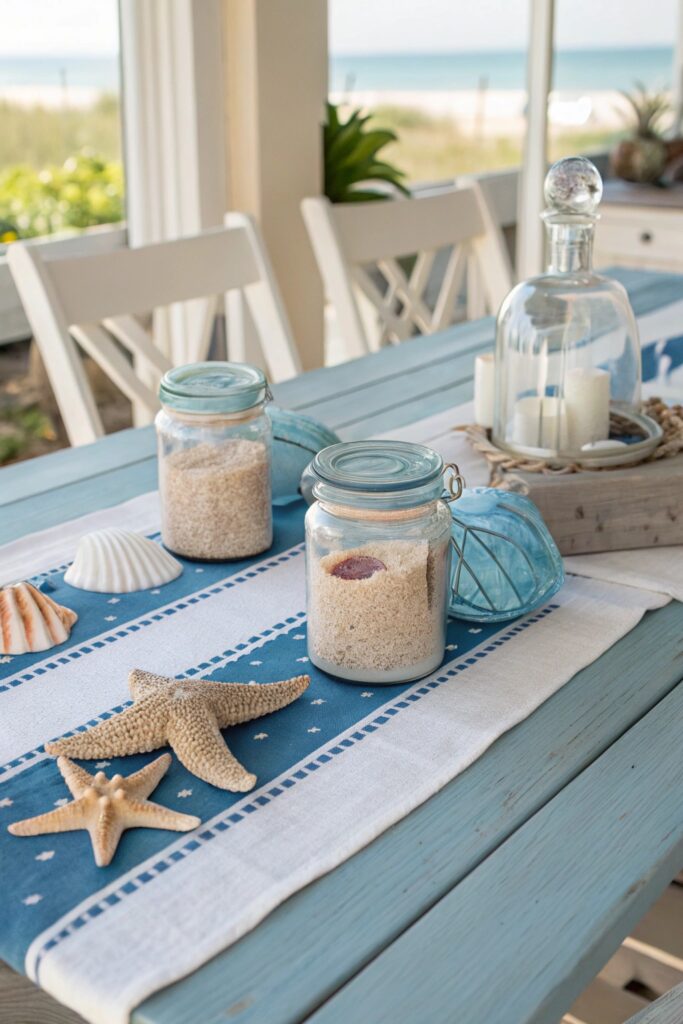
Choose smooth shells and driftwood pieces over rough or sharp-edged ones for a dining table specifically, since hands and arms rest close to these objects throughout a meal in a way they don’t near other decor.
4. Use Clear Glass Dinnerware
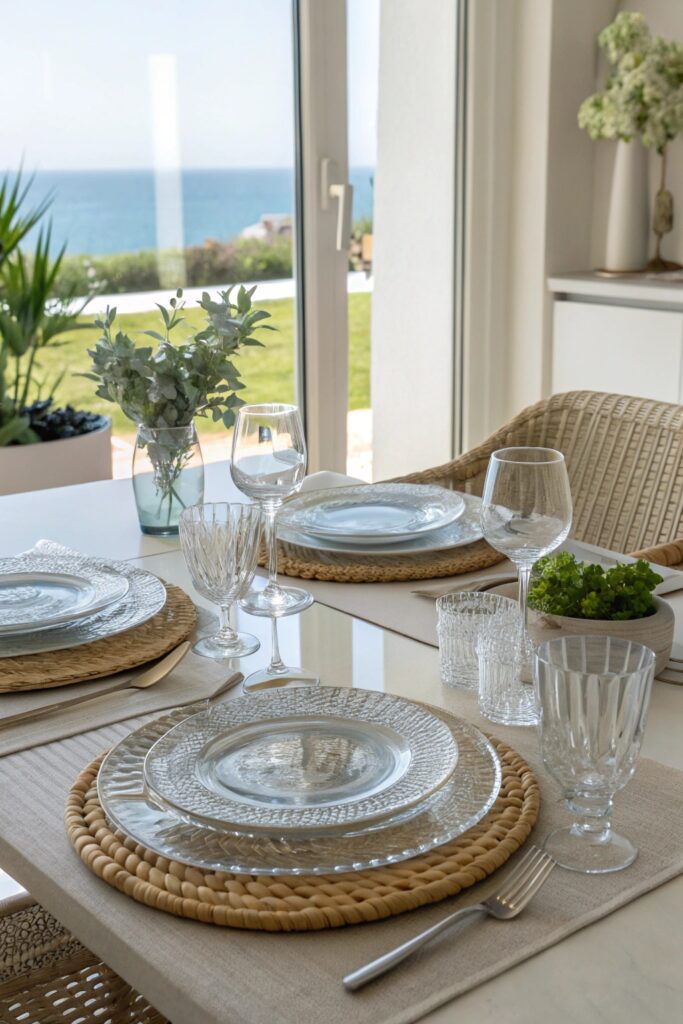
Glass shows fingerprints and water spots more visibly than ceramic given its transparency, so plan on more frequent polishing or handwashing if you want this look to stay looking crisp between uses.
5. Bring in Fresh Flowers (But Keep It Simple)
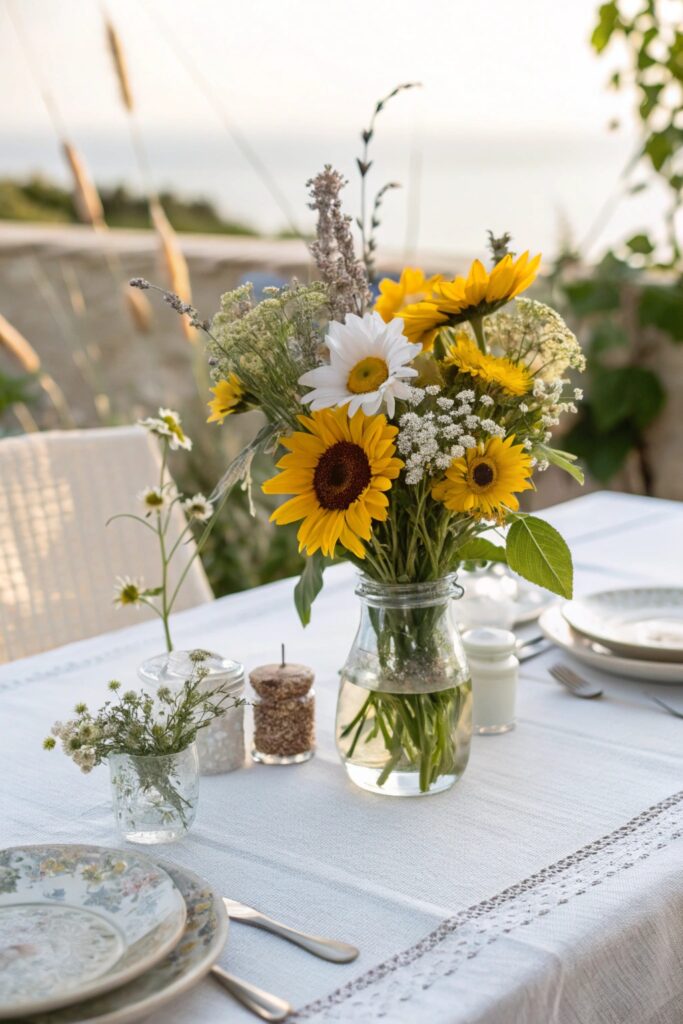
Trimming stems at an angle and changing the water every two to three days meaningfully extends vase life, and choosing low-pollen or pollen-free varieties matters more on a dining table specifically, since dropped pollen can stain a tablecloth or runner.
6. Play with Bright Napkins
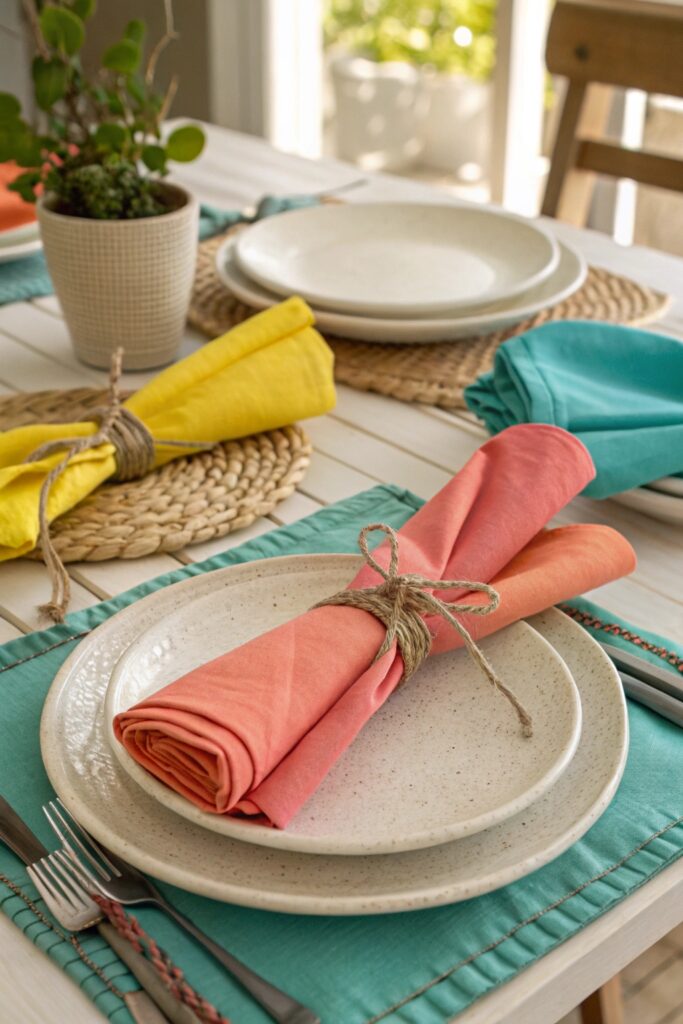
Wash new saturated-color napkins separately before their first use, since strong dyes, especially reds, can bleed onto lighter fabric rather than being reliably colorfast right out of the package.
7. Add Woven Textures for Warmth
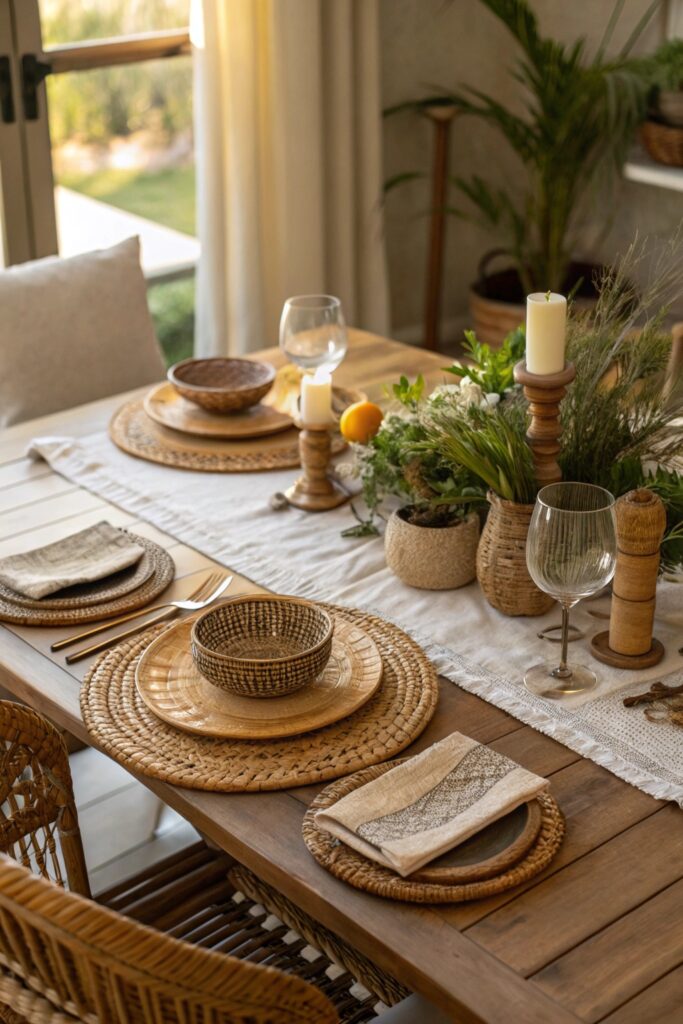
Choose placemats specifically rated for wipe-clean use rather than purely decorative natural fiber pieces, given the direct food and liquid contact a placemat sees compared to a wall-mounted accent.
8. Keep It Minimal with White-on-White
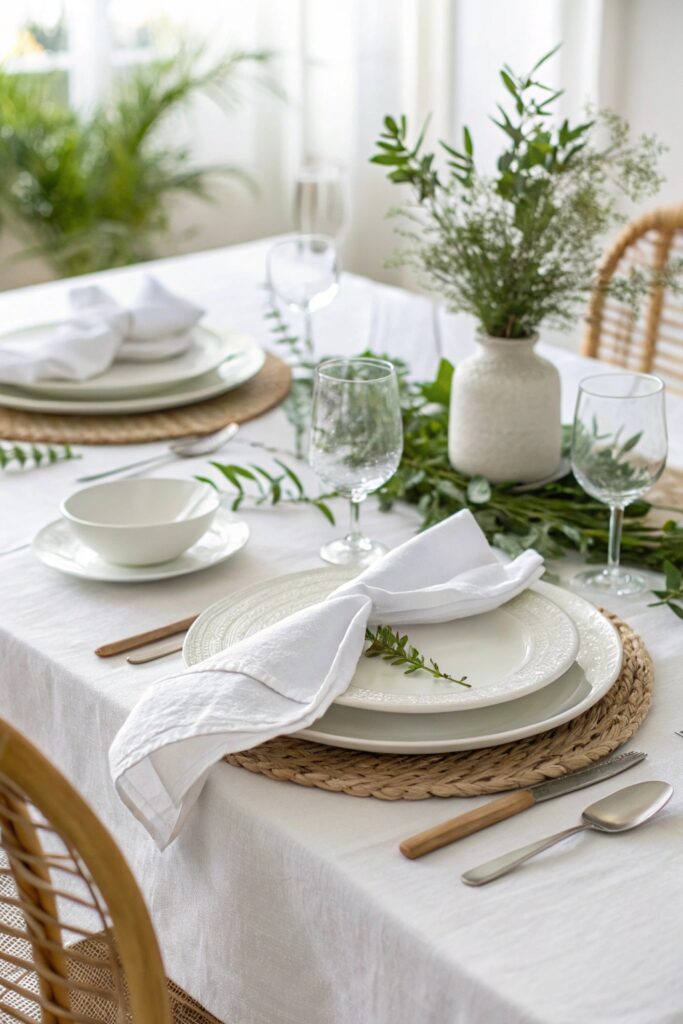
An all-white setting shows stains more visibly than any other color scheme, so it’s worth being realistic about how the look will hold up through an actual meal with guests rather than just how it photographs before anyone sits down.
9. Add Candles for Soft Summer Evenings
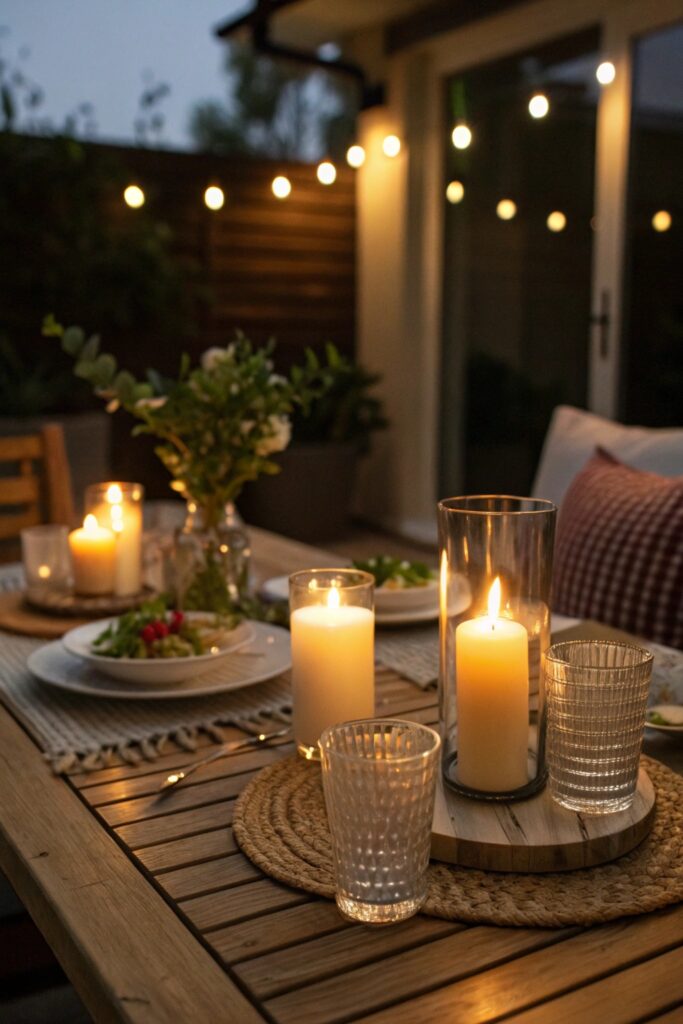
Choose a taper or pillar height that keeps the flame below eye level for seated guests, since a candle positioned right in someone’s sightline across the table becomes a distraction rather than ambiance.
10. Incorporate Seasonal Fruits as Decor
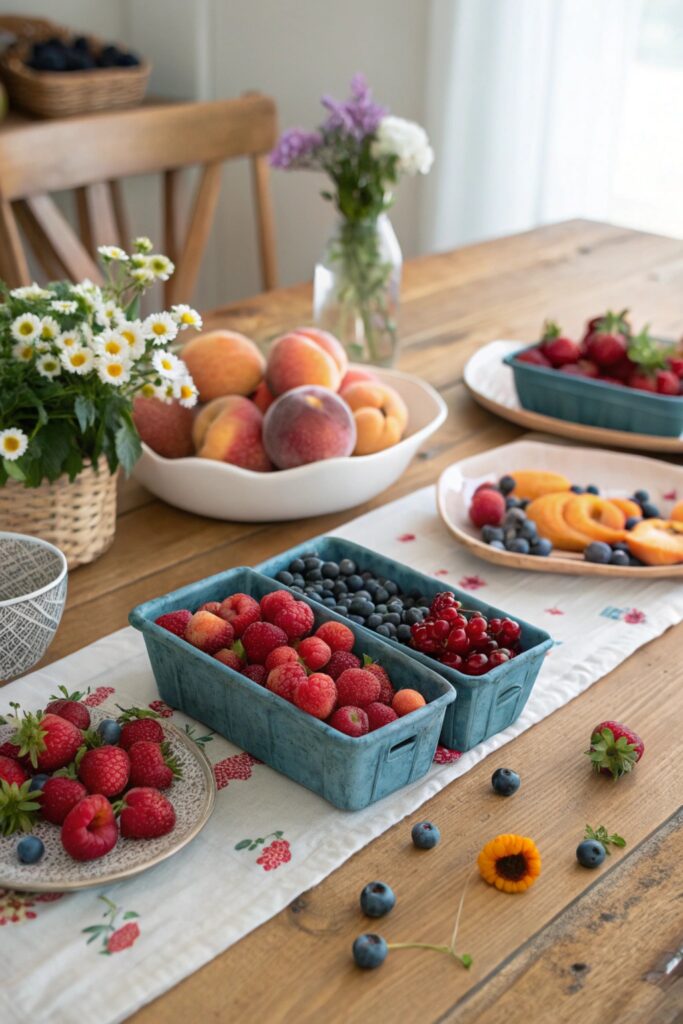
If serving food from the same table, be clear with guests about which display fruit is actually fresh and food-safe, since decorative fruit is sometimes treated with a preservative spray not meant for eating.
11. Use Outdoor-Inspired Table Settings
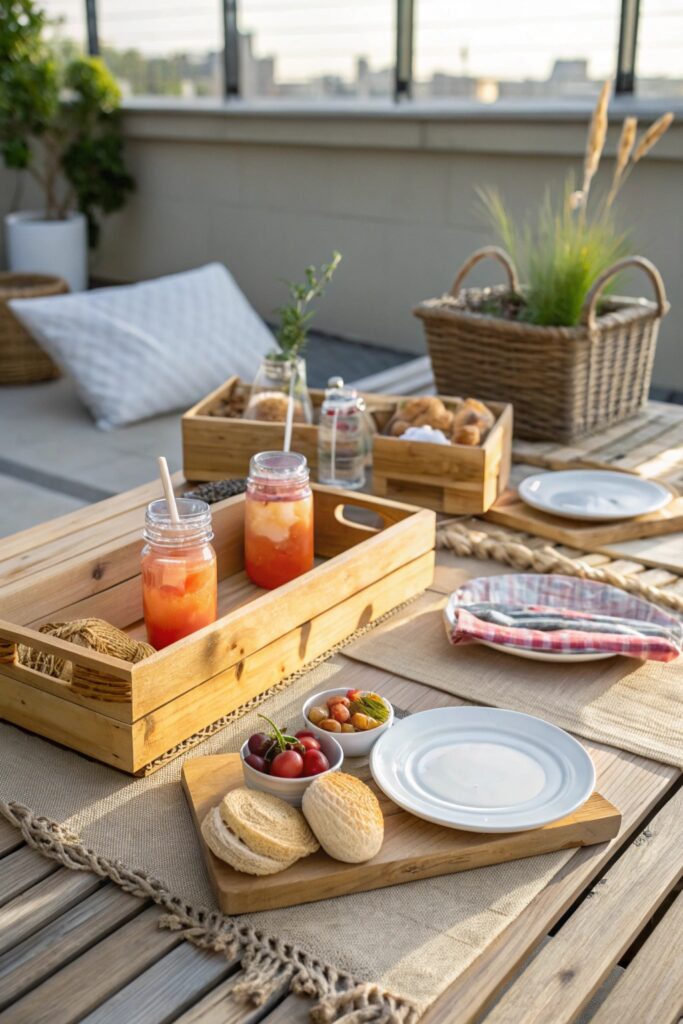
Check the care label before assuming melamine or outdoor-style dinnerware handles the dishwasher or microwave the same way standard ceramic does, since many outdoor pieces aren’t rated for either despite the similar look.
12. Mix and Match for a Relaxed Look
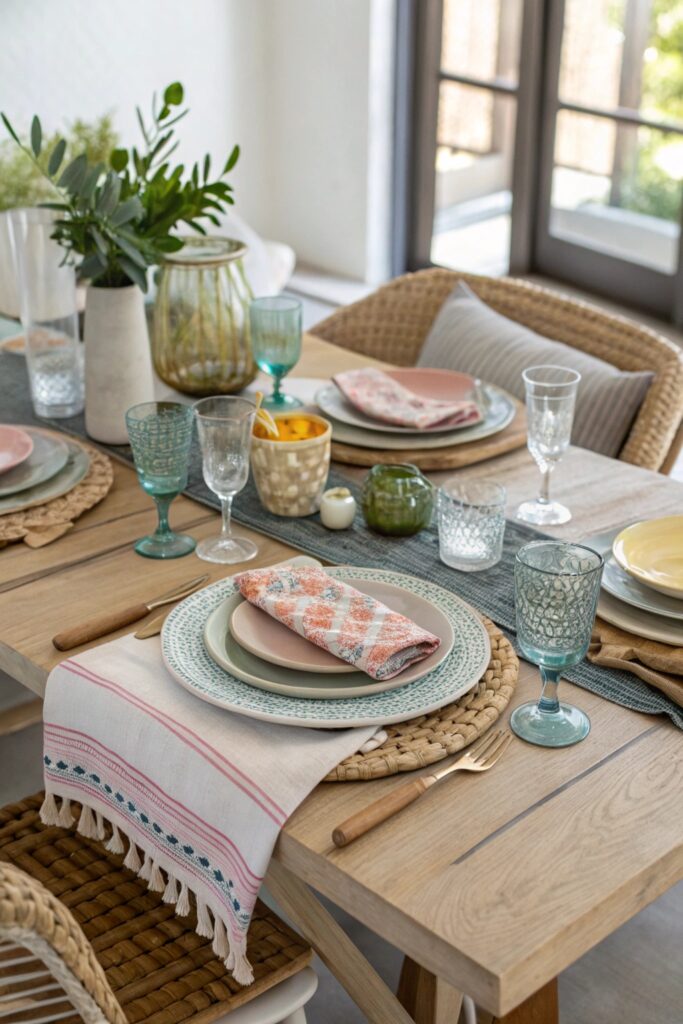
Keeping one consistent element, like a shared color palette or material, across otherwise mismatched pieces helps an eclectic table read as intentional rather than simply unplanned.
Sizing Your Centerpiece to the Table
A centerpiece taller than 12 to 14 inches tends to block sightlines across a standard dining table, making conversation harder for guests seated across from each other — worth keeping taller arrangements for a buffet or console table instead.
Leaving at least a few inches of clearance between the centerpiece and each place setting keeps the table from feeling cramped once plates, glasses, and serving dishes are actually in use.
What a Summer Table Refresh Costs
A simple update using items you already own, plus a few new accent pieces, typically costs $30 to $100.
A fuller refresh including new dinnerware, linens, and a statement centerpiece runs higher, often $150 to $400 depending on the pieces chosen.
Setting Up for Outdoor or Al Fresco Dining
If your summer table setting is on a patio or deck, lightweight linens and paper elements need real weighting or clips to keep them in place, since even a light breeze can send an unweighted runner or napkin across the yard mid-meal.
Citronella candles or a nearby diffuser help manage bugs without relying on synthetic sprays directly at the table, which matters more for an outdoor summer setting than it does indoors.
Coordinating With the Rest of the Room
Pulling one or two colors from your dining room’s existing decor into the table setting, rather than introducing an entirely new palette, helps the seasonal refresh feel like part of the room rather than a separate layer on top of it.
If your dining space connects visually to the kitchen or living room, keeping the summer table styling loosely consistent with what’s happening in those adjacent spaces avoids a jarring transition between rooms.
Starting with a smaller number of pieces and building the look gradually over a few gatherings tends to result in a more considered table than trying to source everything at once, since it gives you time to notice what actually gets used and what stays packed away.
A well-set summer table tends to become part of the memory of a gathering, so it’s worth spending the extra few minutes getting the details right for occasions that matter to you, even if a simpler everyday setup is more practical for the rest of the season.
Storing seasonal linens, dinnerware, and decor pieces in a labeled bin between uses makes next year’s setup considerably faster than starting over, and it protects delicate items like glass or ceramic from damage during the months they’re not in use.
A summer dining table doesn’t need to be reinvented every single week — refreshing just one or two elements, like swapping the centerpiece or changing the napkin color, keeps the space feeling current without requiring a full restyle every time you host.
Conclusion
Testing your table setting with an actual meal before a larger gathering — not just styling it empty for photos — reveals problems no amount of visual planning catches, like a centerpiece blocking sightlines or a runner that shows every water ring.
Whichever combination of these ideas fits your table, choosing materials that hold up to real use tends to serve a summer of regular meals and gatherings better than a setup designed purely around how it looks before anyone sits down.