
Black and rust work together because they sit on opposite ends of the color wheel in terms of warmth, and balancing how much of each color appears in a room determines whether it reads as moody or genuinely warm.
Below are 11 ways to combine these colors, with practical notes for each.
1. Black Feature Wall with Rust Sofa
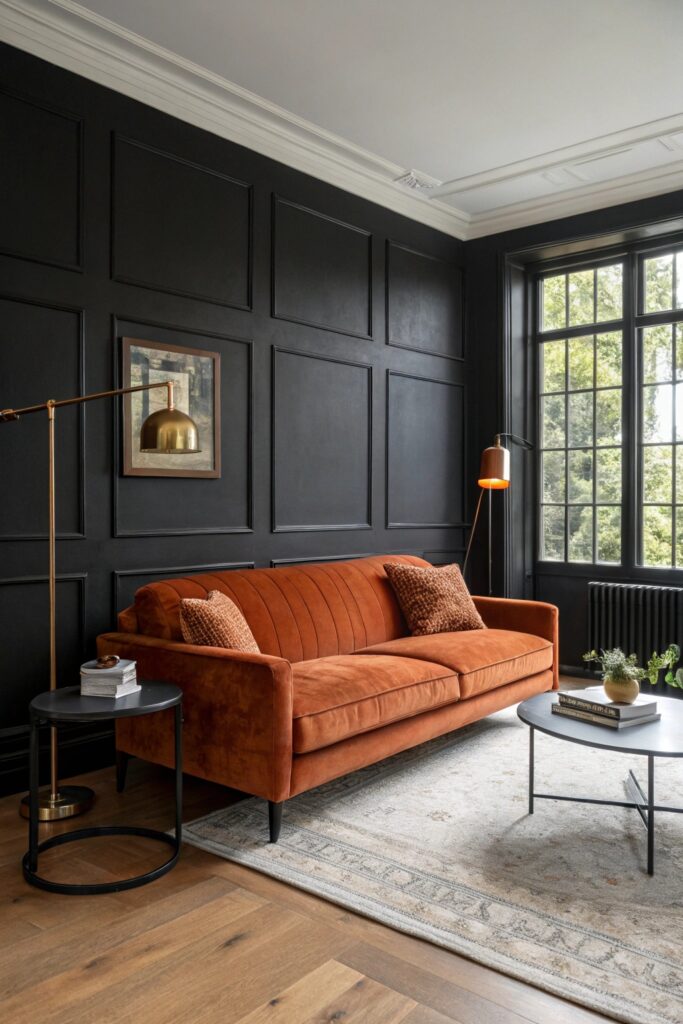
A single black wall behind the seating area gives the rust sofa genuine contrast to stand out against, without committing to a fully dark room.
Choose a genuinely deep, matte black paint for the wall specifically, since a glossy finish can read as harsher than intended under normal room lighting.
2. Rust Walls with Black Furniture
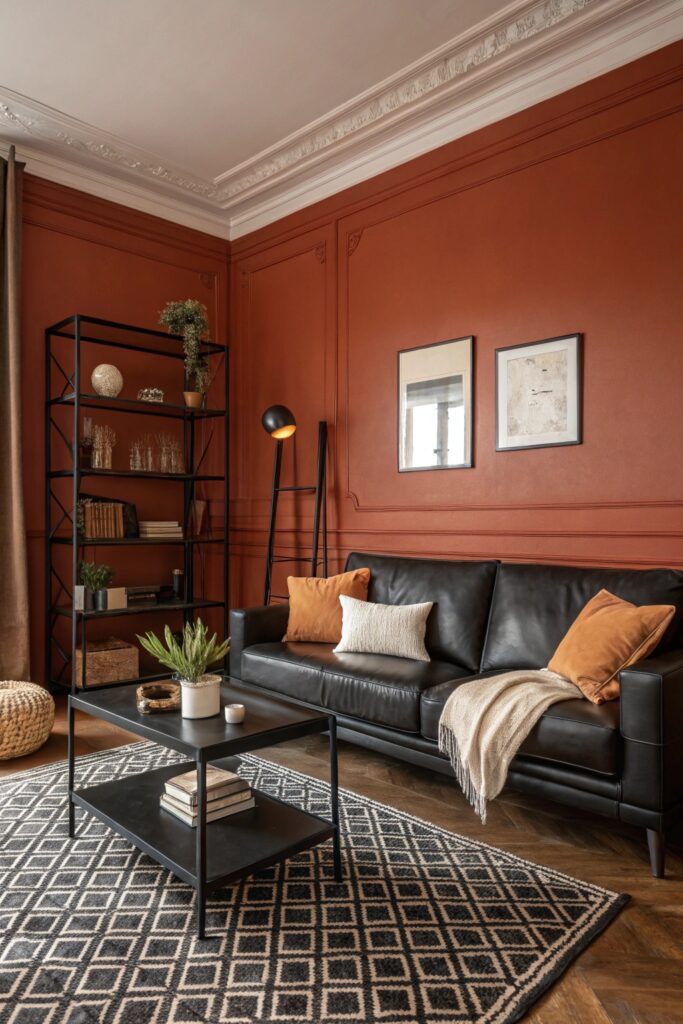
Reversing the usual approach — rust on the walls, black in the furniture — creates a genuinely warmer overall room since the larger surface area carries the warmer tone.
This layout works especially well in a room that gets ample natural light, since the lighter wall color helps prevent the space from feeling too enclosed.
3. Black and Rust with Natural Wood Accents
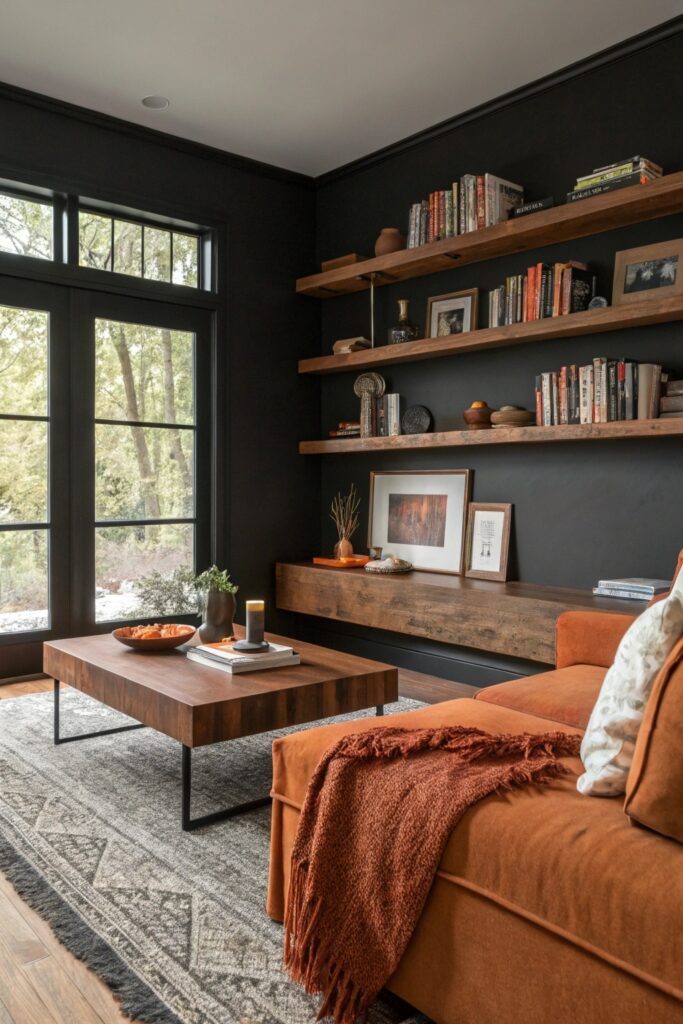
Wood tones bridge the gap between black’s coolness and rust’s warmth, softening what could otherwise be a fairly high-contrast pairing.
Choose wood in a mid-to-warm tone rather than a cool gray-washed finish, which pairs more naturally with rust’s inherent warmth.
4. Rust Velvet Armchairs with Black Sofa
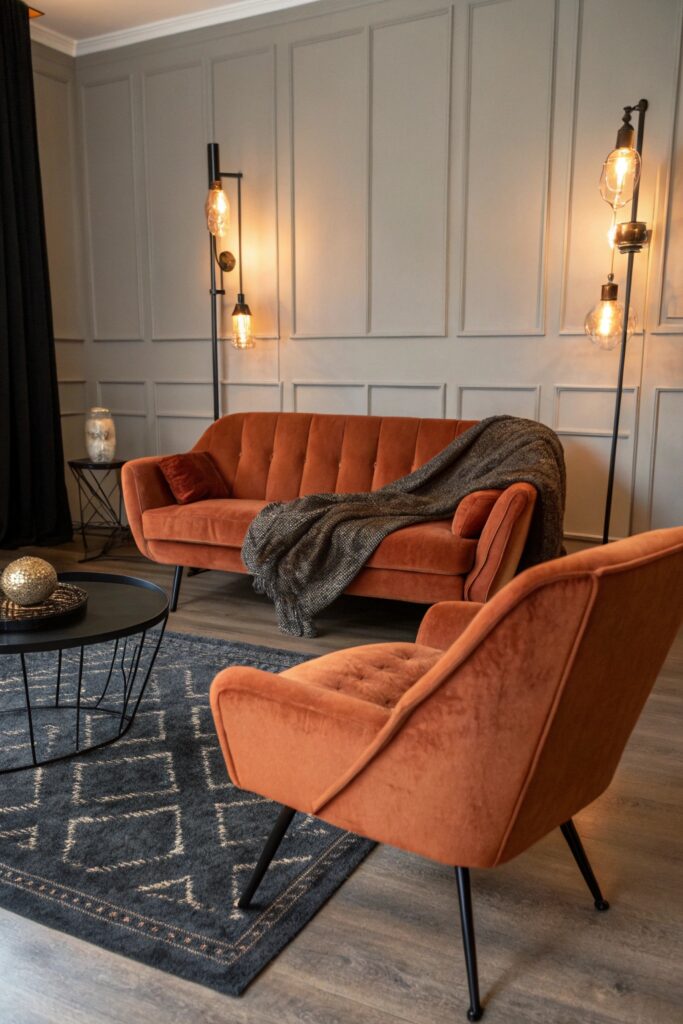
Velvet specifically adds a genuine richness to the rust tone that a flatter fabric wouldn’t achieve, working well as an accent chair pairing.
Confirm the velvet is a genuinely durable weave if the chairs will see daily use, since some velvet blends crush and show wear faster than others.
5. Black and Rust with Cream and White Neutrals
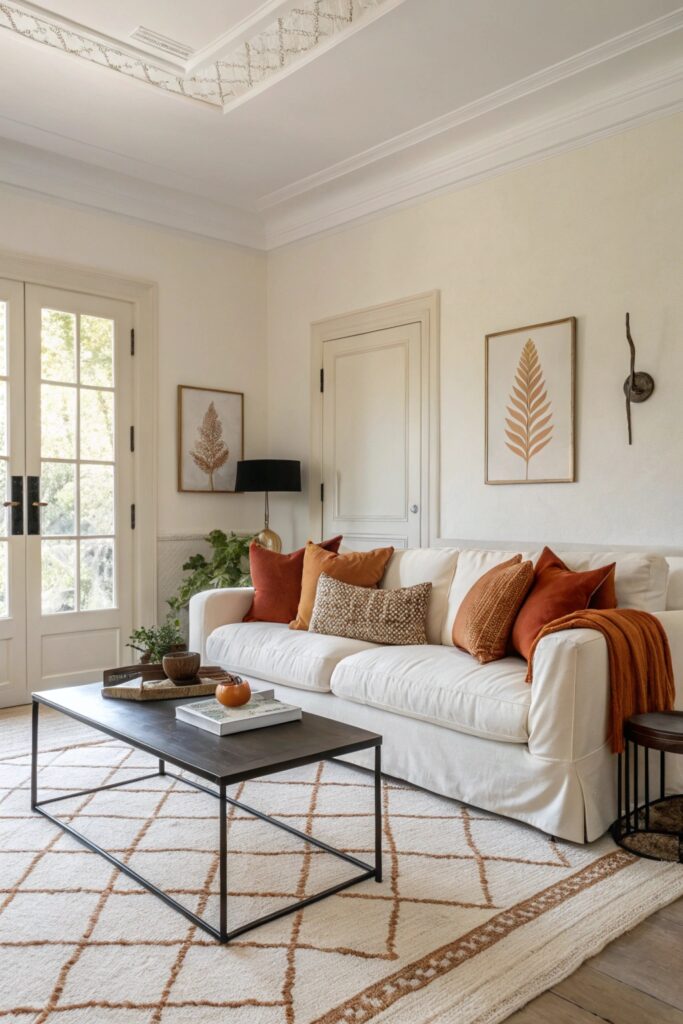
Adding a genuinely light neutral base keeps this bold color pairing from feeling heavy, giving the eye some visual rest between the two saturated tones.
Keep the neutral tones warm rather than stark white, which helps them blend with rust more naturally than a cooler white would.
6. Industrial Black and Rust Living Room
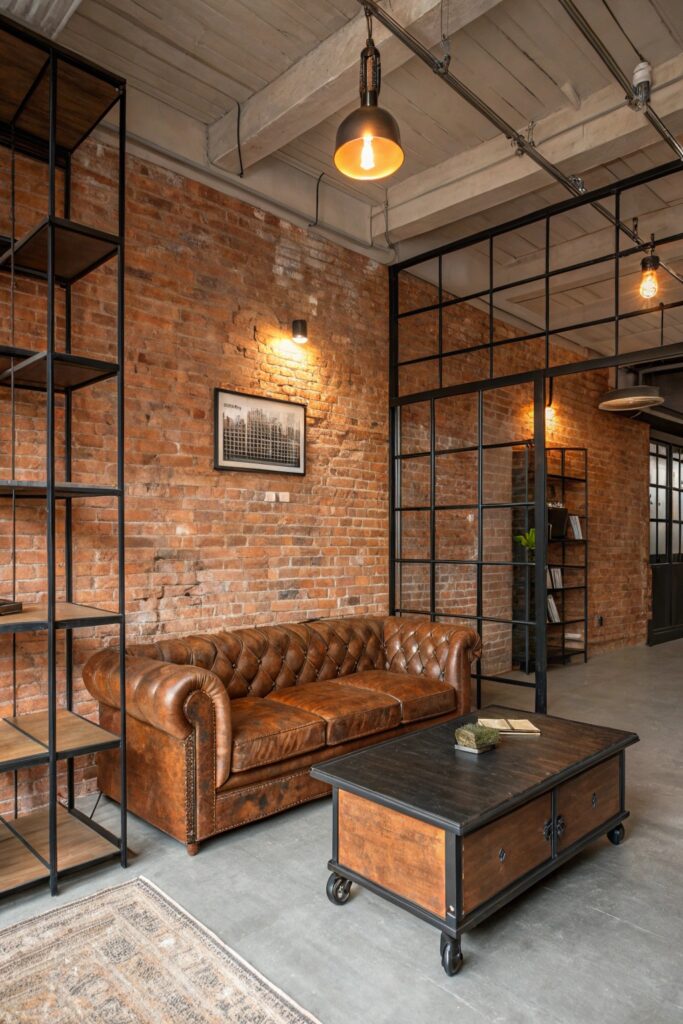
Exposed metal, black iron fixtures, and rust leather furniture lean into this pairing’s naturally weathered, slightly worn quality.
Leather in a genuinely aged or distressed finish suits this style better than a smooth, new leather look.
7. Rust and Black Bohemian Living Room
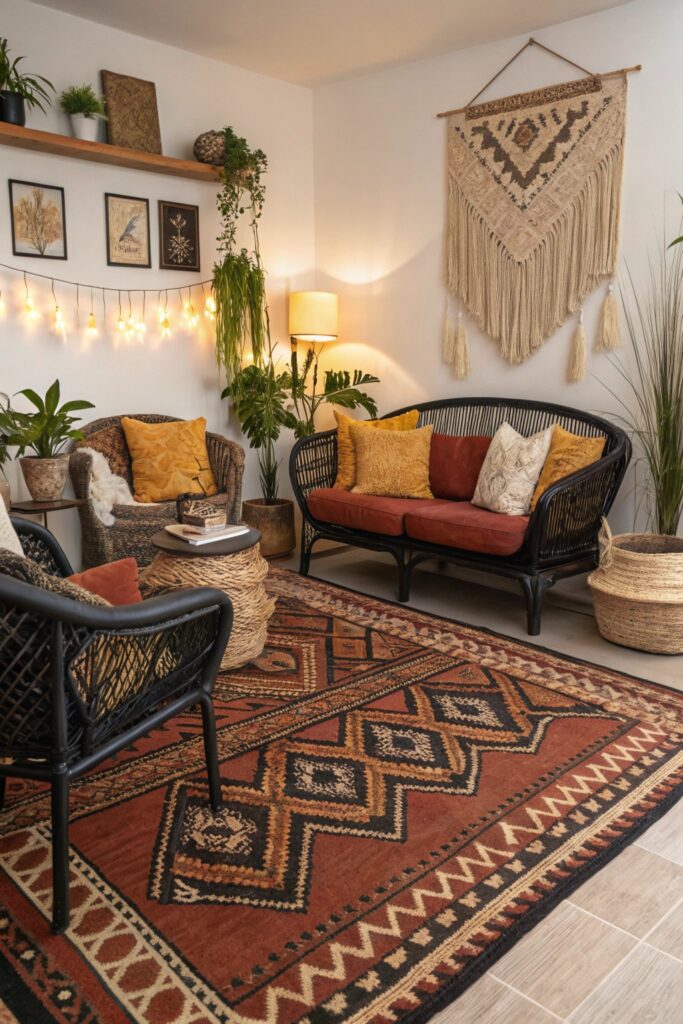
Layered textiles and mixed patterns in these two colors create genuine visual richness that suits a more maximalist, collected room.
Choose patterns that share at least one color note across pieces, which keeps a heavily layered room feeling cohesive rather than random.
8. Minimalist Black and Rust Living Room
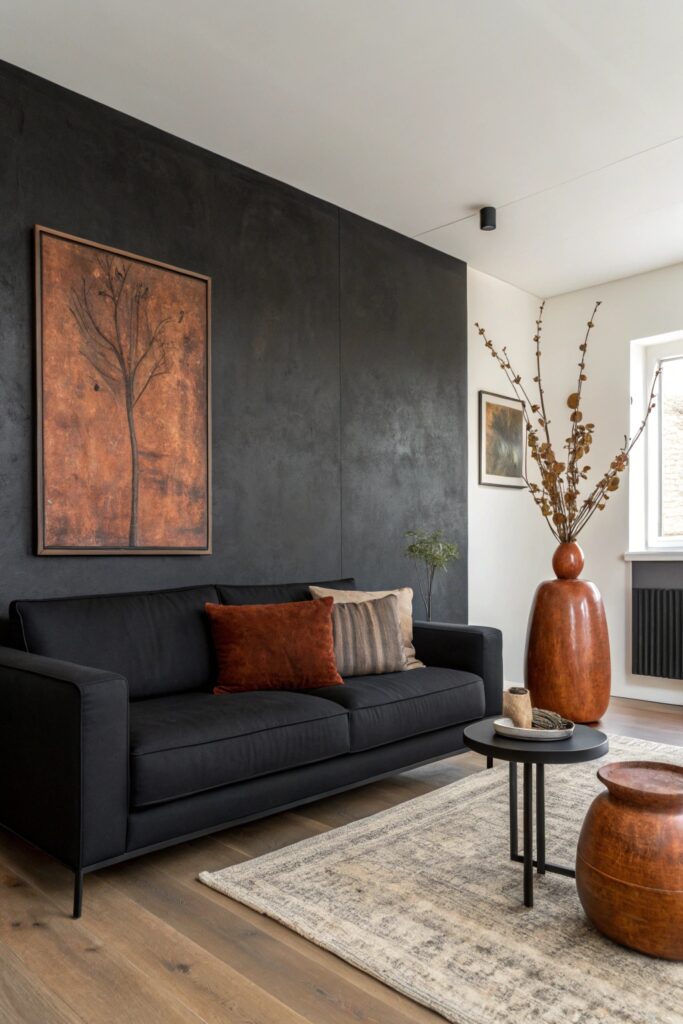
Limiting the room to just a few pieces in each color lets the pairing read as genuinely intentional rather than needing many objects to carry the theme.
Stick to just two or three total pieces in each color, which is what keeps a minimalist room from needing more objects to read as intentional.
9. Black and Rust with Dark Green Plants
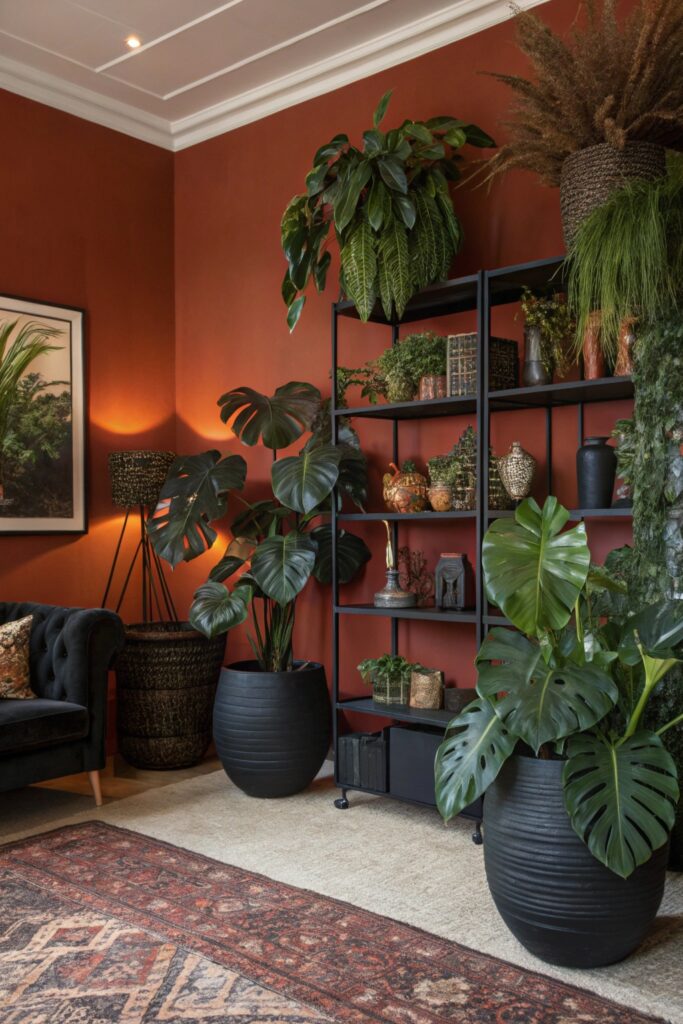
Deep green foliage adds a third genuine color note that complements both black and rust without disrupting the room’s overall warm-cool balance.
Choose plants with genuinely deep, matte foliage rather than glossy leaves, which tend to suit this color palette’s overall moodier tone better.
10. Rust Rug as the Starting Point
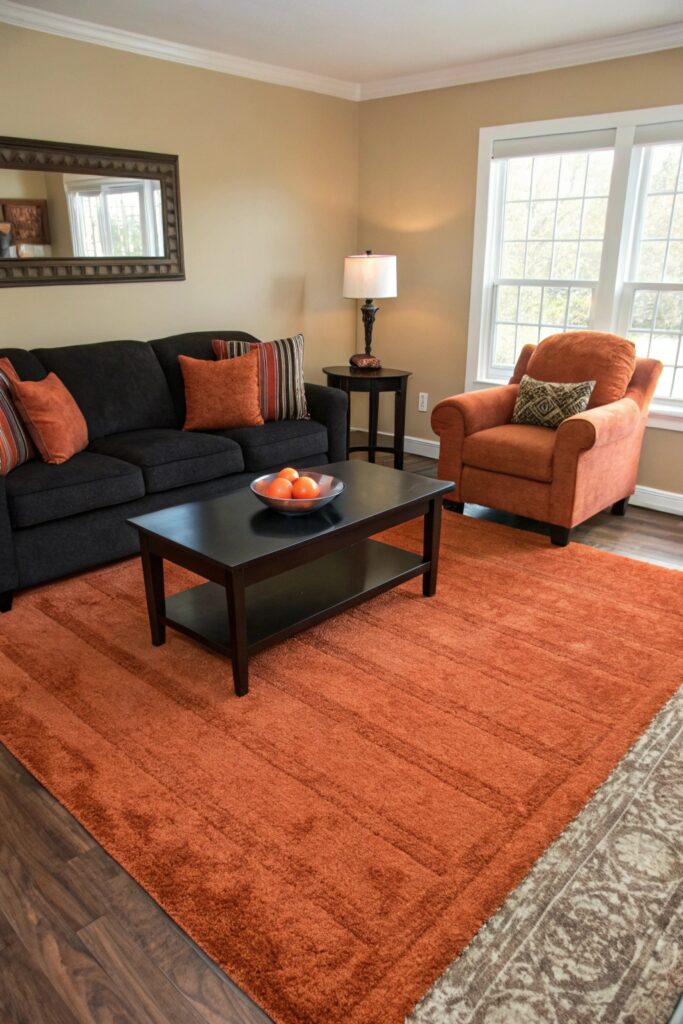
Building the rest of the room’s palette around an existing or planned rust rug is often easier than trying to match a rug to furniture chosen first.
Look for a rug with genuine texture variation, like a hand-knotted weave, which adds more visual interest than a flat printed alternative.
11. Black Ceiling with Rust Walls for Maximum Drama
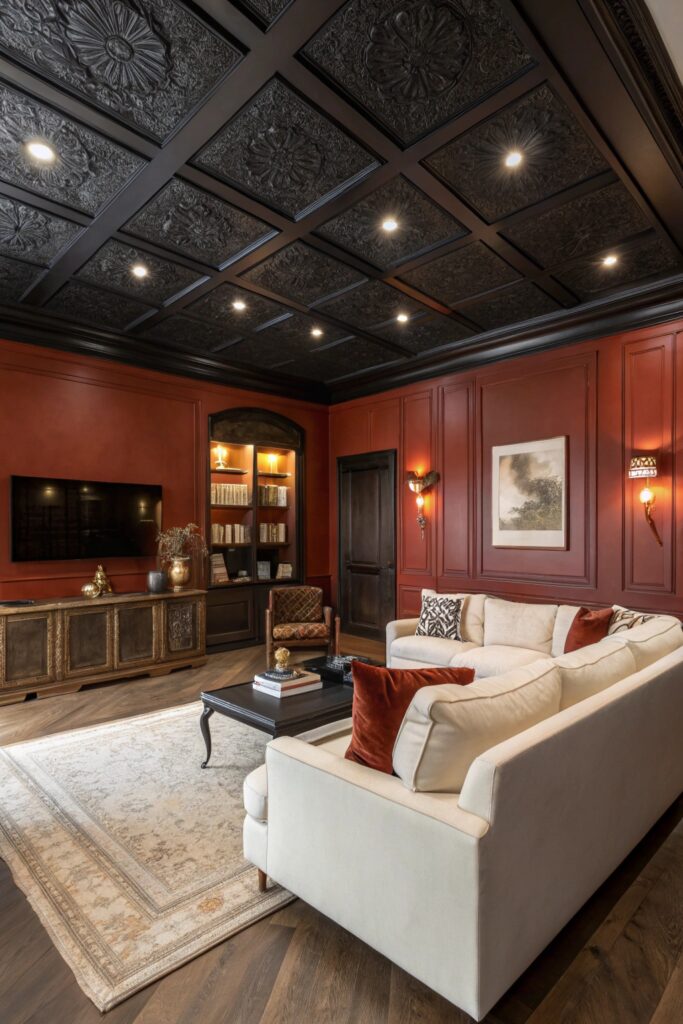
A painted black ceiling genuinely lowers the perceived height of a room, which works best in a space with already generous ceiling height to spare.
Finding the Right Balance
A useful starting ratio is roughly 60% neutral, 30% black, and 10% rust, using the smaller amount of rust as an accent rather than an equal partner to black.
From there, you can shift the balance toward more black for a moodier room or more rust for a warmer one, depending on which direction suits your space and natural light.
What This Room Costs
A few accent pieces — pillows, a throw, a small chair — can introduce this palette for $150 to $400.
A larger commitment like a sofa, an area rug, and an accent wall typically runs $1,500 to $4,000 depending on furniture quality and whether you’re painting or hiring it out.
Lighting Matters More Here Than Usual
Both black and rust absorb more light than lighter colors, so a room built around this palette often needs more layered lighting than a lighter, brighter room would.
A combination of overhead lighting, a floor lamp, and a table lamp genuinely helps prevent the space from feeling dim once the sun goes down, which matters more here than in a room with a lighter base palette to reflect available light.
Warm-toned bulbs specifically, rather than a cooler white light, help the rust tones read as genuinely warm rather than muddy once evening lighting takes over from natural daylight.
Start with a single piece — a rust throw pillow or a small accent chair — before committing to paint or a full furniture change, which lets you live with the pairing for a while and confirm it actually suits your space.
Secondhand furniture is worth checking specifically for leather and velvet pieces in these colors, since older items often already have the slightly worn, richer patina that suits this palette better than something brand new.
Live with the room for a couple of weeks before adding more pieces, since it’s easier to judge what the space genuinely needs once you’ve spent real time in it under different lighting throughout the day.
Conclusion
The ratio between black and rust matters more than any specific furniture choice, since leaning too heavily on black alone can make a room feel cold despite the warmer accent color. Test paint and fabric samples together in your actual room’s lighting before committing, since both colors can shift considerably under different light sources.