
This guide covers different bar styles and formats to choose from. Once you’ve picked a direction, see our companion guide to home lounge bar ideas for the functional elements — lighting, storage, cocktail stations — that make any of these styles actually work well.
Below are 10 bar formats worth considering, with practical notes for each.
1. The Built-In Back Bar With Open Shelving
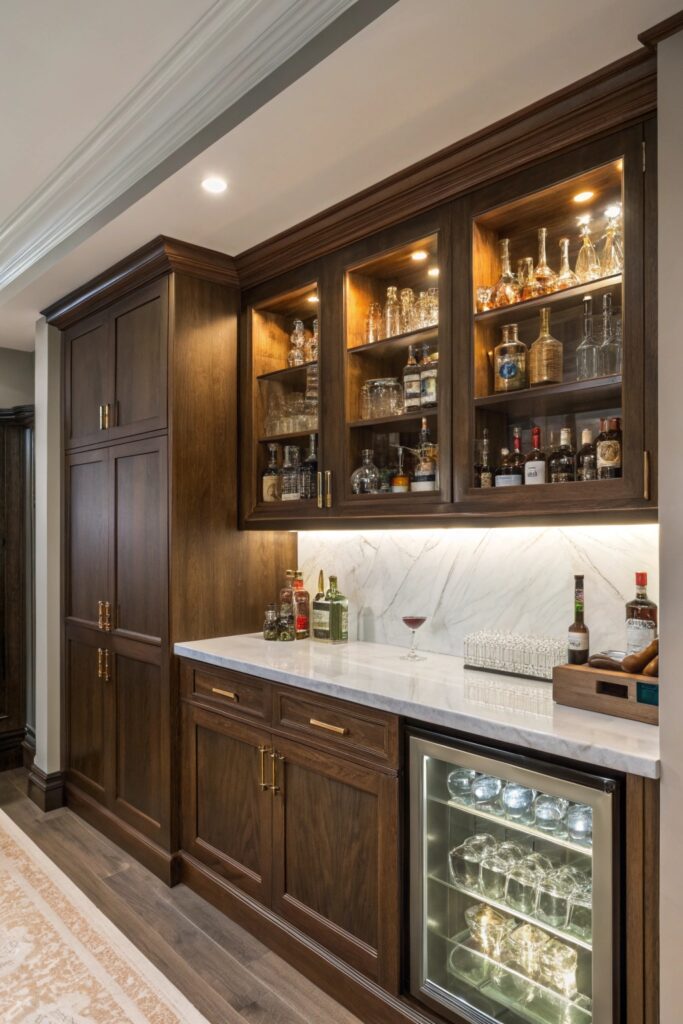
A built-in setup makes the most permanent use of a dedicated wall, working well if you’re genuinely committed to hosting regularly in this specific spot.
Confirm the wall you’re building against can handle the plumbing or electrical work involved if you’re adding a sink or under-counter fridge, since this is more involved than a purely cosmetic build.
2. The Freestanding Bar Cabinet
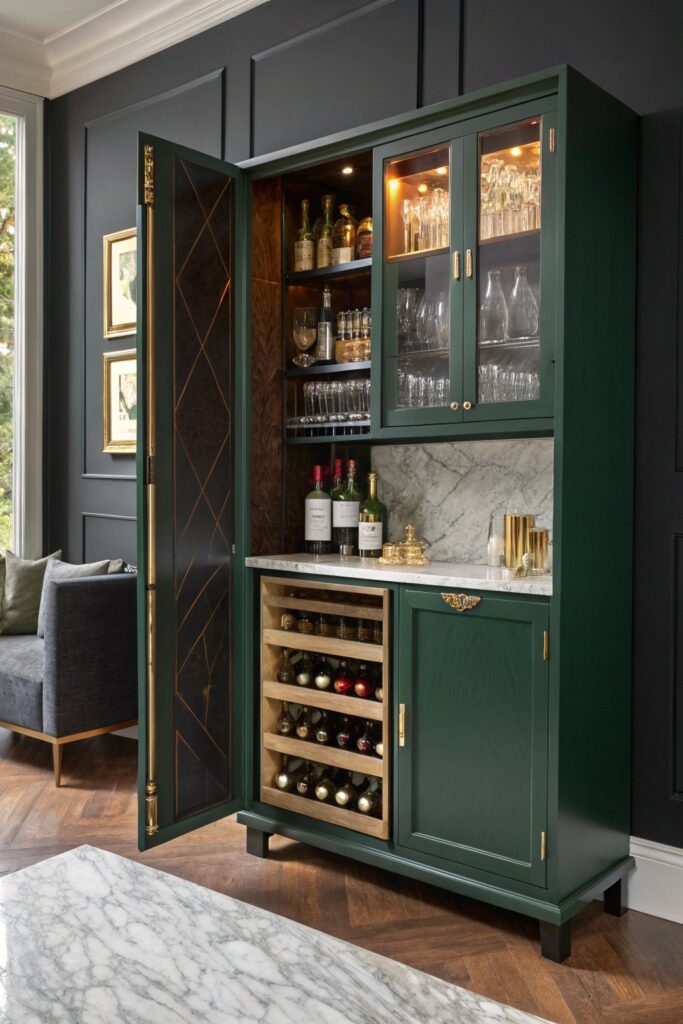
A cabinet that closes fully keeps bottles and glassware out of sight when not in use, which matters in a room that serves other purposes beyond entertaining.
Choose a cabinet with genuinely sturdy hinges and hardware, since a fully loaded bar cabinet is heavier than most furniture pieces its size.
3. The Dedicated Bar Cart Setup
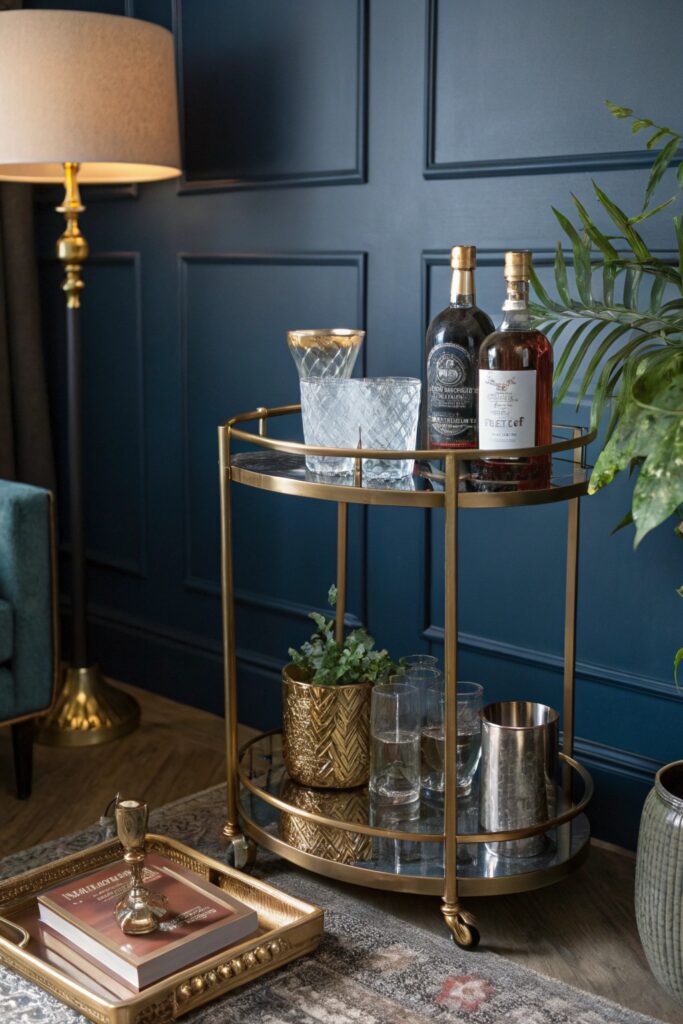
A cart’s mobility is a genuine advantage over fixed furniture, letting you move the whole setup to wherever guests are actually gathering.
Look for a cart with locking wheels specifically, which keeps it from rolling unexpectedly once you’ve set it up in a chosen spot.
4. The Industrial Pipe and Wood Shelving Bar
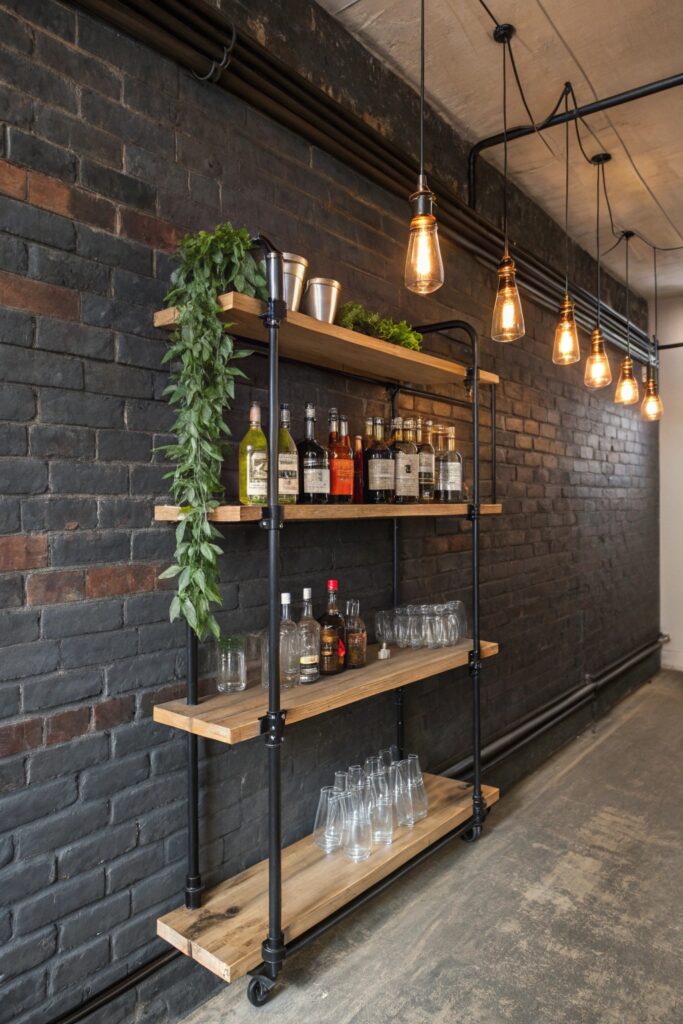
Exposed pipe fittings and reclaimed wood bring genuine texture, working especially well in a room that already leans toward a more industrial aesthetic.
Choose pipe fittings rated for genuine load-bearing use if the shelving will hold anything heavier than a few bottles, since decorative fittings aren’t always structurally rated for that purpose.
5. The Marble and Brass Luxe Bar Corner
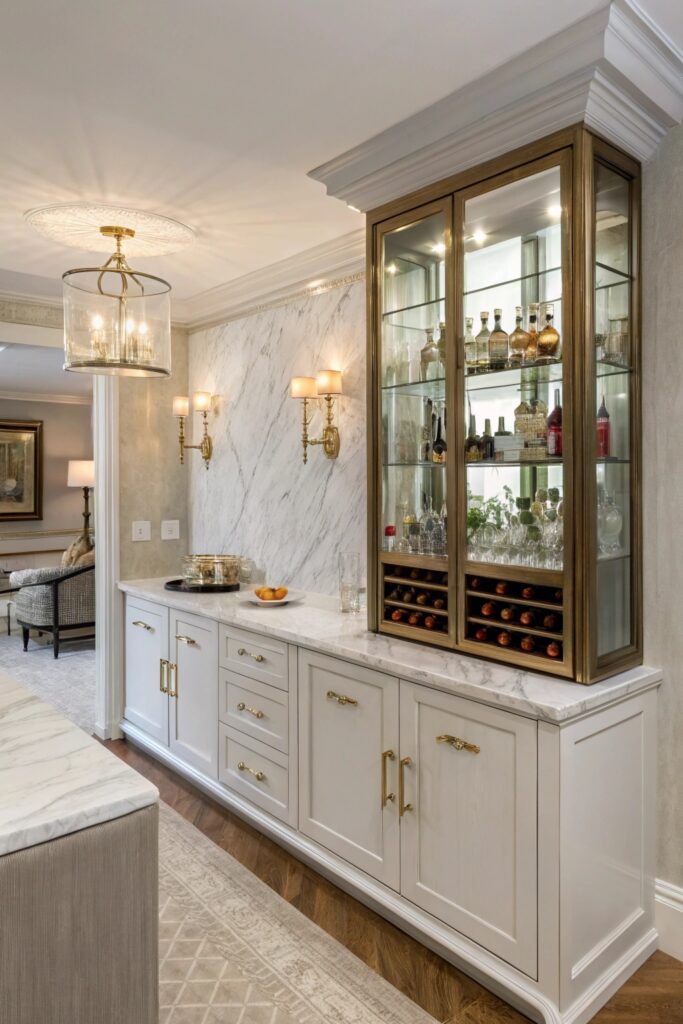
Marble specifically needs sealing to resist staining from spilled drinks, which is worth budgeting into this style’s genuinely higher-end material choice.
Choose a marble with a honed rather than polished finish specifically, which shows water spots and etching less visibly than a glossier surface.
6. The Vintage Saloon-Style Home Bar
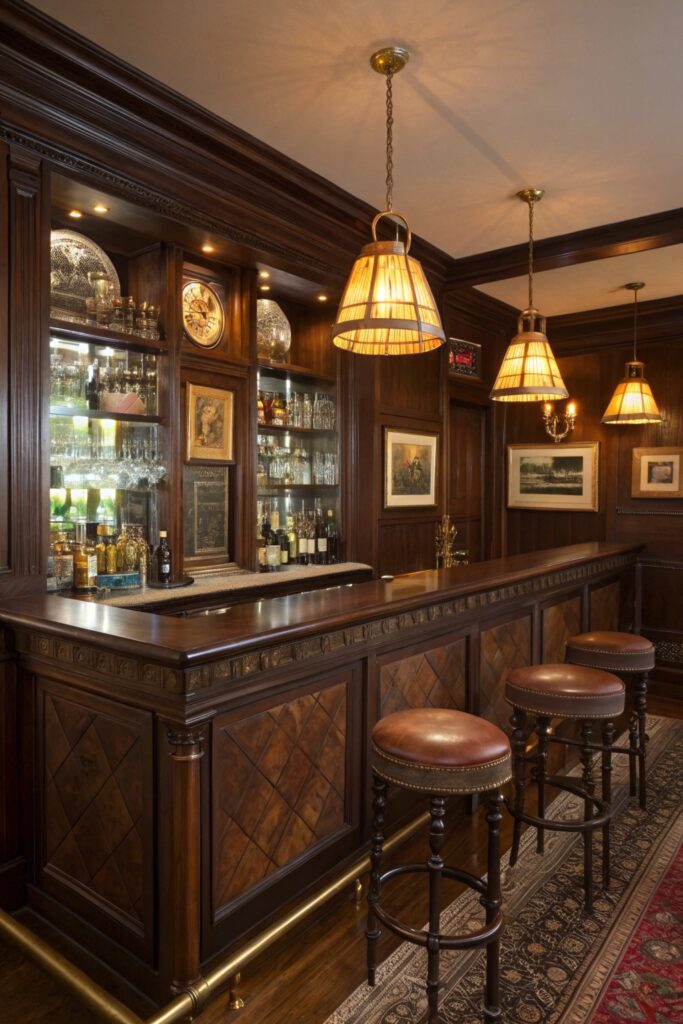
Salvaged wood and aged hardware bring genuine character to this style, which is difficult to replicate with new materials alone.
Look for salvaged wood specifically from a reclamation yard rather than new wood distressed to look old, which tends to read as more authentic.
7. The Sleek Modern Minimalist Bar
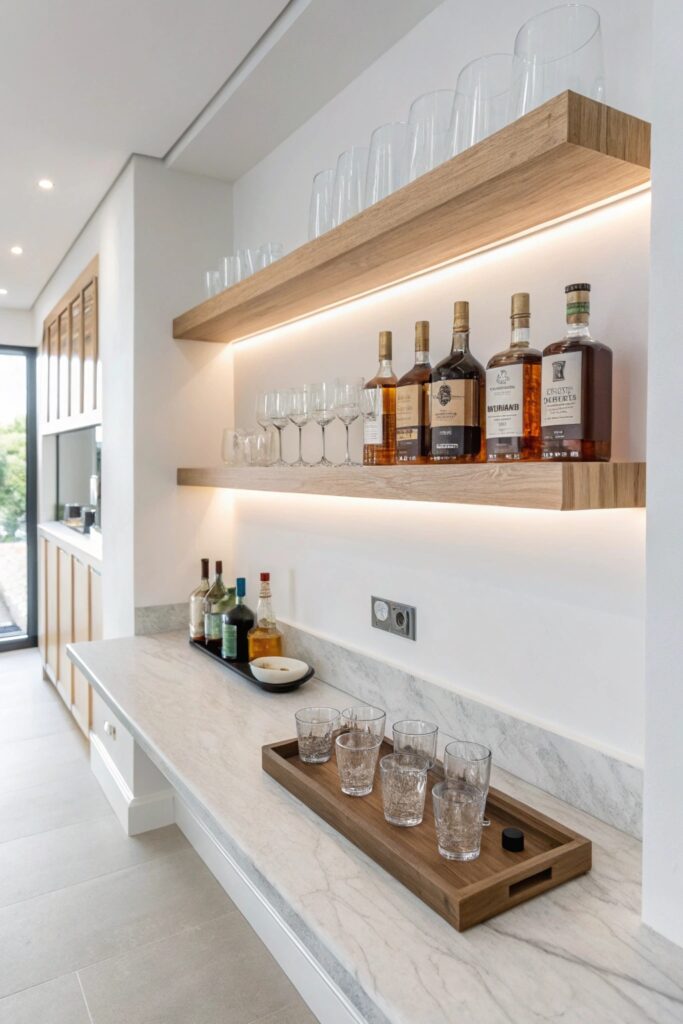
Keeping the visible bottle count genuinely low is what separates this style from a cluttered display, so plan on storing the bulk of your collection out of sight.
Choose glassware and bottles in a genuinely coordinated style if they’ll be visible, since a minimalist bar shows mismatched pieces more obviously than a busier display would.
8. The Lounge Bar With Dedicated Cocktail Seating
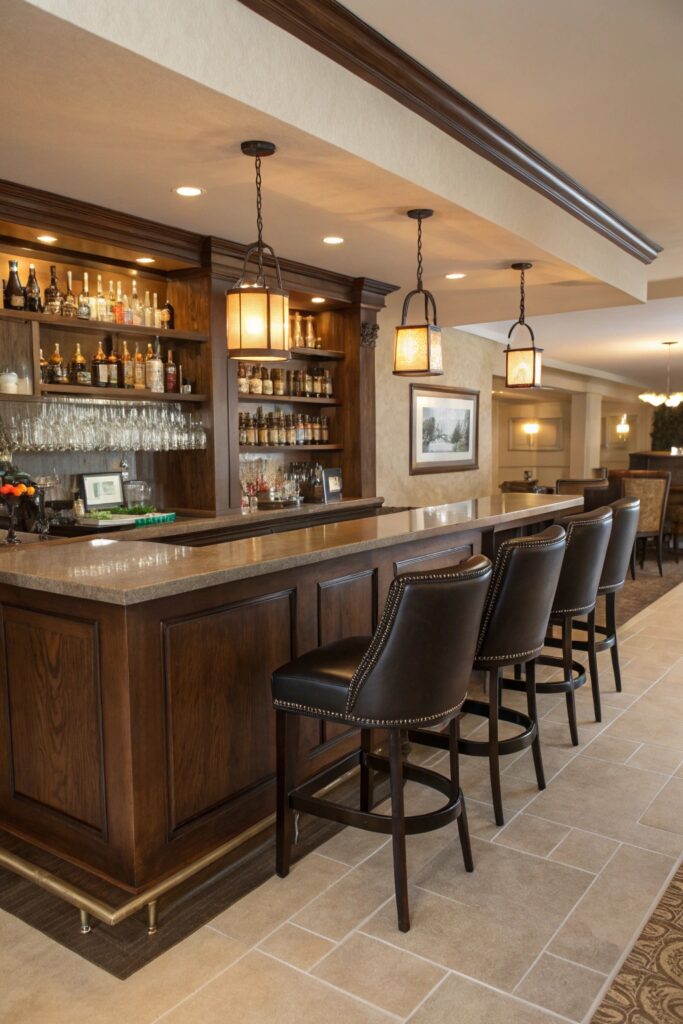
A couple of stools or a small seating cluster genuinely turns the bar into a destination within the room, rather than just a serving station guests walk past.
Choose seating that’s comfortable for genuinely extended use, since guests tend to linger near a bar longer than they would at a standard dining table.
9. The Hidden or Concealed Bar
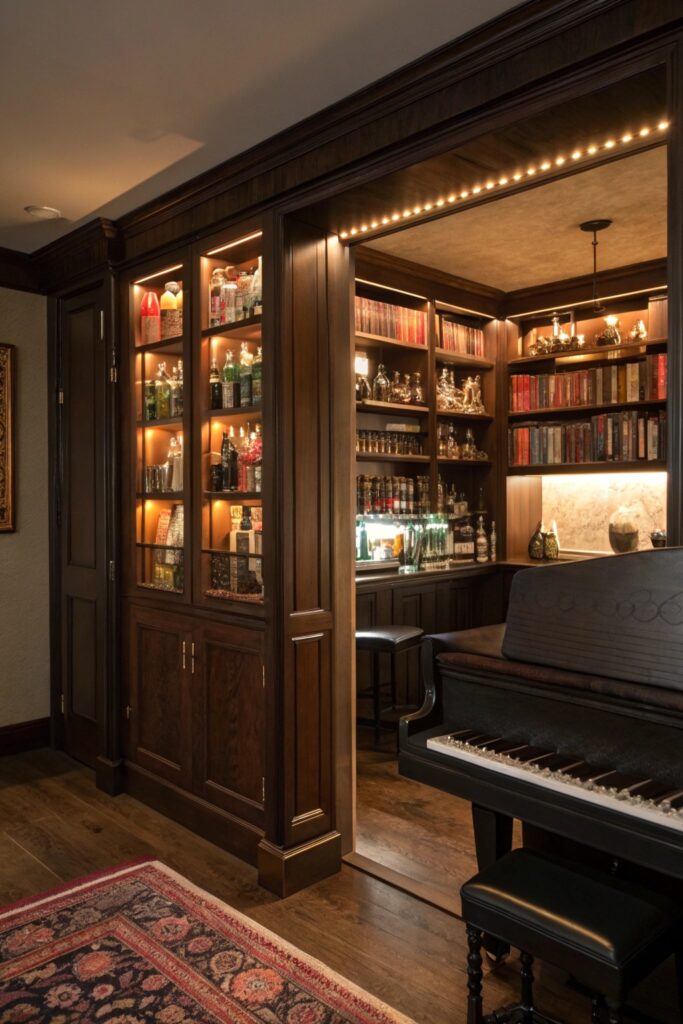
A bar disguised as a bookshelf or cabinet works best in a room where you genuinely want the space to read as something else most of the time.
Confirm the concealment mechanism is genuinely easy to open and close, since a bar that’s a hassle to access tends to go unused regardless of how clever the hidden design is.
10. The Outdoor-Adjacent Lounge Bar
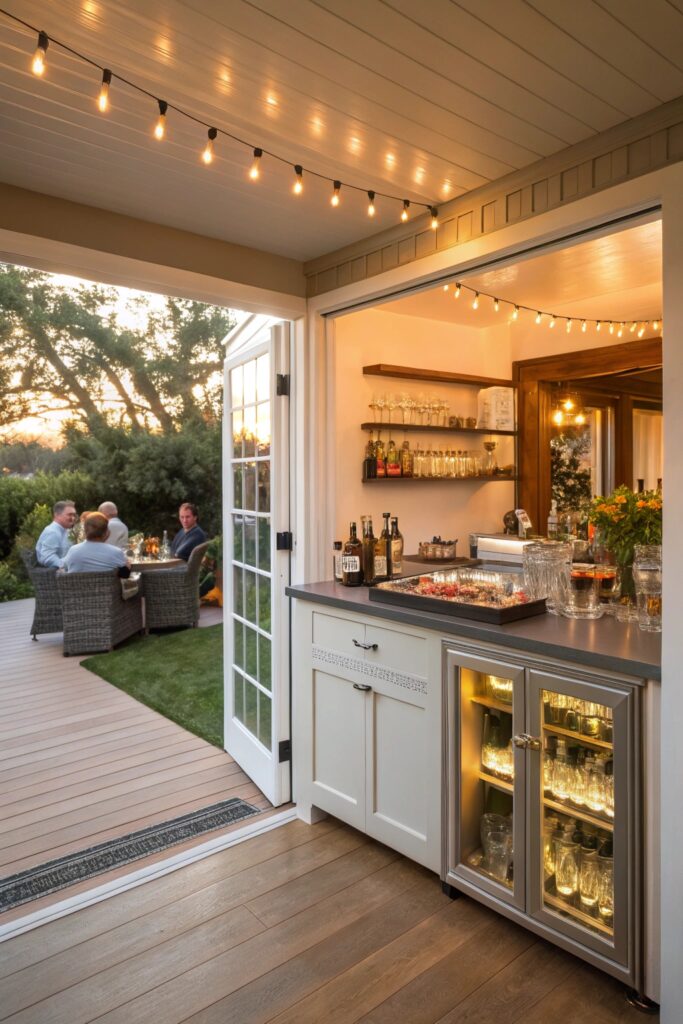
Positioning the bar near a door to a patio or deck genuinely extends entertaining space outward, which matters for larger gatherings that spill beyond a single room.
Weatherproof any materials that will be exposed to outdoor humidity or temperature swings, even if the bar itself sits just inside the door.
Matching the Bar to How You Actually Entertain
A cart or small freestanding cabinet suits occasional entertaining well, since it doesn’t demand a permanent commitment of space in a room that serves other purposes most of the time.
A built-in or dedicated bar nook makes more sense if hosting is a genuinely regular part of how you use the room, since the investment pays off through consistent use rather than sitting mostly idle.
What These Setups Cost
A bar cart or small cabinet runs $150 to $600 depending on materials and finish.
A built-in setup with shelving, lighting, and possibly a small fridge typically lands between $2,000 and $8,000, varying widely based on materials and whether plumbing or electrical work is involved.
Check with a contractor before any permanent installation if the room’s electrical or plumbing setup needs modification, since this genuinely affects both timeline and budget beyond what furniture alone would cost.
Secondhand furniture is worth checking specifically for a bar cabinet or cart, since older pieces often have genuine wood or metal quality that’s harder to find in new furniture at a comparable price point.
Whatever format you choose, leave room to adjust it over time. A bar setup that felt right when you first entertained a few close friends might need to expand or reconfigure once your hosting habits genuinely change.
Take a look at the room’s overall traffic flow before finalizing the bar’s placement, since a setup that blocks a natural walking path tends to feel like an obstacle rather than a genuine gathering spot once the room actually fills with guests.
Live with a simpler cart or cabinet setup for a while before committing to a built-in, since it’s a genuinely useful way to confirm the room’s layout and your actual hosting habits before making a larger, more permanent investment.
Wrapping It All Up
The right format depends more on how you actually entertain than on which style photographs best, since a bar that doesn’t fit your genuine hosting habits ends up underused regardless of how it looks. Consider how much of the room the bar needs to occupy day-to-day when it’s not in use, since a fully open display commits more visually than a closed cabinet or cart does.