
A spring refresh for a living room works best as a series of smaller, reversible swaps rather than a full redecoration — lighter textiles, more natural light, a few seasonal accents. The details below cover the practical side of each change, including material specifics and simple techniques that make the difference noticeable.
Below are 13 ways to bring this feeling into the room, with the specifics for each.
1. Swap Heavy Fabrics for Light, Airy Textiles
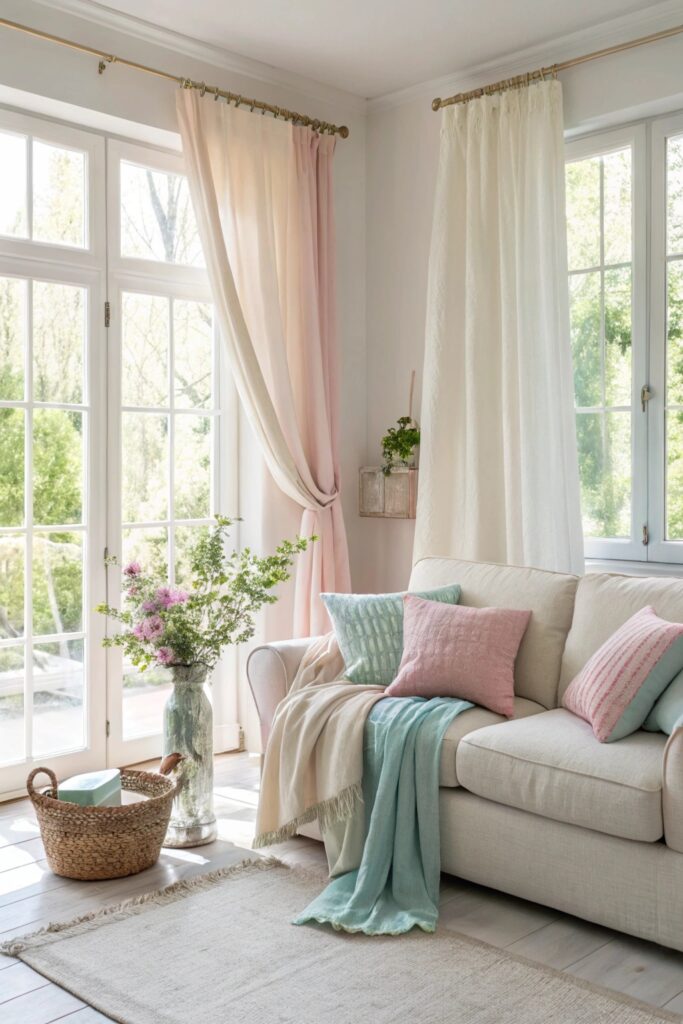
Winter throws and heavier upholstery fabrics like wool or velvet often run 300 to 500 grams per square meter or more, while linen and cotton throws typically sit in the 150 to 250 range — a noticeable difference in how the room feels underhand and visually.
Store the swapped-out heavier textiles with a cedar block or sachet in the storage container, which helps deter moths during the months they’re not in use.
2. Add Fresh Flowers or Green Plants
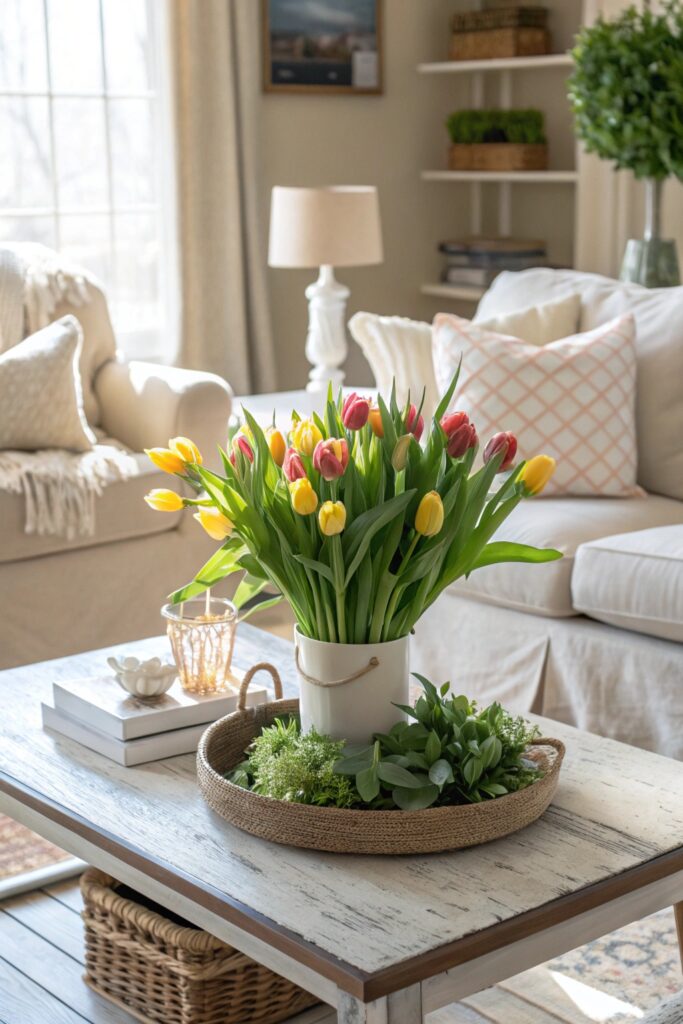
Tulips, daffodils, and hyacinths are spring-specific choices that read differently than the more generic florals available year-round. Changing the vase water every two to three days, and giving stems a fresh diagonal cut each time, meaningfully extends how long cut flowers last.
3. Introduce Soft Pastel Color Accents
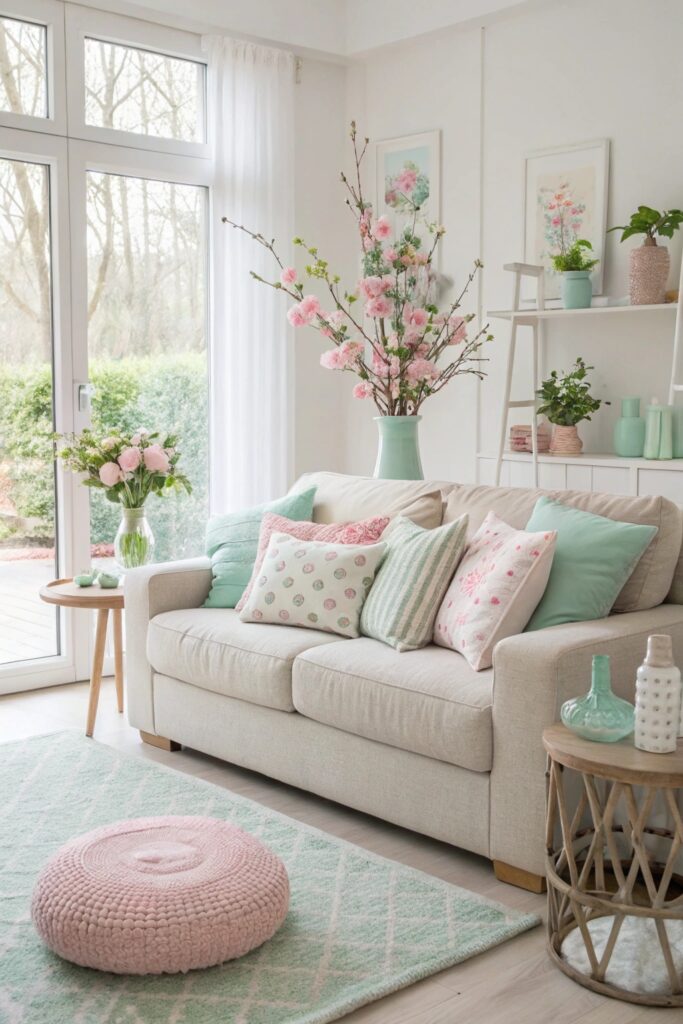
Keeping pastels to roughly 10 to 20 percent of the room — pillows, a vase, a throw — against a neutral base avoids the overly saccharine look that can happen when pastels dominate a space rather than accenting it.
4. Rearrange Furniture for a Fresh Layout

Leave at least 30 to 36 inches of clear walking path between furniture groupings, and consider pulling seating a few inches away from the walls — a fully wall-hugging layout tends to feel more closed off than one with a bit of breathing room around each piece.
5. Let Natural Light Take Over

Swapping heavy blackout drapes for sheer or lightweight curtains during warmer months lets considerably more daylight into the room. Trimming any exterior landscaping that’s grown to block windows over winter is an easy, often-overlooked step that makes a real difference in how bright a room actually reads.
6. Bring in Natural Materials
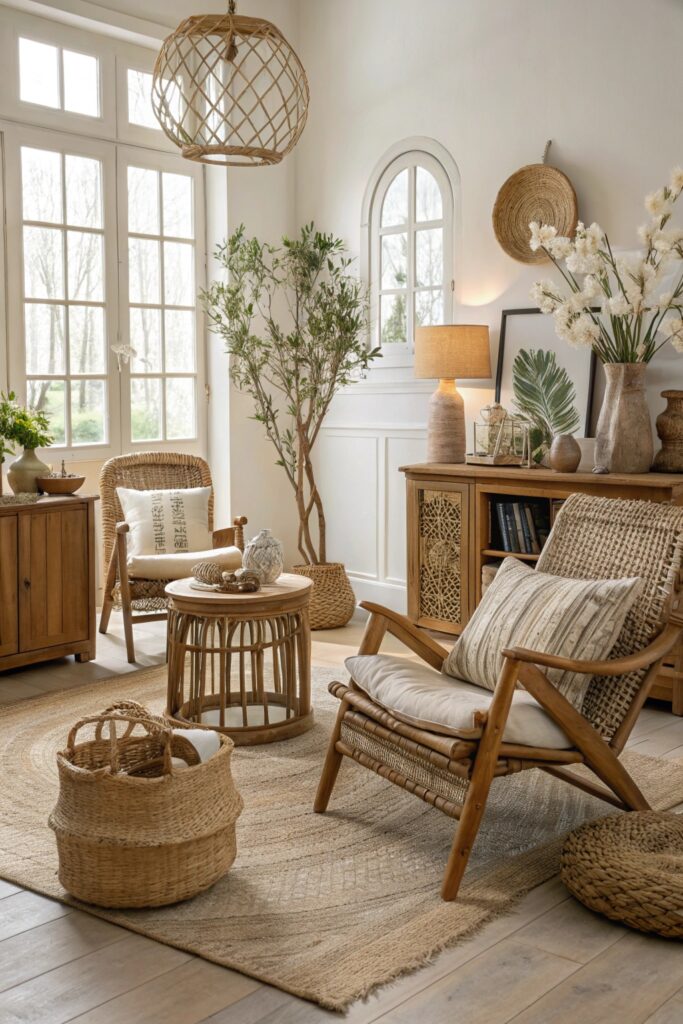
Rattan, jute, and other natural fiber pieces can absorb more humidity as the weather warms, so a well-ventilated room helps prevent the slight swelling or warping these materials can develop in consistently damp spring conditions, especially in climates with a pronounced wet season.
7. Update Your Wall Art for a Seasonal Feel
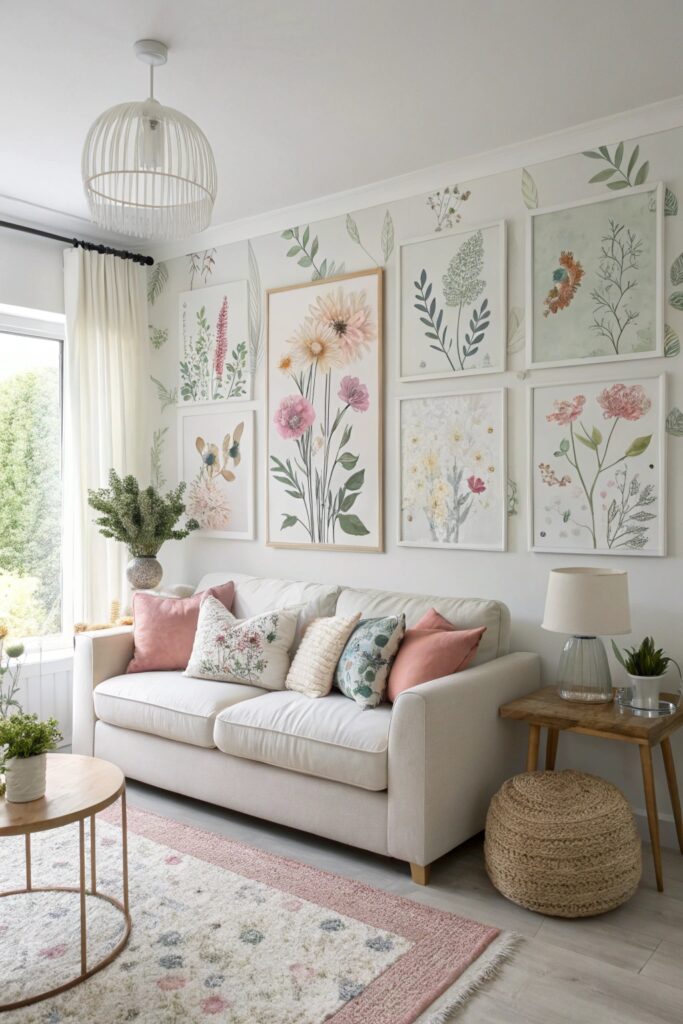
Rotating in botanical prints or lighter-toned pieces for a season, rather than committing to a permanent swap, keeps the investment low while still refreshing the room’s overall feel.
8. Declutter and Simplify Your Space

A one-in-one-out approach — removing an item for every new one added — keeps clutter from creeping back in after an initial decluttering pass. Storing off-season items in labeled bins makes the next seasonal swap considerably faster than starting from scratch each time.
9. Add a Statement Rug
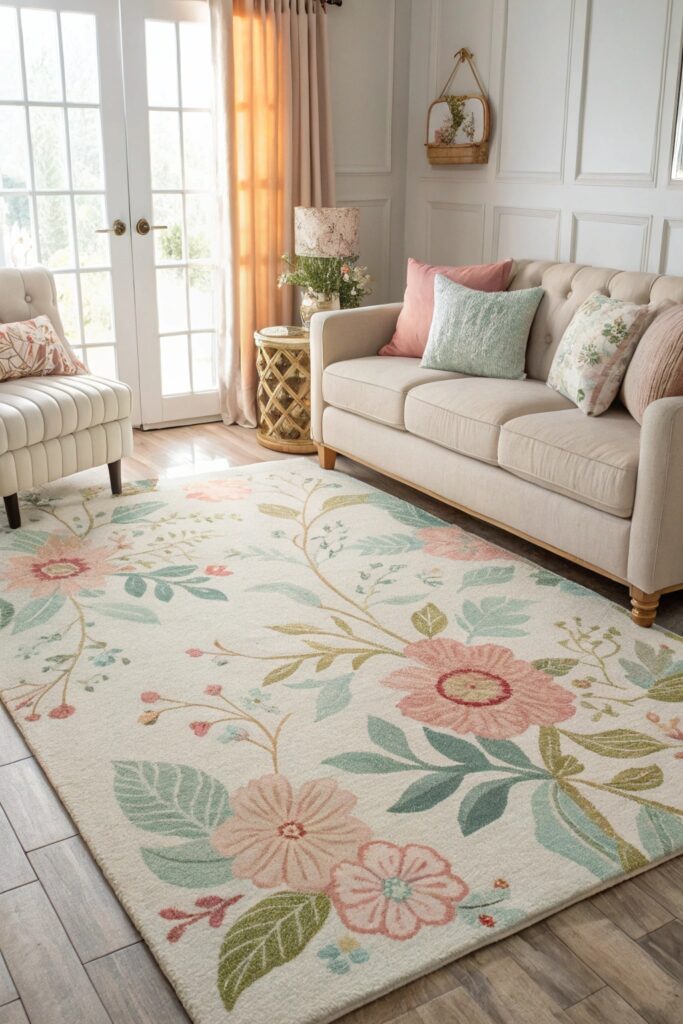
A jute or sisal rug breathes better in warmer months than a dense wool rug, which can feel heavier underfoot as temperatures rise. At minimum, the front legs of major furniture pieces should sit on the rug; ideally all four legs do, which keeps a large rug from looking undersized for the room.
10. Use Light Wood or Neutral Furniture
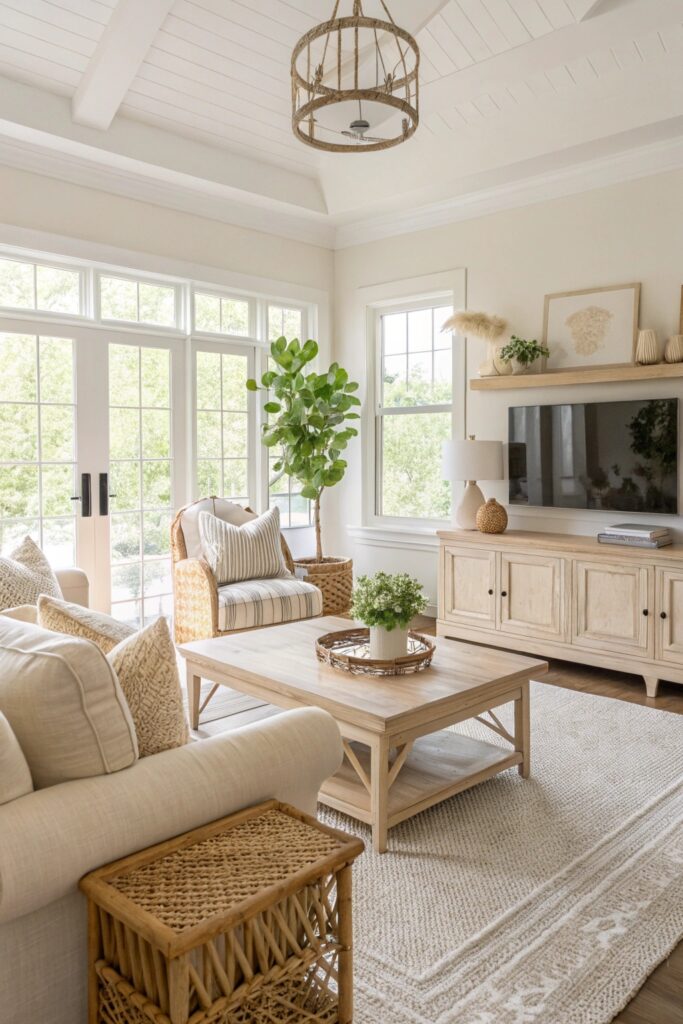
White oak, ash, and birch all read lighter and more seasonally appropriate than the deeper walnut or mahogany tones more commonly associated with a heavier winter look, without requiring a full furniture replacement — a single lighter accent piece can shift the room’s overall feel.
11. Add Mirrors to Reflect Light

Positioning a mirror directly across from a window, rather than at an angle, reflects the most natural light back into the room. Sizing the mirror to roughly a third to half the width of the wall it’s on keeps it proportional rather than looking like an afterthought.
12. Incorporate Soft Spring Scents
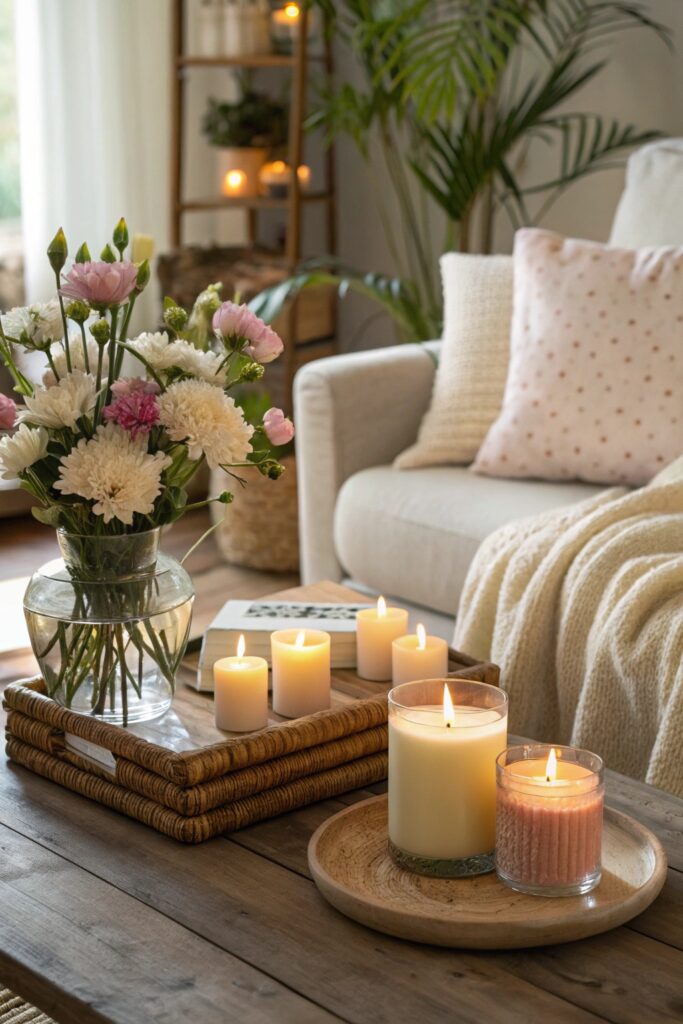
A reed diffuser avoids the open-flame consideration a candle requires, which matters if the room sees regular use by kids or pets. Natural, single-note scents — a light floral or green tea — tend to read as more seasonal than heavier, more complex fragrance blends.
13. Create a Cozy Spring Corner

A single comfortable chair, a light throw, and a small side table with good task lighting turns an underused corner into an actual destination in the room, rather than empty space that goes unused between the main furniture groupings.
Cleaning Tasks Worth Pairing With a Spring Refresh
Since a spring refresh already involves moving furniture and swapping textiles, it’s an efficient time to handle a few cleaning tasks that are easy to skip otherwise — vacuuming under and behind furniture, wiping down window tracks that collect dust and pollen over winter, and washing any removable slipcovers or cushion covers before putting them back into rotation.
Air quality tends to improve noticeably once windows can stay open more regularly, but it’s worth checking HVAC filters at the same time, since a filter that’s been working through a full heating season often needs replacing right around when cooling season begins.
What This Refresh Costs
If you’re mostly rearranging and decluttering existing items, this refresh can cost close to nothing beyond maybe a candle or a small bundle of fresh flowers, typically under $30.
Adding new elements — a rug, a mirror, updated throw pillows — runs considerably higher, often $150 to $600 depending on quality and how many pieces you’re adding at once.
Pacing the Refresh Over a Few Weekends
Tackling all 13 of these changes in a single weekend can feel overwhelming and often leads to a rushed result. Splitting the work into a few sessions — decluttering and cleaning first, then textile swaps, then final styling touches like art and scent — makes each step more manageable and gives you a chance to live with earlier changes before deciding on the smaller finishing details.
Keep the Swapped-Out Items Organized for Next Season
Since most of these changes are reversible rather than permanent, labeling and storing winter textiles, darker accents, and heavier decor together makes the transition back in fall considerably easier than searching for scattered items later. A dedicated bin or closet shelf for seasonal swaps turns this into a repeatable twice-a-year routine rather than a project you have to fully re-plan each time.
Most of these updates cost very little if you’re working with what you already own — rearranging furniture, swapping in existing lighter textiles, decluttering — while the ones that do involve buying something new, like a rug or a mirror, tend to be pieces that carry over well into other seasons rather than being spring-specific purchases.