Craftsman homes have a way of making every other architectural style look like it’s trying too hard. The low-pitched rooflines, the tapered columns, the deep covered porches — everything about the style communicates craftsmanship, permanence, and genuine character. It’s no accident that Craftsman exteriors consistently rank among the most beloved home styles in America.
I’ve spent a lot of time studying what separates a Craftsman home that stops traffic from one that just sits there looking vaguely traditional. The difference almost always comes down to a handful of intentional, well-executed exterior details.
Whether you own a historic Craftsman bungalow or a newer home with Craftsman-inspired bones, these 11 exterior ideas will sharpen your curb appeal and honor everything that makes this style truly timeless.
1. Nail the Front Door Color
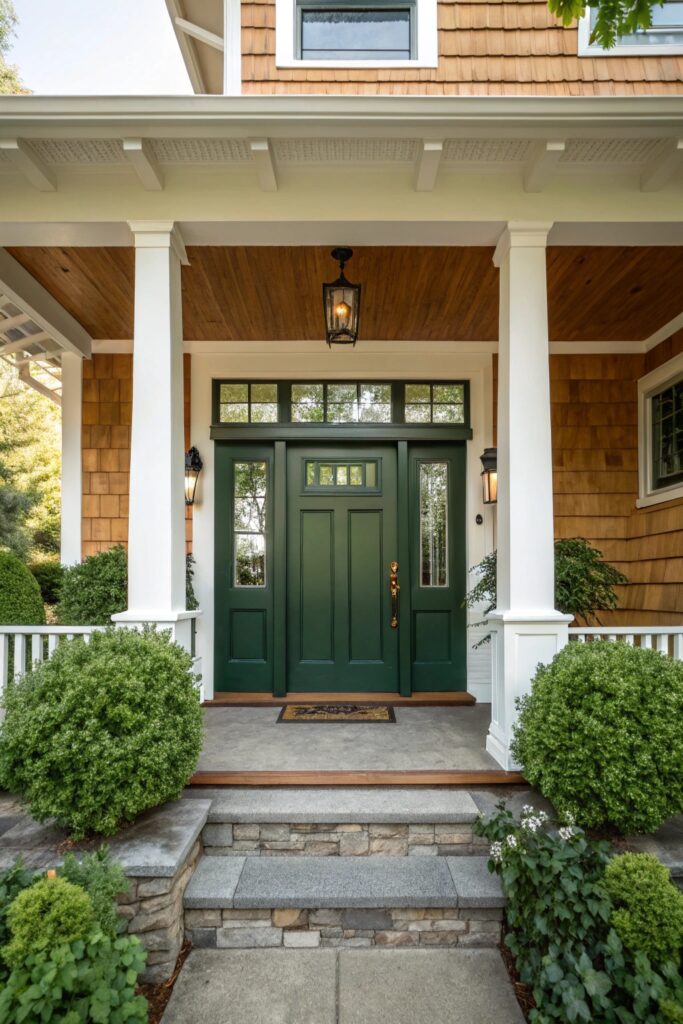
The front door is the face of a Craftsman home — and choosing the right door color is the single highest-impact exterior decision you can make for under $100. Craftsman architecture provides the perfect canvas for bold, saturated door colors because the natural wood trim, stone accents, and earthy siding tones create a grounding framework that makes color sing.
Think beyond the safe choices. A deeply saturated door color against warm wood or earthy siding creates exactly the kind of visual punctuation a Craftsman exterior needs.
Front door colors that work beautifully on Craftsman homes:
- Deep forest green — classic, grounded, pairs with any siding color
- Rich burgundy or oxblood red — warm, traditional, suits brown and tan siding
- Navy blue — sophisticated, striking against grey or cream siding
- Warm black — bold, graphic, suits any Craftsman color palette
- Terracotta or burnt orange — earthy, unexpected, suits green or grey siding
IMO, deep forest green on a Craftsman door is the single most satisfying exterior color combination in residential architecture. It just works every time. 🙂
2. Restore or Add Tapered Porch Columns
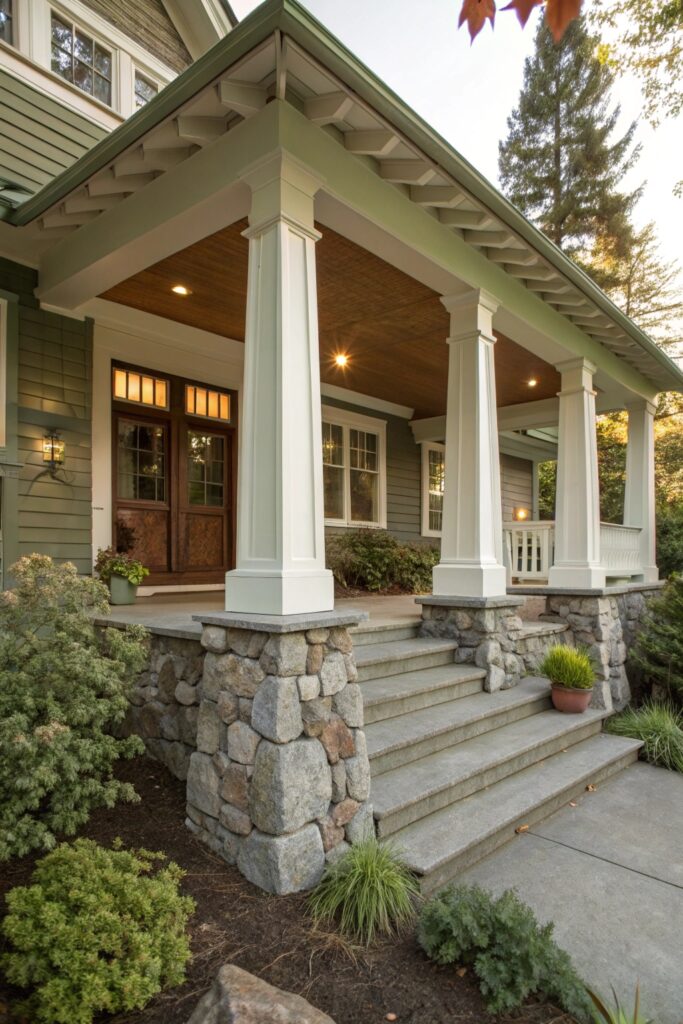
Tapered porch columns sitting on substantial stone or brick piers are one of the most defining visual elements of authentic Craftsman architecture. They signal structural honesty, craftsmanship, and the fundamental design philosophy that every element should serve both a functional and aesthetic purpose.
If your Craftsman home has thin, underpowered columns — or worse, basic round columns from a generic renovation — replacing them with proper tapered columns makes an enormous difference.
Craftsman column specifications that matter:
- Square tapered profile — wider at the base, narrowing toward the top
- Substantial base pier in stone, brick, or stucco to anchor the column visually
- Correct proportions — columns should feel heavy and load-bearing, not decorative
- Paint in a contrasting trim color — typically white, cream, or a lighter tone than the siding
- Match column height to porch depth — shallow porches need shorter, broader columns
Proper tapered columns on a Craftsman porch transform the entire street-facing elevation. They communicate authenticity in a way that few other exterior details can match.
3. Choose an Authentic Craftsman Color Palette
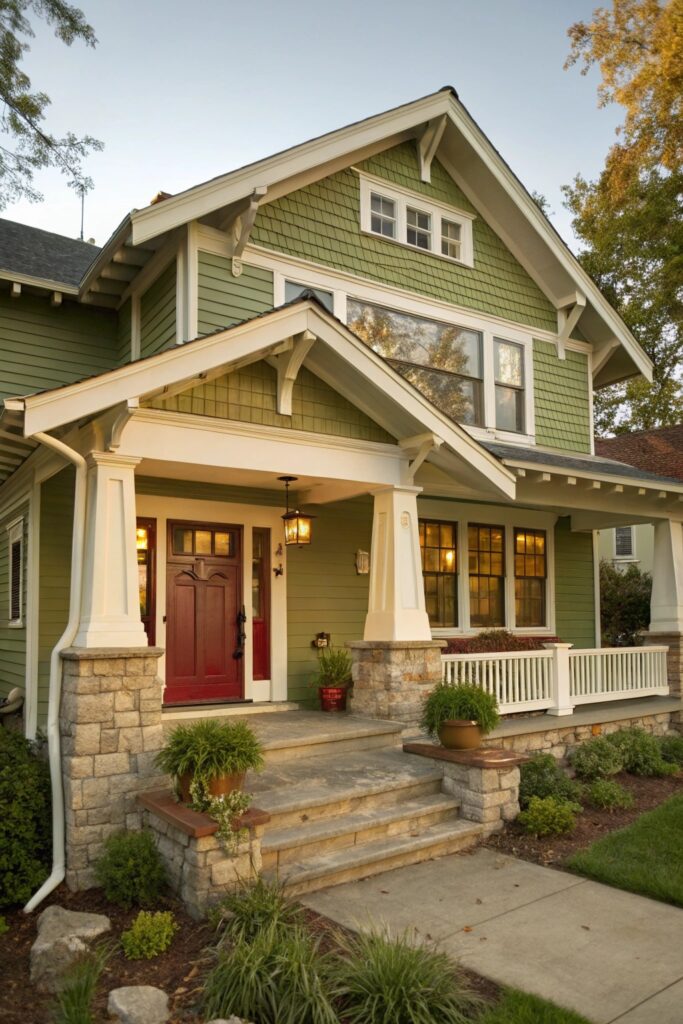
Color palette selection on a Craftsman exterior isn’t just about picking colors you like — it’s about understanding how the style uses color to express its philosophy of natural materials and honest construction. Authentic Craftsman color palettes draw from the natural world: earth tones, forest greens, warm browns, muted sages, and the colors of stone and aged wood.
The typical Craftsman exterior uses three coordinated colors: a body color, a trim color, and an accent color for the door and decorative details.
Classic Craftsman exterior color combinations:
- Sage green body, cream trim, deep red door — warm, natural, quintessentially Craftsman
- Warm brown body, white trim, forest green door — traditional, grounded, timeless
- Grey-blue body, white trim, navy door — coastal Craftsman variation, clean and fresh
- Tan body, dark brown trim, terracotta door — earthy, warm, suits stone-accented homes
- Olive green body, black trim, brass-toned accents — modern Craftsman, sophisticated
FYI — always test exterior paint colors in large swatches on your actual home before committing. Natural light changes colors dramatically throughout the day, and what looks perfect on a paint chip often reads completely differently on siding at noon.
4. Add or Restore Craftsman Brackets and Knee Braces
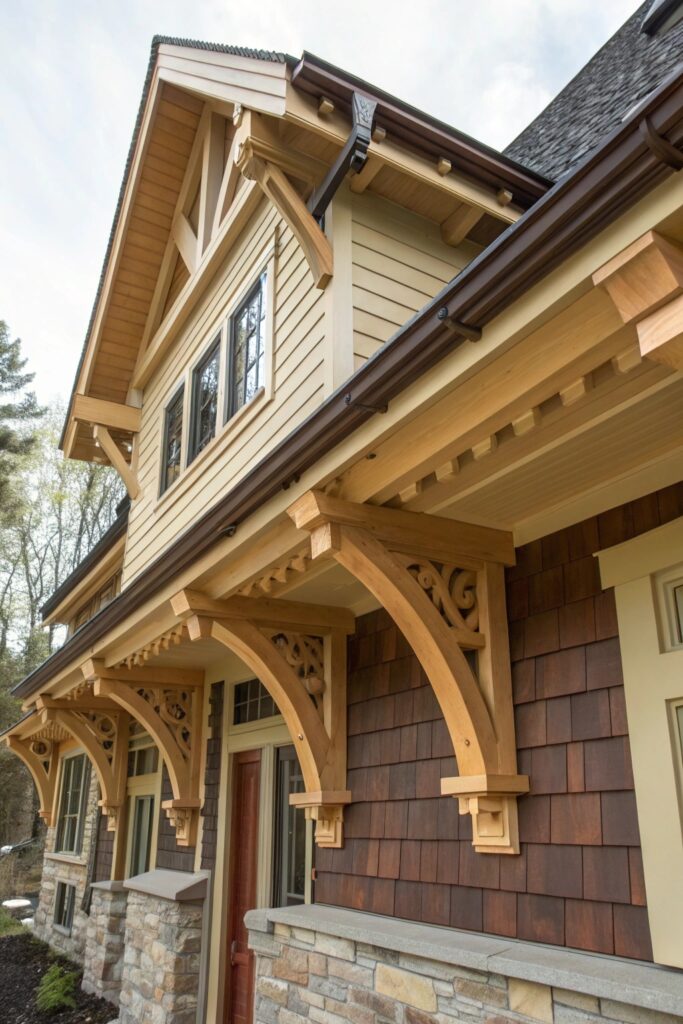
Decorative brackets and knee braces under the roofline overhangs and gable ends are among the most distinctive decorative elements of authentic Craftsman architecture. These exposed structural details — whether actually load-bearing or purely decorative — communicate the style’s core commitment to showing, rather than hiding, how a building goes together.
Adding period-appropriate brackets to a Craftsman home that lacks them delivers an authenticity upgrade that architectural historians and casual observers alike immediately register.
Bracket and knee brace guidelines:
- Size proportionally to the overhang — undersized brackets look timid and wrong
- Paint to match trim color for a cohesive, integrated look
- Cedar or clear pine are the traditional wood choices for authentic appearance
- Pre-made Craftsman brackets are widely available and far more affordable than custom
- Install at gable peaks, under eave overhangs, and above porch columns for maximum impact
These details are what separate a house with Craftsman features from a house that actually IS Craftsman. The difference registers immediately, even to people who can’t articulate why.
5. Install Craftsman-Style Windows
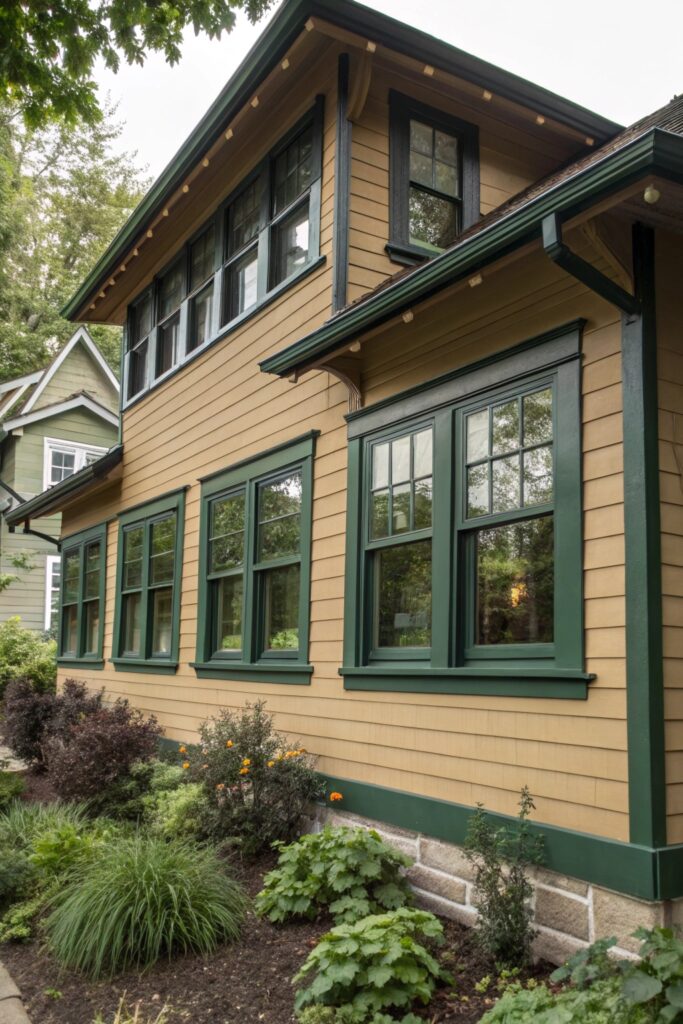
Window style and proportion define the character of a Craftsman exterior more than most homeowners realize. Authentic Craftsman windows feature divided light patterns in the upper sash — typically a single large lower pane paired with a row of smaller panes across the top — creating the distinctive grid pattern associated with Arts and Crafts architecture.
Replacing builder-grade double-hung windows with proper Craftsman-profile windows transforms the entire exterior reading of the house.
Craftsman window details to prioritize:
- Three-over-one or four-over-one divided light pattern in the upper sash
- Dark exterior finish — typically dark brown, forest green, or black — to frame views and contrast with lighter siding
- Grouped window arrangements — two or three windows side by side — are characteristically Craftsman
- Wide flat casing trim around each window rather than decorative molding profiles
Dark-framed windows against lighter siding create the kind of graphic, high-contrast exterior that photographs beautifully and reads clearly from the street. :/
6. Upgrade the Porch Flooring
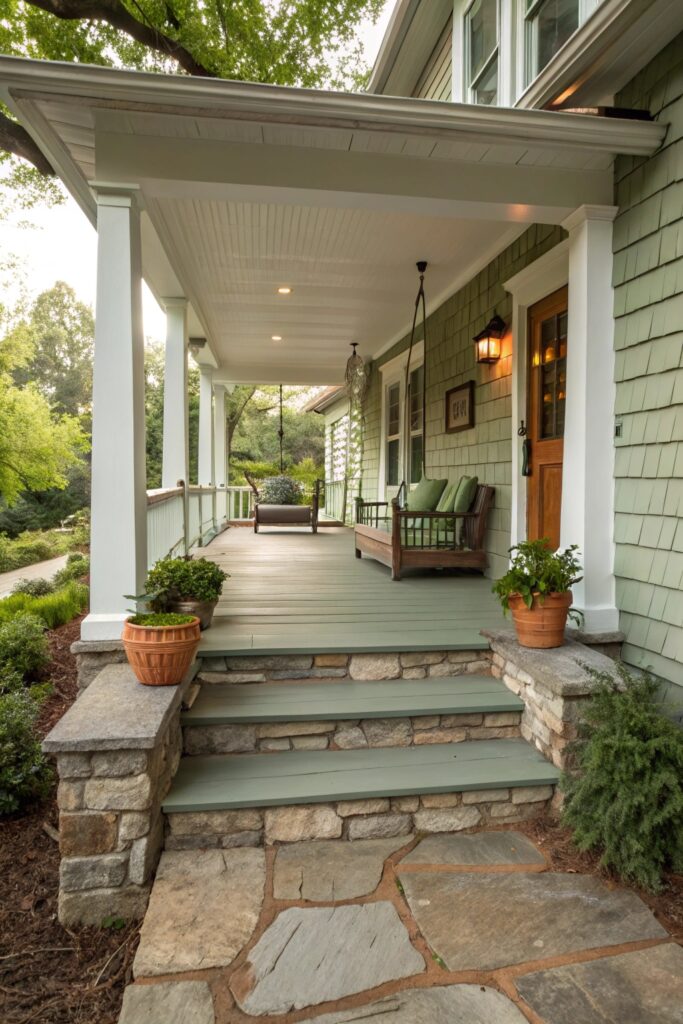
The front porch floor on a Craftsman home takes more visual real estate than most people acknowledge — and upgrading it delivers a curb appeal improvement that transforms the entire porch experience. A well-maintained, beautifully finished porch floor communicates care and quality before guests take a single step inside.
Porch flooring options for Craftsman homes:
- Tongue-and-groove fir or pine in a traditional grey-green porch paint — the authentic historic choice
- Composite decking in warm brown or grey tones — modern durability with traditional proportions
- Painted concrete with a scored pattern — budget-friendly, durable, suits any Craftsman color palette
- Natural slate or bluestone tile — premium, authentic, suits stone-accented Craftsman exteriors
Paint porch floors in traditional porch grey or a soft sage green for an authentically Craftsman finish. These colors were the historic standard because they showed dirt minimally while complementing the surrounding natural materials beautifully.
7. Add Exterior Stone or Brick Accents
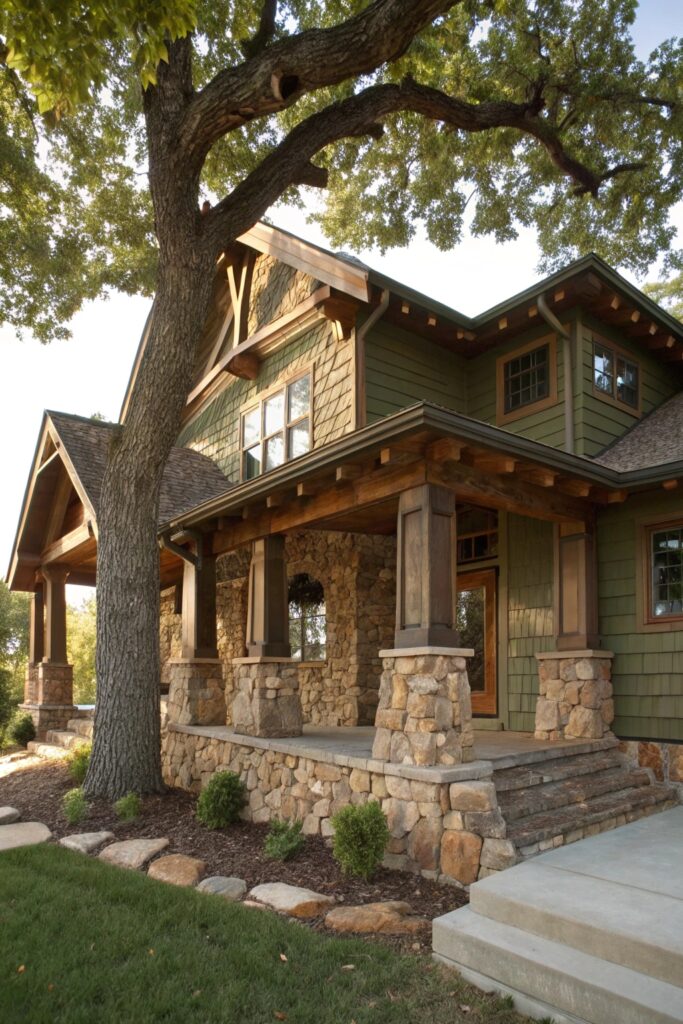
Stone or brick accents at the foundation, porch piers, and chimney connect a Craftsman home to its Arts and Crafts roots in the most literal way possible. The style emerged partly as a reaction against industrial materials — natural stone represented everything the movement valued: permanence, craftsmanship, and honest connection to the natural world.
Even adding stone veneer to existing porch piers or a foundation section makes a significant visual difference.
Stone and brick accent strategies:
- River rock or fieldstone on porch piers — the most authentically Craftsman choice
- Clinker brick accents on the chimney or foundation — rough-textured, earthy, period-appropriate
- Stacked stone veneer on the lower third of the exterior — adds visual weight and groundedness
- Stone cap details on column bases and porch walls for a finished, intentional look
Natural stone grounds a Craftsman exterior in a way that no paint color or decorative detail can replicate. It literally connects the house to the earth it sits on.
8. Light the Porch With Period-Appropriate Fixtures
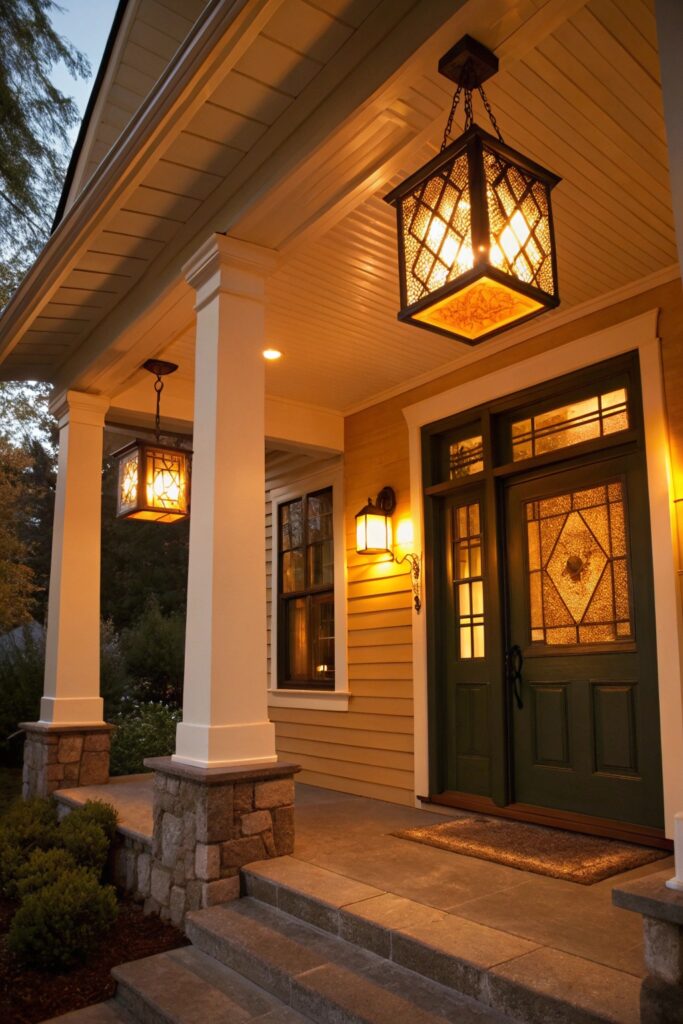
Porch lighting on a Craftsman home should look like it was designed specifically for the architecture — because it was. Mission-style and Arts and Crafts lighting fixtures feature simple geometric forms, art glass panels, and dark metal finishes (oil-rubbed bronze, aged brass, or matte black) that perfectly complement the style’s design vocabulary.
Swapping generic coach lights for proper Craftsman fixtures is one of the most cost-effective authenticity upgrades available.
Craftsman-appropriate exterior lighting:
- Mission-style wall sconces with amber or seeded glass panels flanking the front door
- Hanging porch lanterns with geometric metal frames and art glass inserts
- Post-mounted pathway lights in matching dark metal finishes along the walkway
- String lights on the porch ceiling for warm, ambient evening atmosphere
- Under-eave recessed lights for functional porch illumination without visible fixtures
Choose warm bulbs at 2700K exclusively for Craftsman porch lighting. Cool or daylight bulbs destroy the warm, inviting atmosphere the style depends on.
9. Install a Craftsman-Style Front Door With Sidelights
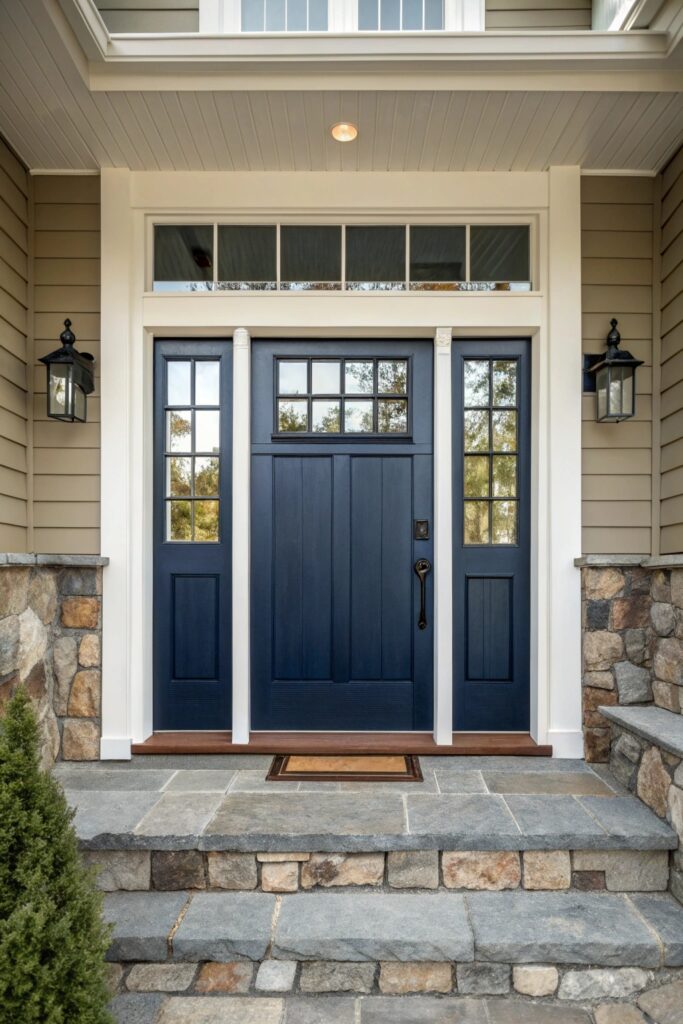
The front door assembly — door, sidelights, and transom — creates the primary architectural moment on a Craftsman facade. An authentic Craftsman door features divided glass panels in the upper third, solid wood construction in the lower two-thirds, and simple, rectilinear proportions that reflect the style’s rejection of unnecessary ornamentation.
Adding sidelights to an existing single door dramatically increases the entry’s presence and architectural authenticity.
Craftsman front door features that matter:
- Three-lite or five-lite glass panel arrangement in the upper door section
- Clear, frosted, or art glass in the door lights depending on privacy needs
- Solid wood or fiberglass wood-grain construction — steel doors undermine the aesthetic
- Simple flat casing trim rather than elaborate molding profiles
- Period-appropriate hardware in oil-rubbed bronze, aged brass, or matte black
The front door assembly sets every guest’s expectation for what they’ll experience inside. Make it count.
10. Landscape With Native and Natural Plantings
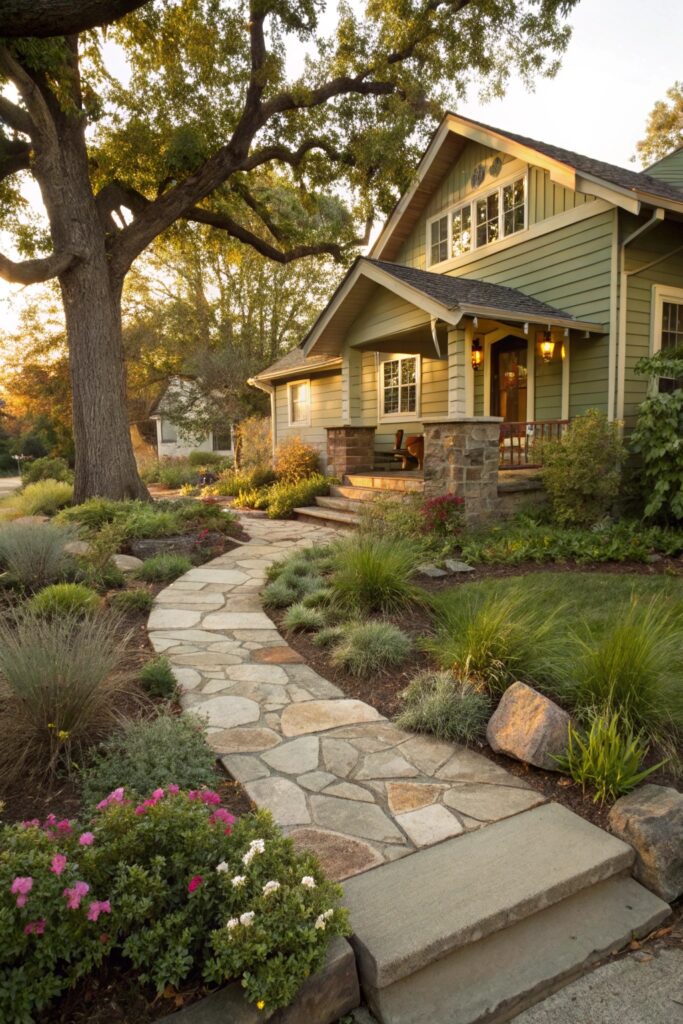
Craftsman-appropriate landscaping grounds the home in its natural environment rather than imposing artificial formality. The Arts and Crafts movement valued gardens that felt like natural extensions of the surrounding landscape — not manicured showpieces. Native plants, natural stone pathways, and layered planting beds all suit the Craftsman aesthetic beautifully.
The goal is a front yard that looks tended but not fussy.
Craftsman-compatible landscaping elements:
- Low stone or brick garden borders that echo the home’s masonry accents
- Native shrubs and ornamental grasses in layered planting beds
- A defined stone or brick pathway from the street to the front door
- Hydrangeas, rhododendrons, or native azaleas as primary flowering shrubs
- A mature shade tree — nothing anchors a Craftsman home in its lot like a well-placed oak or maple
Avoid overly formal, symmetrical plantings — they fight the Craftsman aesthetic rather than supporting it. Natural asymmetry and layered depth always win here.
11. Replace the Garage Door With a Craftsman-Paneled Design
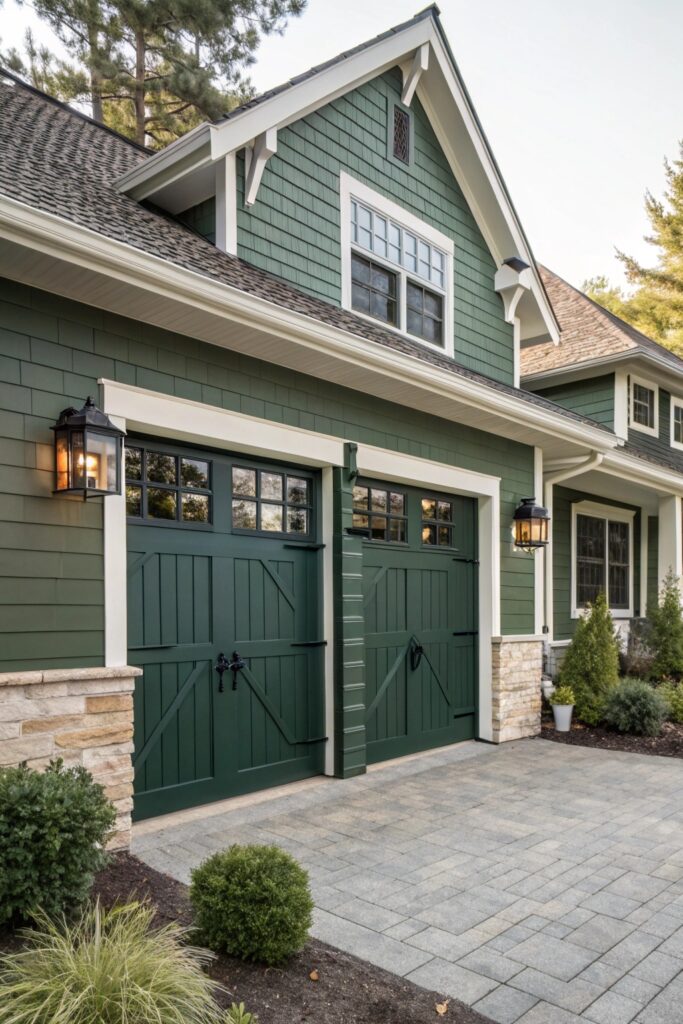
On homes where the garage faces the street, the garage door represents a significant portion of the visible facade — and a generic flat-panel or raised-panel garage door actively undermines every other Craftsman detail you’ve carefully developed. Replacing it with a Craftsman-style carriage door brings the entire exterior into visual coherence.
Craftsman garage doors feature horizontal and vertical panel divisions, decorative hardware, and optional window lites in the upper panels that echo the home’s window patterns.
Craftsman garage door features to specify:
- Carriage house style with decorative strap hinges in dark metal
- Rectilinear window lites in the upper panel section matching the home’s window pattern
- Paint to match the front door or the trim color for visual connection
- Wood-grain texture on steel construction for authenticity without maintenance burden
- Dark metal decorative hardware — handles, hinges, and pulls in oil-rubbed bronze or matte black
A properly specified Craftsman garage door pulls the entire street-facing facade together into a unified, coherent architectural composition. Don’t let a generic door undo everything else you’ve worked on.
Your Craftsman Exterior Deserves the Attention
Craftsman architecture rewards care and intentionality more than any other residential style. Every authentic detail you add — the right door color, proper columns, period lighting, natural stone — compounds on the others and builds toward a facade that communicates genuine quality and craftsmanship.
Start with the changes that deliver the most impact for the least investment: door color, lighting fixtures, and bracket details. Then work toward larger structural elements as budget allows.
Your Craftsman home has extraordinary bones. Give it the exterior treatment those bones deserve — and watch how differently people look at it when they drive past. 🙂