
Boho farmhouse blends two styles that don’t always share the same instincts — boho’s tendency toward layering and eclectic collection against farmhouse’s grounded simplicity — which means this look benefits from more editing than a purely boho room would need. The details below cover both the styling direction and the practical specifics for each element.
Below are 13 elements worth focusing on, with the specifics for each.
1. Layered Neutral Bedding for Instant Warmth
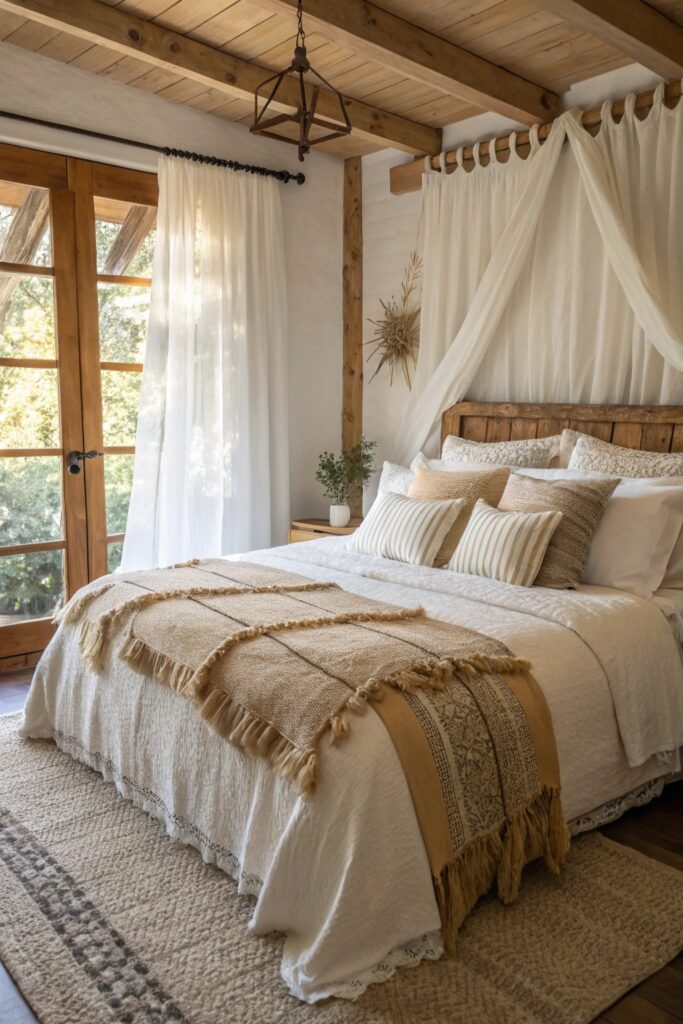
Mixing weights rather than just colors is what makes this layering read as intentional — a heavier waffle-knit blanket over a lighter linen duvet, topped with a thinner throw, creates the textural depth this style depends on more than matching neutral tones alone would.
2. Rustic Wooden Bed Frame
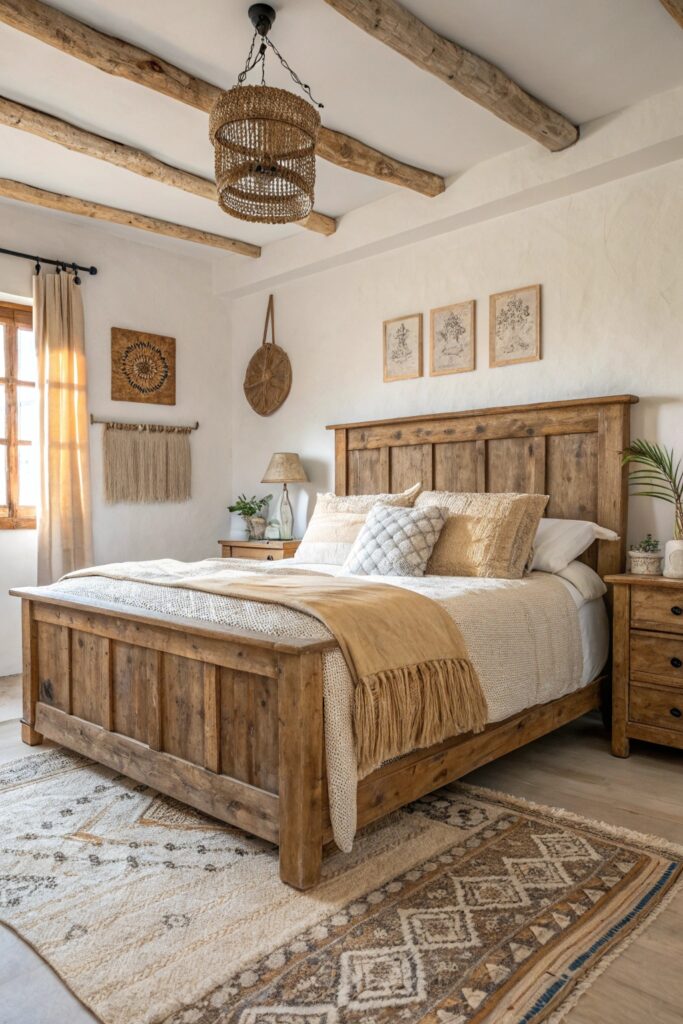
Whatever the finish, confirm the frame is structurally rated for both mattress weight and occupant weight combined, not just visually sturdy — this matters especially with reclaimed or vintage frames, which sometimes need reinforcement before regular use.
3. Woven Textures Everywhere
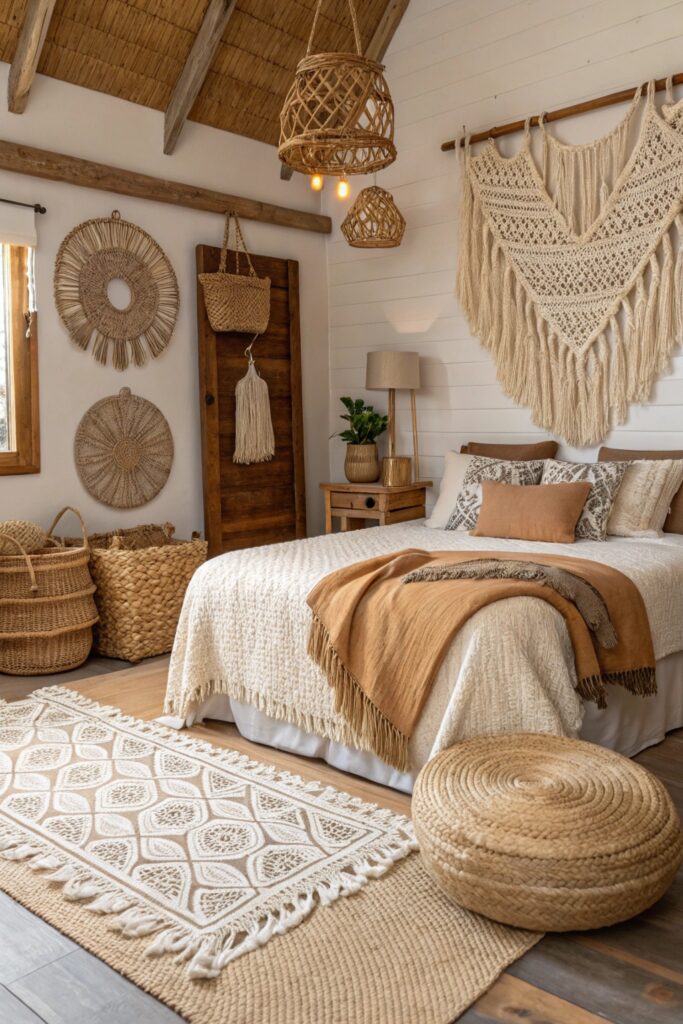
Cotton rope macrame traps dust in its texture and is notably tricky to clean thoroughly, so occasional gentle vacuuming with a brush attachment works better than trying to wipe it down. Rattan furniture can dry out and become brittle in low-humidity climates, and an occasional light coat of furniture oil helps keep it from cracking over time.
4. Soft Earthy Color Palette
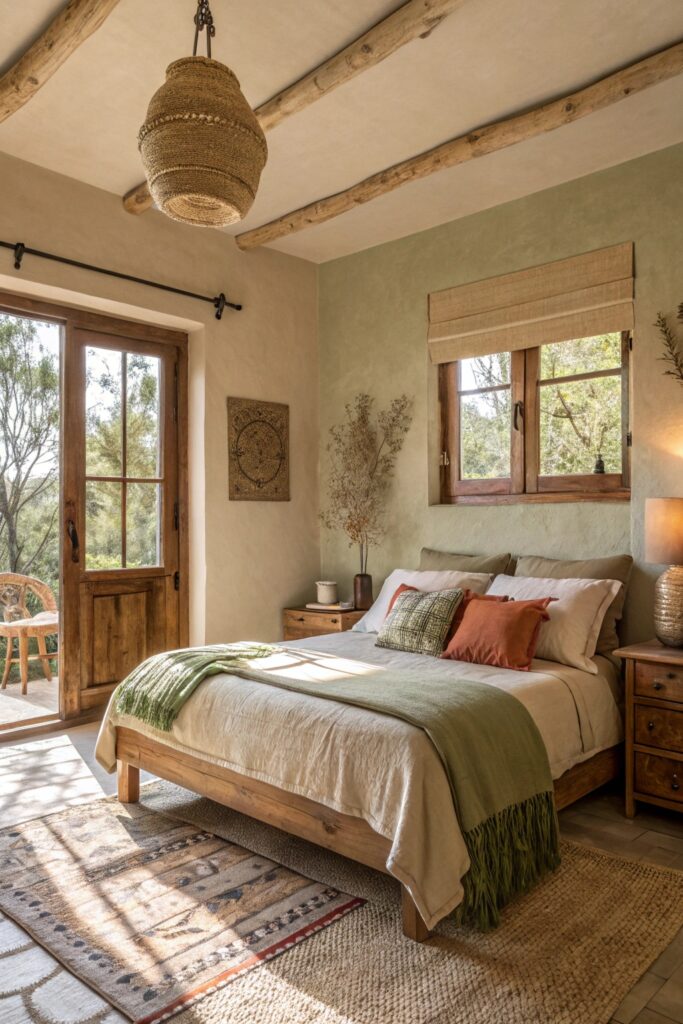
Warm terracotta, sand, and muted sage all read as distinctly earthy without leaning into the more saturated, playful tones of a broader boho palette — this restraint is part of what keeps the look grounded in farmhouse simplicity.
5. Vintage Decor Pieces with Character
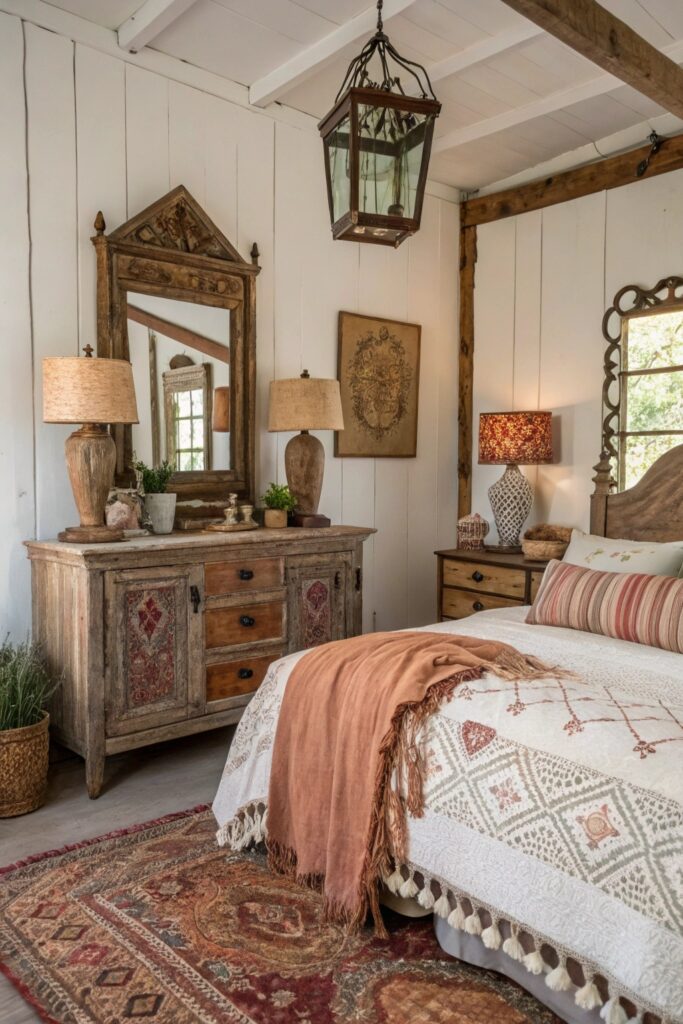
Estate sales and vintage shops are worth checking specifically for smaller decorative pieces, and it’s worth testing any vintage furniture for structural soundness — a wobbly leg or loose joint — before bringing it into regular bedroom use.
6. Cozy Lighting That Feels Magical
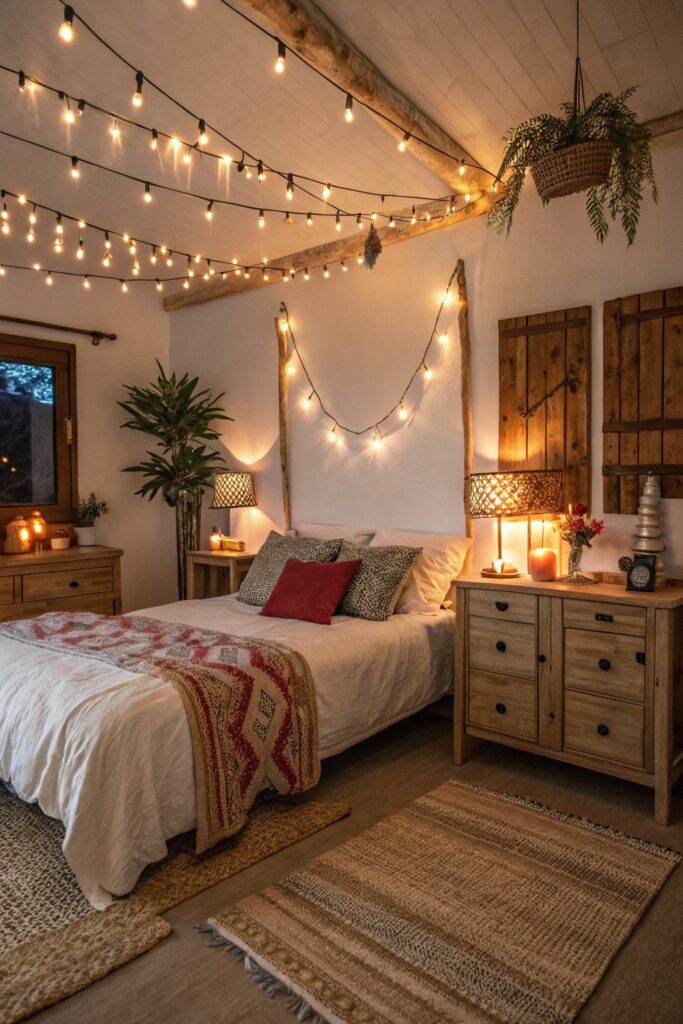
String lights should be specifically rated for indoor use and UL listed, and it’s worth avoiding leaving them plugged in unattended for extended stretches, since even low-voltage string lights carry some risk if left running continuously for days at a time.
7. Statement Wall with Subtle Drama
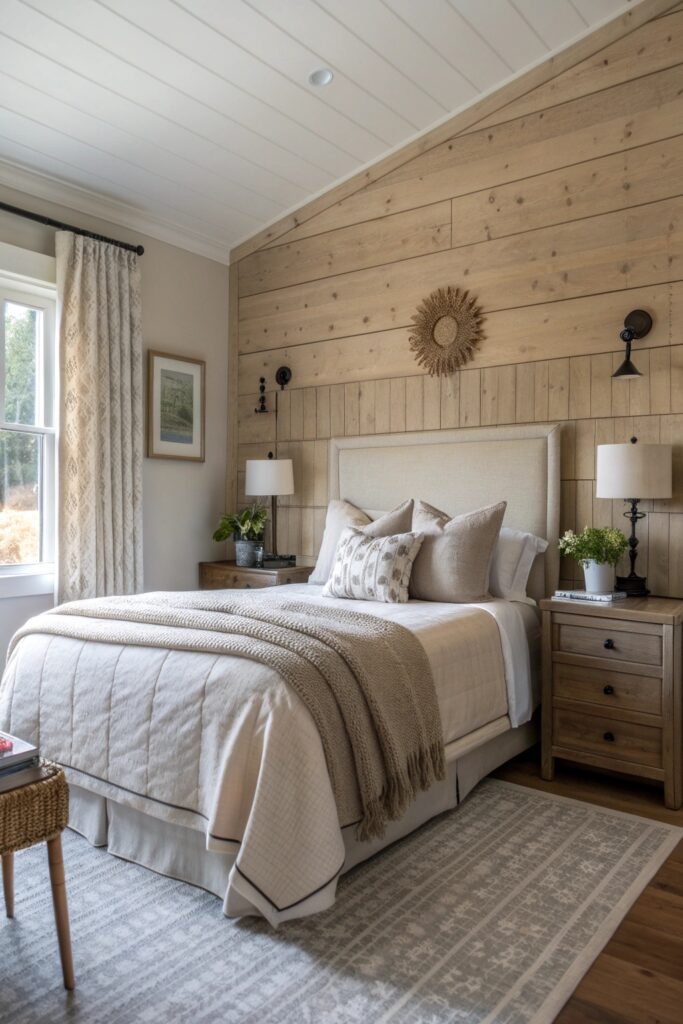
A single textured or paneled wall — shiplap, a woven tapestry, a deeper accent color — gives the room a focal point without requiring changes throughout the entire space.
8. Indoor Plants for a Fresh Touch
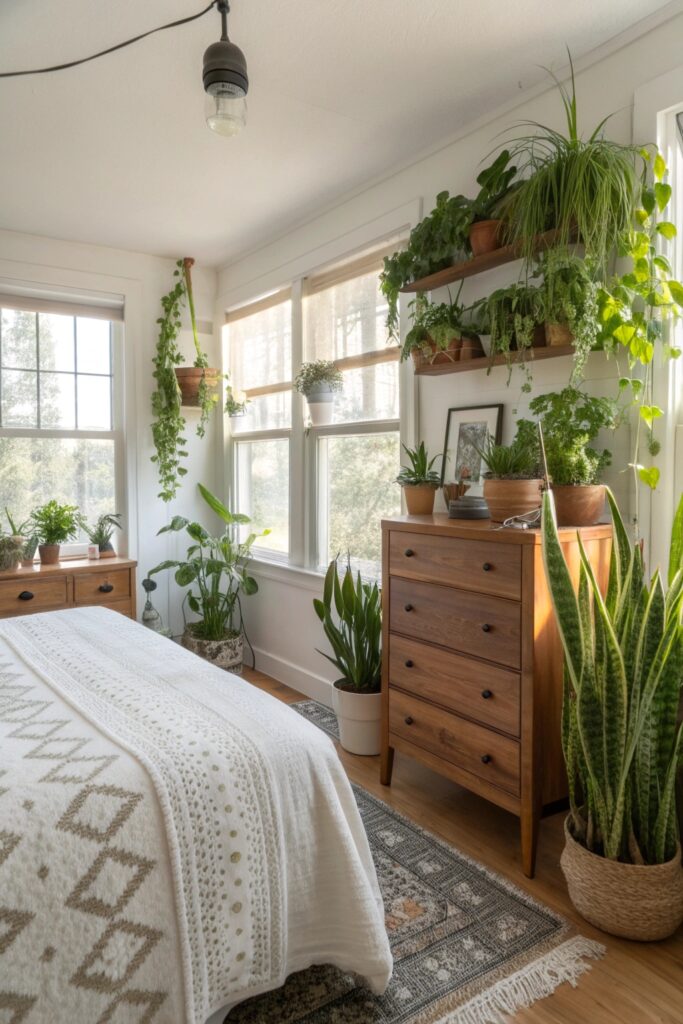
Trailing varieties like pothos or string of pearls suit this style particularly well, since their draping growth habit adds the organic, slightly wild visual quality boho decor often reaches for, beyond just tolerating the room’s available light.
9. Mix of Old and New Furniture
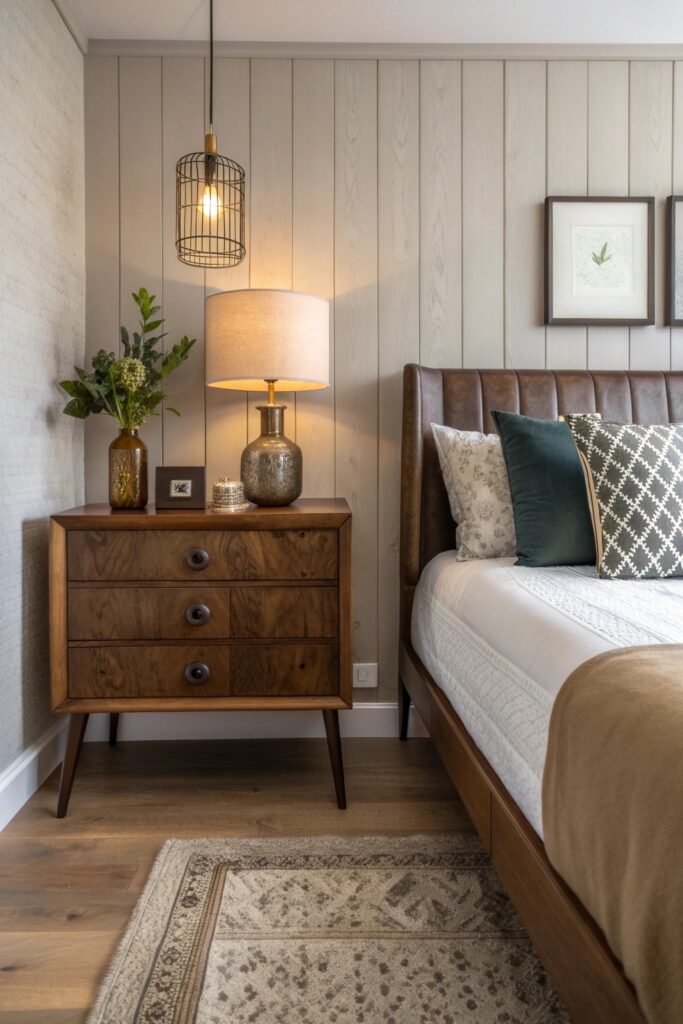
Pairing one clearly vintage piece against otherwise newer furniture avoids the room reading as either a period piece or a generic new furniture set, landing instead on the collected, lived-in feel both styles share.
10. Layered Rugs for Extra Comfort
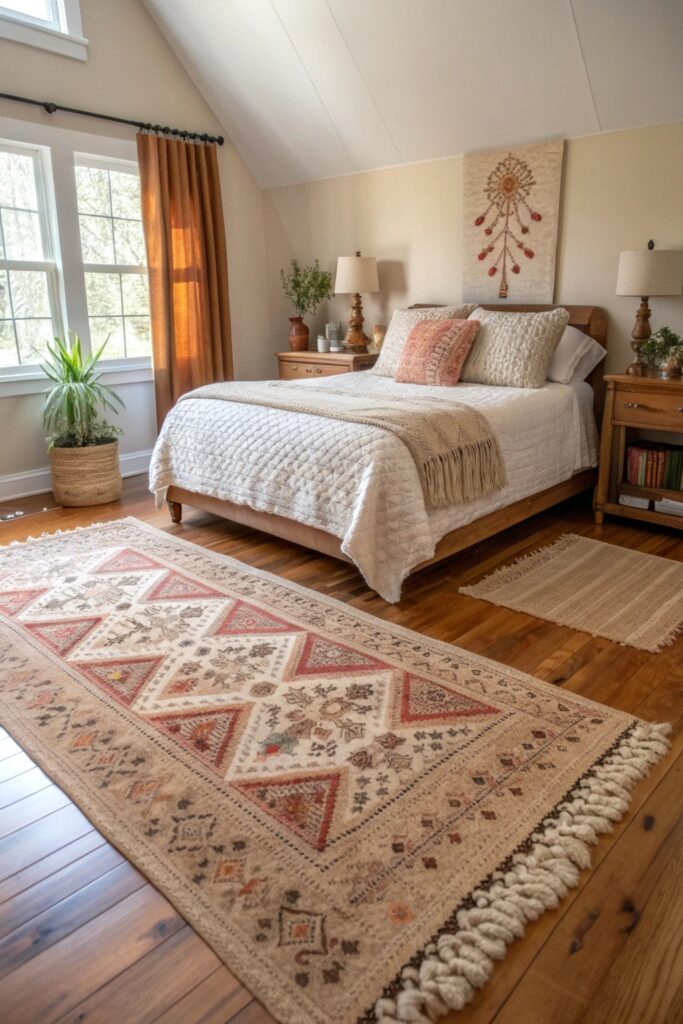
A natural jute base rug topped with a smaller vintage or patterned rug is the classic boho layering technique, and a thin rug pad between the two layers keeps the top rug from sliding around on the base.
11. Handmade or DIY Decor
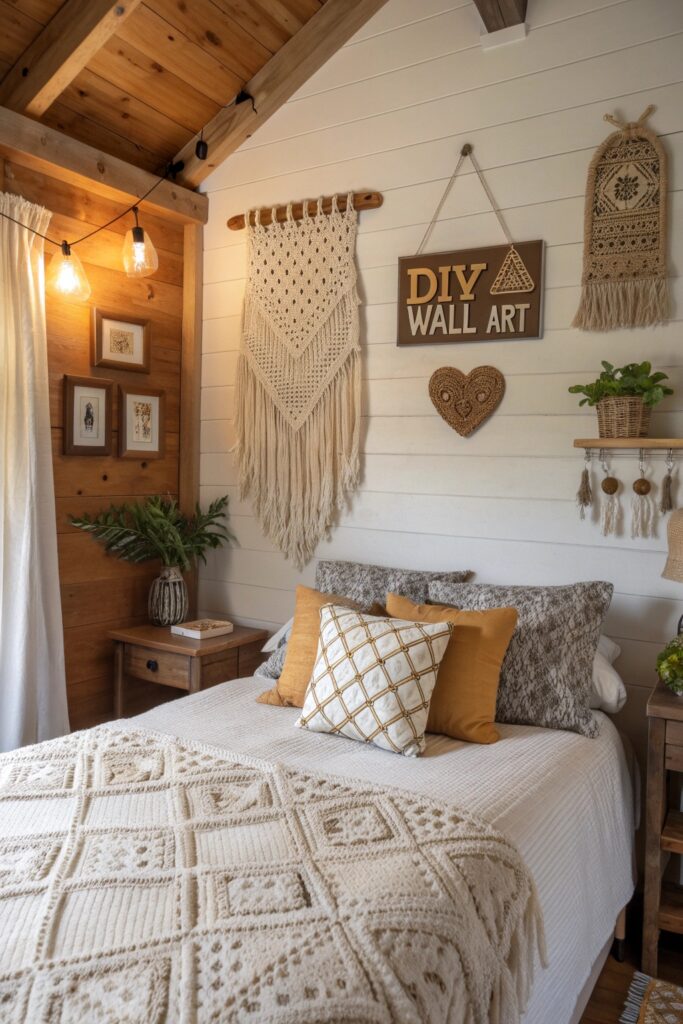
A hand-thrown ceramic vase, a woven wall hanging made rather than bought, or another handmade piece adds genuine character that mass-produced decor doesn’t replicate, even when the mass-produced version is well made.
12. Open Shelving with Styled Decor
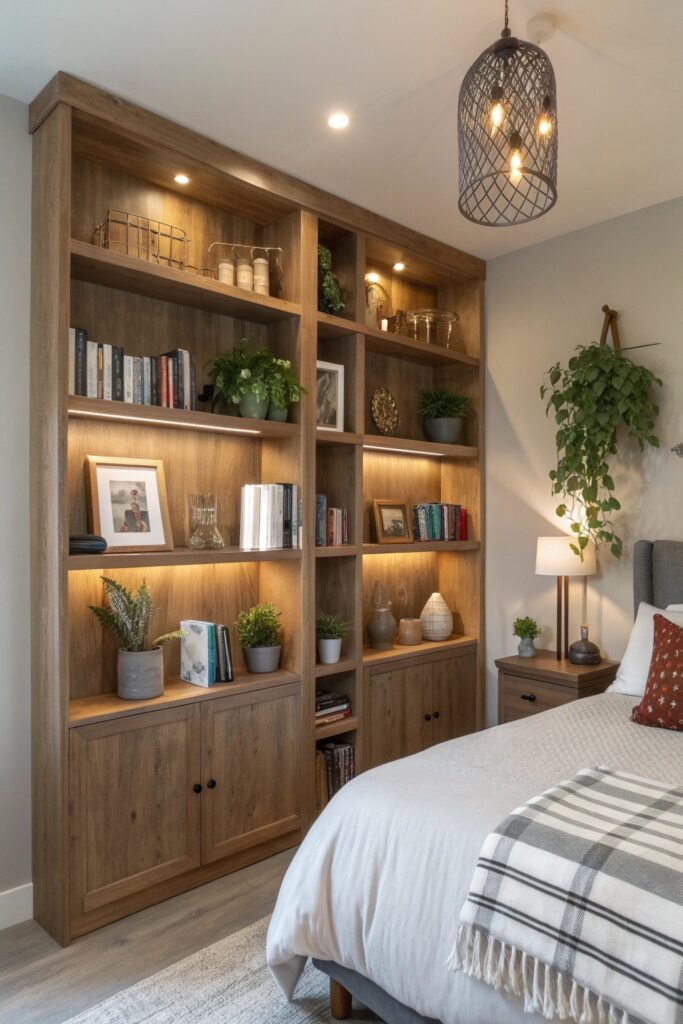
Anchor shelves into studs and keep the styling edited — a few meaningful objects read as more intentional in this hybrid style than a fully packed shelf, which can tip the room from boho-eclectic into simply cluttered.
13. Soft Curtains for an Airy Feel
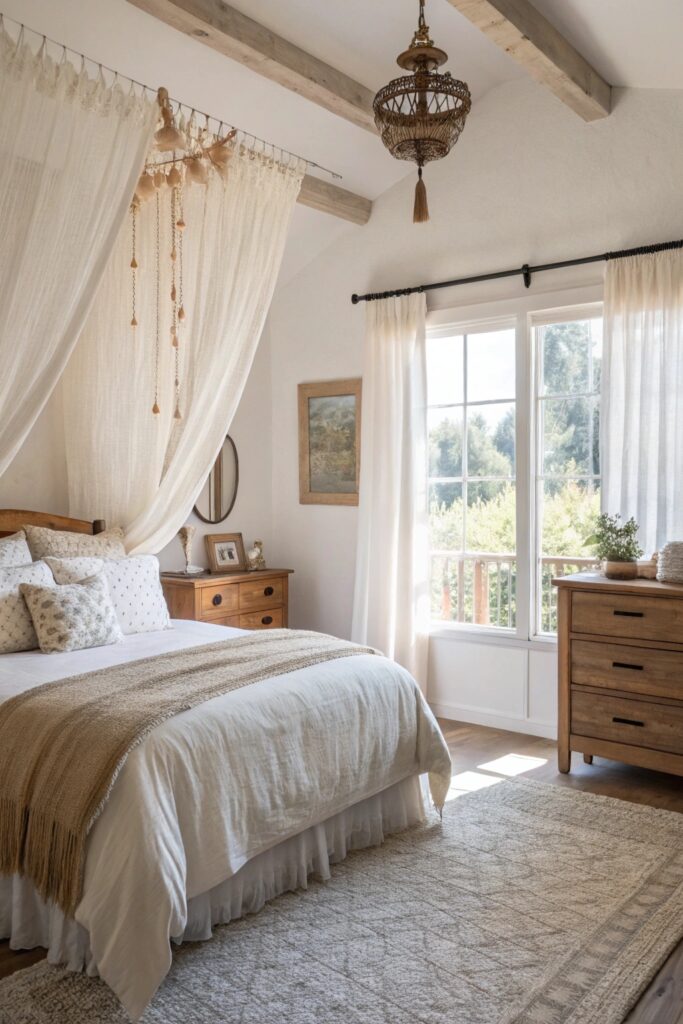
Lightweight linen curtains suit this style better than heavier blackout fabric, and mounting the rod close to the ceiling rather than just above the window frame elongates the room and reinforces the airy quality this look aims for.
Balancing Warm and Cool Tones Within the Palette
Even within an earthy palette, mixing a few cooler-toned neutrals — a soft gray-green or a muted stone color — against the warmer terracottas and tans prevents the room from reading as entirely one temperature, which can start to feel flat across a full bedroom’s worth of surfaces.
Testing fabric and paint samples together in the room’s actual lighting matters more here than in a single-tone room, since the interplay between warm and cool neutrals shifts noticeably depending on whether the light is warm incandescent or cooler daylight-toned.
What This Bedroom Refresh Costs
Updating textiles, lighting, and smaller decor while keeping existing furniture typically costs $300 to $800 depending on quality.
A fuller refresh including a new bed frame, rugs, and furniture runs considerably higher, often $1,500 to $4,000 depending on whether pieces are new or sourced secondhand.
Caring for Natural Fiber Pieces Long-Term
Jute and sisal rugs shed some fiber initially, which is normal and settles after regular vacuuming over the first few weeks. These natural fibers also don’t handle wet cleaning well — a spill should be blotted immediately rather than scrubbed, since excess moisture can cause jute specifically to discolor or weaken at the base.
Rotating rugs and textiles occasionally, rather than leaving the same piece in the same spot indefinitely, helps distribute wear more evenly and extends how long natural fiber pieces hold their appearance before needing replacement.
A room built around this hybrid style tends to work well long-term because both underlying aesthetics have shown real staying power individually — you’re not committing to a narrow trend that’s likely to feel dated within a couple of years, which is worth factoring in if you’re investing in furniture pieces meant to last well beyond a single season.
Photographing the room after each change, even informally, gives you a reference point for what’s actually working as you build up the layers this style depends on — it’s easier to spot when a room has crossed from cozy into cluttered by comparing photos over time than by relying on memory of how it looked a few additions ago.
Editing Is What Keeps This Style From Feeling Cluttered
Boho decor on its own often leans toward more-is-more layering, while farmhouse style depends on restraint and a calm neutral base — combining them well means resisting the urge to include every boho element at once. Choosing a handful of these ideas rather than all thirteen, and leaving some visual breathing room between them, keeps the room feeling like an intentional blend rather than two competing aesthetics.
Starting with the grounding farmhouse elements — the bed frame, the neutral palette, the rug base — and then layering in boho texture and vintage character on top tends to produce a more cohesive result than trying to balance both styles simultaneously from the first decision.