
Farmhouse style leans heavily on raw and reclaimed materials, which sits in real tension with a bathroom’s consistently high moisture levels — more so than almost any other room this aesthetic gets applied to. The details below cover both the styling direction and the material sealing and rating specifics that keep each element holding up in this wetter environment.
Below are 12 elements worth focusing on, with the specifics for each.
1. Shiplap Walls from Floor to Ceiling
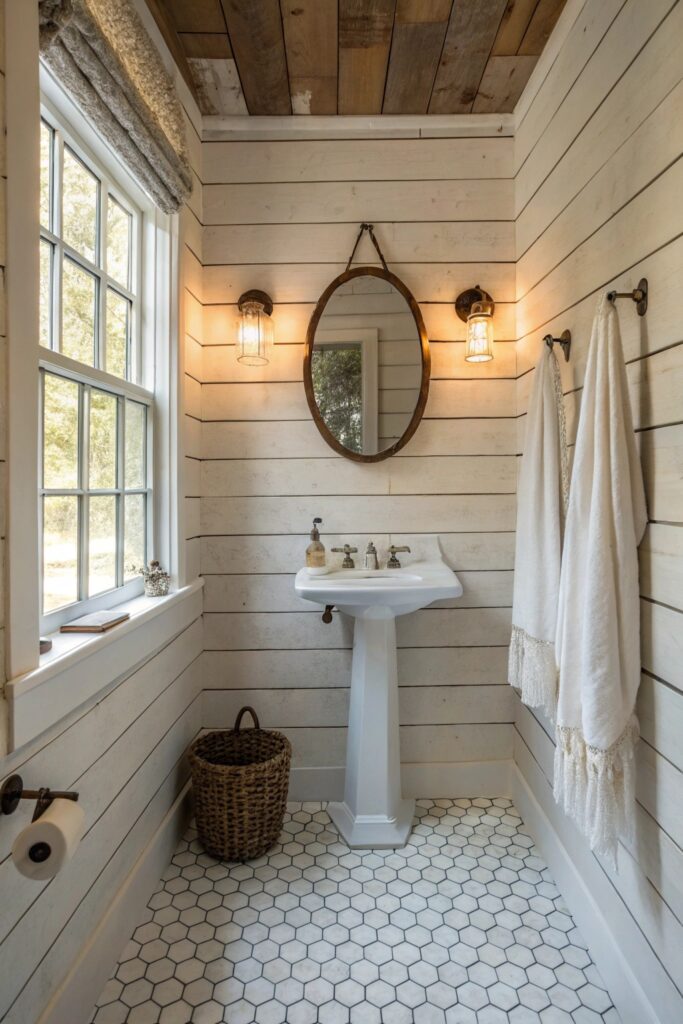
Shiplap needs a paint or sealant specifically rated for moisture in a bathroom application, and it’s worth keeping real wood shiplap out of the direct shower spray zone entirely — a moisture-resistant composite version handles that specific area better than solid wood.
2. Clawfoot Freestanding Bathtub
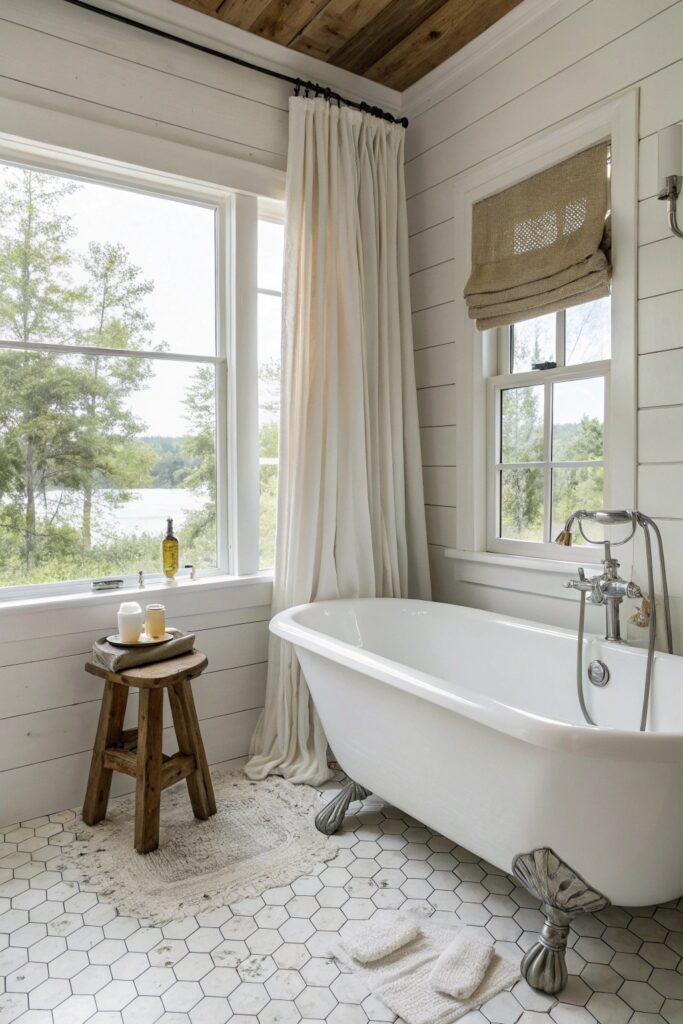
Cast iron clawfoot tubs weigh 300 to 500 pounds empty, considerably more once filled with water and an occupant, which is real concentrated weight worth confirming the floor structure can support, especially on an upper floor. Acrylic or fiberglass reproduction tubs offer a similar look at a fraction of the weight if the floor can’t accommodate cast iron.
3. Reclaimed Wood Vanity
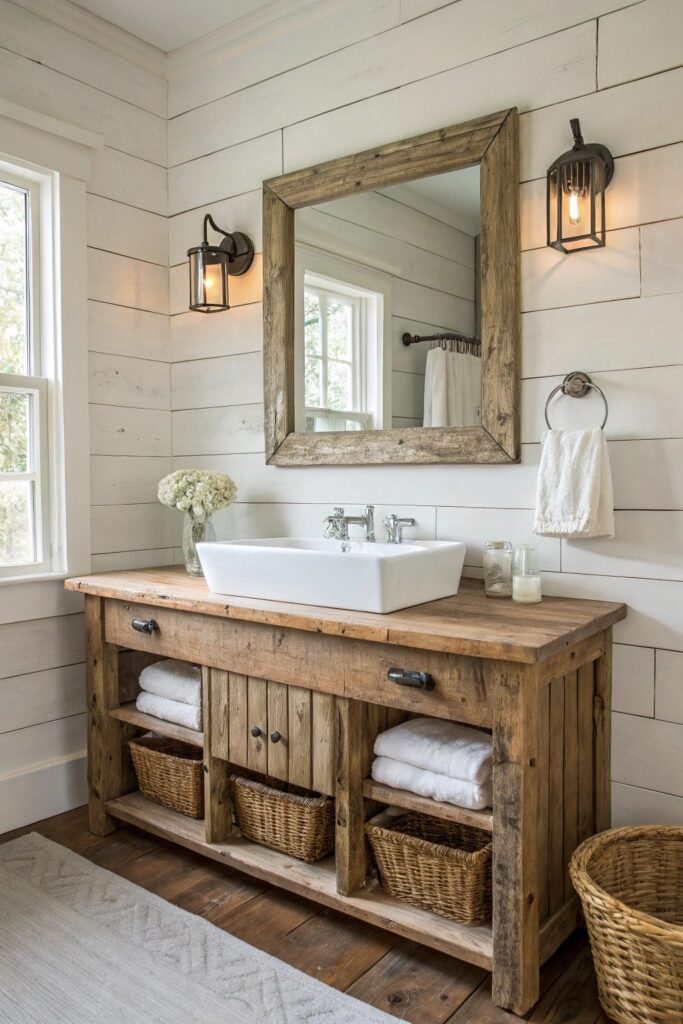
Reclaimed wood used near a sink needs a truly waterproof sealant, since raw reclaimed wood will warp or begin rotting with the repeated water exposure a vanity surface sees over time near the basin.
4. Mason Jar Light Fixtures
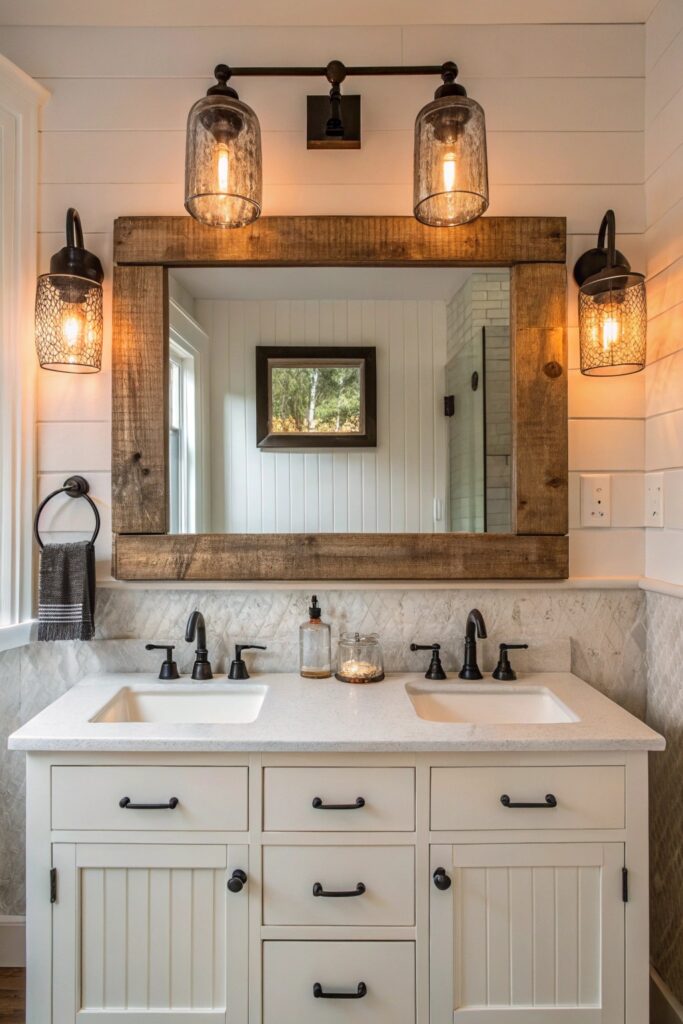
Any fixture in a bathroom needs to be rated for damp locations at minimum, and fixtures positioned inside or directly adjacent to a shower need a wet-location rating specifically — this is a real electrical code requirement, not just a durability suggestion.
5. Subway Tile with Dark Grout
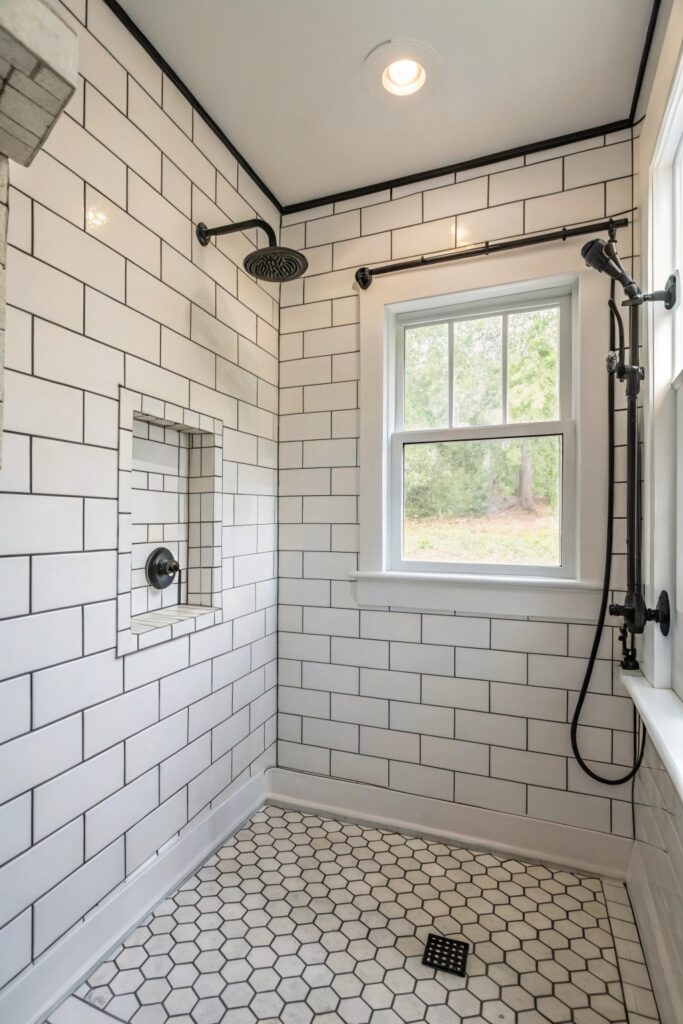
A bathroom sees considerably more sustained moisture than a kitchen backsplash does, so a sealed or epoxy grout resists mildew growth here more effectively than standard grout would in this wetter application.
6. Barn Door Bathroom Entry
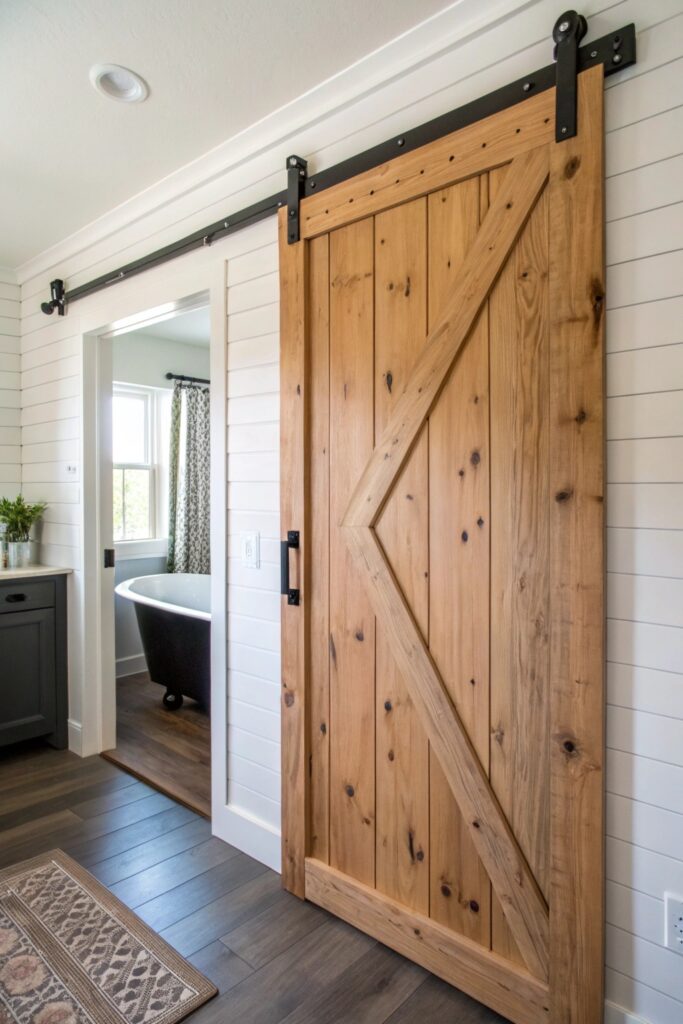
A sliding barn door doesn’t provide the same sound or privacy seal as a traditional hinged door with a latch, which is worth weighing for a primary or shared bathroom versus a powder room where privacy expectations differ. Confirm the floor transition where the door slides is level, since uneven flooring can obstruct smooth sliding operation.
7. Vintage Mirror with Distressed Frame
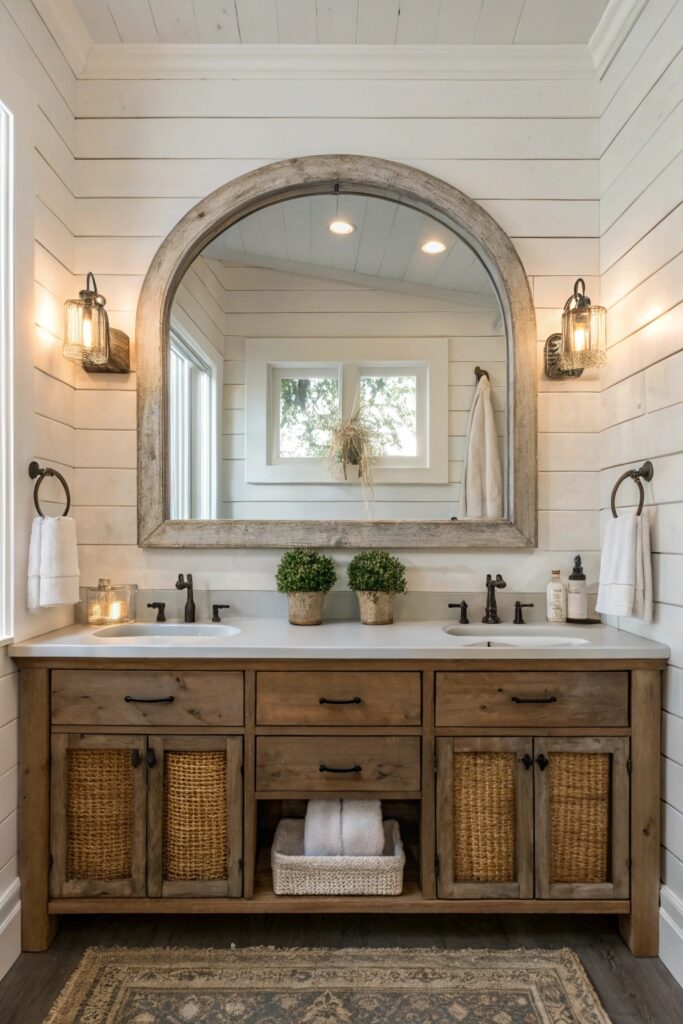
Consistent bathroom humidity causes mirror backing to develop dark edge spots faster than it would in a drier room, so a sealed-back mirror holds up considerably better here than a standard mirror repurposed from elsewhere in the house.
8. Open Wooden Shelving for Towel Storage
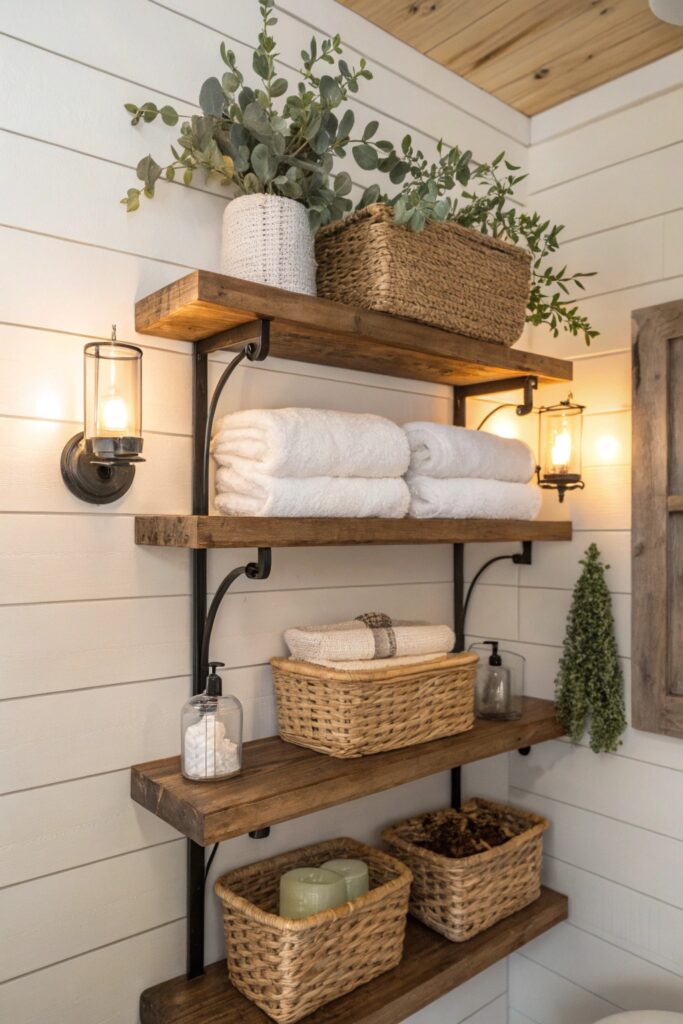
Wood shelving in a bathroom needs a sealed finish to resist warping from ambient humidity, a real concern here that wouldn’t apply to the same shelving used in a drier room like a living space or bedroom.
9. Freestanding Apron-Front Sink
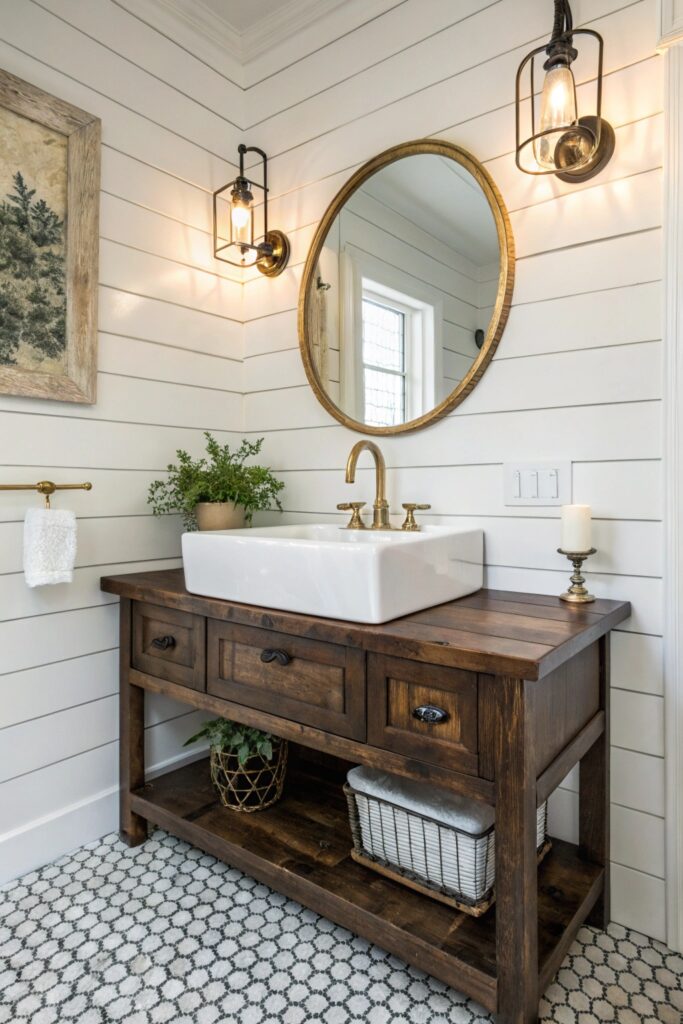
Cast iron or fireclay apron-front sinks are notably heavy, and the supporting cabinetry needs to be rated for that weight rather than standard lightweight vanity construction, similar to the same consideration in a farmhouse kitchen but scaled to bathroom fixtures.
10. Wainscoting with Beadboard Panels
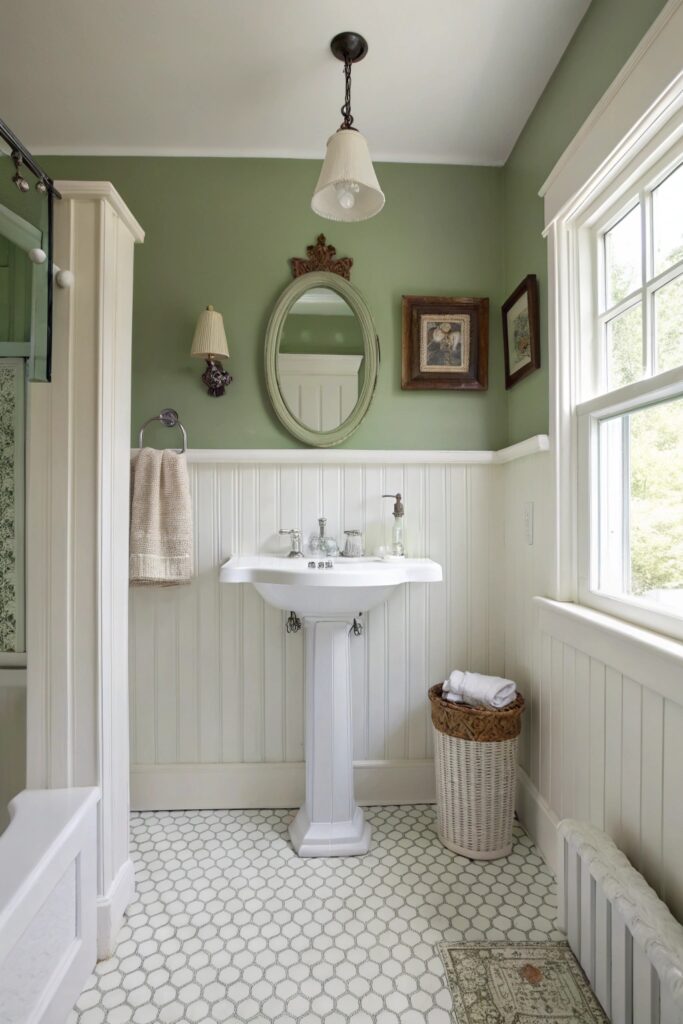
Beadboard should stop below the direct splash zone or use a moisture-rated composite material in that area specifically, the same underlying concern as shiplap applied to this different wall treatment.
11. Galvanized Metal Accents
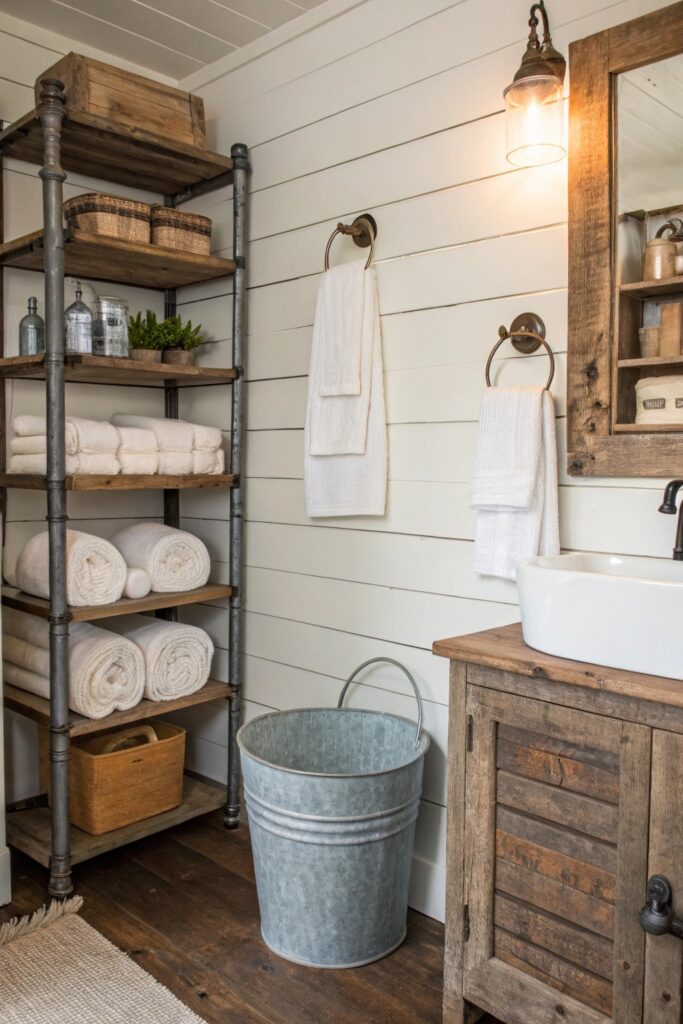
Galvanized metal can develop white rust — a zinc oxide corrosion — in consistently humid environments if it isn’t properly finished, so a powder-coated or sealed galvanized piece holds up better in a bathroom specifically than an untreated one.
12. Vintage Botanical Prints and Farmhouse Wall Art
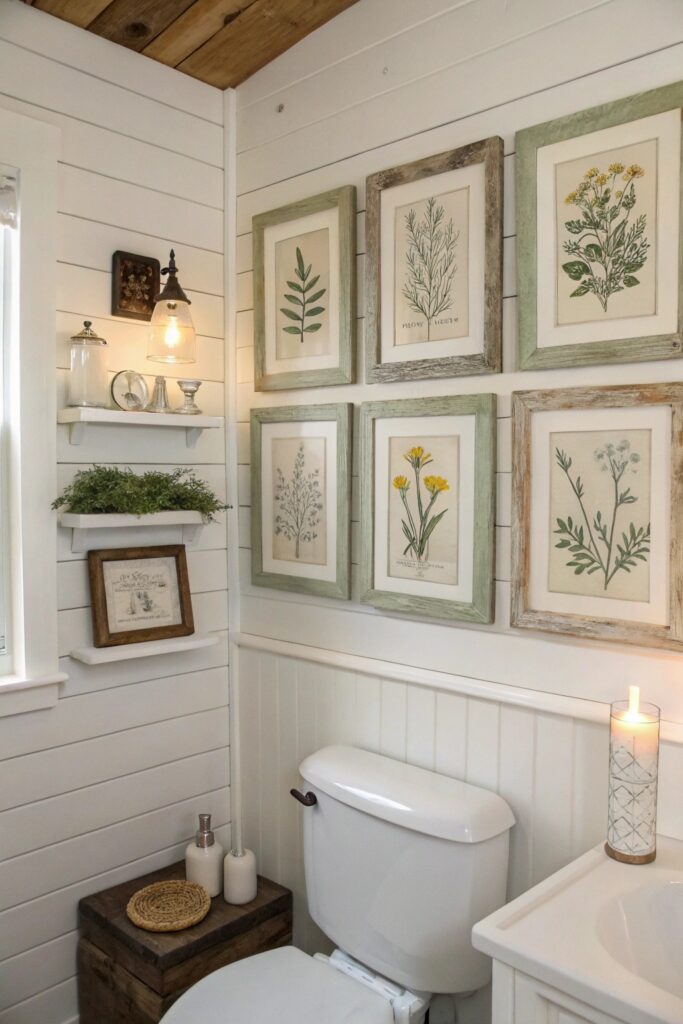
Paper prints near a shower can warp or develop mold in the backing from repeated steam exposure, so keeping them in a less humid zone of the bathroom, or choosing a sealed or laminated print for the most humid areas, protects the piece considerably longer.
Flooring Choices That Complement This Style
Wood-look luxury vinyl plank or tile achieves the warm farmhouse floor aesthetic without the water-damage risk real hardwood carries in a bathroom, making it a more practical choice than solid wood flooring for this specific room despite wood’s strong association with the overall style.
If real wood flooring is important to the design, choosing a species with better natural water resistance, like teak, and applying a marine-grade sealant considerably improves its odds of holding up, though it still requires more maintenance than a wood-look alternative.
What a Farmhouse Bathroom Refresh Costs
A cosmetic update — fixtures, mirror, shelving, and paint — typically costs $500 to $1,500 depending on material quality.
A fuller renovation including a clawfoot tub, apron-front sink, and tile work runs considerably higher, often $8,000 to $20,000 or more depending on the scope and whether plumbing changes are involved.
Ventilation Requirements Worth Confirming
A bathroom exhaust fan should be sized to the room’s actual square footage — most codes reference roughly 1 CFM (cubic feet per minute) per square foot of floor area as a baseline, with additional capacity recommended for a room with a soaking tub or larger shower that generates more steam.
Running the fan for at least 20 to 30 minutes after a shower or bath, rather than switching it off the moment you’re done, clears residual humidity that would otherwise settle into the wood and reclaimed materials this style relies on so heavily.
Sourcing vintage or reclaimed pieces from architectural salvage yards, estate sales, or online marketplaces takes noticeably more time than buying new farmhouse-style reproductions, but the character and authenticity these pieces bring is often what separates a bathroom that feels collected over years from one that reads as a single trip to a home decor store.
A farmhouse bathroom done well strikes a balance between visual warmth and practical durability, and taking the moisture considerations seriously from the start tends to save real money on repairs and replacements down the line compared to discovering these issues after materials have already begun to warp or corrode.
Whichever combination of these elements you choose, treating moisture protection as a starting requirement rather than an afterthought is what lets this style’s raw, collected character actually last.
Final Thoughts
Nearly every idea here comes back to the same underlying tension: farmhouse style’s love of raw wood, vintage pieces, and unfinished-looking materials needs real moisture protection to actually survive in a bathroom long-term. Proper sealing, damp or wet-rated fixtures, and keeping the most vulnerable materials out of direct spray zones lets you keep the aesthetic without sacrificing durability.
A functioning exhaust fan, run during and after every shower, does more to protect every material choice on this list than any single sealant or finish — moisture control at the source matters as much as the individual material decisions.