The space above kitchen cabinets is one of the most commonly overlooked display areas in a home, and the difference between it reading as intentional styling versus a dusty catch-all comes down to a cohesive approach rather than any single specific object.
Below are 12 ways to style this space, with real costs and practical notes for each.
1. Oversized Baskets for Texture
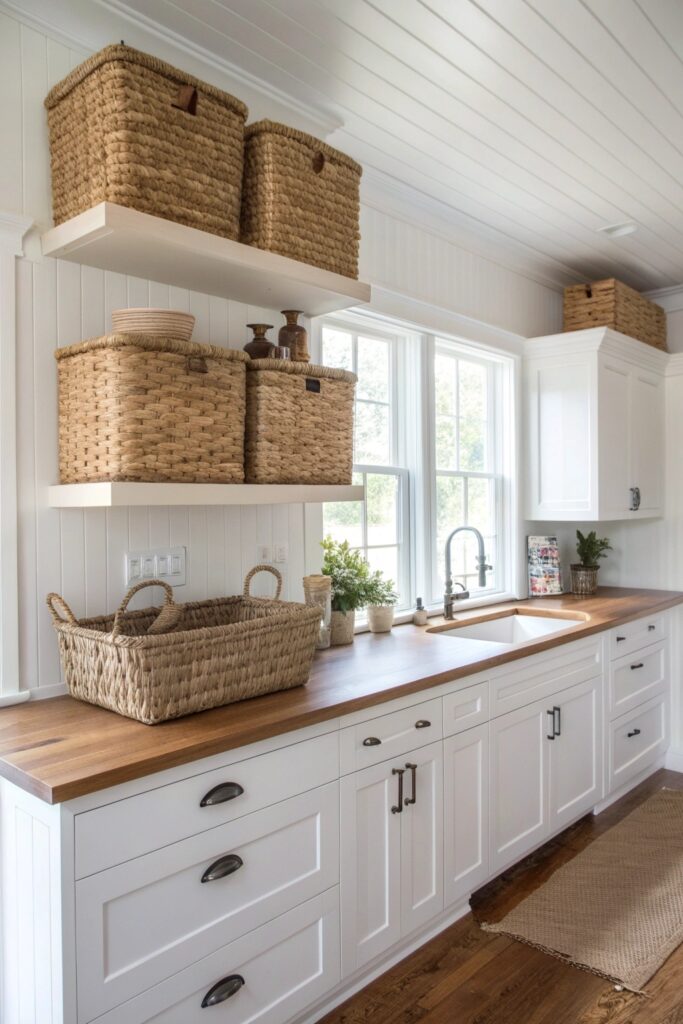
Large woven baskets ($20-50 each) fill the space’s height while adding genuine organic texture, working well leaned at an angle rather than standing perfectly upright for a more natural look.
Choose baskets with genuine structural rigidity rather than a fully collapsible weave, since a flimsy basket can look sagging or lopsided once positioned above eye level where every angle is visible.
2. Vintage Pottery and Ceramics
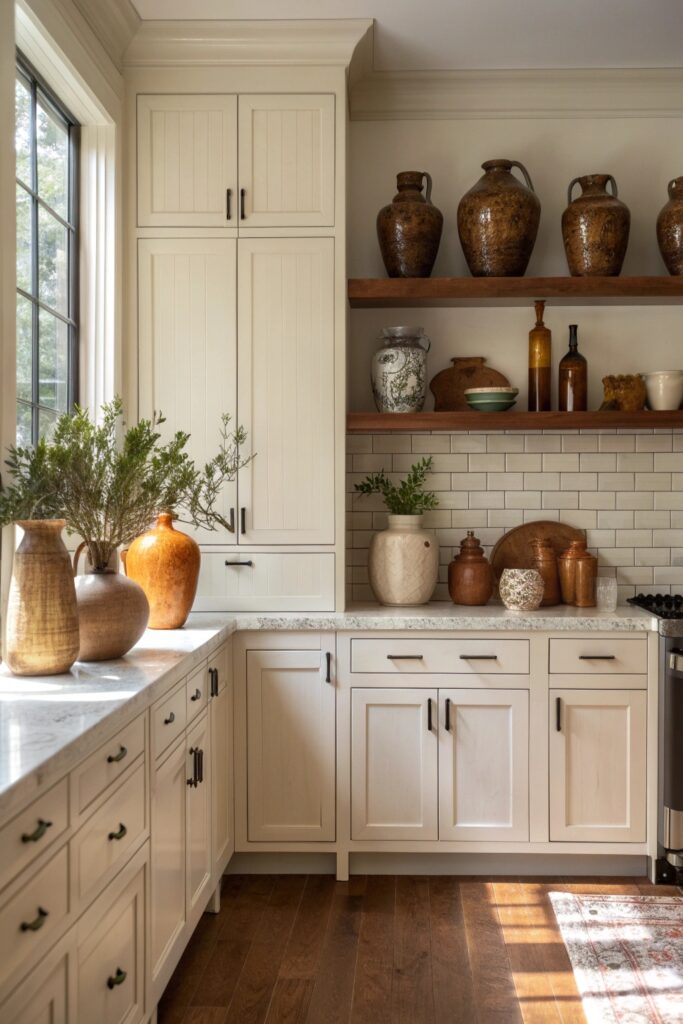
A collection of vintage or vintage-look pottery pieces brings genuine character and history that new decor often can’t replicate, particularly effective if sourced gradually from thrift stores or estate sales.
Look for pieces with some visual cohesion (similar glaze tones or a shared era) rather than a completely random assortment, which reads as more intentionally curated even without an exactly matched set.
3. Greenery That Doesn’t Need Constant Care
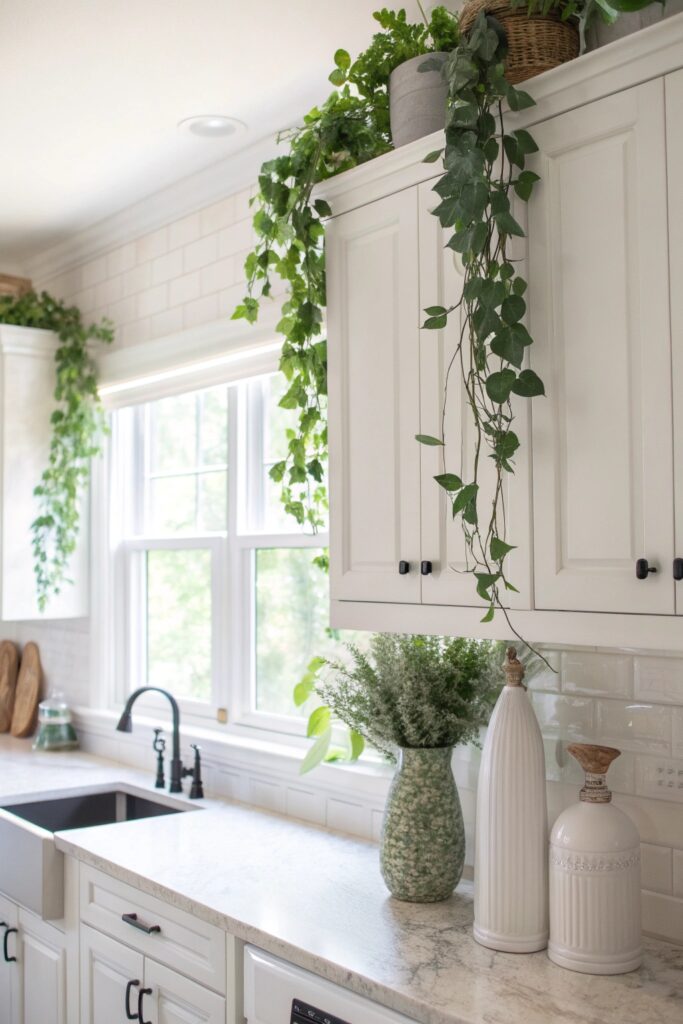
Faux plants or genuinely low-maintenance real varieties (pothos, artificial trailing vines) soften the cabinet top’s hard lines without requiring regular watering access to a spot that’s often awkward to reach.
Confirm the specific spot’s light exposure before choosing a real plant, since cabinet tops are often positioned near a ceiling with less direct light than a lower shelf or windowsill would receive.
4. A Curated Collection of Wooden Bowls
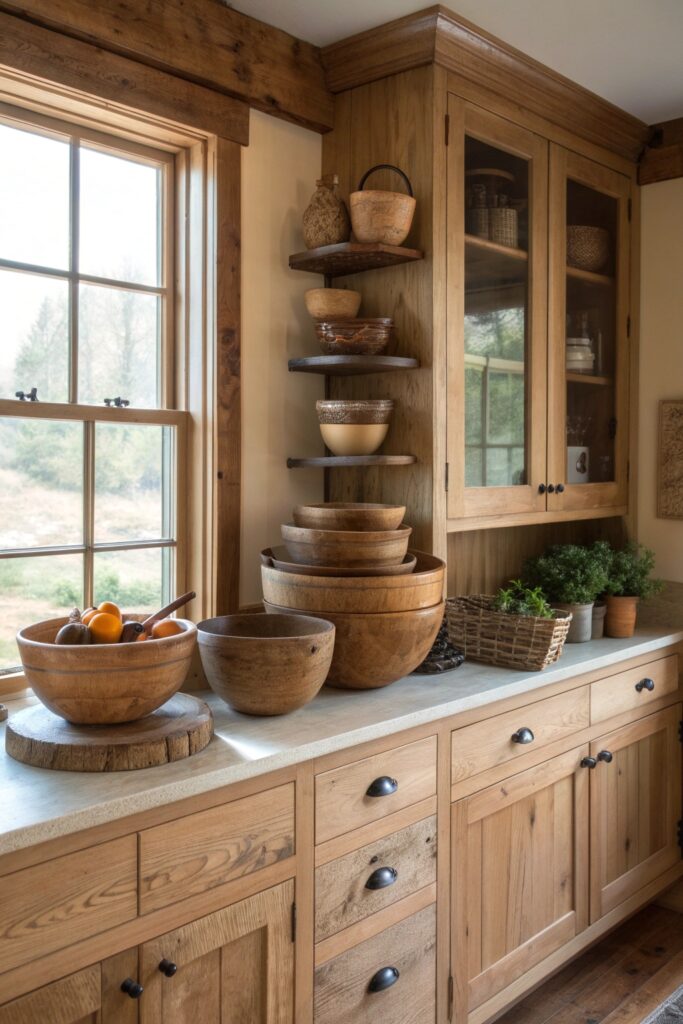
Stacked or staggered wooden bowls in varying sizes add warm material texture and a sense of intentional collecting, working especially well in a kitchen with other wood tones already present.
Vary the bowl sizes and stack heights slightly rather than lining them up uniformly, which creates more visual rhythm than a perfectly even row.
5. Antique Crates or Wooden Boxes
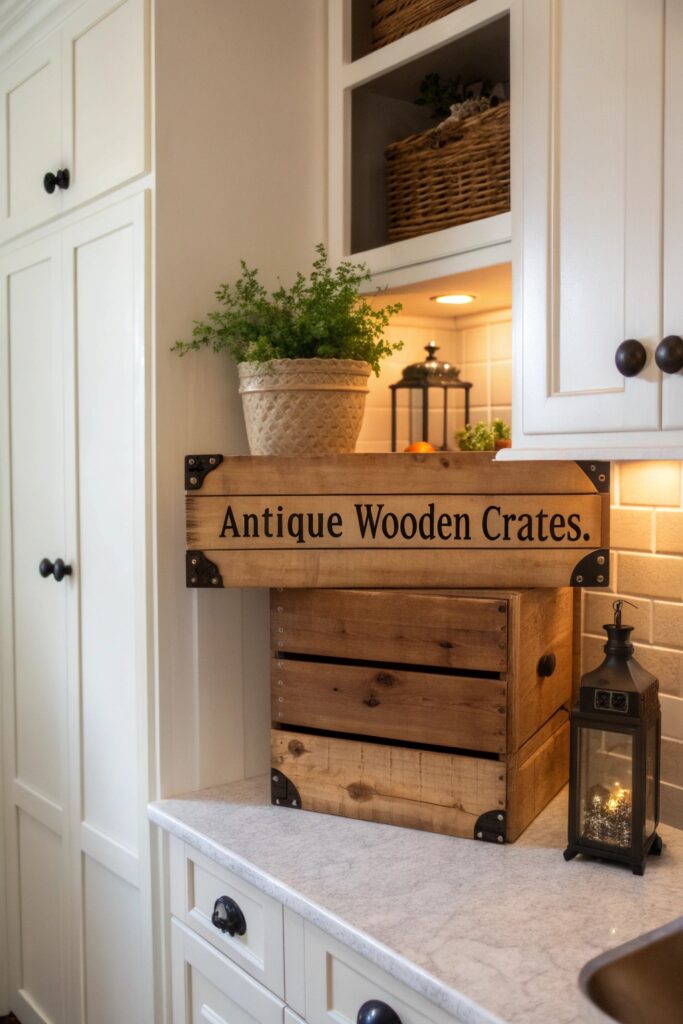
Vintage crates ($15-40 each) add rustic texture and can be arranged at varying depths for visual interest, working well in a farmhouse or more casual kitchen style specifically.
Stack crates at varying heights and slight angles for a more natural, collected look rather than lining them up in a uniform row.
6. Decorative Plates on Stands
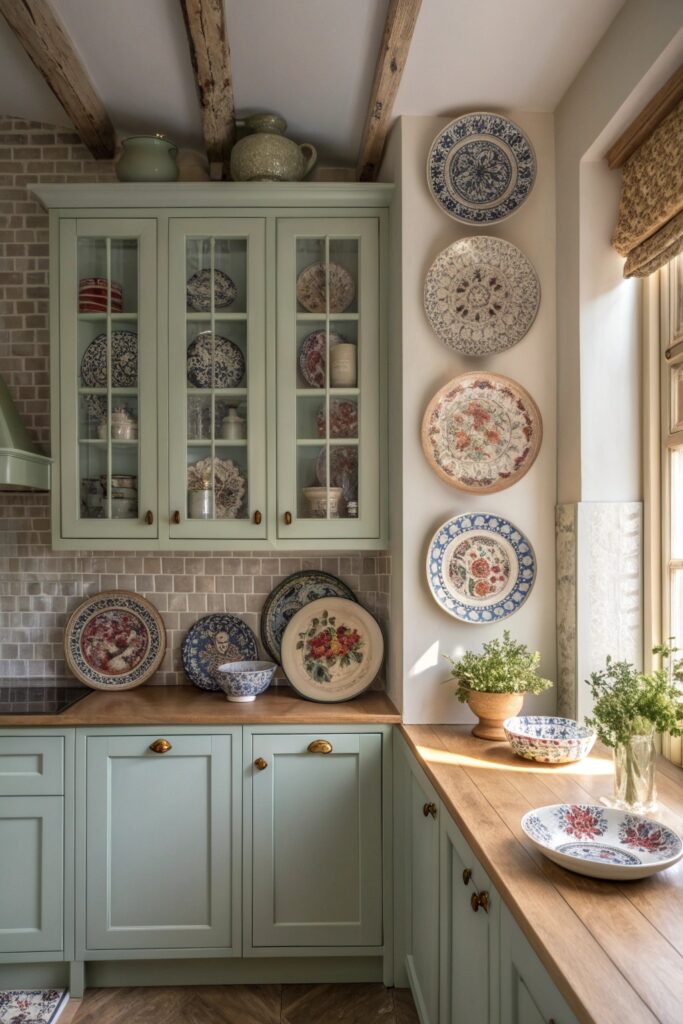
Plates displayed upright on small stands ($5-10 each) turn functional or purely decorative dishware into genuine wall-adjacent art, adding color and pattern above the cabinet line.
Choose stands with a stable, wide enough base for your specific plate sizes, since a stand that’s too narrow relative to the plate can look precarious even when it’s technically secure.
7. Glass Jars and Apothecary Bottles
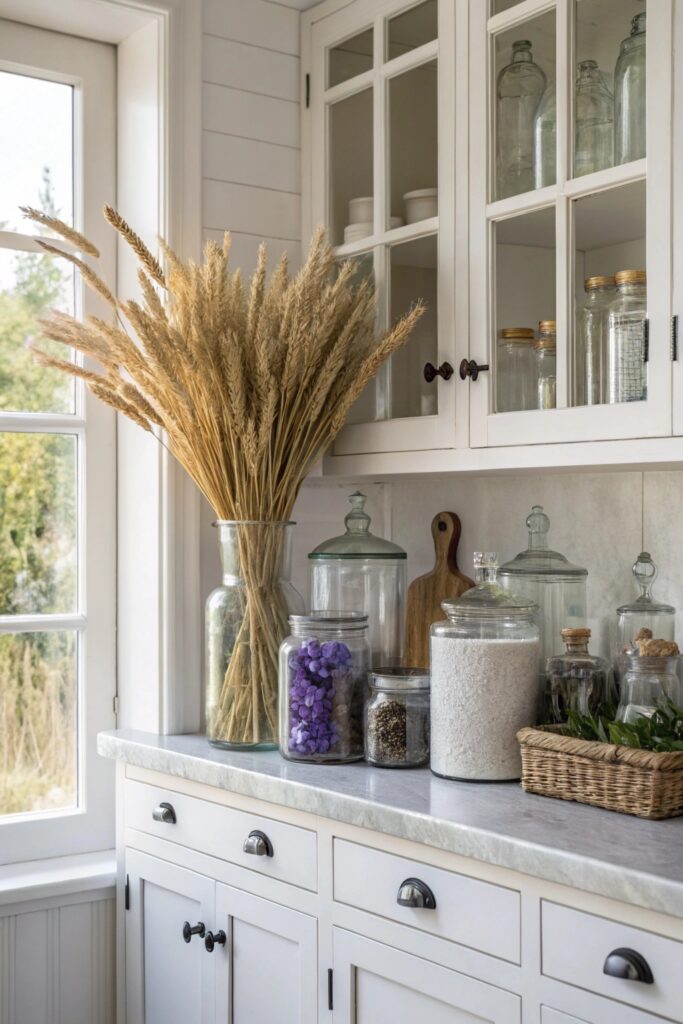
A cluster of glass jars or apothecary-style bottles in varying heights adds visual interest through both material and silhouette variety, and they can be left empty or filled with dried botanicals.
Mix bottle heights and shapes within the cluster, which adds more visual interest than uniform-sized bottles arranged in a straight line.
8. Cookbooks Stacked as Decor
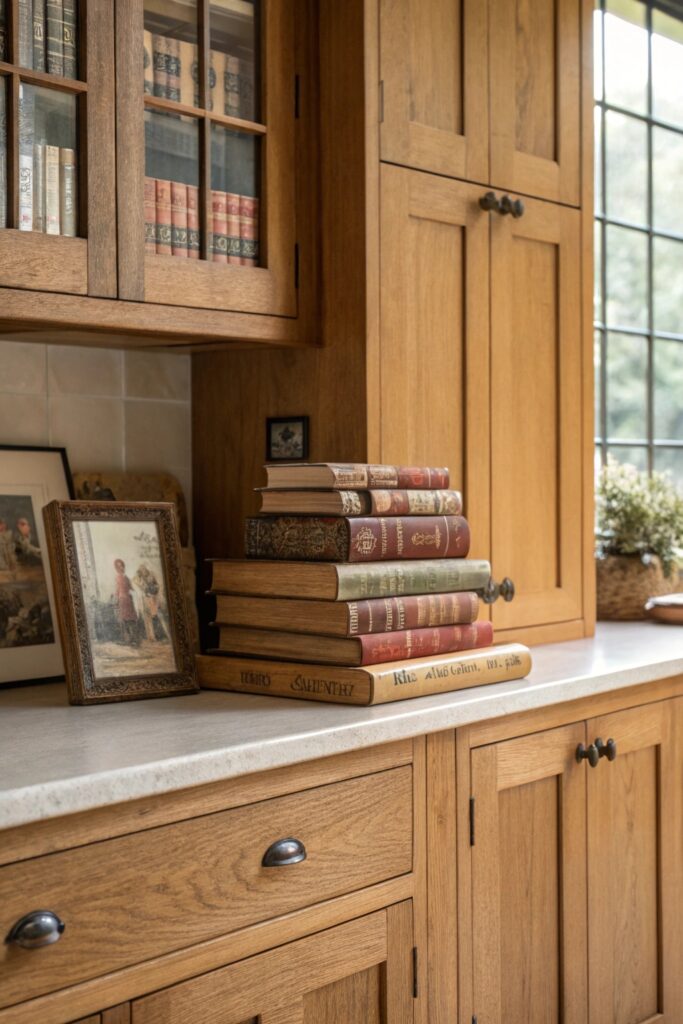
A few cookbooks with visually appealing spines, stacked and paired with a small object on top, bring genuine personality and a collected feel to the space.
Choose books you don’t mind exposing to kitchen heat and grease over time, since this location sits closer to cooking activity than a living room shelf would.
9. String Lights for Ambient Glow
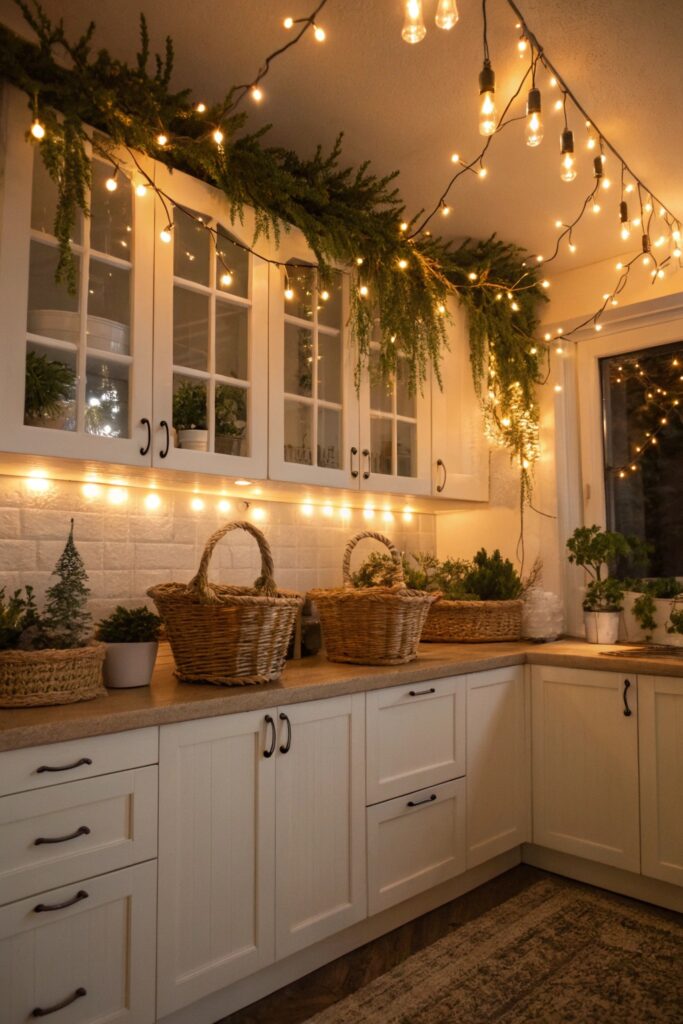
Warm string lights woven among other displayed items add a soft evening glow, working particularly well combined with baskets or greenery for genuine layered texture and light.
Battery-powered string lights avoid the need for a nearby outlet, which matters since cabinet-top spaces are rarely positioned near existing electrical access.
10. Seasonal Rotating Displays
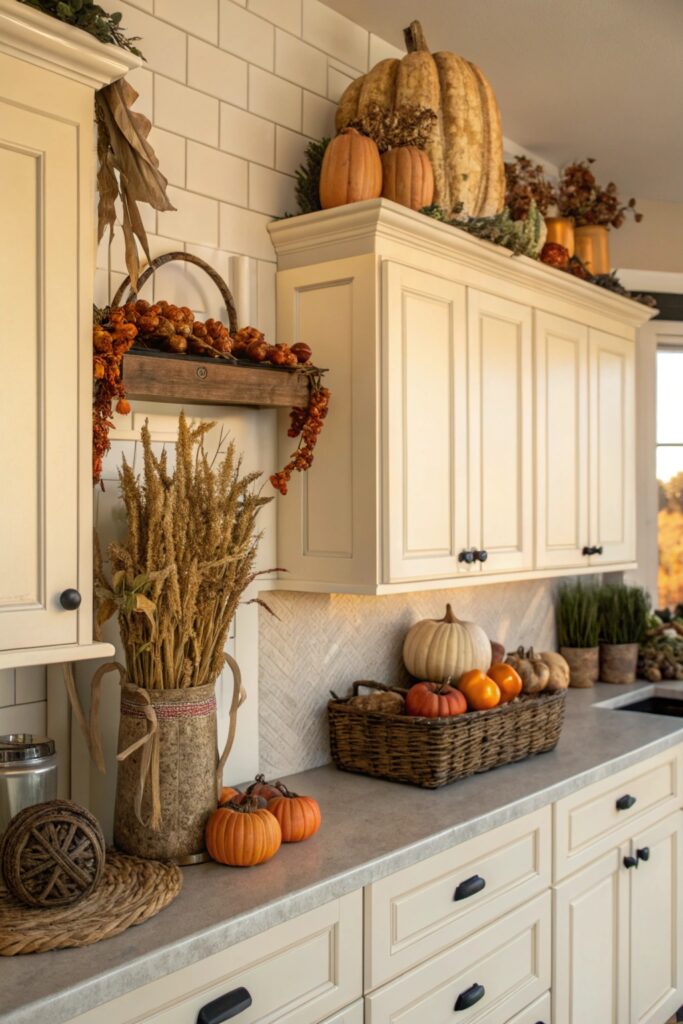
Swapping smaller decorative elements seasonally (dried wheat in fall, evergreen branches in winter) keeps this space feeling current without requiring an entirely new setup each time.
Store off-season items in a labeled bin, which makes the seasonal rotation easier to actually maintain rather than becoming a project you keep meaning to get to.
11. Artwork Leaned Against the Wall
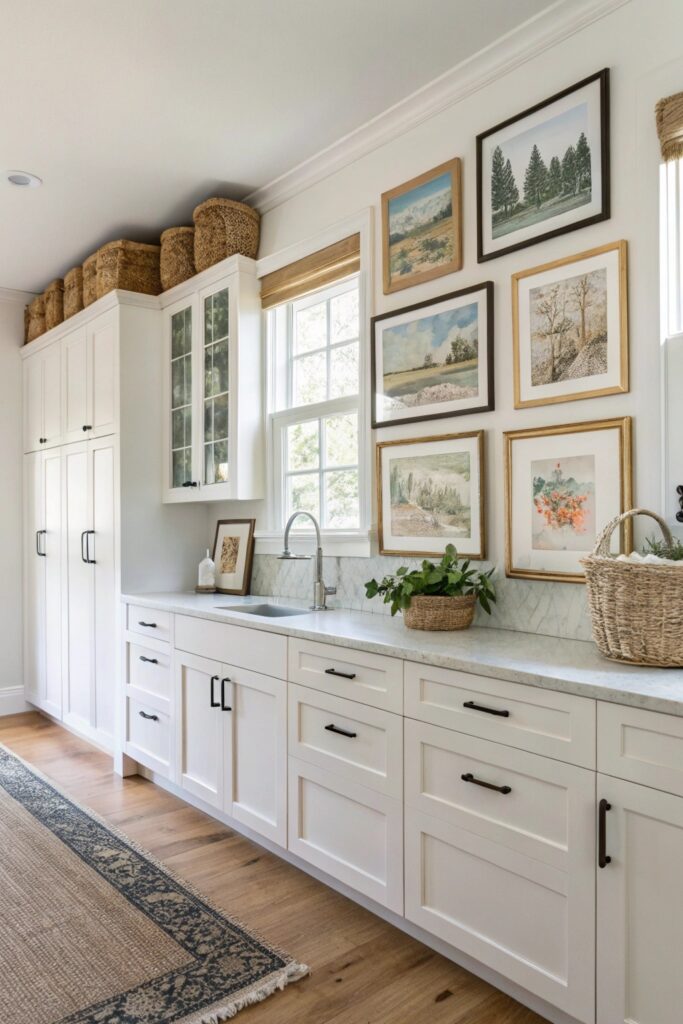
A piece of art leaned rather than hung adds height and visual interest without requiring wall anchors, and it’s easy to swap out or adjust as your styling preferences change.
Lean the art at a slight backward angle against the wall specifically, which looks more intentional than a piece standing perfectly vertical without any support.
12. A Mix of Everything (Curated, Not Chaotic)
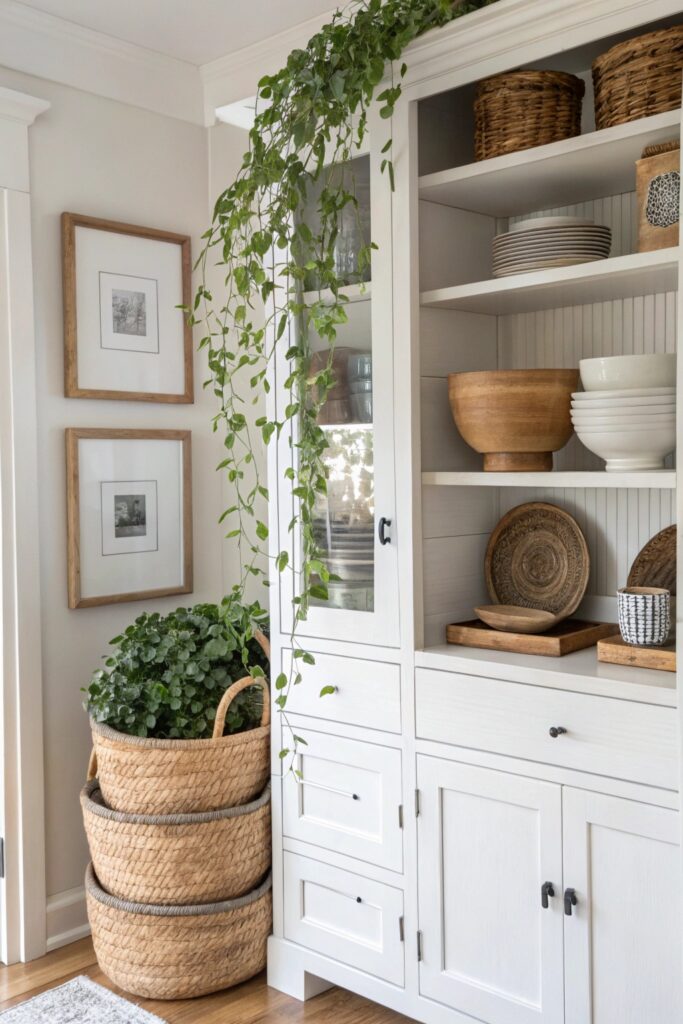
Combining a few elements from this list — baskets, greenery, one or two ceramic pieces — creates a genuinely layered display, provided the combination stays limited to 2-3 material types rather than becoming visually overwhelming.
A Note on Grease and Dust
This specific location, positioned above a working kitchen, accumulates dust and airborne grease faster than most other display spots in a home, which is worth factoring into both material choices and maintenance expectations.
Choose materials that wipe clean easily (sealed ceramics, glass, treated wood) over porous or textured surfaces that trap grease, and plan on dusting or wiping this display every few weeks rather than treating it as a fully set-and-forget arrangement.
Final Thoughts
Height variation and genuine negative space matter more than any specific decor choice, since both separate a curated display from one that simply accumulated items over time. Choose a consistent material story (2-3 types, not five) across whatever elements you use, which is the detail that keeps a mixed display reading as intentional rather than cluttered.