
Minimalist coffee tables share a consistent set of principles — clean lines, limited materials, and understated proportions — that distinguish them from the broader range of styles covered in our general guide to coffee table ideas.
Below are 10 minimalist coffee table approaches, with real costs and material notes for each.
1. Go Sleek with a Glass-Top Coffee Table
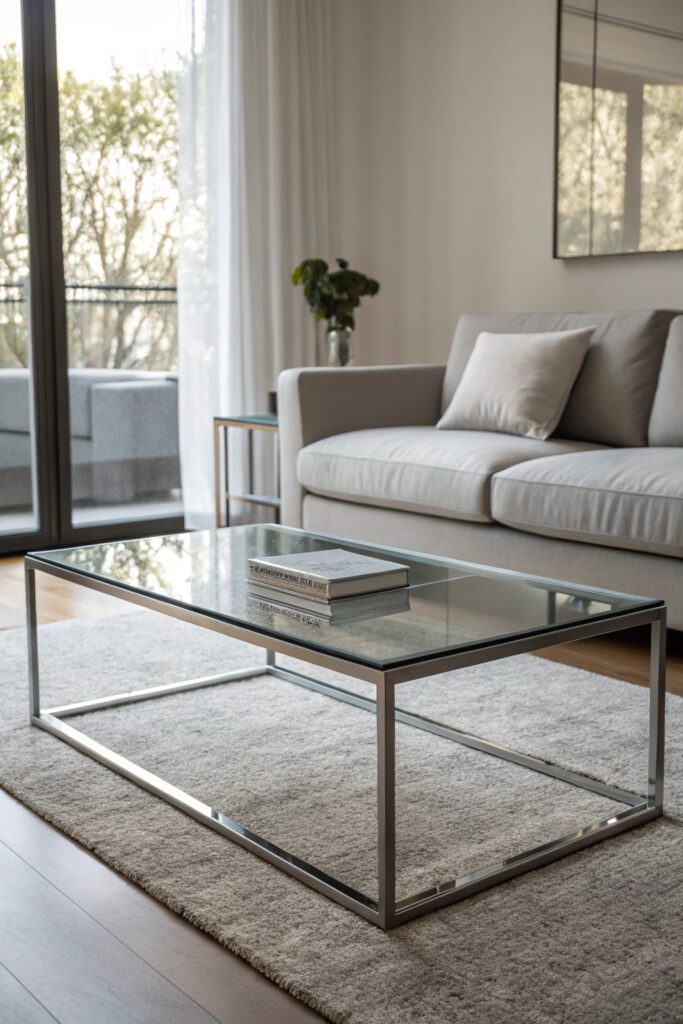
A glass-top table on a simple metal or wood frame ($100-250) reads as visually lighter than a solid-surface table, which is a core minimalist principle — less visual mass even at the same physical footprint.
Pair a glass-top table with a simple metal frame rather than an ornate base, since an elaborate base undercuts the lightweight, uncluttered effect the glass surface is meant to create.
Tempered glass is worth confirming before purchase specifically for durability, since minimalist glass designs tend to have thinner profiles than more traditional glass furniture.
A matte or lightly oiled finish (rather than high-gloss lacquer) keeps a wood slab table feeling natural and understated, which suits minimalist styling better than a shinier, more processed-looking surface.
2. Choose a Simple Wood Slab Table
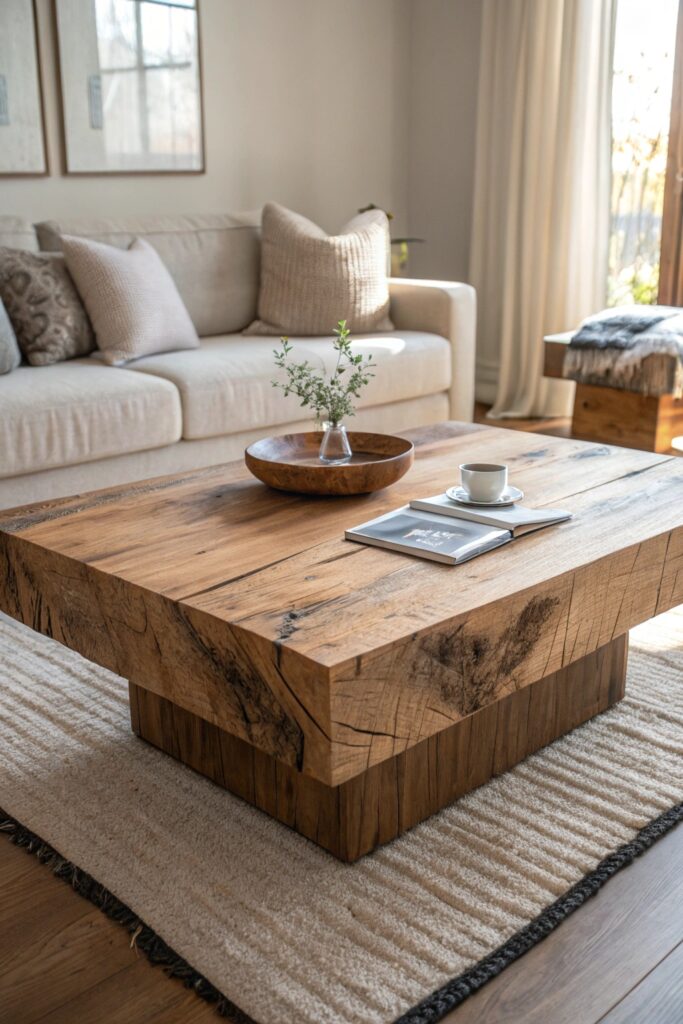
A single solid wood slab on minimal hairpin or block legs ($150-350) achieves genuine warmth without ornamentation, letting the wood grain itself provide visual interest rather than added decorative detail.
A round table’s diameter should roughly match two-thirds the width of the sofa it sits in front of, which keeps the proportions balanced within a minimalist room’s typically sparser overall furniture arrangement.
Light woods (oak, ash, birch) read as more minimalist than darker stained woods, which tend to carry more visual weight even in an otherwise simple silhouette.
Nesting tables also solve a genuine minimalist tension — needing occasional extra surface area without permanently committing floor space to a larger table that sits mostly empty.
3. Opt for a Round Coffee Table
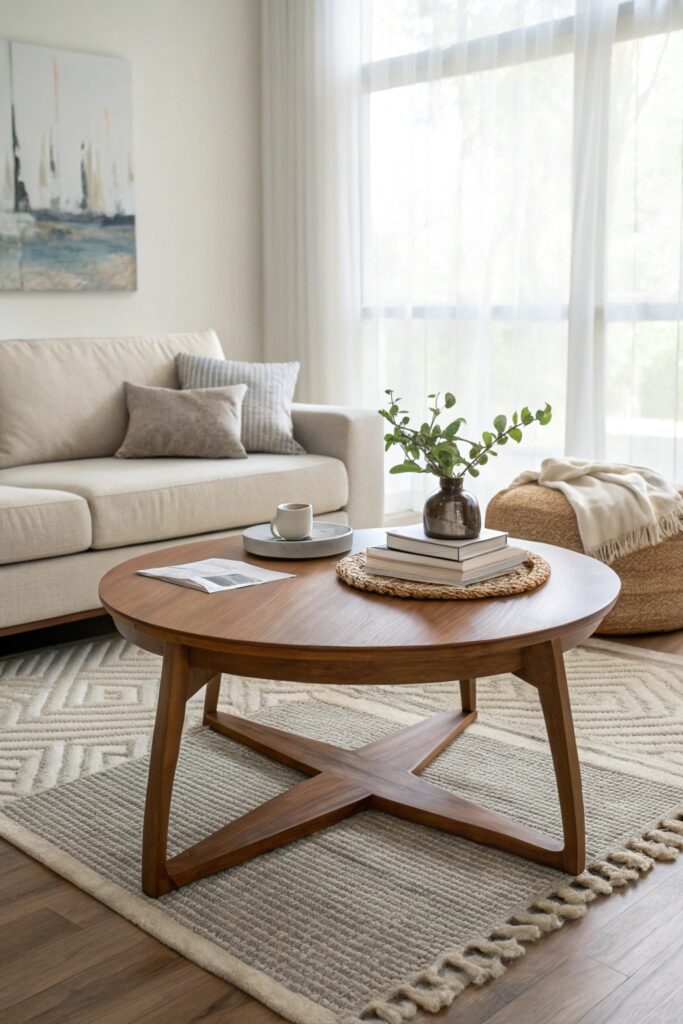
A round table removes the visual weight of sharp corners, and the simpler geometric form aligns naturally with minimalist design’s preference for clean, uncomplicated shapes.
Confirm the leg attachment hardware is solid steel rather than a thinner stamped metal, since hairpin legs specifically depend on structural integrity to support real everyday use without wobbling.
Round tables also improve traffic flow in smaller living rooms, since there are no corners to navigate around in a tighter seating arrangement.
When shopping for marble-look alternatives, check that the veining pattern doesn’t repeat too obviously across the surface, since some lower-quality printed porcelain options show an unnatural, repeating pattern up close.
4. Try a Nesting Coffee Table Set
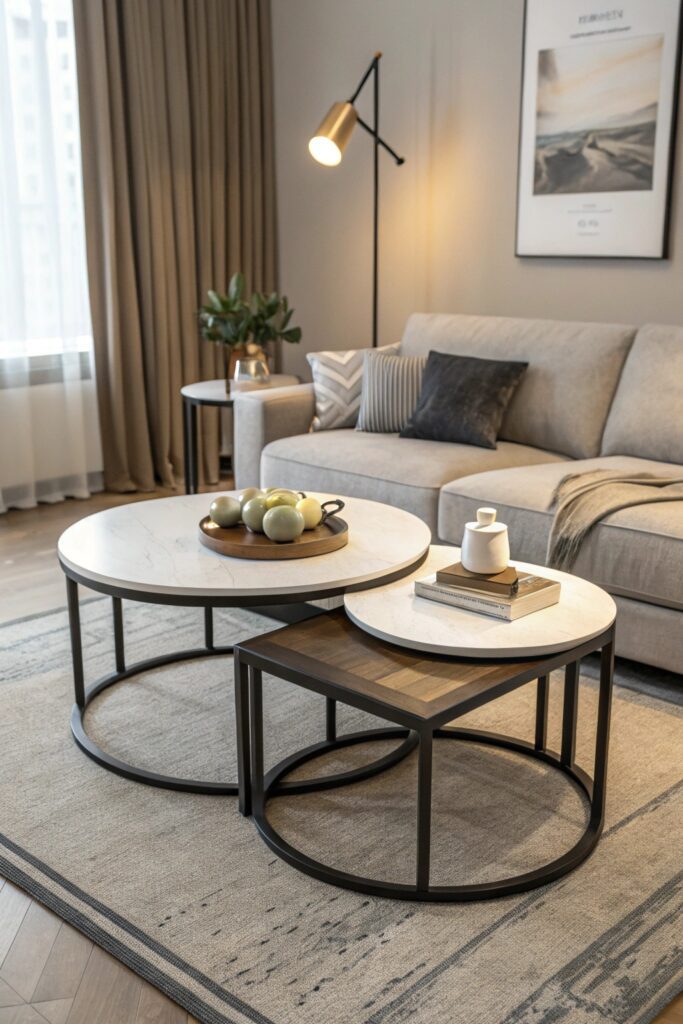
A set of two or three simple, unadorned nesting tables ($100-220) offers flexible surface area while maintaining a minimal footprint when stored together, aligning with minimalism’s efficiency-focused approach to furniture.
Measure your own existing seating height before committing to a low-profile design, since a table that sits too far below the sofa’s arm height can feel awkward to actually use for setting down drinks or a laptop.
Choose a set in a single consistent material and finish rather than mixed materials, which keeps the nested pieces reading as one cohesive unit rather than several competing elements.
Test the storage mechanism in person if possible before buying, since some lower-cost lift-top designs feel sturdy in photos but wobble or stick once installed.
5. Pick a Table with Hairpin Legs
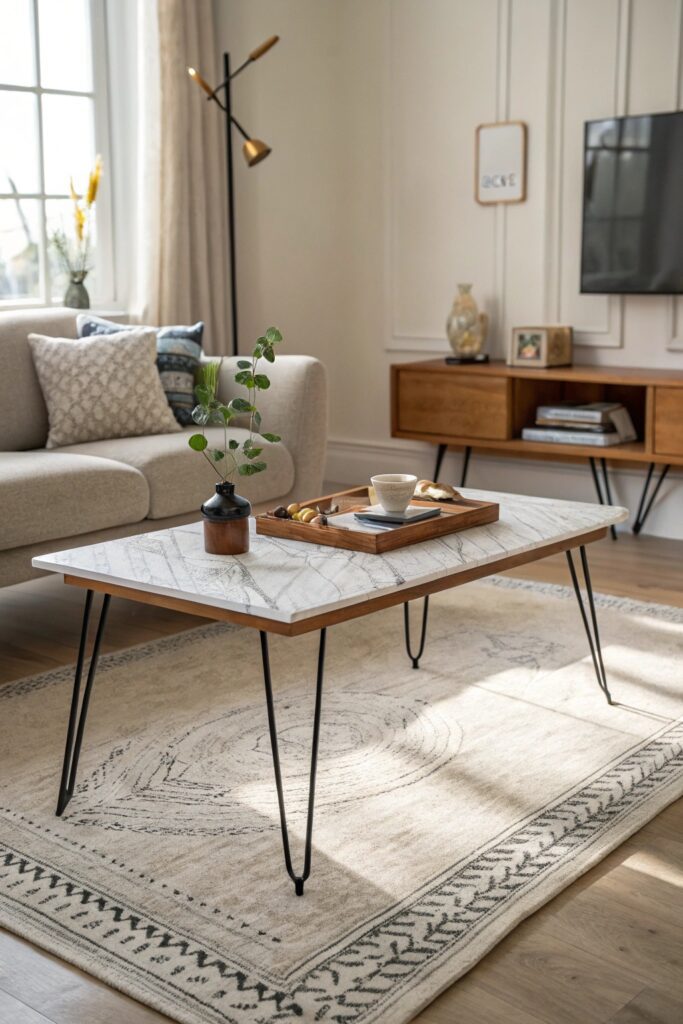
Thin metal hairpin legs ($80-180 for the full table) are a defining minimalist and mid-century detail, since their slim profile takes up minimal visual space compared to a solid or block-style base.
Black or brass hairpin legs specifically pair well with almost any minimalist tabletop material, from wood to glass to stone.
6. Use a Marble-Top Coffee Table
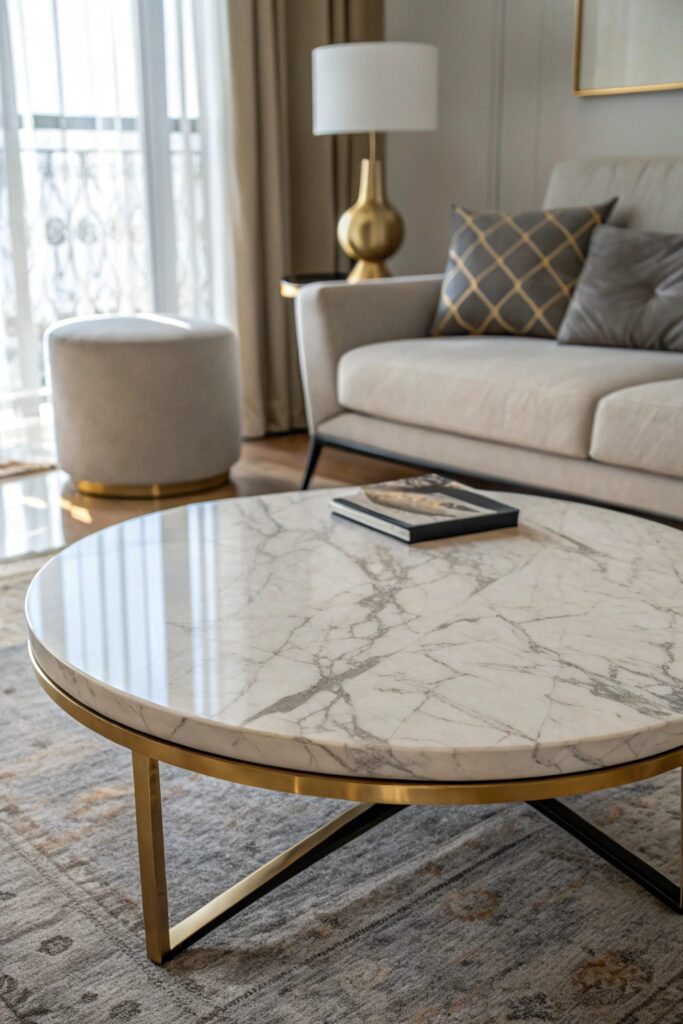
A simple marble slab on a minimal base ($200-500 for genuine marble, $120-250 for marble-look alternatives) adds material richness while keeping the overall silhouette clean and unadorned.
Marble-look porcelain or engineered stone alternatives achieve a similar visual effect with less maintenance than genuine marble, which requires periodic sealing to resist staining.
7. Go Low-Profile for a Modern Look
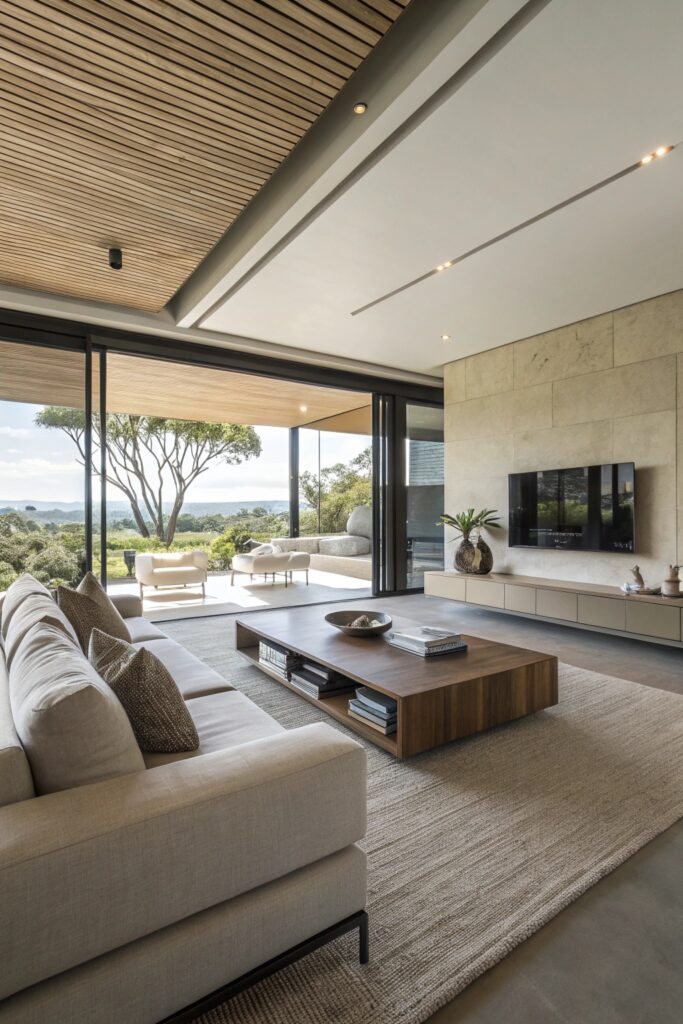
A table under roughly 16 inches tall reads as more contemporary and minimal, since less visual bulk sits between the seating and the floor, letting the room feel more open overall.
This style works best paired with lower-profile seating, maintaining proportional balance between the table and the sofa or chairs around it.
8. Try a Coffee Table with Hidden Storage
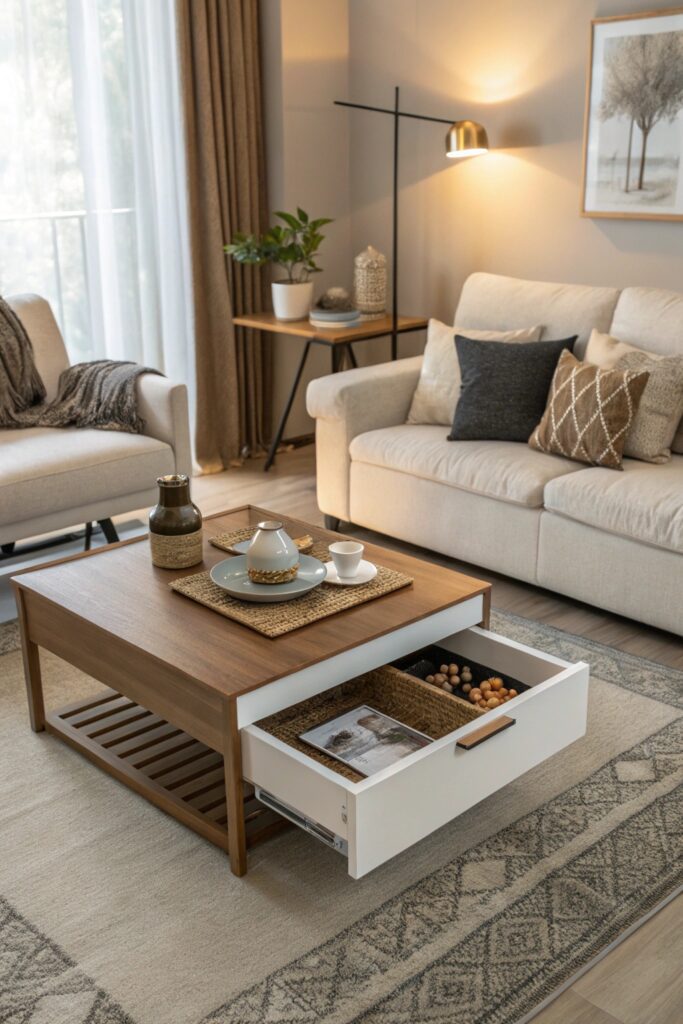
A table with a concealed drawer or lift-top surface ($150-350) keeps remotes, coasters, and small items out of sight, which directly supports the clutter-free look minimalist design depends on.
Choose a design where the storage mechanism is fully invisible when closed, since visible hardware or hinges can undercut the clean, seamless look minimalism aims for.
9. Choose a Two-Tone Minimalist Design
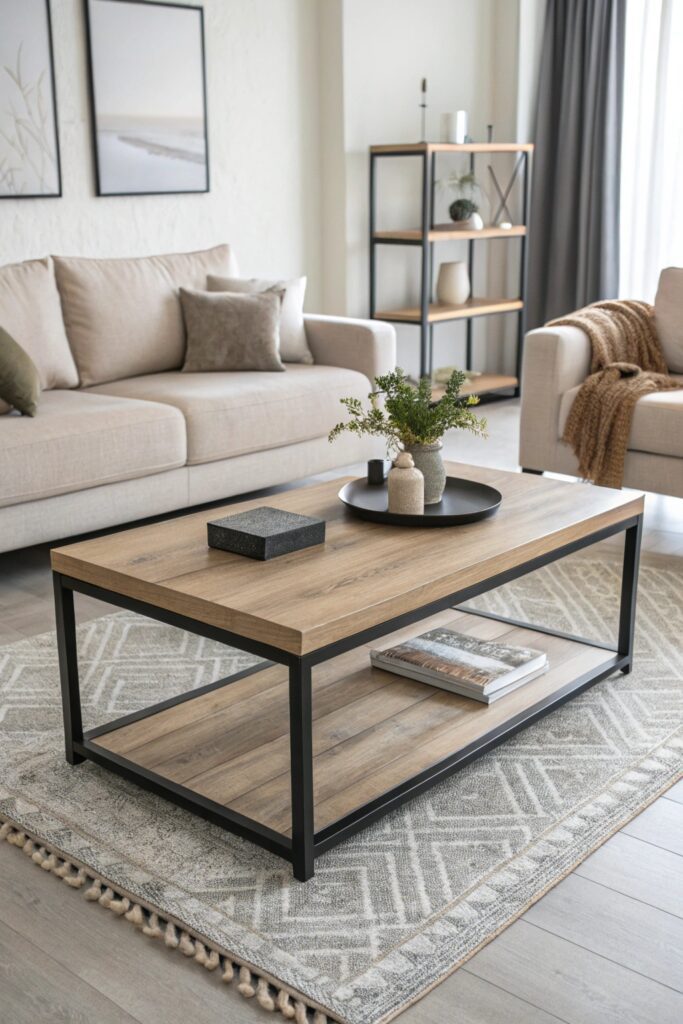
Pairing two complementary materials — a wood top with black metal legs, for instance — adds subtle visual interest without introducing ornamentation, keeping the overall design simple while avoiding a flat, single-material look.
Limit the design to exactly two materials rather than three or more, which is the detail that keeps this approach reading as minimal rather than busy.
10. Keep It Neutral with a Monochrome Table
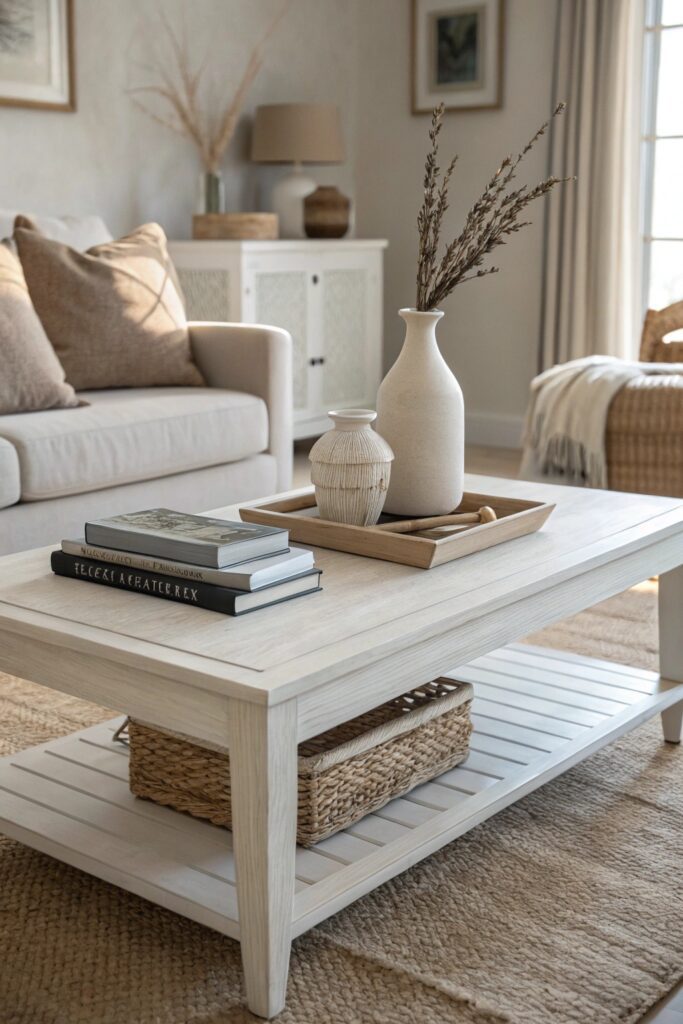
A table in a single neutral tone — all black, all white, or all natural wood — removes any color contrast that could draw unnecessary visual attention, letting the table recede into the room’s overall palette.
This approach works particularly well as a foundation for a room where other elements (art, textiles) are meant to carry the visual interest instead.
Final Thoughts
A limited material palette matters more than any single style choice — sticking to one or two materials throughout, whether that’s a single wood tone or a wood-and-metal pairing, is what keeps a minimalist table reading as intentional rather than simply plain. Scale and proportion relative to your specific seating area remain just as important here as with any other coffee table style.