
A front flower bed that looks considered year-round, not just during peak bloom, comes down to a few consistent principles — layering, structure, and a mix of plant types rather than relying entirely on seasonal flowers alone.
Below are 15 ways to build that kind of bed, with practical notes for each.
Looking for different flower bed shapes and formats to choose from first? See our companion guide to flower bed ideas that boost curb appeal.
1. Layer Your Plants by Height
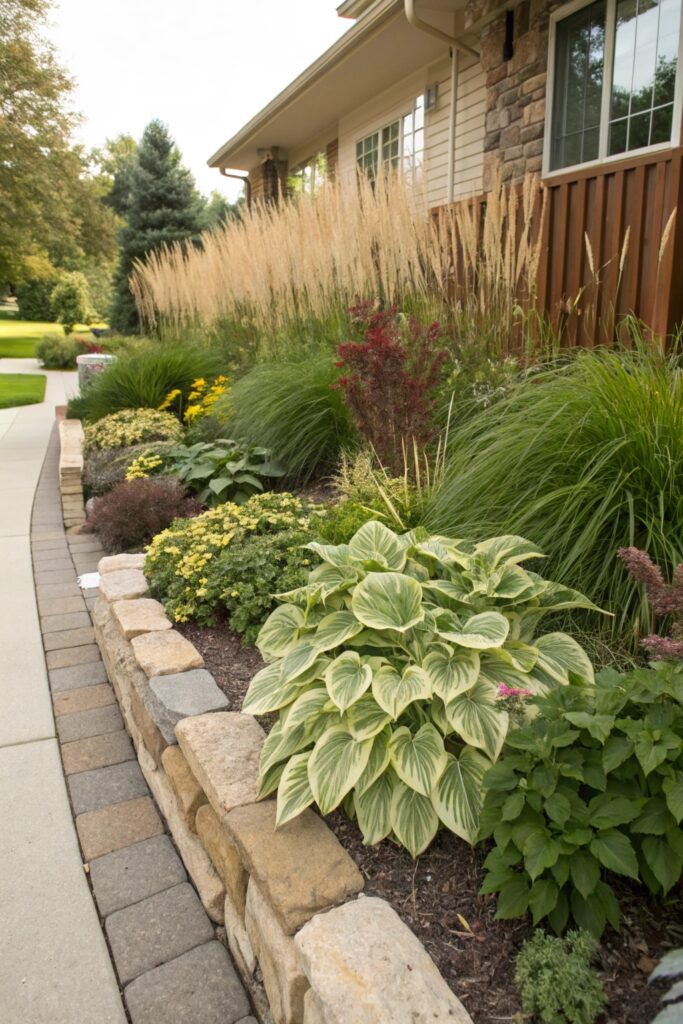
Placing taller plants toward the back of a bed, mid-height plants in the middle, and low groundcover or edging plants in front creates the visual depth that a single-height planting can’t achieve, and it ensures every plant remains visible from the street rather than shorter plants being hidden behind taller ones.
A common ratio to start with is roughly one-third tall, one-third mid-height, and one-third low plants across the bed’s total footprint, adjusted based on the bed’s actual depth and viewing distance from the street.
2. Mix Evergreens With Seasonal Bloomers
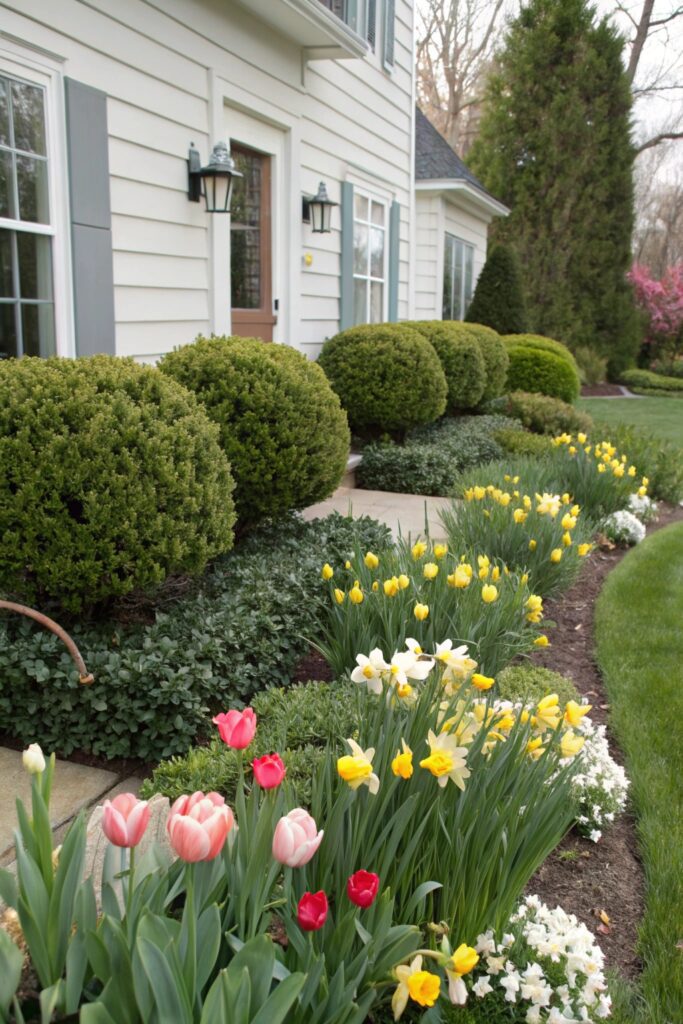
Anchoring a bed with evergreen shrubs (boxwood, dwarf holly) provides year-round structure, while seasonal flowering plants layered around them add color and change through the growing season without leaving the bed looking bare during off-bloom periods.
A rough guideline is keeping evergreens to about half the bed’s total plant count, which provides enough year-round structure without crowding out the seasonal color that makes a bed feel alive during the growing months.
3. Choose a Color Palette and Stick to It
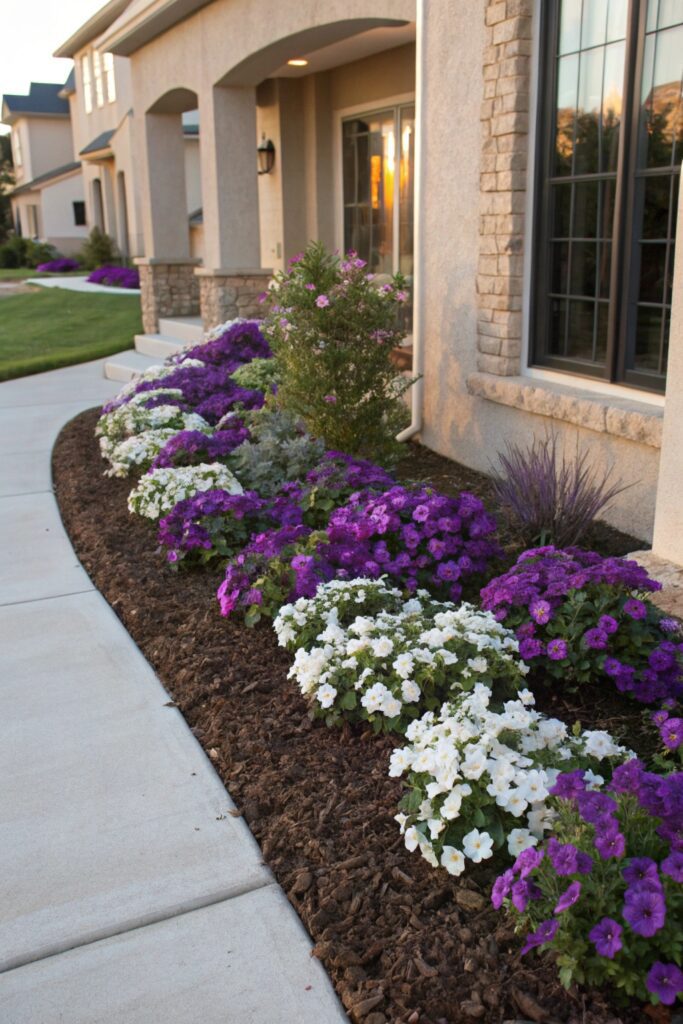
Limiting a bed to 2-3 coordinated colors (rather than one of everything) reads as considerably more intentional and polished than a mixed, unplanned palette, even when using the exact same total number of plants.
A simple way to test a palette before planting is gathering paint chips or fabric swatches in your chosen colors and holding them against the actual bed location in daylight, which catches clashes a mental color plan alone might miss.
4. Add Structure With Boxwood Borders
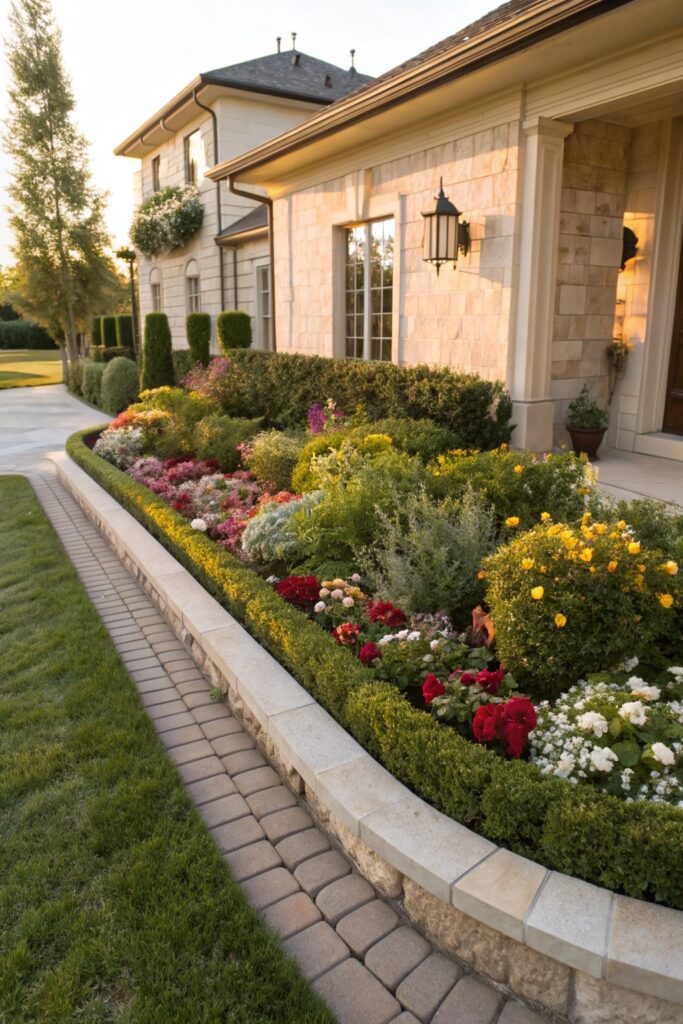
A low, trimmed boxwood hedge along a bed’s edge creates crisp, architectural definition that makes even a simple planting scheme read as more formal and considered, and boxwood’s slow growth rate means the structure holds its shape with only occasional trimming.
Boxwood requires shearing 1-2 times per year to maintain crisp lines, and slower-growing dwarf varieties specifically reduce how often this maintenance is needed compared to faster-growing standard boxwood cultivars.
5. Use Ornamental Grasses for Texture
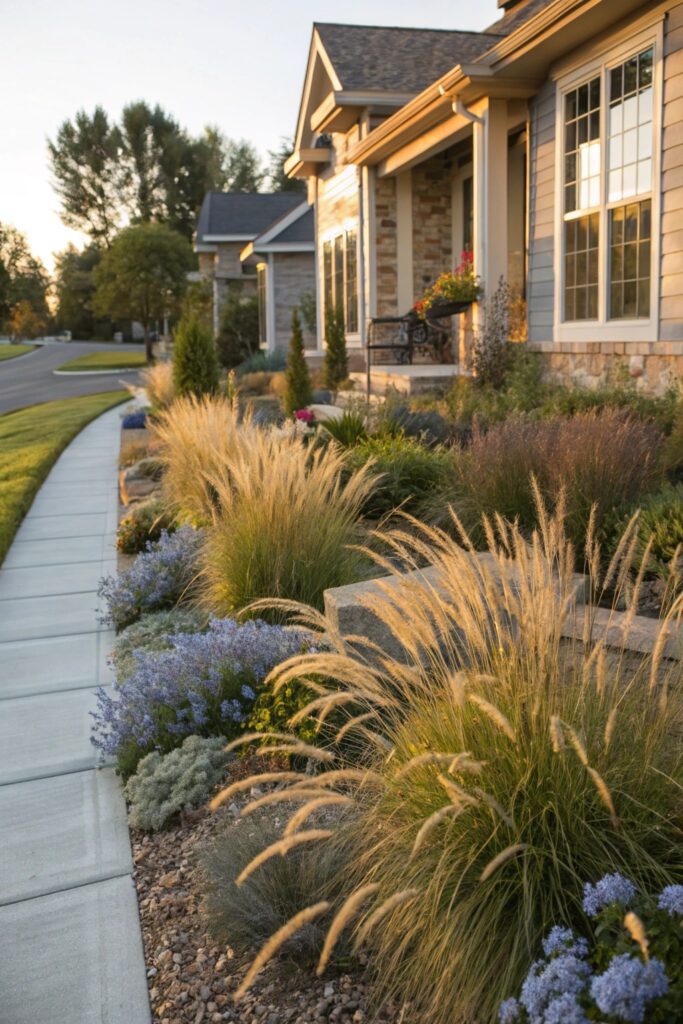
Grasses add movement and a softer, more textural element that flowering plants alone don’t provide, and many varieties offer genuine winter interest even after flowering plants have died back for the season.
Many ornamental grasses are genuinely low-maintenance once established, needing only an annual cutback in late winter before new growth begins, making them a good choice for beds where ongoing care time is a real constraint.
6. Plant in Odd Numbers
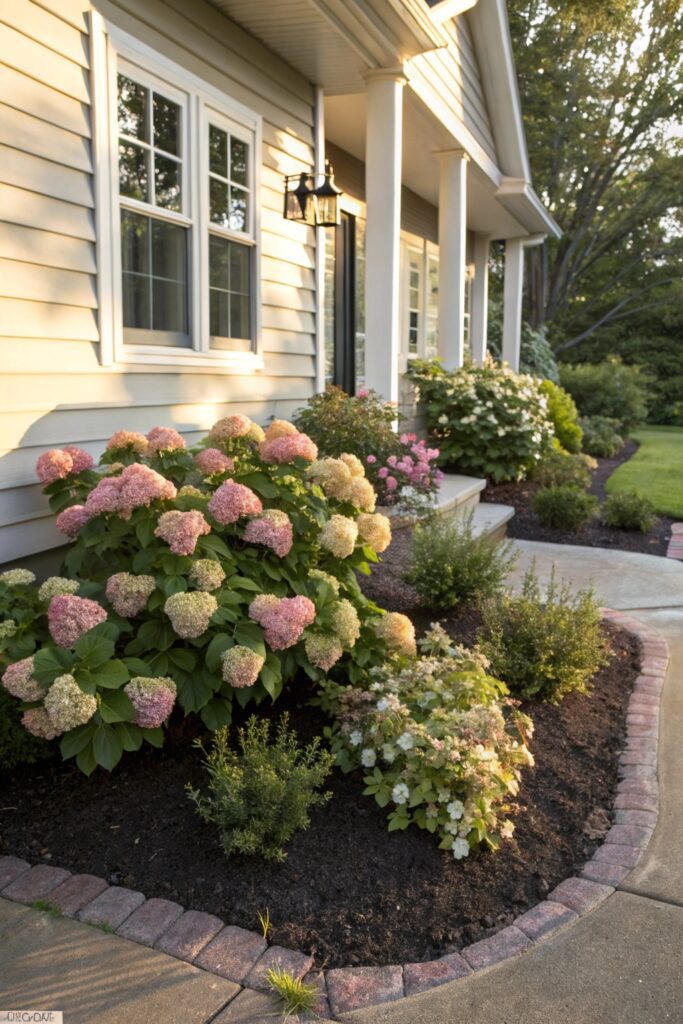
Grouping plants in clusters of three or five (rather than pairs or single specimens scattered individually) reads as more naturally arranged and visually cohesive, following the same odd-number principle that applies to interior styled displays.
This principle applies at the individual-plant level within a larger bed too — even a bed with many total plants benefits from grouping same-species plants in odd-numbered clusters rather than scattering singles throughout.
7. Incorporate Perennials for Long-Term Payoff
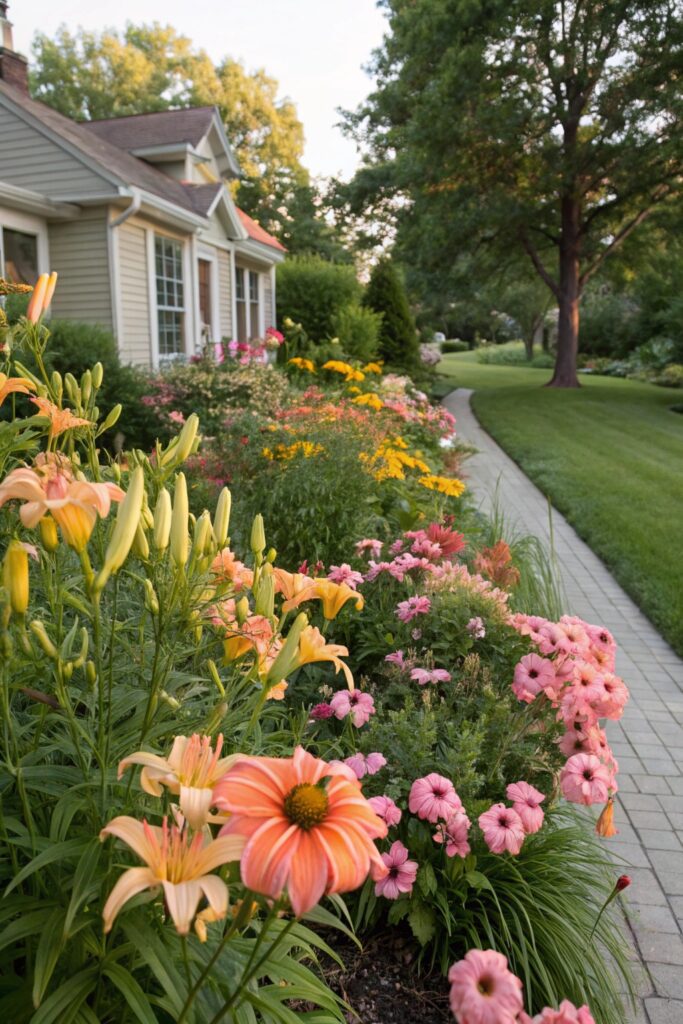
Perennials cost more upfront than annuals but return year after year without replanting, making them a better long-term investment for the bulk of a bed’s planting, with annuals reserved for smaller accent pops of seasonal color.
A reasonable starting ratio for a new bed is roughly 70% perennials to 30% annuals, which balances long-term cost savings with the flexibility to refresh seasonal color without disturbing established plantings.
8. Add a Focal Point Plant or Feature
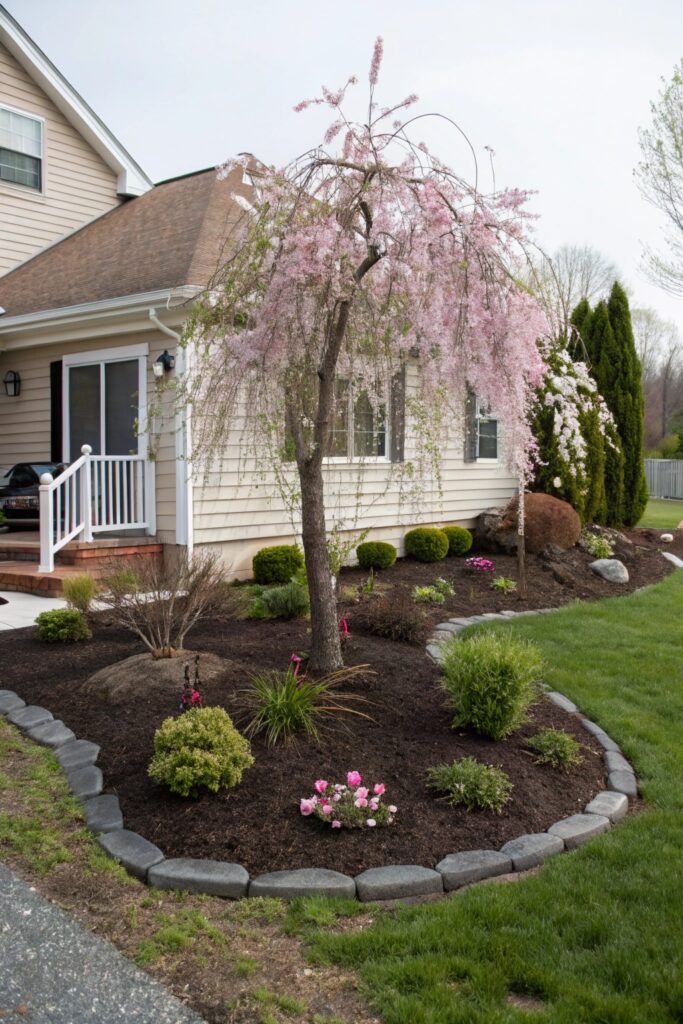
A single larger or more architecturally distinct plant — an ornamental tree, a large specimen shrub — gives the eye a clear place to land, which is especially useful for a bed that might otherwise read as a uniform mass of similar-sized plants.
Position the focal point slightly off-center within the bed’s overall composition rather than dead-center, which tends to read as more naturally balanced than a perfectly symmetrical placement.
9. Choose Plants That Bloom in Succession
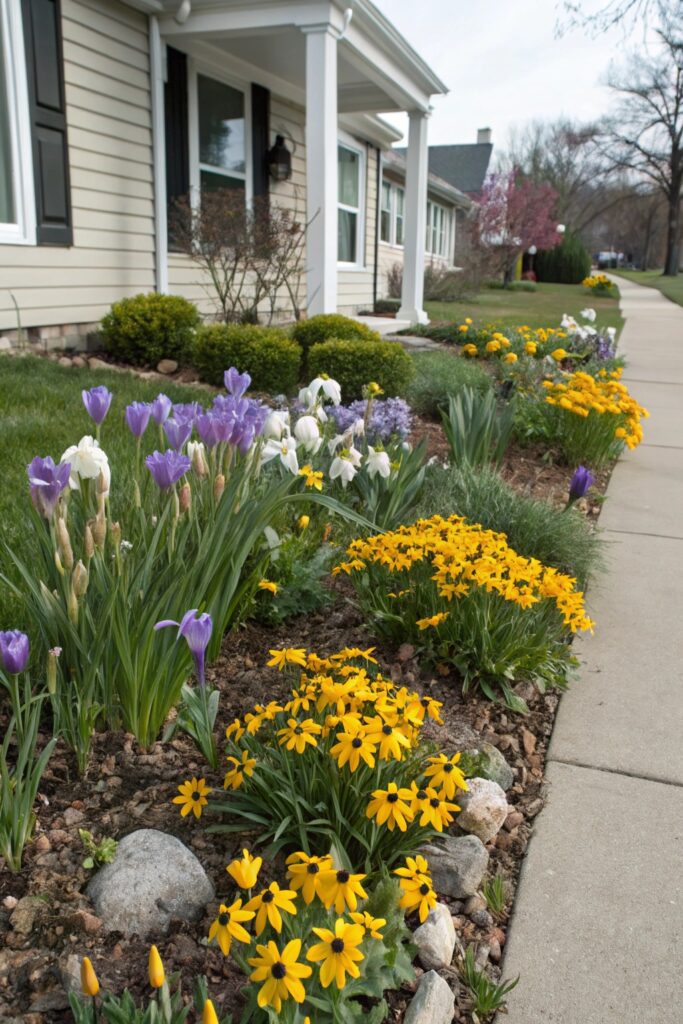
Selecting plants with staggered bloom times across spring, summer, and fall keeps a bed visually interesting throughout the growing season, rather than peaking all at once and then going comparatively flat for the remaining months.
A simple three-season bloom calendar (noting what’s flowering each month) helps identify genuine gaps in a bed’s succession before planting, rather than discovering an unplanned bare stretch after the season has already begun.
10. Add Mulch for a Polished Finish
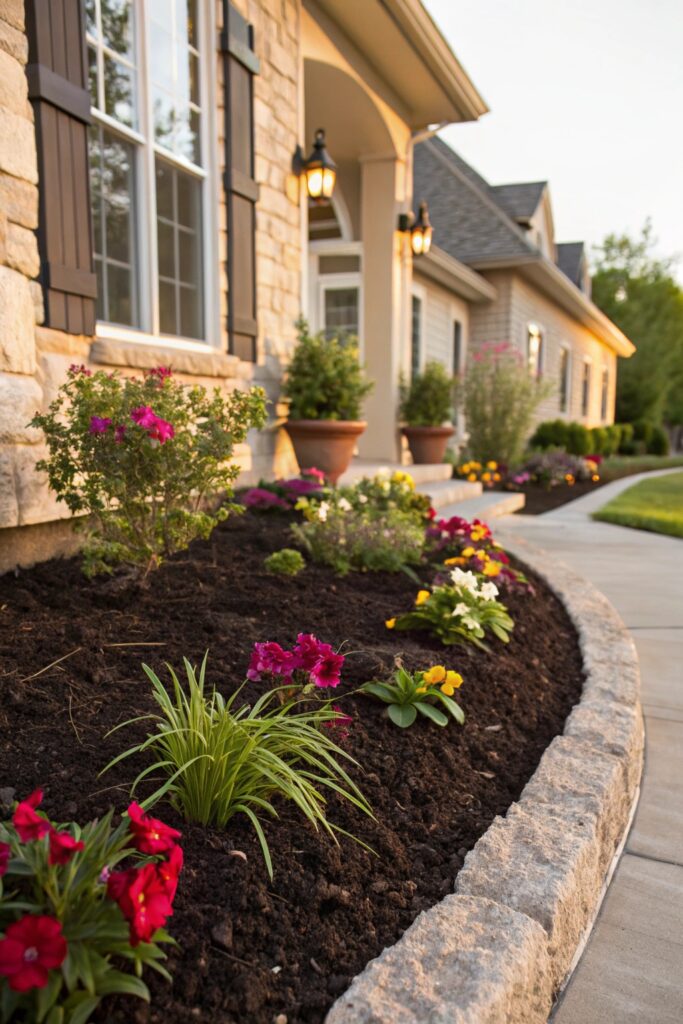
A fresh layer of mulch not only suppresses weeds and retains soil moisture but also gives a bed an immediately more finished, maintained appearance — this single step often does more to visually elevate a bed than any individual plant choice.
Reapply mulch annually in spring, using a 2-3 inch depth — thicker layers can actually suffocate plant roots and retain excess moisture, which causes more problems than the thinner, properly maintained layer this depth provides.
11. Include Low-Maintenance Ground Cover
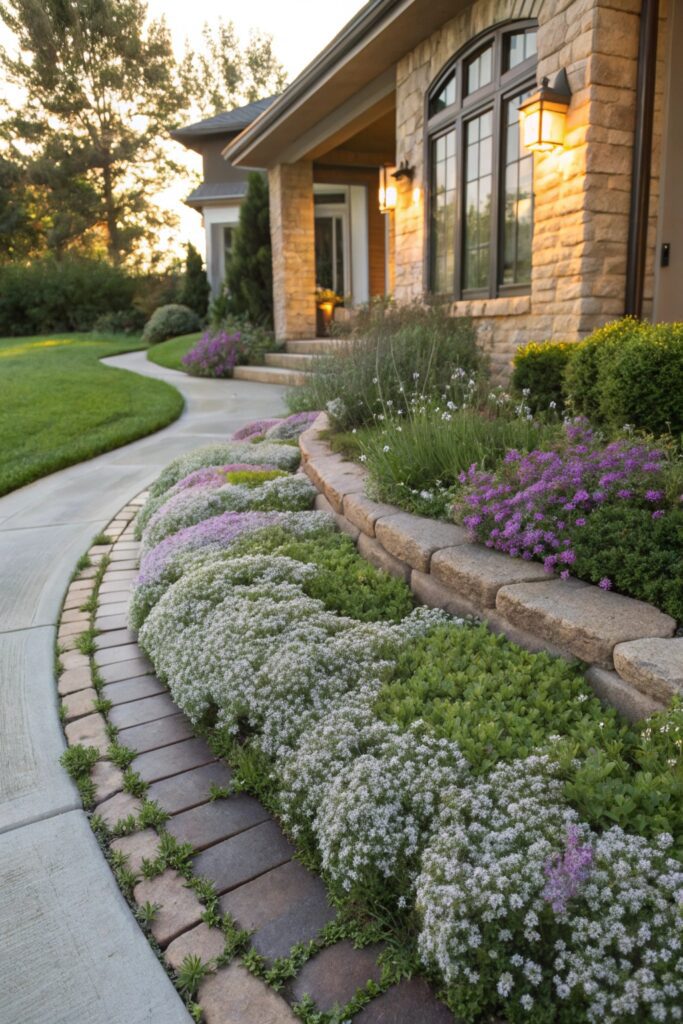
Ground cover plants fill gaps between larger plantings, suppress weeds naturally, and reduce the amount of exposed mulch or soil, cutting down on ongoing maintenance while still contributing genuine visual texture to the bed.
12. Frame Your Front Door or Walkway
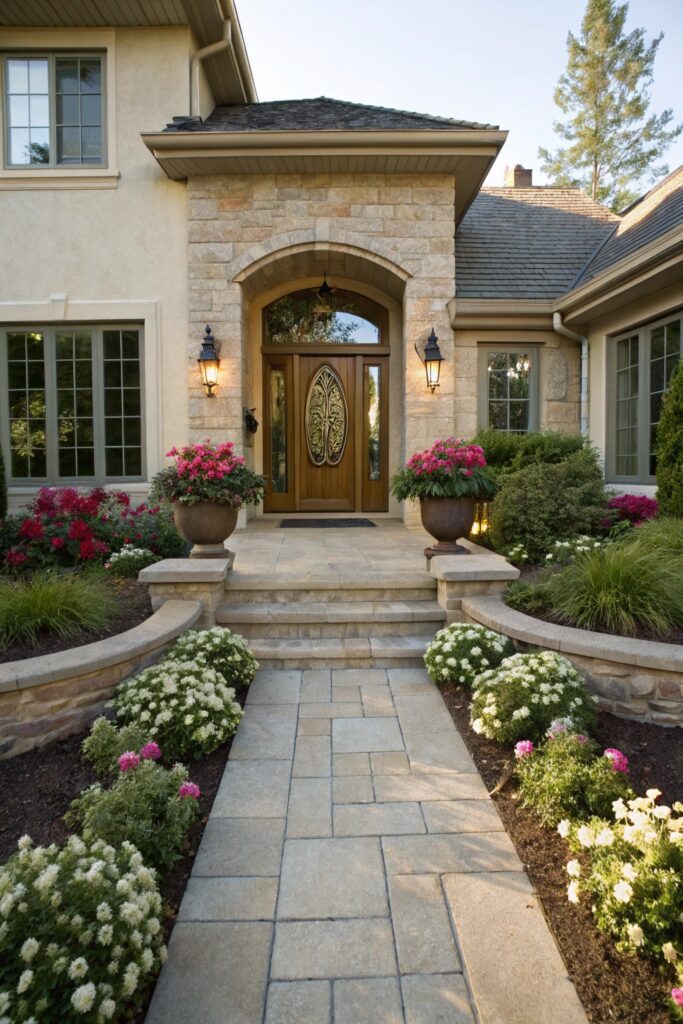
Symmetrical or intentionally balanced planting on either side of a front door or walkway draws the eye toward the entrance, reinforcing a sense of arrival — this is the same framing principle covered in our guide to driveway entry landscaping, applied specifically to the front door itself.
13. Add Winter Interest
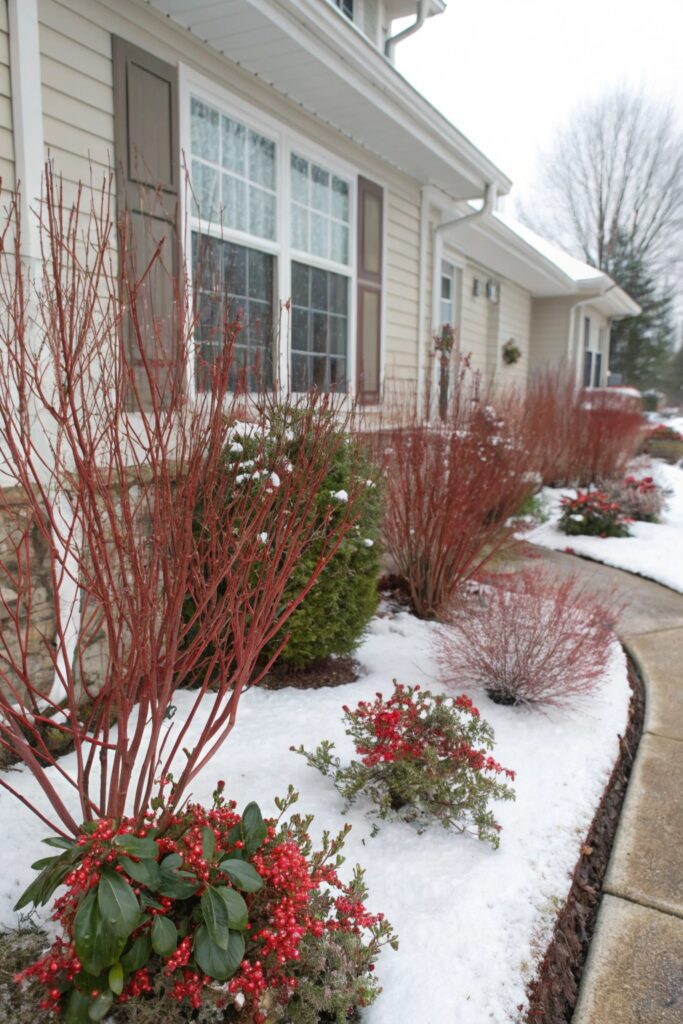
Include at least some plants with genuine winter presence — evergreen shrubs, ornamental grasses that hold their form, plants with colorful bark or berries — so the bed doesn’t read as completely dead or barren during the colder months.
14. Match Your Bed Shape to Your Home’s Style
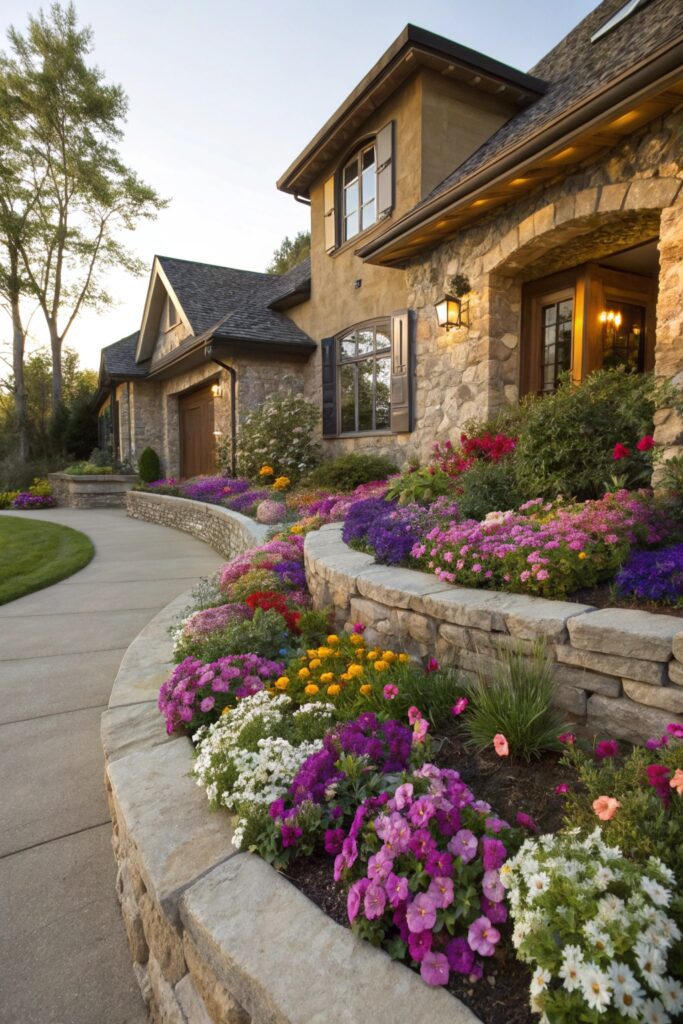
Formal, symmetrical bed shapes with crisp edges suit traditional or colonial-style homes, while flowing, curved bed lines read as more natural and better suit contemporary or cottage-style architecture — matching this detail to your home’s existing style creates a more cohesive overall look.
15. Add Lighting for Evening Impact
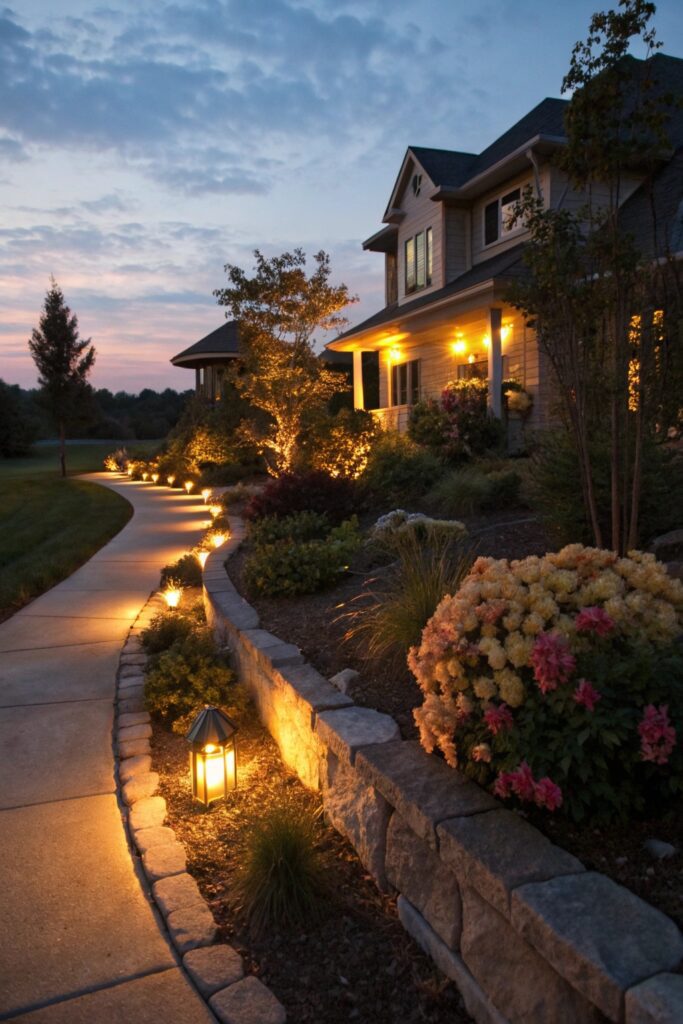
Low-voltage landscape lighting positioned to highlight key plants or the bed’s overall shape extends its visual impact into evening hours, turning a daytime-only feature into something that enhances curb appeal around the clock.
Wrapping It Up
Layering by height and mixing evergreens with seasonal bloomers matter most for a bed that looks good in every season, since these two principles address the most common reason beds look great in summer and bare the rest of the year. Fresh mulch and a limited color palette are the fastest, lowest-cost ways to make an existing bed look noticeably more polished without adding any new plants at all.