
White kitchens have been declared “over” approximately forty-seven times in the last decade — and they keep outlasting every trend that tries to replace them. There’s a reason for that.
A well-designed white kitchen feels clean, bright, and truly timeless in a way that no other color palette quite matches. The key word there is “well-designed” — because a badly executed white kitchen just looks like someone gave up on color without having a plan. I’ve seen both, and the difference is entirely in the details.
These 10 white kitchen ideas show you exactly how to make white work beautifully — warm, intentional, and interesting enough to keep looking good for decades rather than just until the next design cycle rolls through.
1. Choose Warm White Cabinets Over Stark Bright White
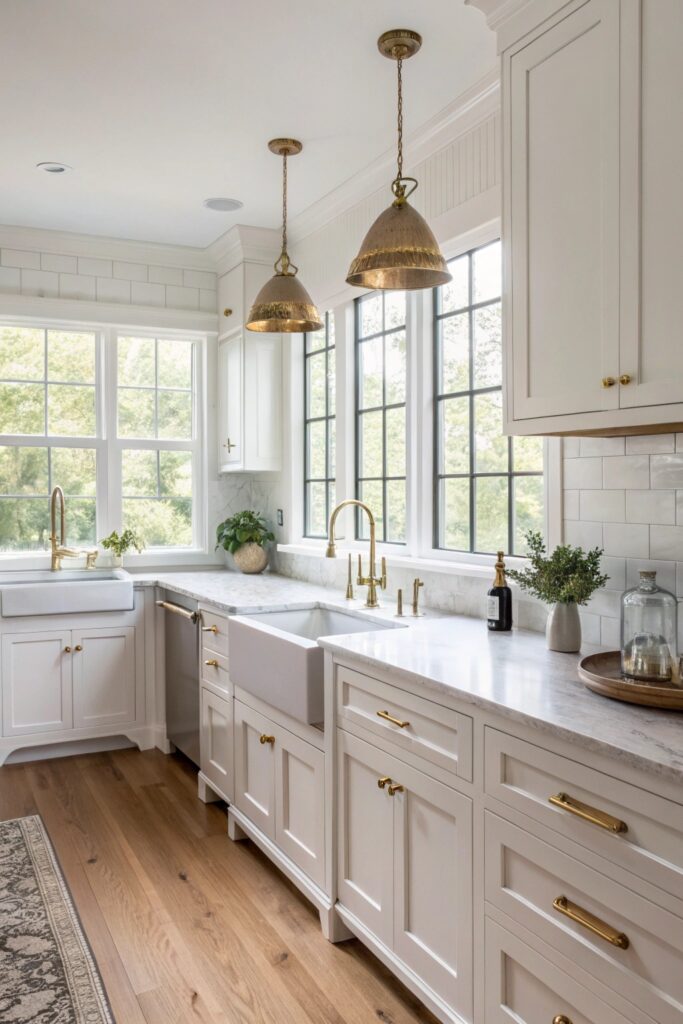
The single most important decision in a white kitchen is choosing the right shade of white — and most people get this wrong by defaulting to the brightest, coolest white available.
Warm white cabinet shades that consistently deliver beautiful results:
- Benjamin Moore White Dove OC-17 — the most beloved warm white in kitchen design, soft and inviting
- Sherwin-Williams Alabaster SW 7008 — creamy, warm, and endlessly versatile
- Benjamin Moore Simply White OC-108 — slightly warmer than pure white, works in any light condition
- Farrow & Ball All White No.2 — complex, slightly warm, looks different at every hour of the day
Warm whites pick up the golden tones in wood, brass, and natural stone — making every other material in the kitchen look richer and more intentional. Cool bright whites fight against warm materials and make kitchens feel sterile rather than clean. IMO, the difference between a warm white kitchen and a cool white kitchen is the difference between a spa and a hospital. Choose accordingly.
2. Add Natural Wood Elements for Warmth and Contrast
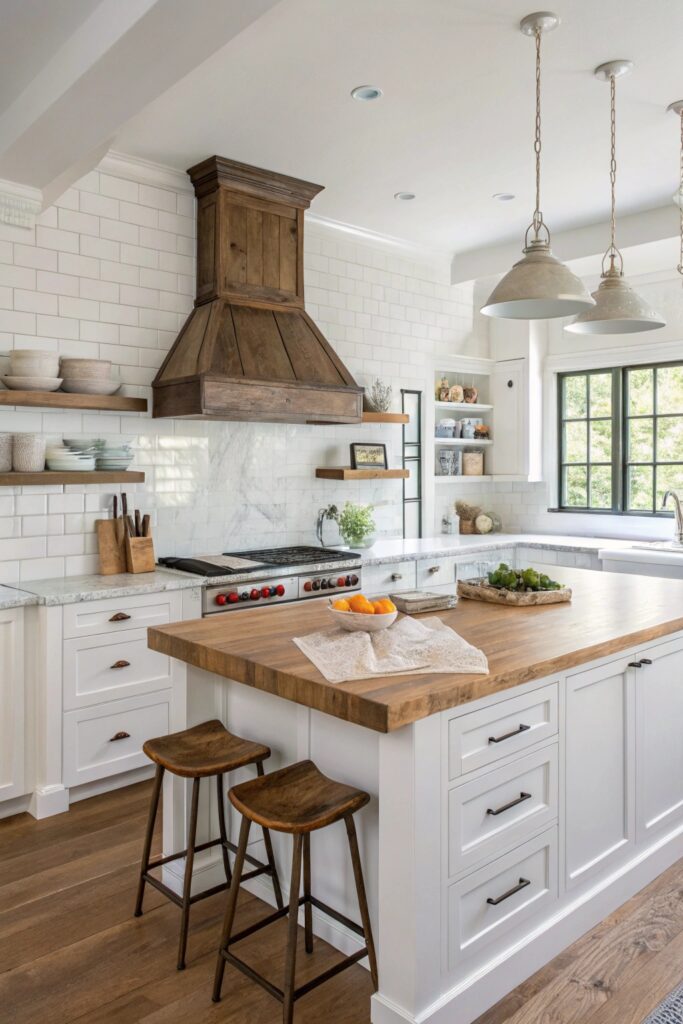
Natural wood in a white kitchen prevents the space from feeling cold or overly clinical — and the contrast between warm wood tones and crisp white creates one of the most visually satisfying kitchen combinations possible.
Wood element opportunities in a white kitchen:
- Open wooden shelving replacing upper cabinets on one wall for warmth and display
- A butcher block countertop on an island or secondary surface area
- Wooden bar stools at a kitchen island — natural oak or walnut both work beautifully
- A reclaimed wood range hood as a statement focal point above the stove
- Floating wooden shelves beside the range for cookbooks and kitchen essentials
The key is keeping wood tones consistent throughout the kitchen — mixing light oak with dark walnut creates visual tension rather than warmth. Choose one wood tone and repeat it across multiple elements for a curated, intentional result. Even small wooden touches — a cutting board on the counter, a wooden fruit bowl — add organic warmth that white cabinets alone cannot provide.
3. Install a Classic White Subway Tile Backsplash
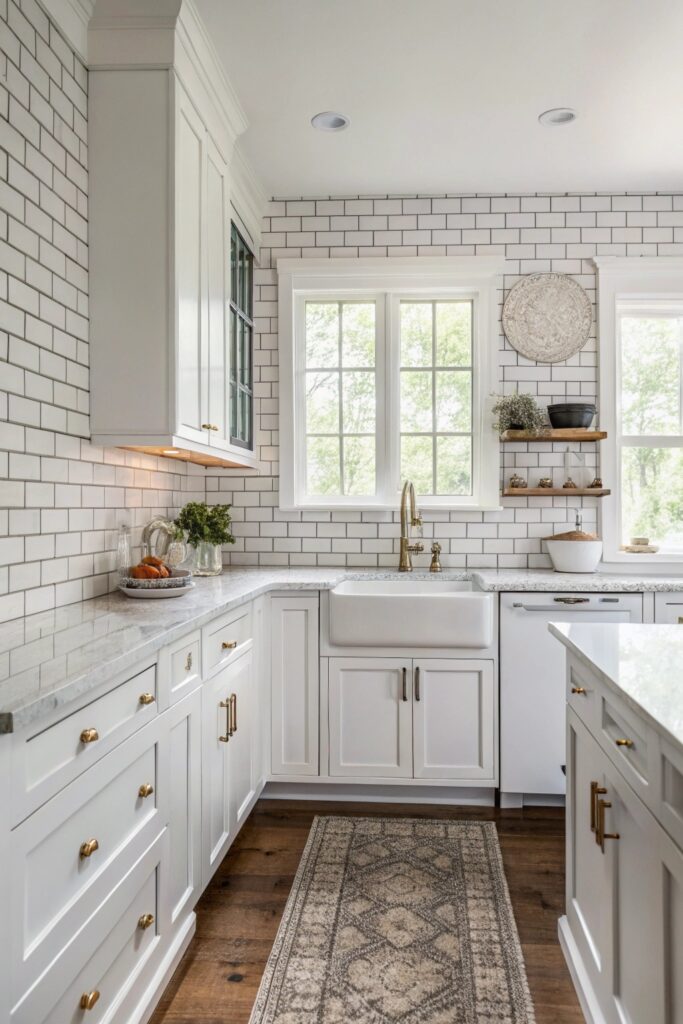
White subway tile is the backsplash equivalent of a white button-down shirt — it goes with everything, looks great forever, and never gives you a reason to regret it. The variation is in the details, not the material itself.
Subway tile options that keep a white kitchen interesting:
- Classic 3×6 horizontal brick pattern with white grout for the cleanest, most traditional look
- Vertical stack bond installation for a more contemporary, elongated effect
- Herringbone pattern for visual movement and texture without changing the material
- Handmade ceramic subway tiles with slight surface variation for a more artisanal quality
- Dark grout on white tiles for a graphic, high-contrast result that hides grout staining — both practical and beautiful
FYI, sanded grout in a medium gray rather than bright white is one of those small decisions that makes a significant practical difference over years of kitchen use. White grout on a white tile backsplash looks immaculate on day one and requires enormous maintenance effort to keep that way. Gray grout is the pragmatic choice that still looks excellent. 🙂
4. Use Marble or Quartz Countertops for Luxury
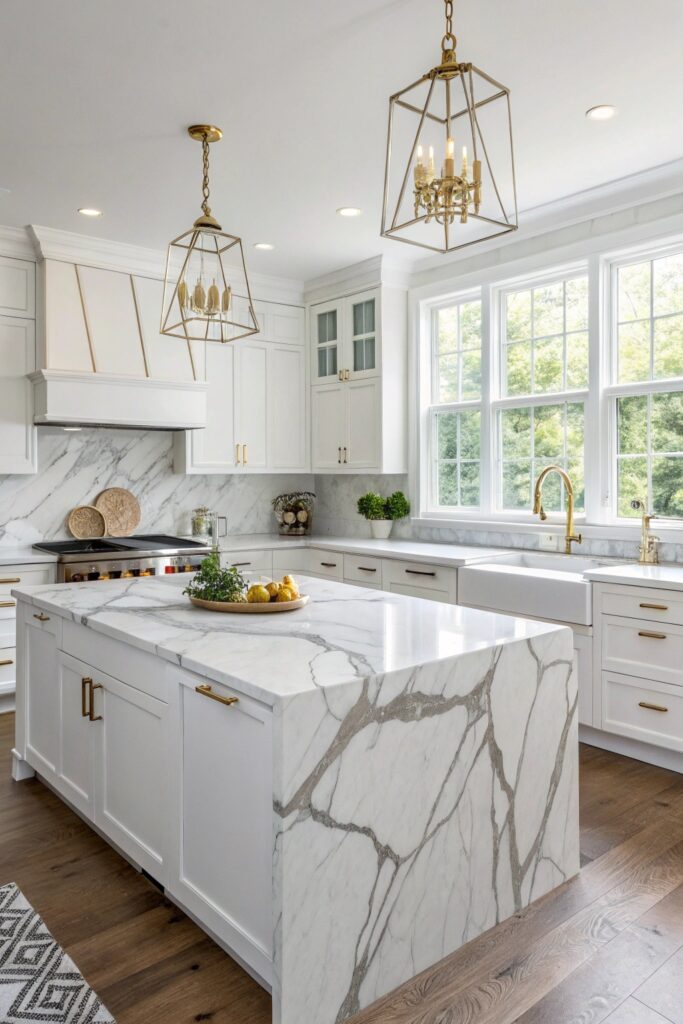
White countertops in a white kitchen create a seamless, luxurious surface that makes the entire space feel expensive — and the choice between natural marble and engineered quartz comes down to how much maintenance you’re willing to commit to.
Marble versus quartz for white kitchens:
Natural Marble:
- Genuine luxury material with unique veining in every slab
- Requires annual sealing and careful maintenance
- Etches and stains with acidic substances — lemon juice, wine, vinegar
- Carrara, Calacatta, and Statuario are the most popular white kitchen choices
Engineered Quartz:
- Non-porous surface that resists staining, etching, and bacteria
- No sealing required — truly low maintenance
- Consistent appearance that some find less interesting than natural marble
- Brands like Calacatta Gold by Caesarstone convincingly mimic marble veining
For families with children or high kitchen use, quartz delivers better practical performance at a comparable price point. For a less heavily used kitchen where visual luxury matters most, genuine marble is incomparable.
5. Add Brass or Gold Hardware for a Warm Accent
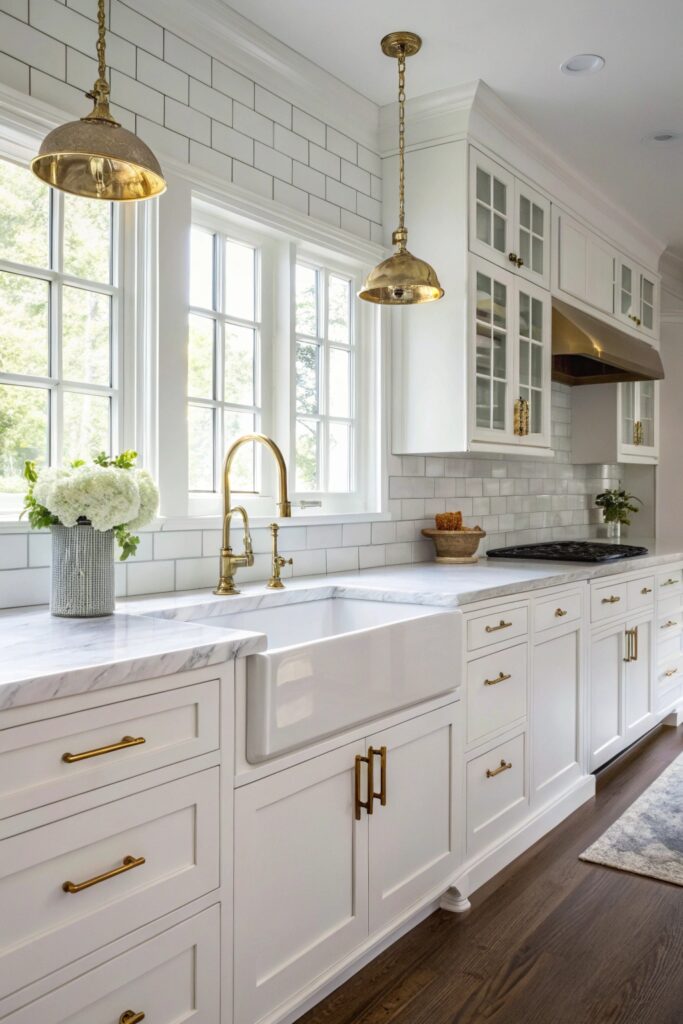
Hardware is the jewelry of a white kitchen — and brass or gold pulls, knobs, and fixtures add warmth and elegance to white cabinetry that silver and chrome simply cannot replicate.
Hardware options that elevate a white kitchen:
- Unlacquered brass pulls that develop a warm patina over time — beautiful and characterful
- Brushed gold bar pulls for a modern, clean-lined look with warm metallic tones
- Antique brass bin pulls on lower cabinets for a traditional, timeless feel
- Brushed brass cabinet knobs mixed with bar pulls on different cabinet types
Keep hardware consistent in finish across all cabinets — mixing brass and chrome in the same kitchen creates visual confusion. Choose one metal finish and apply it to every hardware element including faucets, light fixtures, and cabinet pulls. Brushed gold or satin brass is more forgiving than high-polish gold — it shows fewer fingerprints and looks more sophisticated in most kitchen styles.
6. Install Shaker Cabinets for Classic Structure
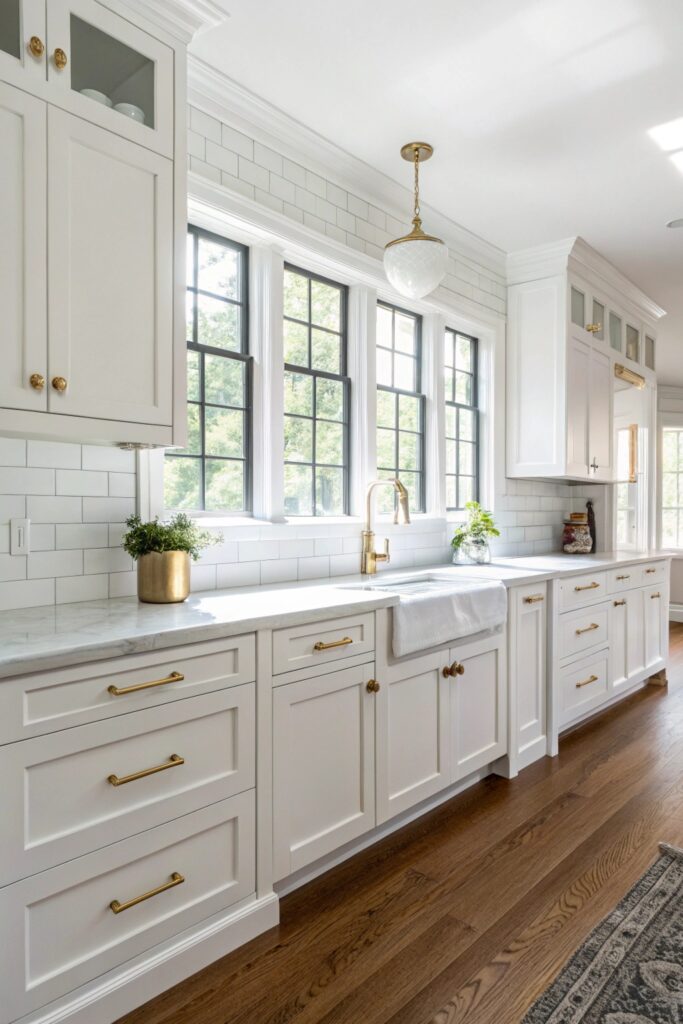
Shaker cabinets are the most universally appropriate cabinet style for a white kitchen — they work in traditional, transitional, and contemporary kitchens with equal elegance, which is a surprisingly rare quality in any design element.
Why shaker cabinets suit white kitchens so consistently:
- The recessed panel detail adds visual depth that flat slab doors lack
- Clean, simple lines that never feel dated or style-specific
- The frame-and-panel construction creates shadow lines that prevent all-white from looking flat
- Compatible with every hardware style from traditional bin pulls to modern bar pulls
Full overlay shaker cabinets — where doors cover the cabinet frame completely — look more contemporary and refined than partial overlay. Inset shaker cabinets — where doors sit flush within the cabinet frame — are the most traditional and premium option, though they cost significantly more to manufacture and install. Either version looks equally excellent in a white kitchen.
7. Maximize Natural Light with Strategic Window Placement
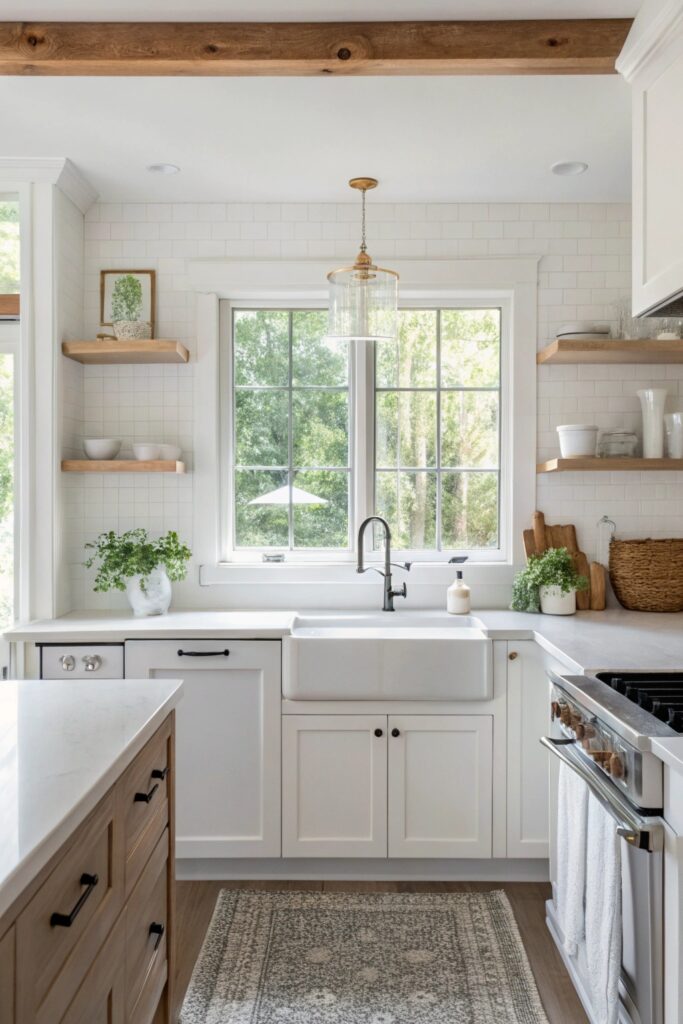
Natural light transforms a white kitchen from clean to truly luminous — and a white kitchen that floods with natural daylight is one of the most beautiful rooms a house can contain.
Strategies for maximizing natural light in a white kitchen:
- Remove upper cabinets near windows and replace with open shelving or nothing at all
- Install a picture window above the kitchen sink — the most traditional and beautiful natural light source
- Add a skylight above the cooking area for overhead natural light that eliminates shadows
- Use glass-front cabinet doors on upper cabinets to allow light to pass through rather than block it
- Keep window treatments minimal — sheer linen panels that filter rather than block light
Reflective surfaces amplify natural light in white kitchens — a glossy tile backsplash, polished marble countertops, and white-painted ceiling all bounce light around the space. A white kitchen without adequate natural light just looks dim rather than clean. Natural light is the non-negotiable foundation that makes everything else in the kitchen look its best.
8. Create a White Kitchen Island for Extra Function
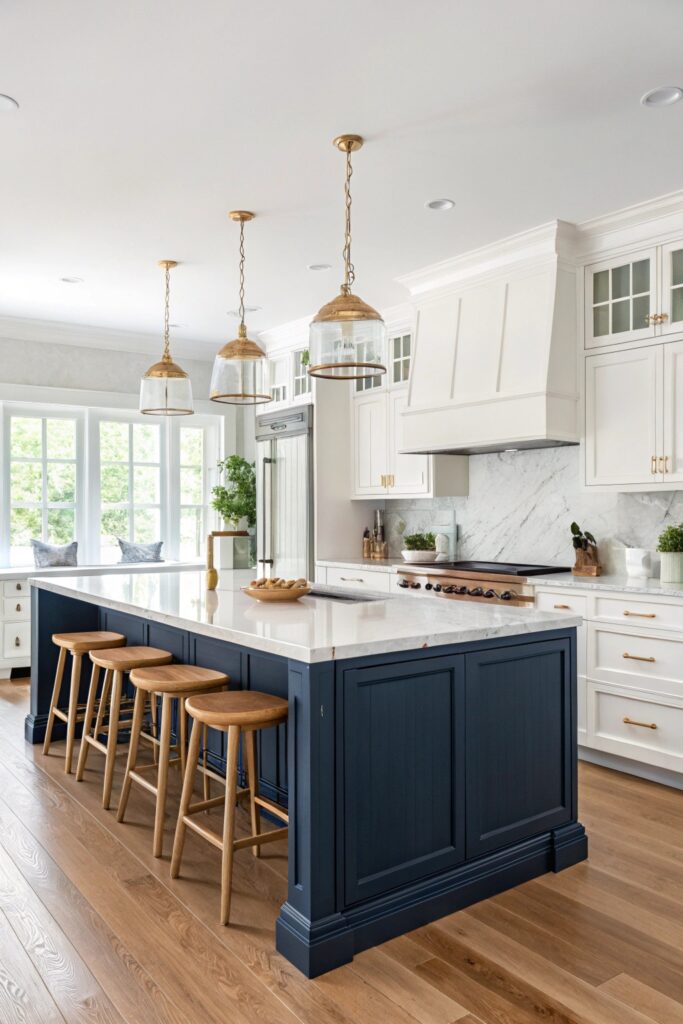
A kitchen island in a white kitchen adds workspace, storage, and social space simultaneously — and when designed well, it becomes the most used and most loved feature in the entire kitchen.
Island design details that work in white kitchens:
- A contrasting island color — navy, sage green, or charcoal — for visual interest against white perimeter cabinets
- A butcher block island top paired with stone perimeter countertops for material variety
- Pendant lights above the island — two or three pendants in brass or matte black define the zone
- Bar stool seating on one side for casual dining and socializing while cooking
Size the island carefully — it needs 42 to 48 inches of clearance on all sides for comfortable movement during cooking. An island that’s too large for the kitchen floor plan creates traffic flow problems that no design detail can compensate for. A correctly proportioned island with the right countertop and pendant lights above it becomes the heart of the white kitchen and the spot everyone gravitates toward.
9. Display Open Shelving for Personality and Warmth
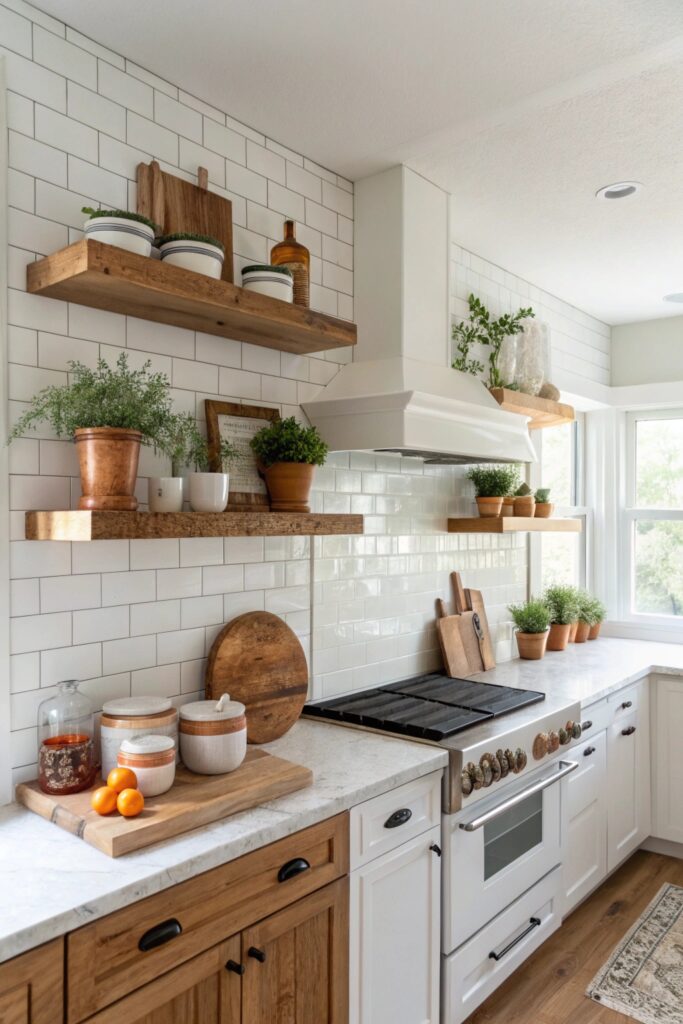
Open shelving in a white kitchen adds the personality and warmth that all-cabinet kitchens can lack — and it gives you a surface to display beautiful objects that make the kitchen feel authentically lived in.
Open shelving styling for white kitchens:
- Stack white ceramic dishes as both decor and functional dishware
- Display a collection of glassware — amber, green, or clear glass catches light beautifully
- Add potted herbs — rosemary, basil, and thyme on shelves look beautiful and smell incredible
- Lean a cookbook or two face-out for color and personality
- Introduce small wooden or ceramic objects that add warmth and tactile interest
Edit shelves ruthlessly — open shelving in a white kitchen requires consistent editing because every item on the shelf is permanently on display. Remove anything that doesn’t contribute to the visual story. The goal is a shelf that looks curated and personal — not one that looks like overflow cabinet storage.
10. Add Texture Through Tiles, Textiles, and Materials
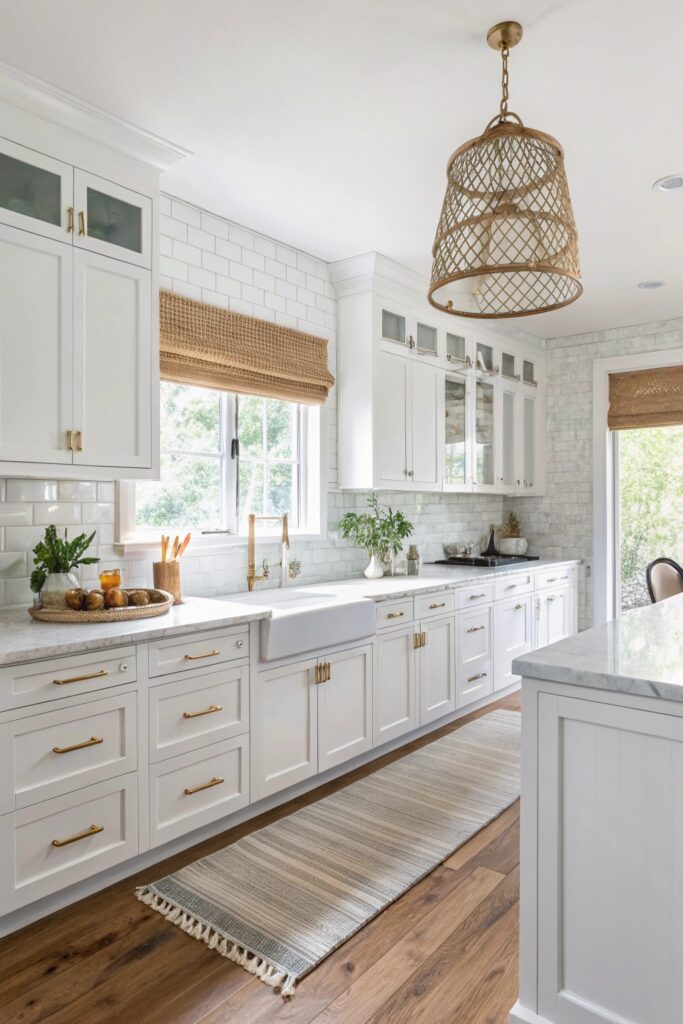
A white kitchen that lacks texture looks flat and slightly institutional — and the solution is layering different materials, finishes, and textiles that catch light differently and add visual depth to an otherwise monochromatic palette.
Texture additions that prevent a white kitchen from looking boring:
- Zellige or handmade ceramic tile backsplash with surface variation and imperfect glaze
- A linen or cotton kitchen runner rug in a natural or striped pattern
- Woven pendant lights in rattan or seagrass above the island
- Linen or cotton Roman shades at the kitchen window in a warm neutral
- Textured cabinet hardware — hammered brass or knurled pulls add tactile interest
Vary countertop finishes — a honed matte marble surface reads completely differently from a polished quartz surface, and mixing finishes in the same kitchen adds visual richness. A white kitchen should engage the eye through material variety rather than relying on color contrast to create visual interest. Texture is how a white kitchen stays interesting over years rather than just on the day of installation.
White Kitchens Work — When You Do Them Right
A white kitchen looks timeless because it’s built on a foundation of good design rather than trend-dependent color choices. Warm whites, natural wood accents, quality materials, layered textures, and warm metallic hardware — these five elements guarantee a white kitchen that looks as good in fifteen years as it does on installation day.
Start with your cabinet color and countertop material. Every other decision — hardware, backsplash, lighting — builds from those two foundational choices. Keep the palette warm and the materials natural, and the kitchen will take care of itself visually.
White kitchens outlast every trend that rises to challenge them. There’s a reason they’ve been doing it for decades — and no amount of dark cabinet enthusiasm changes that fundamental truth.