
Small apartment living rooms face constraints a standalone house’s living room doesn’t — shared walls, lease restrictions, single light sources, and layouts you can’t structurally change. For general space-maximizing techniques that apply to any small living room, our guide to small living room hacks covers additional strategies that pair well with the apartment-specific considerations below.
Below are 10 ways to address the specific challenges apartment living rooms present, with practical notes for each.
1. Define Zones Without Permanent Walls
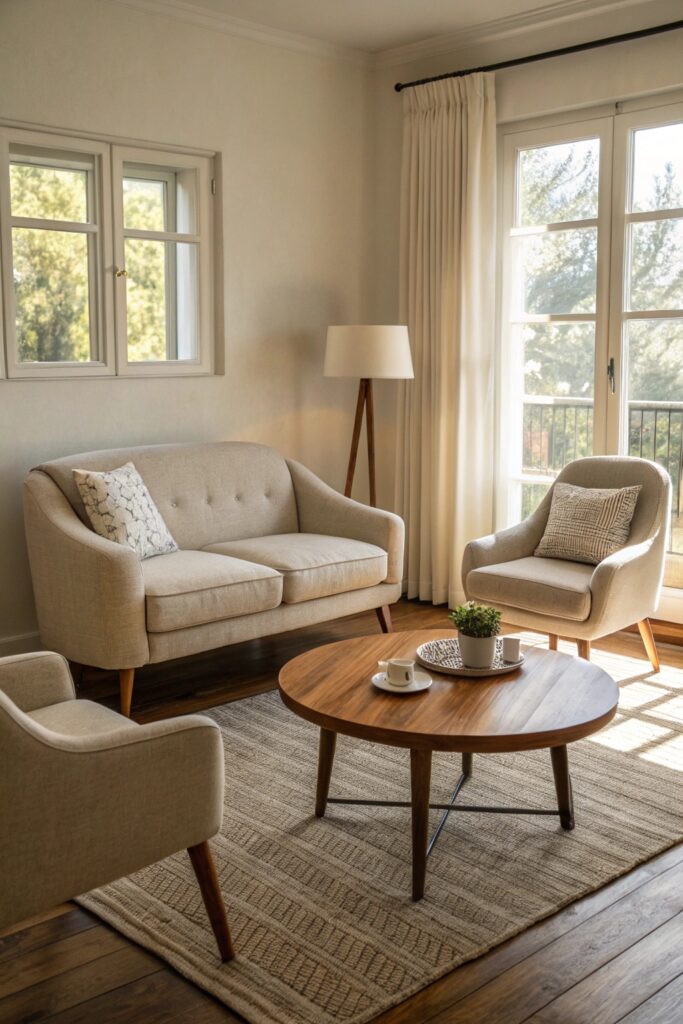
Many small apartment living rooms double as a dining area, workspace, or even a sleeping zone in a studio layout, and a rug or furniture arrangement can define these separate functions without needing an actual partition.
This is particularly relevant for apartments specifically, where structural changes aren’t an option — a rug boundary or a bookshelf used as a room divider achieves functional separation while remaining fully removable at move-out.
2. Choose Furniture That Serves Double Duty
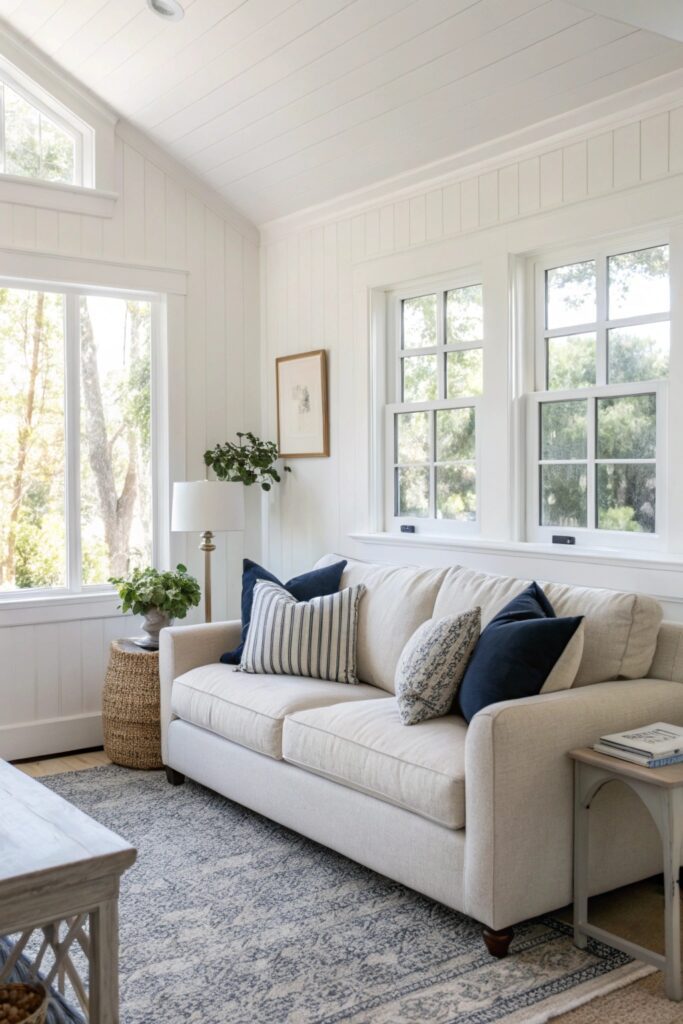
A storage ottoman, an extendable dining table, or a sofa bed matters even more in an apartment than a house, since apartment square footage is typically more constrained and every piece needs to earn its space.
Prioritize multi-functional furniture for the specific combined uses your apartment’s living room actually serves — a fold-down desk makes sense if the room doubles as a home office, while a sofa bed matters more if it occasionally serves guests overnight.
3. Work With (Not Against) Awkward Layouts
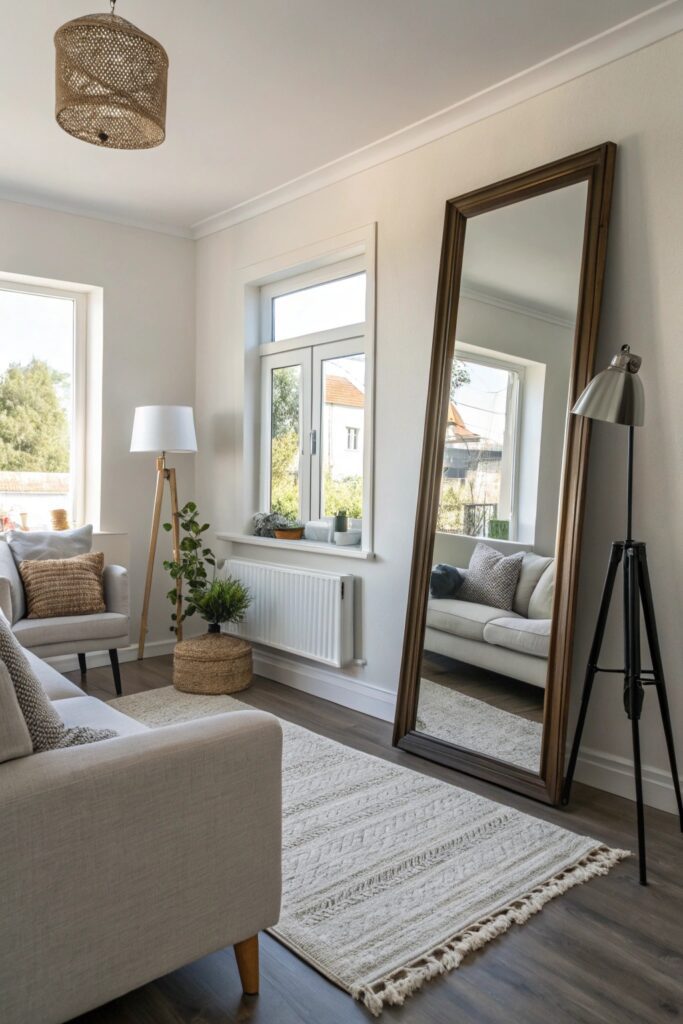
Many apartment living rooms have structural quirks — an oddly placed support column, a radiator, an awkward door swing — that a house’s more standard layout typically doesn’t present.
Rather than fighting these features, building furniture placement around them (a reading chair tucked beside a radiator, for instance) often works better than trying to force a layout that ignores the room’s actual constraints.
4. Use Renter-Friendly Wall Treatments
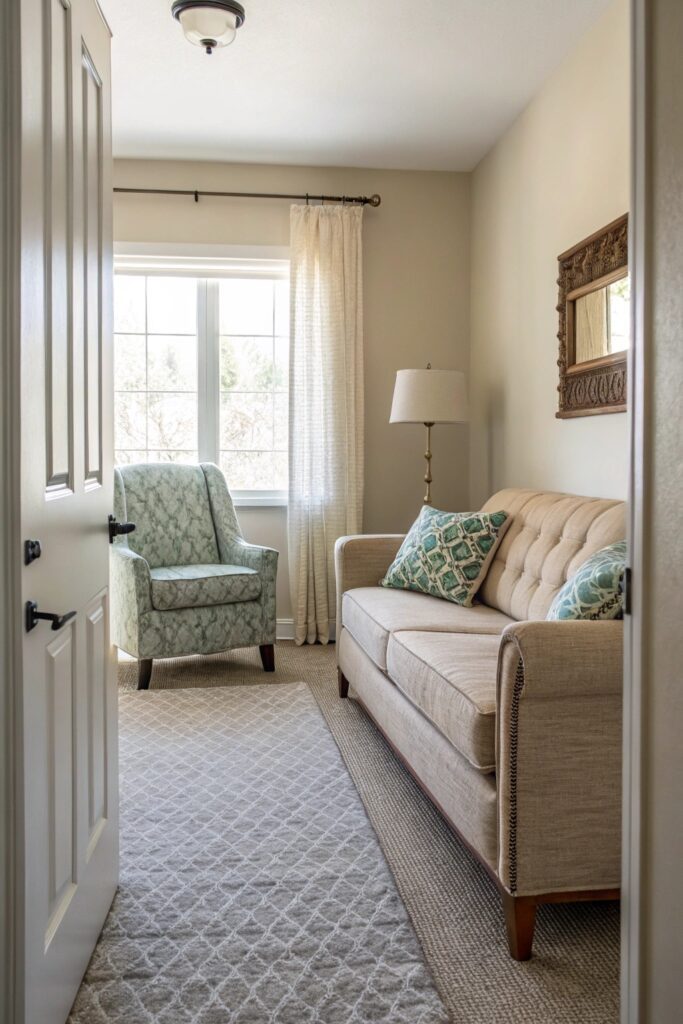
Peel-and-stick wallpaper, removable wall decals, and command-strip-mounted art let you personalize an apartment’s walls without violating a typical lease’s restrictions on paint or permanent fixtures.
This matters specifically for apartments in a way it doesn’t for owned homes, since the investment in wall treatments needs to be either genuinely removable or accepted as a loss at move-out.
5. Maximize a Single Window’s Light
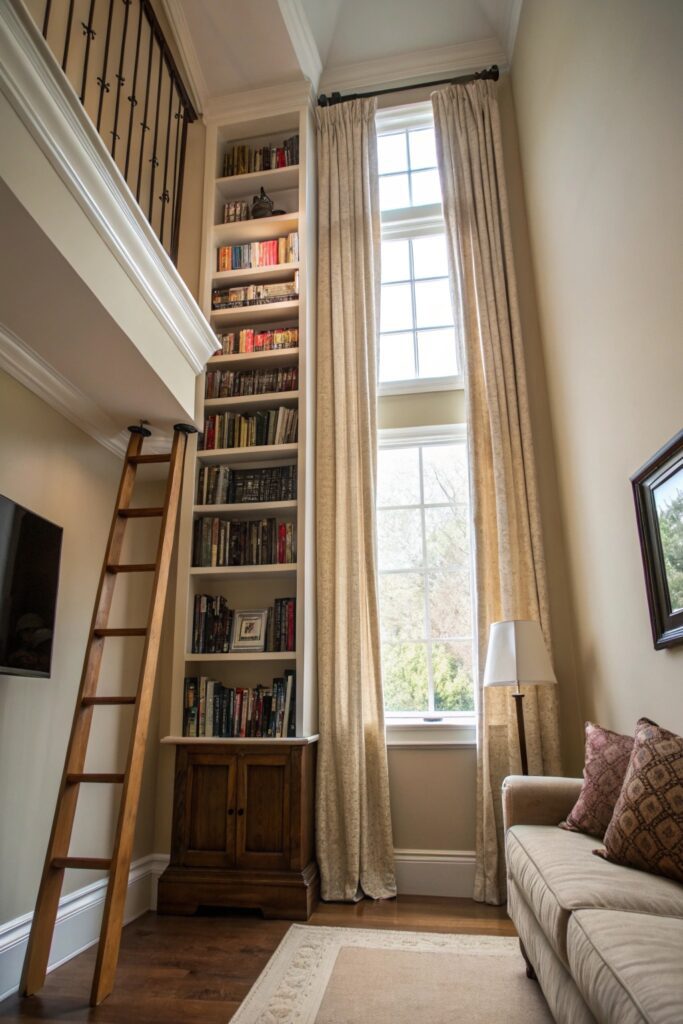
Many apartment living rooms have only one window, sometimes facing a less-than-ideal direction, making it worth maximizing whatever light that single source provides rather than assuming multiple light sources like a house might have.
Keep the area directly around the window clear of furniture, and use sheer rather than heavy curtains, both of which matter more when a room depends on one window for all its natural light.
6. Borrow Storage From Vertical Space
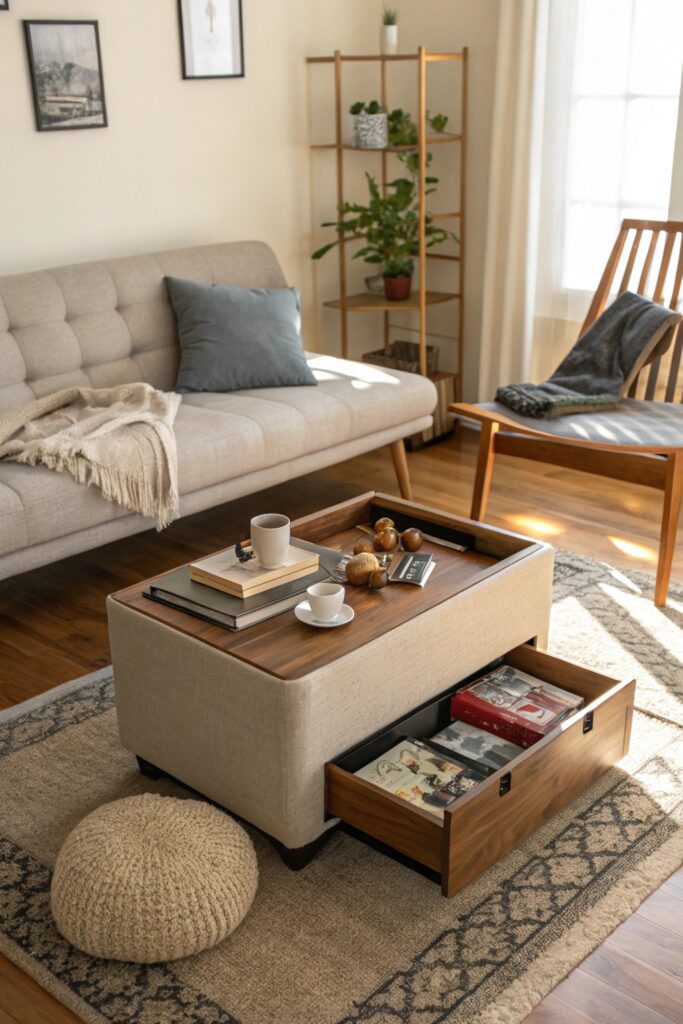
Floor-to-ceiling shelving or wall-mounted storage makes use of height that apartment living rooms, often with limited floor space to begin with, can’t recover any other way.
This is worth prioritizing over floor-based storage furniture specifically in an apartment, where the tradeoff between storage capacity and lost floor space is more pronounced than in a larger home.
7. Coordinate With Adjacent Open-Concept Areas
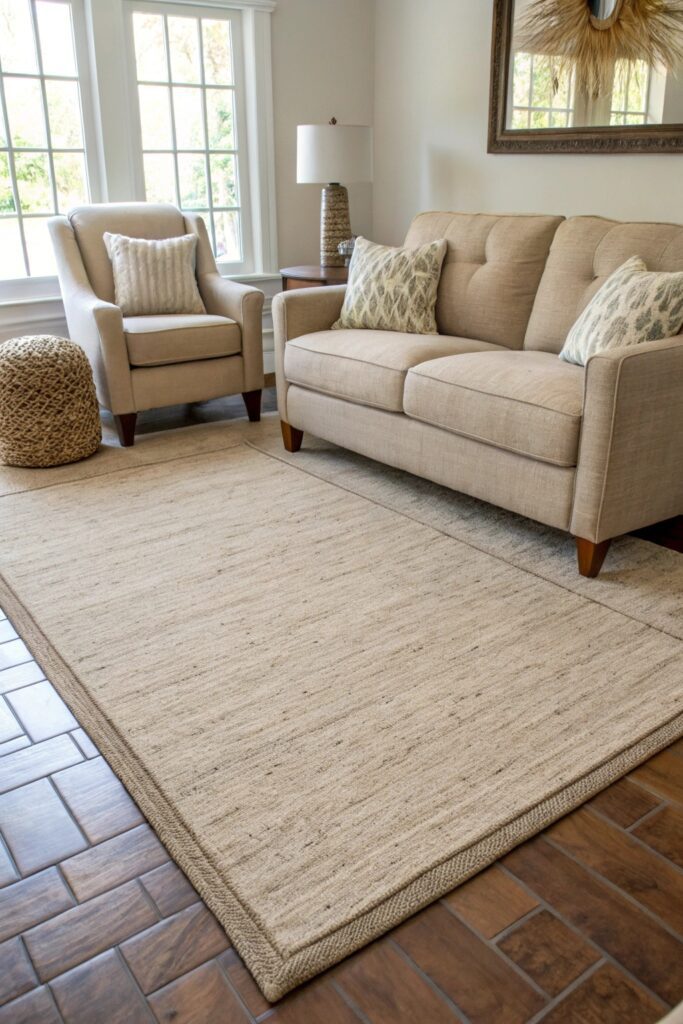
Many apartments have an open-concept layout where the living room flows directly into a kitchen or entry without a wall separating them, making color and material coordination across those connected areas more important than in a fully enclosed room.
A cohesive palette carried across the visible connected spaces reads as more intentional than treating the living room as an isolated design project disconnected from what’s visible just beyond it.
8. Account for Shared Walls and Sound
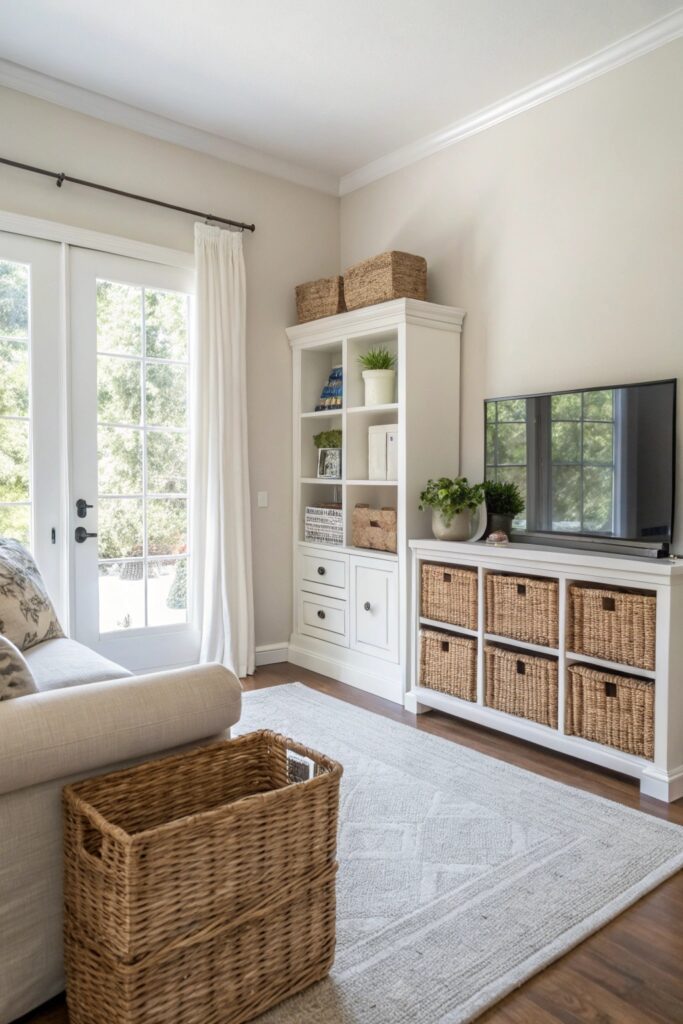
Apartment living rooms often share at least one wall with a neighboring unit, which is a genuine practical consideration a standalone house doesn’t have — soft furnishings (rugs, upholstered furniture, curtains) help absorb sound in a way hard surfaces don’t.
This is worth factoring into furniture choices beyond pure aesthetics, since a room with more soft materials genuinely transmits less sound to neighboring units than one dominated by hard surfaces.
9. Keep a Clear Path to Every Exit
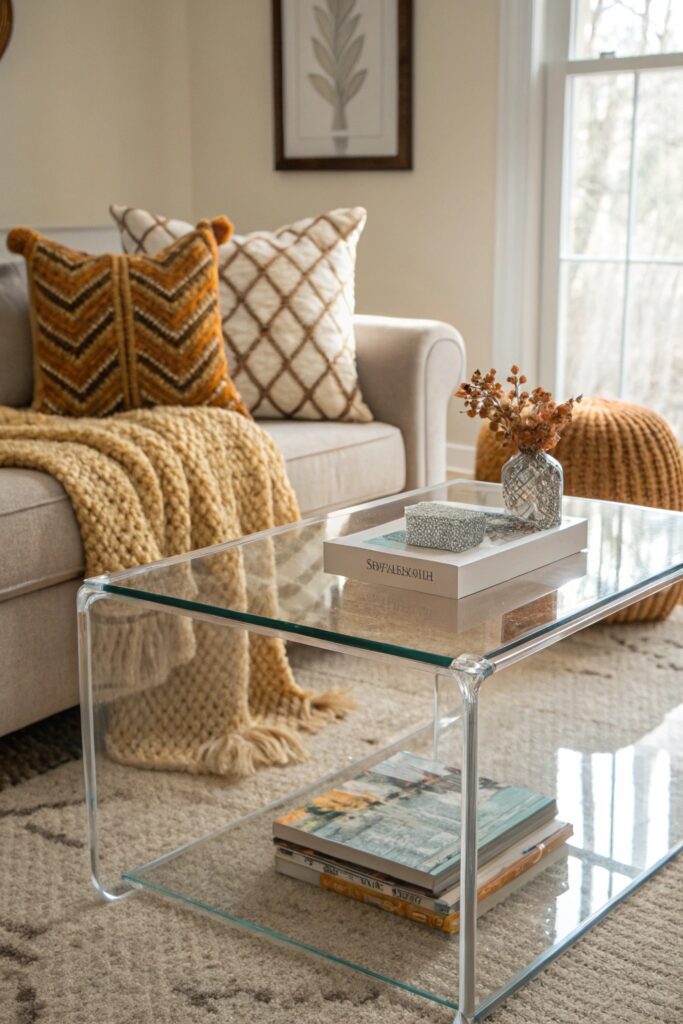
Apartment living rooms are often the primary route between the entry and other rooms, making a genuinely clear walking path more of a functional necessity than in a house where multiple routes might exist.
Arrange furniture with this through-traffic in mind first, then address styling and other considerations second, since a beautifully arranged room that blocks the natural path to the kitchen or bedroom creates daily friction.
10. Use Furniture That Can Move With You
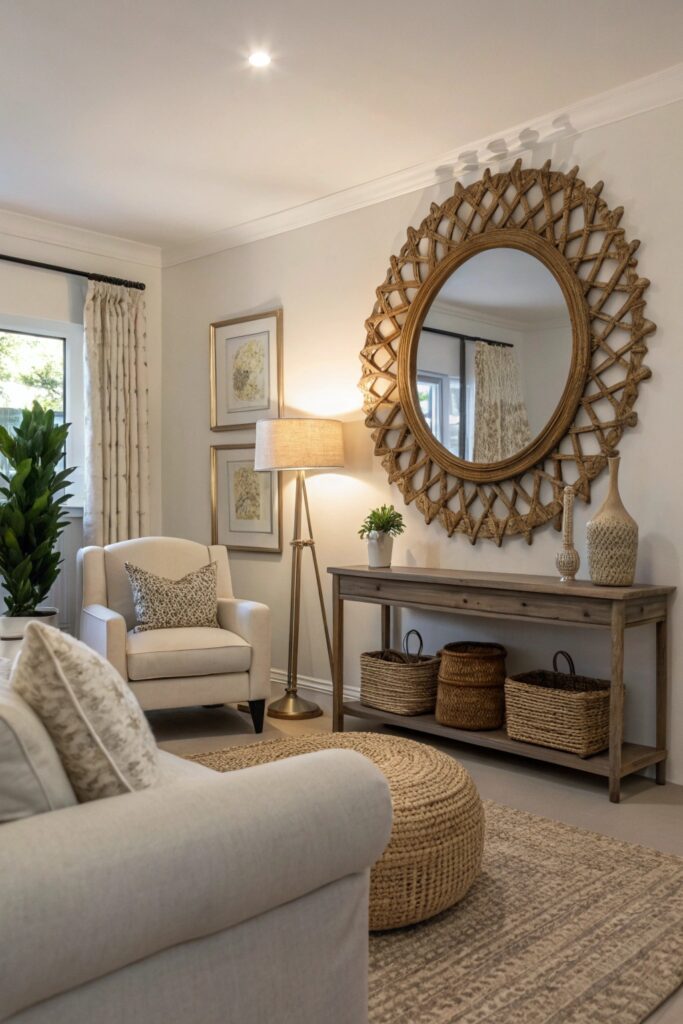
Since apartment living often means moving more frequently than homeownership, furniture that disassembles easily or adapts to different room shapes and sizes offers genuine practical value beyond its immediate use in your current space.
Modular sofas and adjustable shelving units specifically are worth the investment if you anticipate moving within the next few years, since they’re more likely to work in your next apartment’s different layout than a large, fixed-configuration piece.
11. Budget for a Few Higher-Quality Pieces Instead of Many
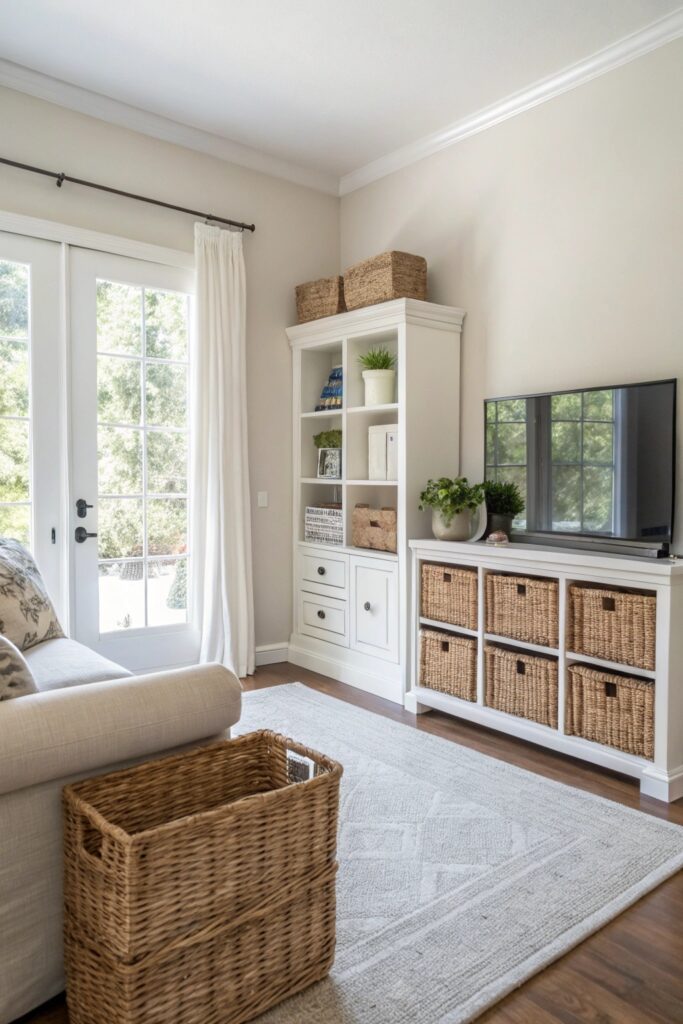
In a small apartment specifically, a handful of well-made furniture pieces tend to have more overall impact than a larger number of budget items, since a smaller room shows off (and shows wear on) each individual piece more prominently.
This is worth factoring into apartment furniture budgeting differently than you might for a larger home — spending more on a genuinely good sofa or a well-made storage piece pays off more visibly in a room where that item is one of only a few things in view at once.
Final Thoughts
Zoning and vertical storage matter most for genuinely small apartment layouts, since both address the specific constraint of fixed, often oddly-shaped square footage that apartments present more acutely than houses. Keep every change renter-friendly and reversible unless you’re certain about staying long-term, since that flexibility matters more in apartment living than in a home you own outright.