
A farmhouse laundry room sits at the intersection of several real concerns — moisture from washing, vibration from the machines themselves, and truly heavy daily use — which means material durability deserves as much attention as the rustic aesthetic. The details below cover both the styling direction and these practical specifics for each element.
Below are 12 elements worth focusing on, with the specifics for each.
1. Shiplap Walls with Open Shelving
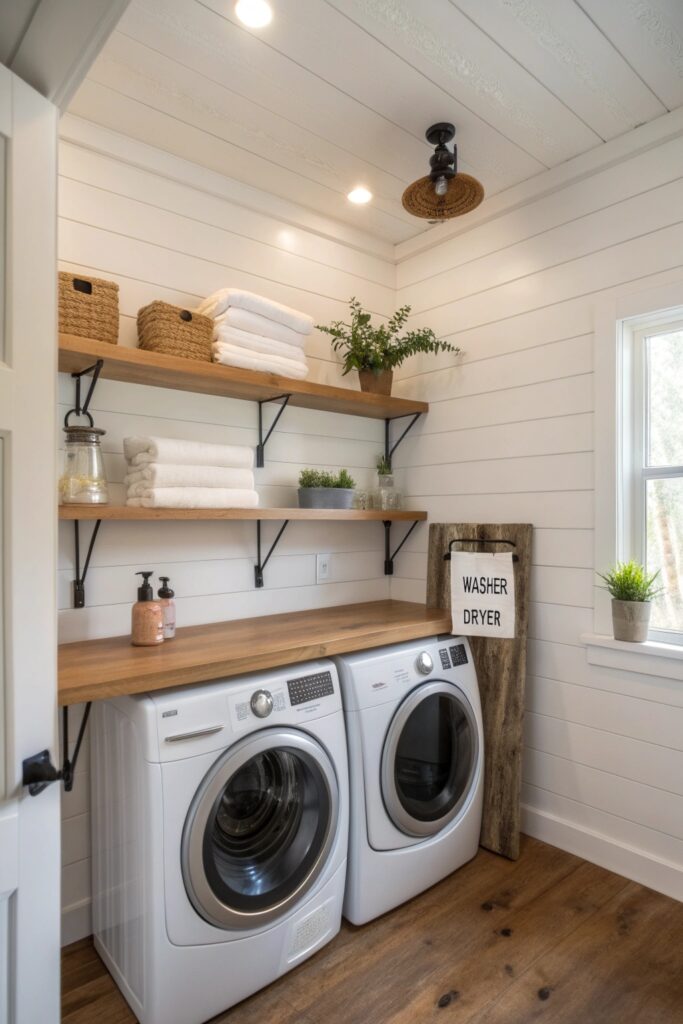
Keep shiplap a few inches back from directly behind the washer specifically, since a hose leak or overflow sprays outward from that area, and even moisture-resistant paint doesn’t fully protect wood from sustained direct water contact.
2. Farmhouse Utility Sink with Apron Front
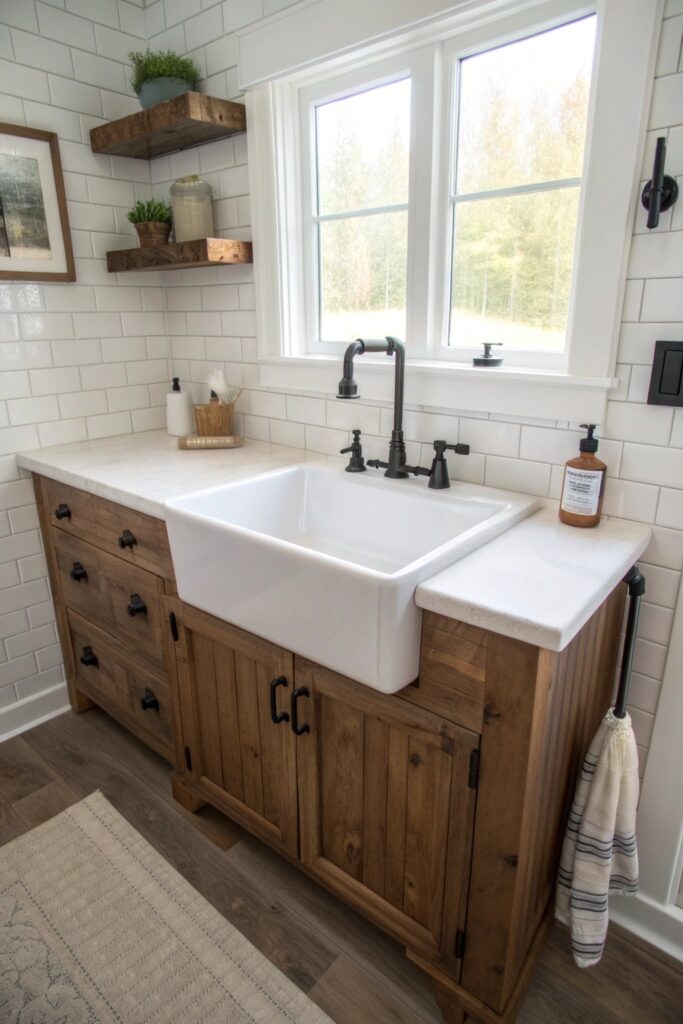
Cast iron or fireclay utility sinks need reinforced cabinetry support given both the sink’s own weight and the added weight of water once filled — considerably more load than a standard vanity sink puts on its base.
3. Painted Shaker Cabinetry in Sage Green
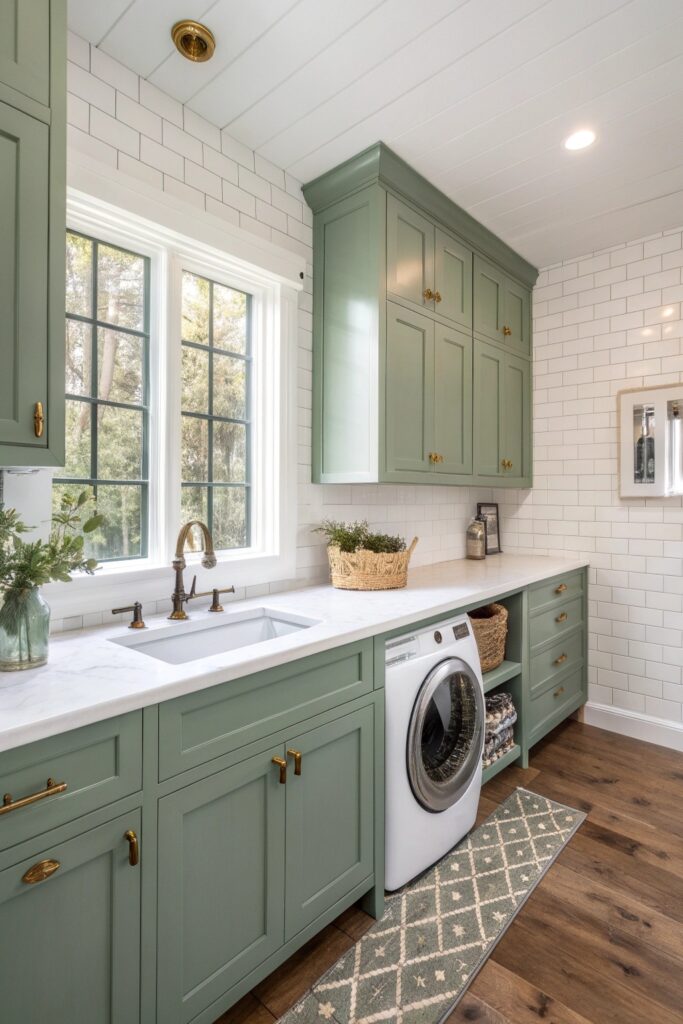
A satin or semi-gloss finish holds up to splash and humidity better than flat paint, which matters more in a laundry room’s regularly damp environment than it would in a drier room.
4. Barn Door Laundry Room Entry
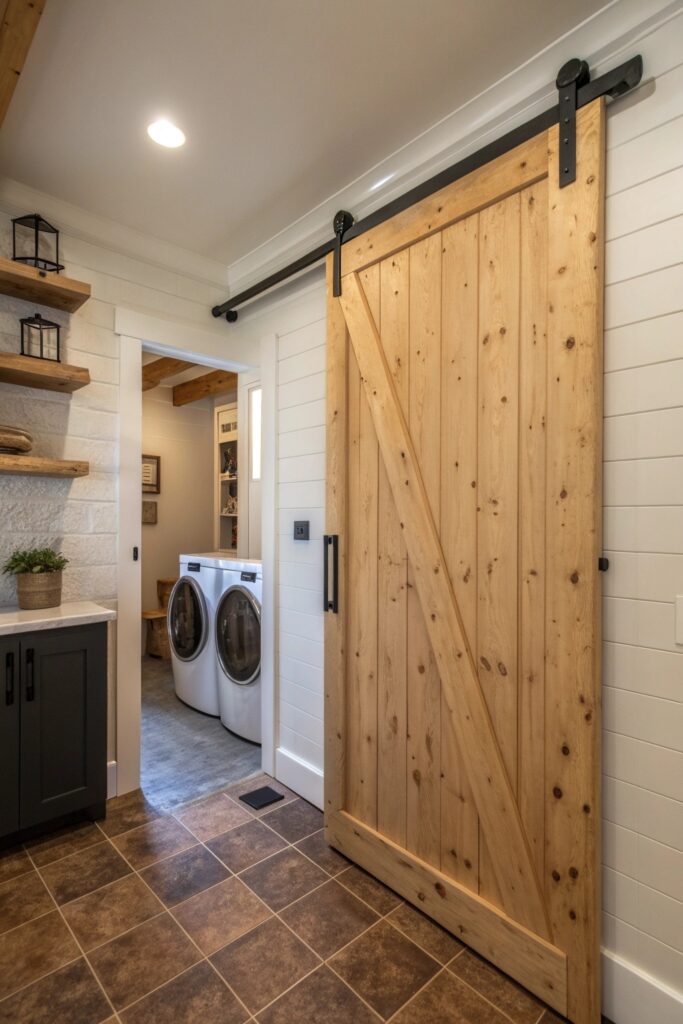
A sliding barn door doesn’t dampen washer and dryer noise the way a solid hinged door does, worth considering if machine noise during a nighttime load might disturb other parts of the house.
5. Countertop Over Washer and Dryer
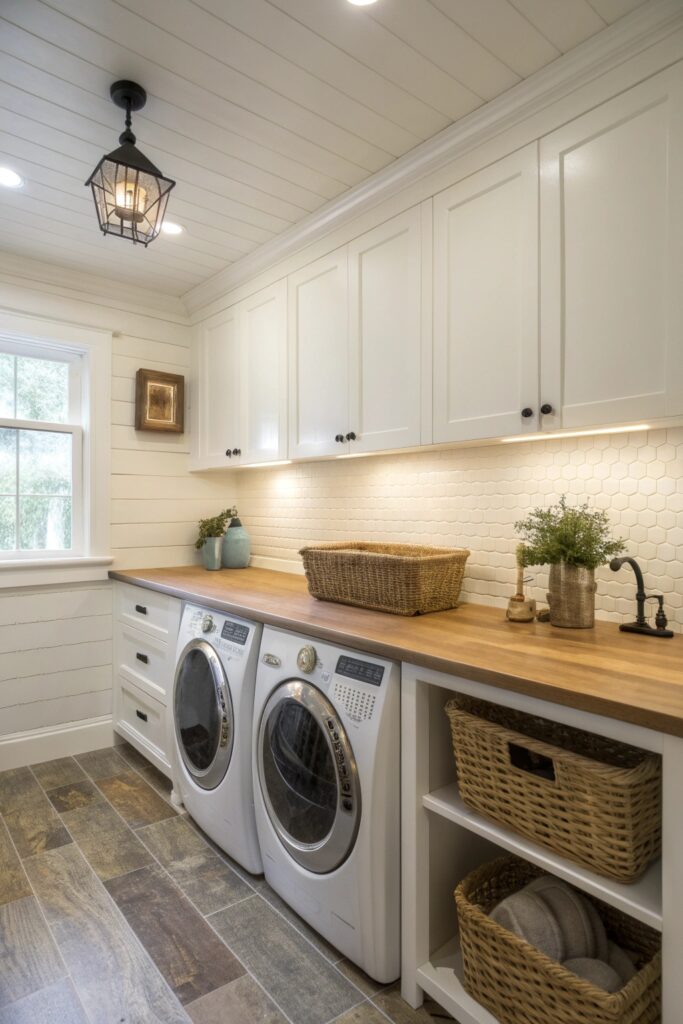
Leave clearance between the countertop and the machines themselves to account for vibration during spin cycles — a countertop mounted too rigidly against the appliances can develop cracks or transmit noise over years of regular use.
6. Vintage-Inspired Laundry Room Sign and Decor
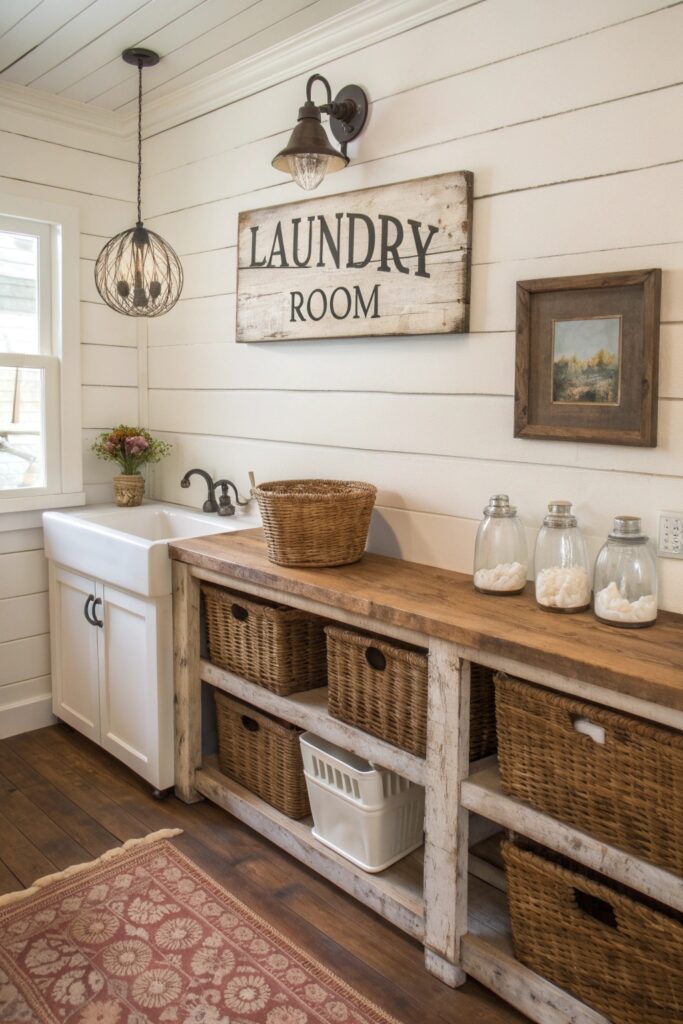
Metal or sealed wood signage holds up to humidity considerably better than unsealed paper or fabric pieces, which can warp or fade faster in this room’s regularly damp air.
7. Woven Baskets and Organized Linen Storage
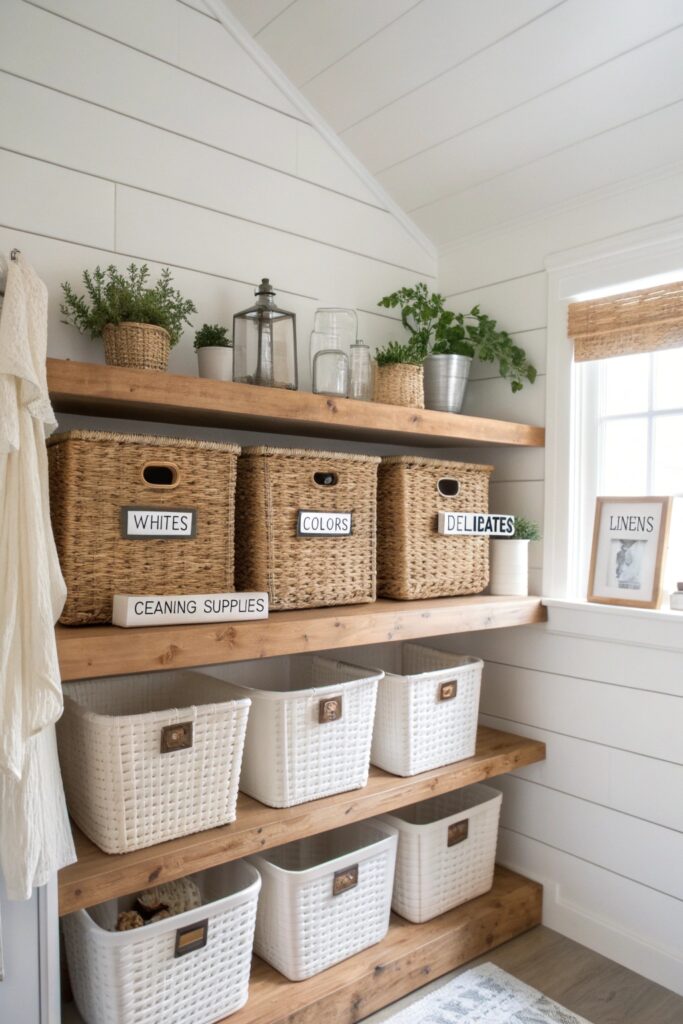
Sealed or treated wicker resists the moisture this room regularly produces better than raw natural fiber baskets, which can develop mold or weaken over time in a consistently humid environment.
8. Black and White Patterned Tile Floor
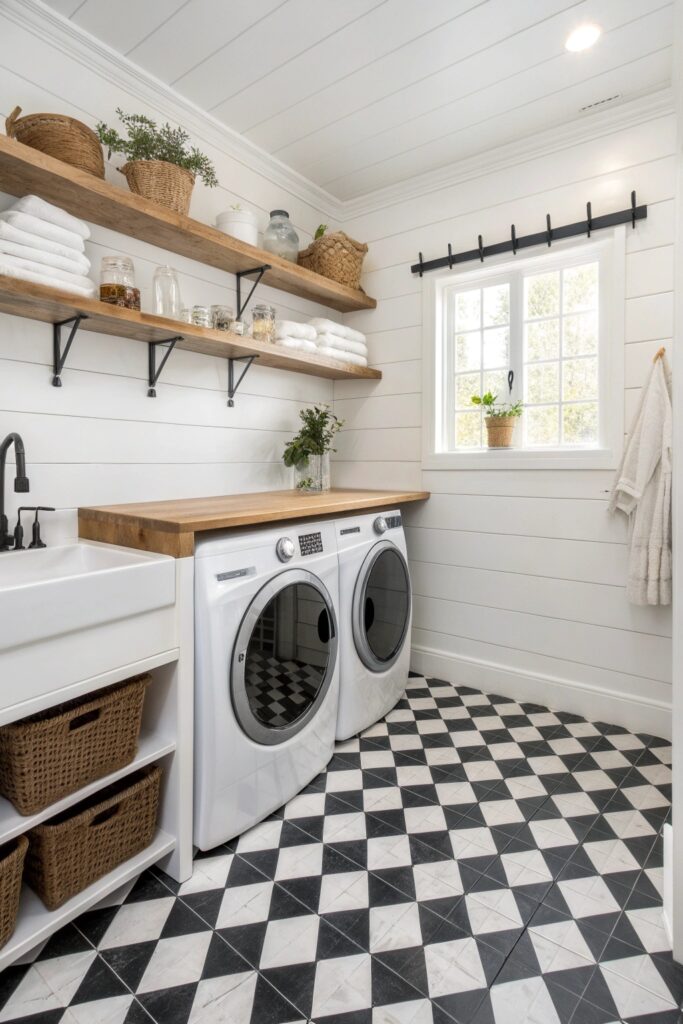
A slip-resistant tile finish matters more here than in most rooms, given the real risk of a wet floor from an overflowing machine or dripping laundry being transferred between washer and dryer.
9. Drying Rack and Hanging Rail System
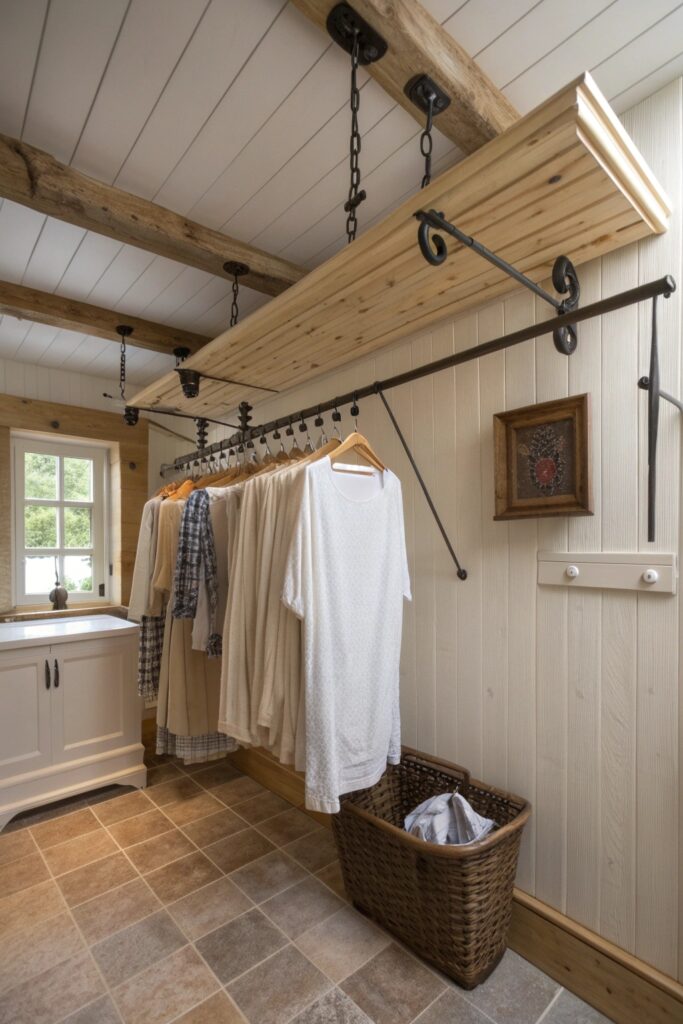
Wet garments weigh considerably more than dry ones, so any wall-mounted drying rail needs a weight rating that accounts for a full rail of soaked clothing, not just the same items dry.
10. Farmhouse Laundry Room with Mudroom Connection
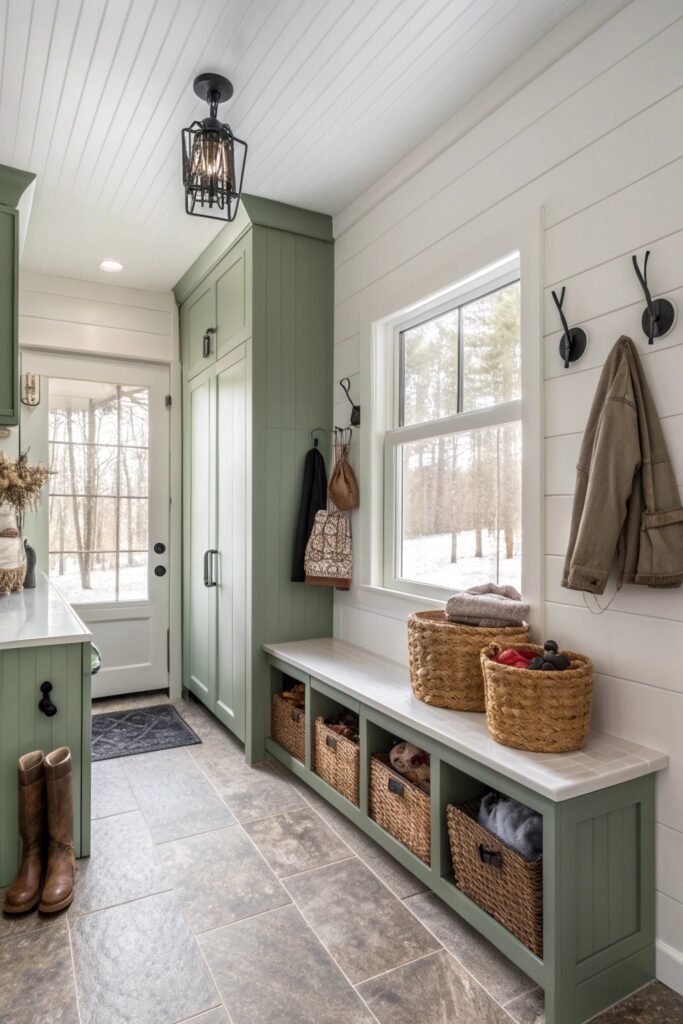
This layout sits at the intersection of several guides worth checking depending on your specific space — see our companion guides to laundry room organization ideas and mudroom laundry room combo ideas for the plumbing and workflow specifics that apply to a combined space like this one.
11. White Beadboard Wainscoting
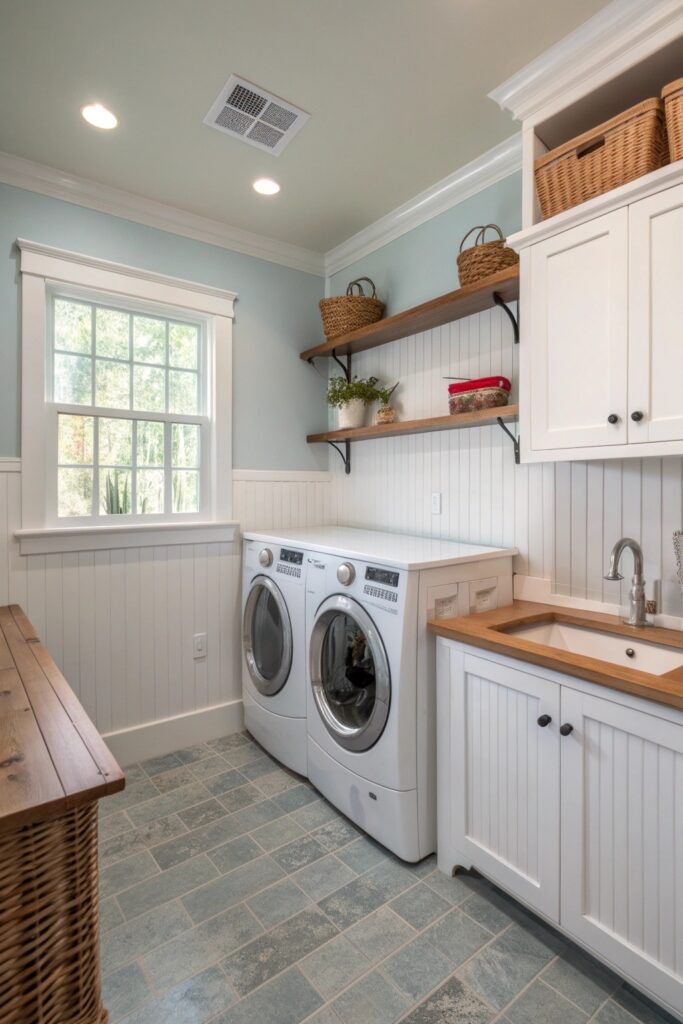
Beadboard should stop below the direct splash zone around the washer and utility sink, or use a moisture-rated composite material in that specific area, the same underlying principle that applies to shiplap in this room.
12. Farmhouse Laundry Room with Natural Light and Window Treatments
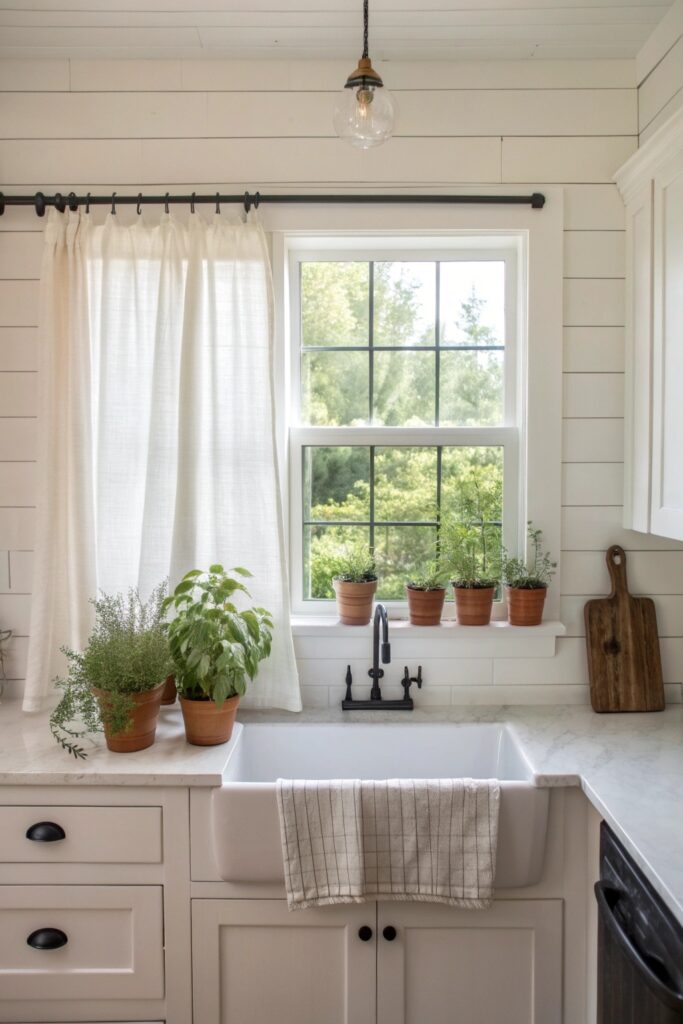
Vinyl or faux wood blinds hold up to this room’s regular humidity and steam considerably better than real wood or fabric treatments, which can warp or absorb moisture over time.
Flooring Choices That Handle This Room’s Conditions
Beyond patterned tile, luxury vinyl plank or sealed concrete both handle a laundry room’s regular water exposure well, resisting damage from spills and the occasional overflow considerably better than hardwood or carpet would in this specific location.
A slightly textured finish provides better traction than a high-gloss surface when the floor gets wet, which is worth prioritizing over a purely aesthetic choice given how often this room sees water on the floor.
What a Farmhouse Laundry Room Costs
A cosmetic update — paint, hardware, shelving, and a few decor pieces — typically costs $300 to $1,000 depending on material quality.
A fuller renovation including custom cabinetry, a utility sink, and new flooring runs considerably higher, often $5,000 to $15,000 or more depending on the scope.
Ventilation Deserves Real Attention Here
A dryer’s exhaust vent needs to be clear and properly routed to the exterior, and cleaning the lint trap after every single load isn’t just about dryer efficiency — lint buildup is a genuine fire hazard when neglected over time.
A room without a window or dedicated exhaust fan traps humidity from both the washer and dryer, which over time contributes to a musty smell or even mold in a poorly ventilated space — a simple exhaust fan makes a real difference in keeping the room dry between loads.
Sourcing Vintage Pieces for This Room
Estate sales and vintage shops are worth checking for smaller decorative pieces like signage, jars, or a vintage stool, though it’s worth testing any vintage furniture for structural soundness before bringing it into regular use in a room that sees this much daily activity.
Sourcing takes more time than buying new farmhouse-style reproductions, but the resulting character is often what separates a laundry room that feels truly collected over time from one that reads as a single coordinated purchase from a home decor store.
A farmhouse laundry room done well strikes a real balance between visual warmth and practical durability, and taking the moisture, vibration, and traffic considerations seriously from the start saves real money on repairs compared to discovering these issues after materials have already begun to wear.
Whichever combination of these ideas fits your space and budget, a laundry room that actually functions well day to day — with materials and hardware suited to its real conditions — tends to get more consistent, satisfying use than one styled primarily for how it photographs.
Getting quotes from at least two or three contractors before starting a larger renovation helps confirm both pricing and their specific experience with the plumbing, ventilation, and material details this room depends on, since not every general contractor is equally familiar with laundry room requirements specifically.
Final Thoughts
Nearly every idea here comes back to the same underlying need: farmhouse style’s raw, natural materials require real moisture and vibration protection to hold up in a laundry room’s daily conditions. Choosing sealed finishes, reinforced hardware, and wet-area-appropriate materials lets you keep the aesthetic without sacrificing how well it performs.
A functioning exhaust fan or window ventilation does more to protect every material choice on this list than any single sealant, since controlling humidity at the source matters as much as the individual material decisions themselves.