
New curtains almost always arrive with fold creases from packaging, and the right removal method depends mainly on the specific fabric — heavier cotton and linen tolerate more direct heat and handling than delicate sheers or silk blends.
Below are 10 methods, ranging from passive (just hanging them) to more active steam or heat-based approaches, so you can match the method to your fabric and how quickly you need the creases gone.
1. Steam Them With a Handheld Steamer
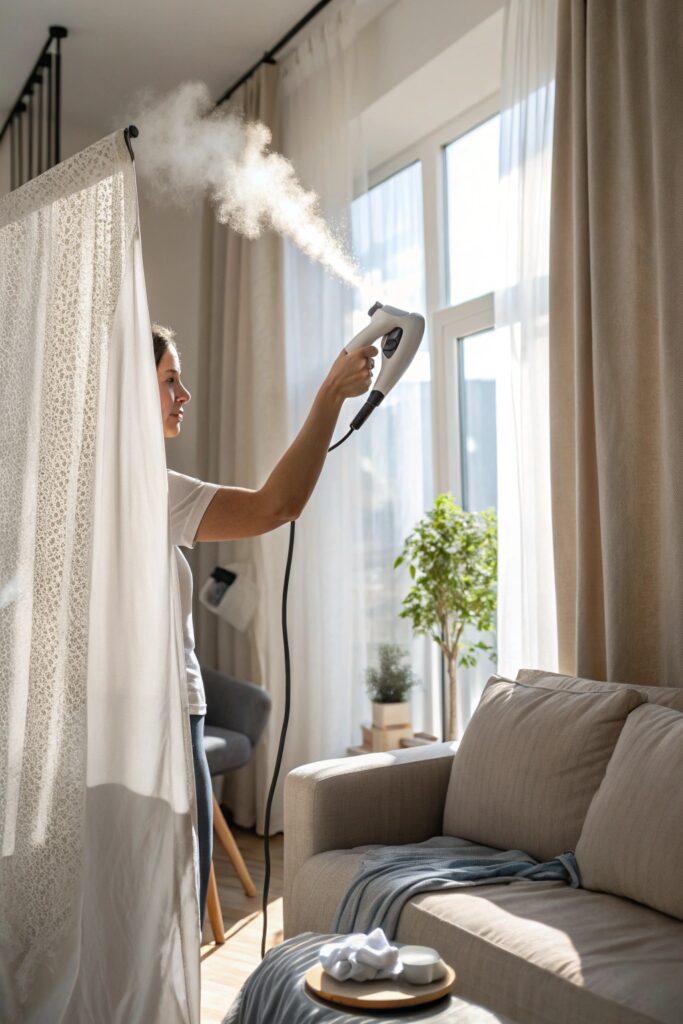
A handheld garment steamer ($25-50) is the most effective and lowest-risk method for most curtain fabrics, relaxing fold lines quickly without direct fabric contact — hang the curtain on its rod first and steam vertically, working from top to bottom.
Keep the steamer moving continuously rather than holding it in one spot, and test an inconspicuous corner first on delicate fabrics like silk or sheer voile, which can water-spot more easily than heavier cotton or linen.
2. Hang Them in a Steamy Bathroom
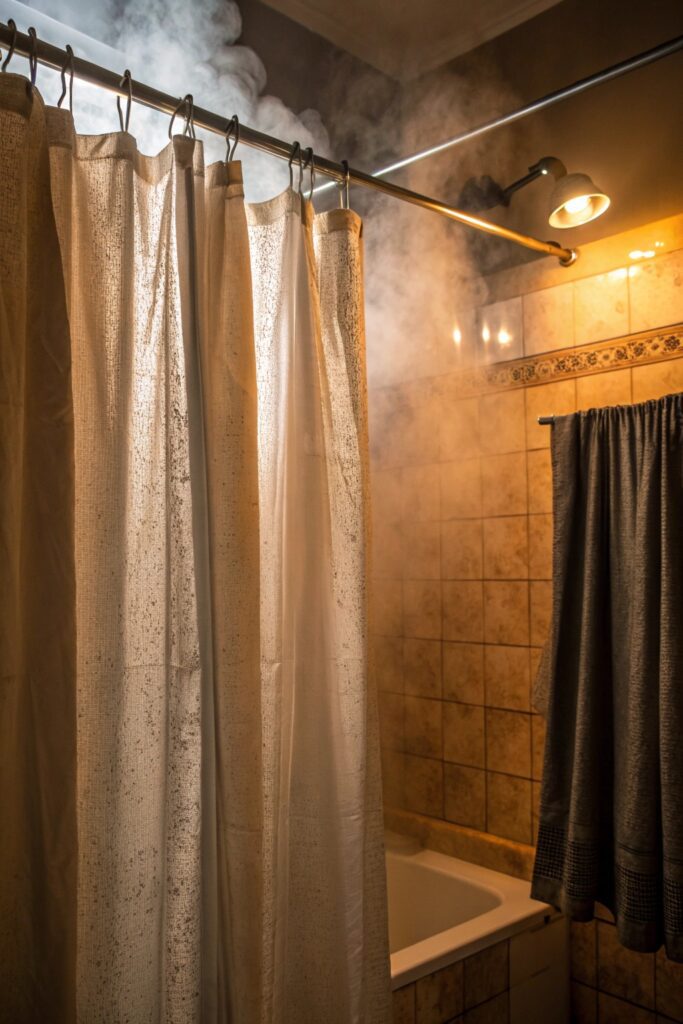
Hanging curtains on a rod or shower curtain bar in a bathroom while running a hot shower for 15-20 minutes creates enough ambient steam to relax mild fold lines, without any specialized equipment required.
This works best for lighter fabrics and milder creasing — deep, sharp fold lines from tight packaging often need more direct, concentrated steam than ambient bathroom humidity alone provides.
3. Tumble Dry With a Damp Towel
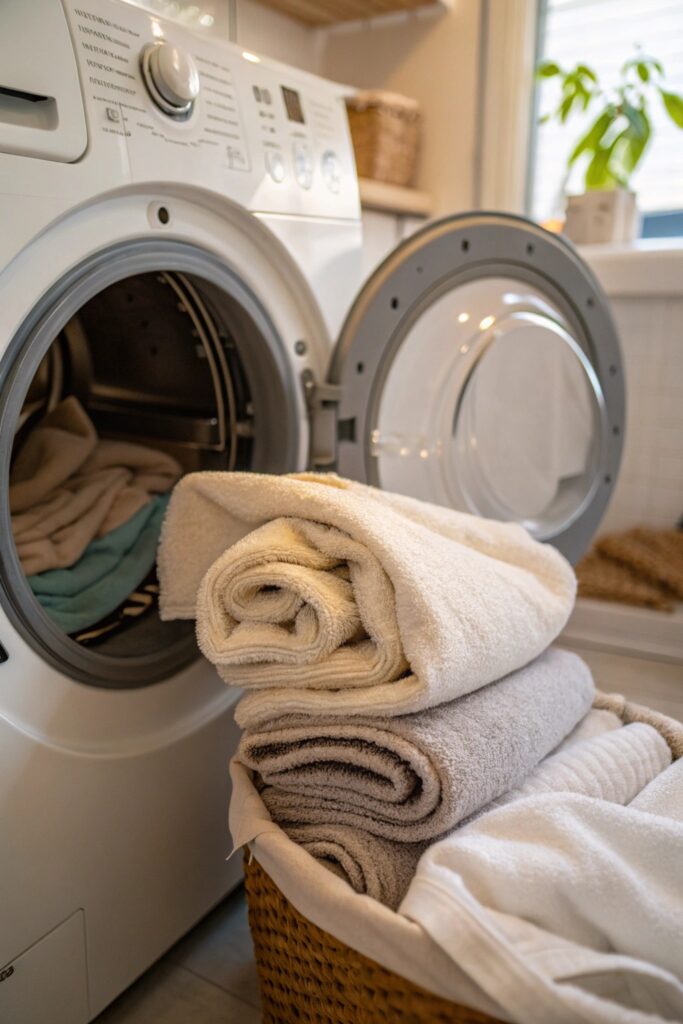
Adding a damp (not soaking wet) towel to the dryer with your curtains on a low or no-heat tumble setting for 10-15 minutes uses the towel’s moisture and the tumbling action together to work out creases, particularly effective for cotton and polyester blends.
Check your specific curtain’s care label first — this method isn’t suitable for fabrics that shouldn’t go in a dryer at all, like some silks or heavily embellished panels.
4. Iron Them Directly (Carefully)
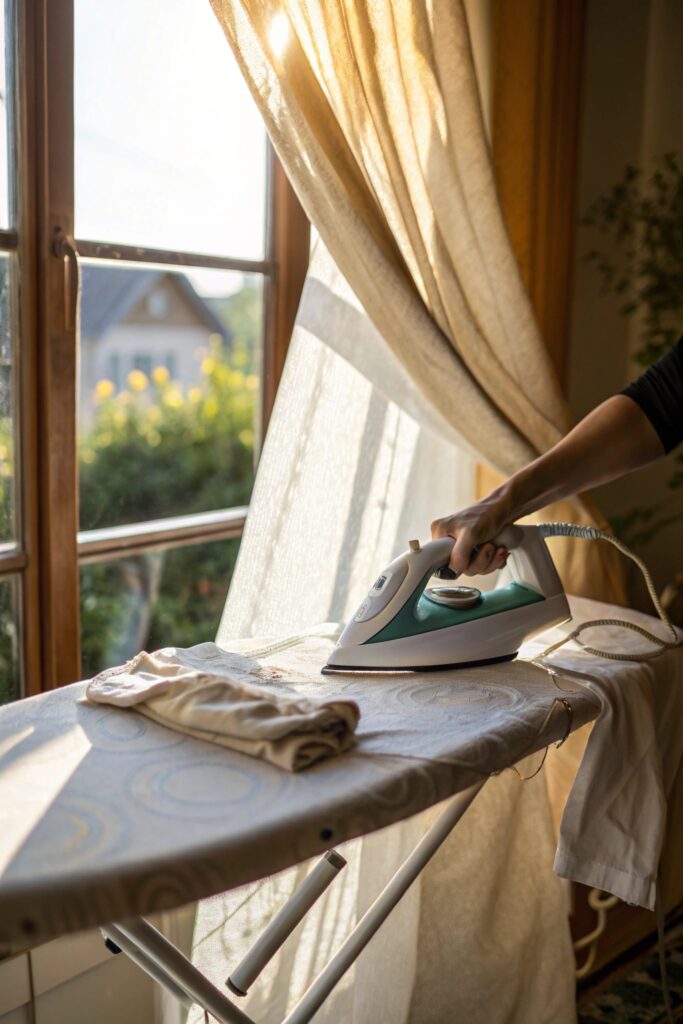
Ironing on the appropriate heat setting for your fabric type, ideally with a pressing cloth between the iron and the curtain to prevent scorching or shine marks, removes even stubborn creases effectively for fabrics that tolerate direct heat.
Always check the care label’s specific heat recommendation before ironing, since synthetic fabrics especially can melt or warp under heat levels that would be perfectly safe for cotton or linen.
5. Use a Spray Bottle and Gravity
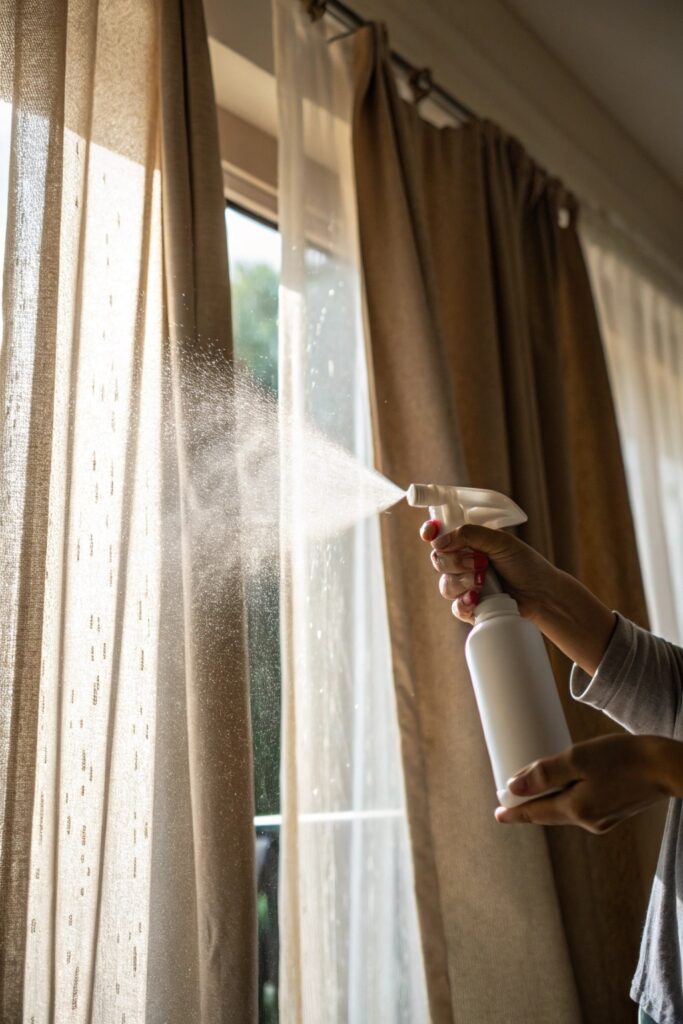
Lightly misting curtains with water while they hang on the rod, then letting gravity and the fabric’s own weight pull out creases as it air-dries, is the lowest-effort method available, though it works better for mild creasing than deep packaging folds.
This method takes longer (often overnight) to see full results, but it’s essentially free and requires no equipment beyond a basic spray bottle.
6. Try the Hair Dryer Method
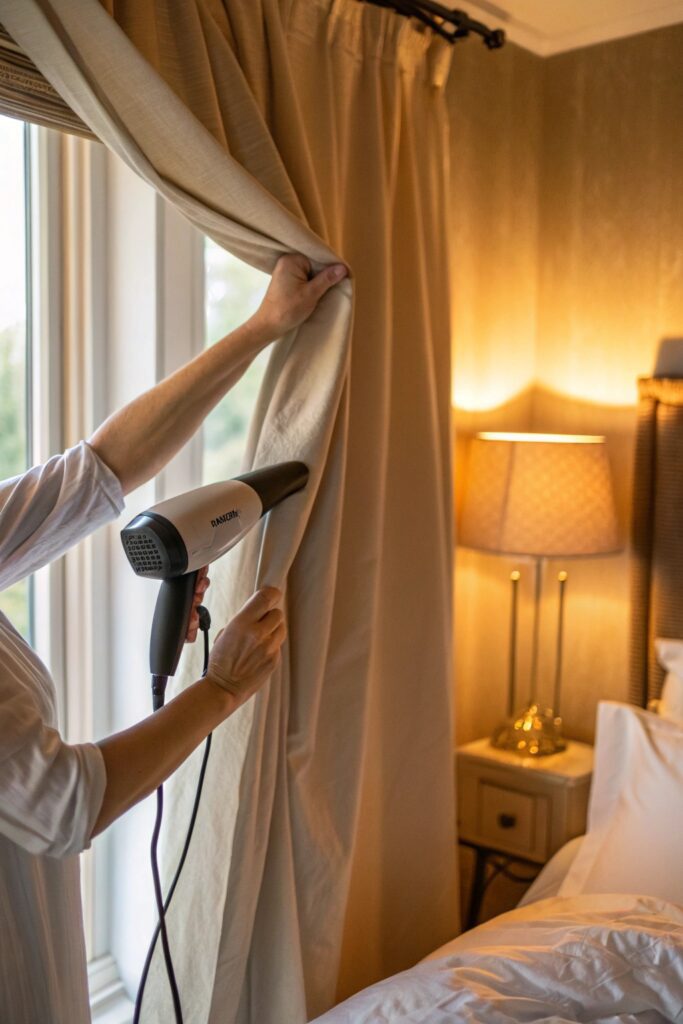
A hair dryer on a warm (not hot) setting, held a few inches from the fabric while gently pulling the material taut with your other hand, can relax smaller localized creases without needing a dedicated steamer.
This works best for spot-treating a few specific fold lines rather than an entire curtain panel, since it’s a slower, more localized process than steaming or ironing a full panel at once.
7. Roll Instead of Fold for Storage
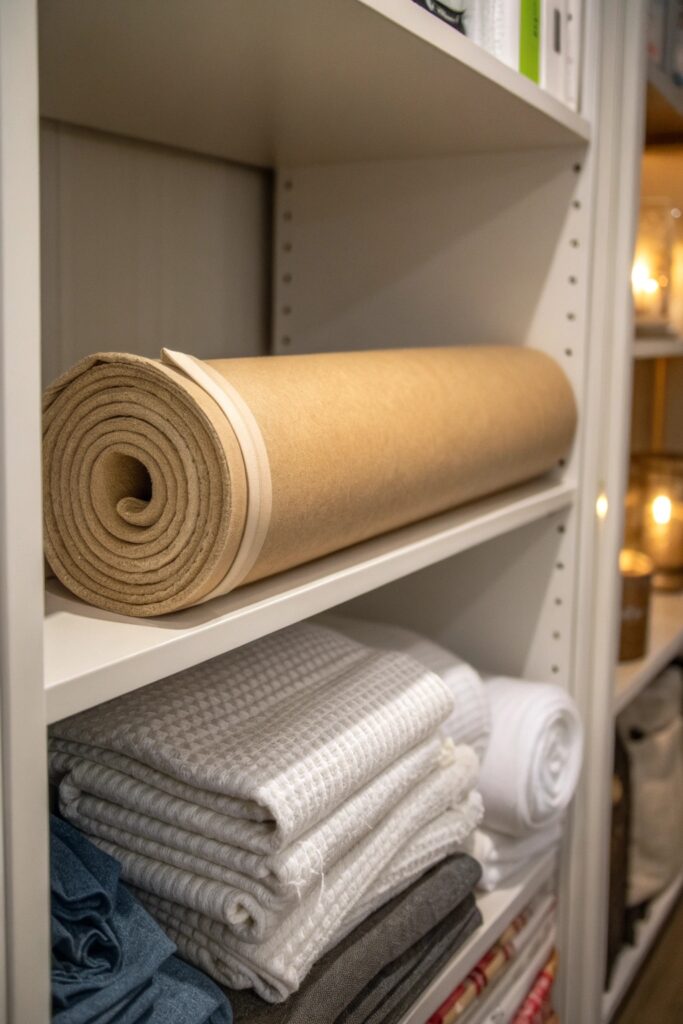
If curtains need to be stored before hanging (during a move, or while waiting on installation), rolling rather than folding prevents new sharp crease lines from forming in the first place, which is easier than removing them later.
This is worth doing proactively even for curtains you plan to hang soon, since folded storage for even a few days can set creases firmly enough to need one of the more involved removal methods above.
8. Use a Fabric Wrinkle-Release Spray
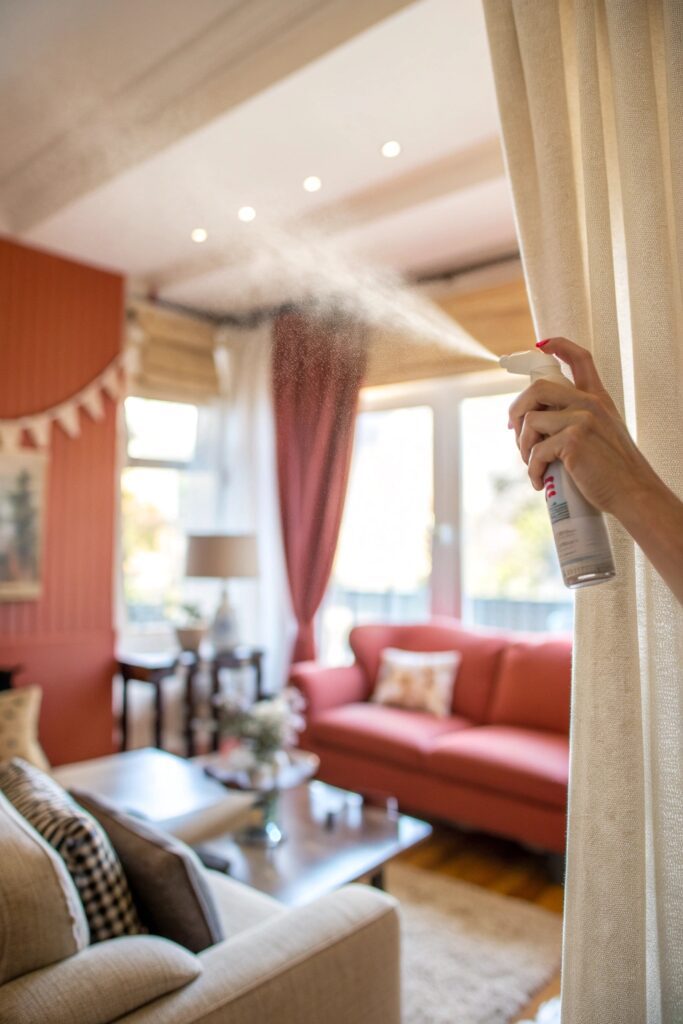
Commercial wrinkle-release sprays ($6-10) use a combination of fine mist and mild fabric relaxants to loosen creases when combined with gently smoothing the fabric by hand, working as a lower-effort alternative to steaming for lighter creasing.
Spray evenly and smooth the fabric with your hands while it’s still damp, then let it air dry fully on the rod for the best result.
9. Hang Them Immediately After Unpacking
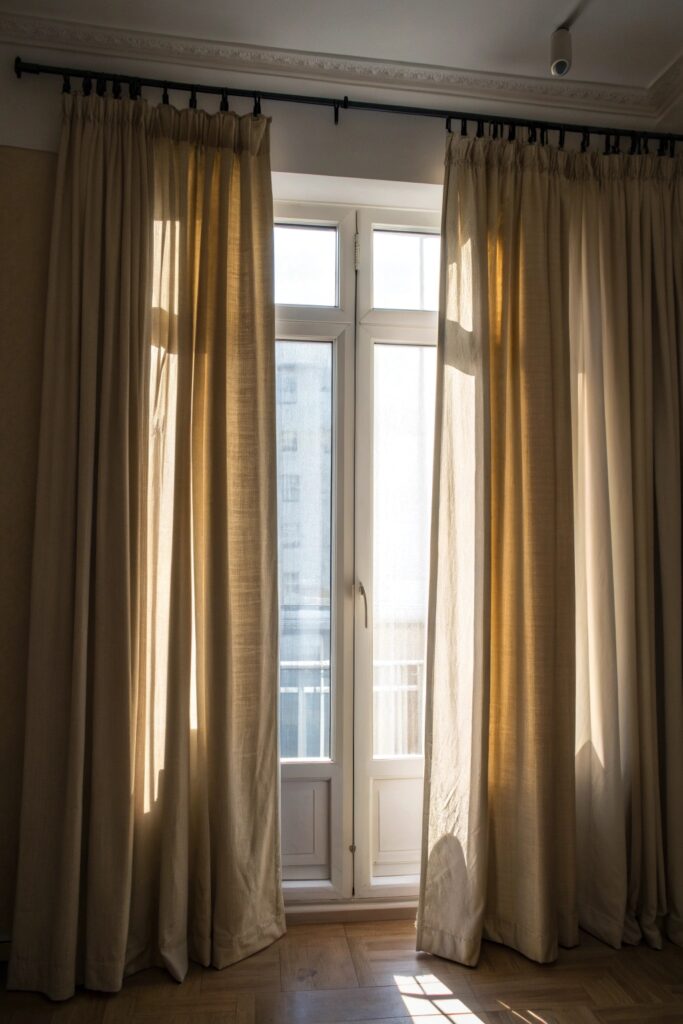
Simply hanging curtains on their intended rod as soon as they’re unpacked, rather than leaving them folded in packaging for days or weeks, lets gravity begin working out creases naturally before you even need to try a more active removal method.
Many milder creases will visibly soften within 24-48 hours of hanging alone, which is worth waiting out before assuming a more involved method is necessary.
10. Wash According to Care Instructions
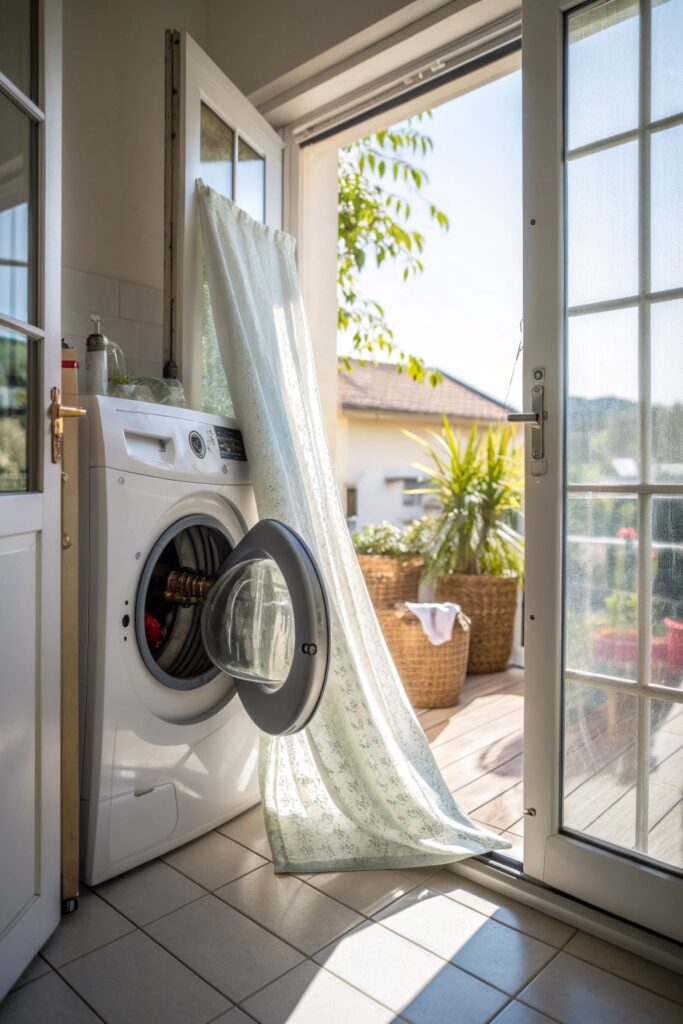
For fabrics rated safe for machine washing, a gentle wash cycle followed by proper drying (whether line-dried or tumble-dried on the appropriate setting) can remove even significant packaging creases as an alternative to steaming or ironing.
Always check the specific care label first, since not all curtain fabrics — particularly some linings, blackout curtains, or delicate sheers — are machine washable without risking shrinkage or damage.
Matching the Method to Your Fabric
Heavier natural fibers like cotton and linen tolerate the widest range of methods, including direct ironing and tumble drying, since they hold up well to both heat and moisture without the risk of watermarking or scorching that lighter fabrics carry.
Sheers, voile, and silk-blend curtains need the gentlest approach — steaming from a distance, ambient bathroom humidity, or a light wrinkle-release spray are safer starting points than direct iron contact, since these fabrics can develop permanent shine marks or water spots more easily than sturdier materials.
Wrapping It Up
Steaming is the safest, most broadly effective method across fabric types and is worth the small investment in a handheld steamer if you frequently buy new curtains or other fabric home goods. For a faster but lower-cost option, hanging curtains immediately and letting gravity work for a day or two resolves milder creasing without any active effort at all.