
Modern chic doesn’t have to mean cold or impersonal — real warmth comes through material choice and texture even within a pared-back aesthetic, and several of these ideas carry practical furniture and material considerations worth knowing before committing. The details below cover both the design direction and these specifics for each.
Below are 11 modern dining room ideas worth considering, with the specifics for each.
1. The Statement Chandelier Dining Room
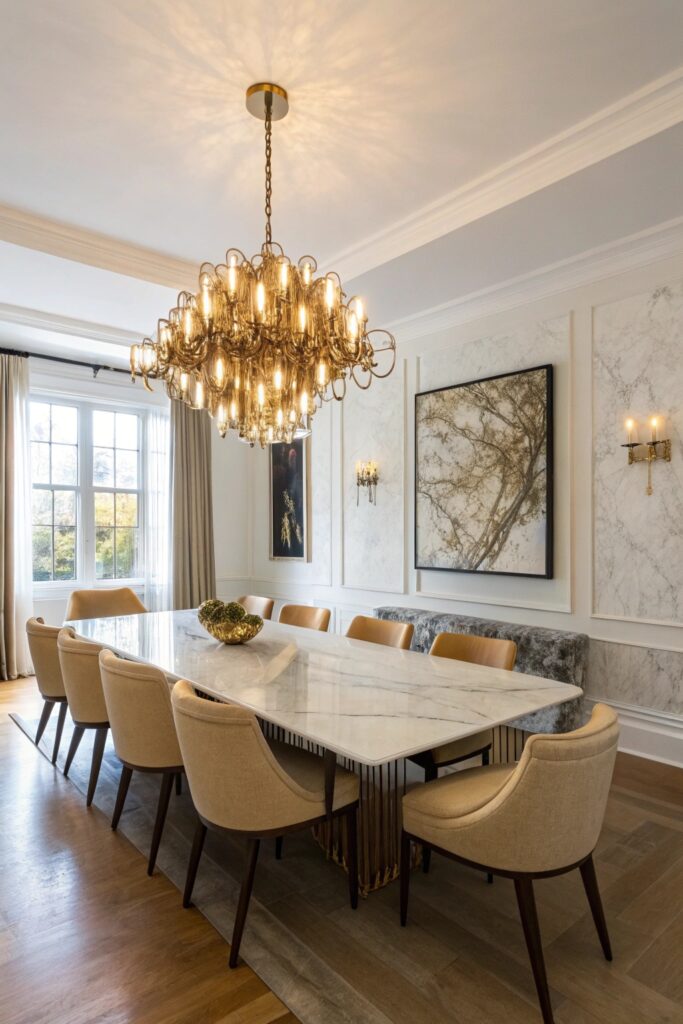
A fixture roughly half to two-thirds the width of the table below it tends to create the best visual balance. Any chandelier heavier than a standard fixture needs a properly rated structural junction box, not just any ceiling electrical box, to safely support the added weight.
2. The Curved Furniture Modern Dining Room
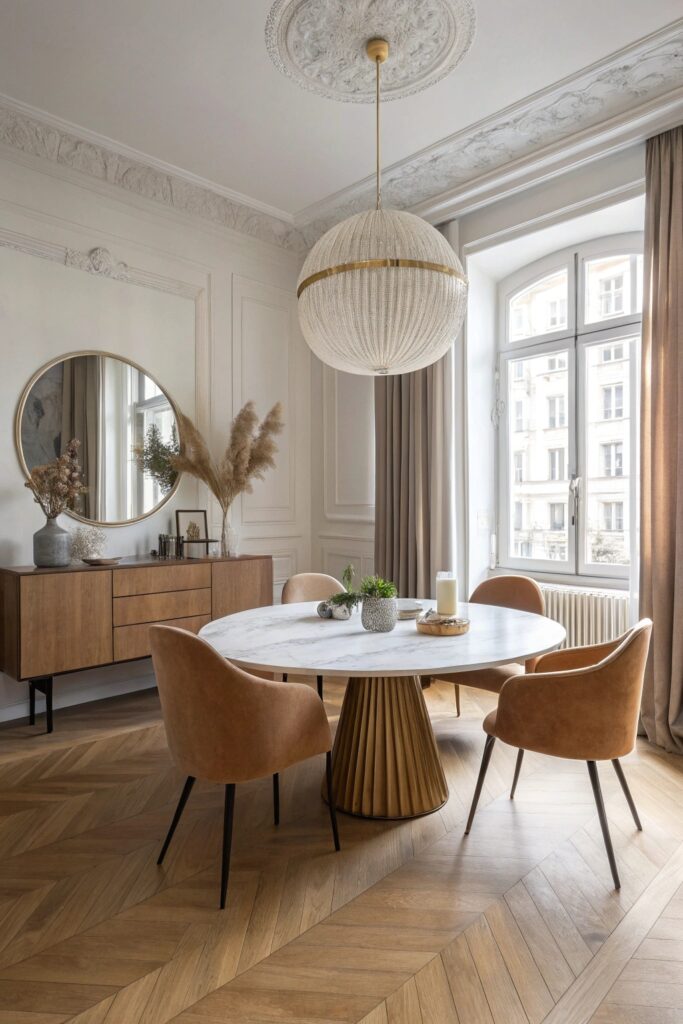
Compound curves cost more to manufacture than straight lines, and curved upholstered pieces show wear differently at the curve points, so choosing a durable performance fabric specifically at those stress areas helps the piece hold up over daily use.
3. The Japandi Modern Dining Room
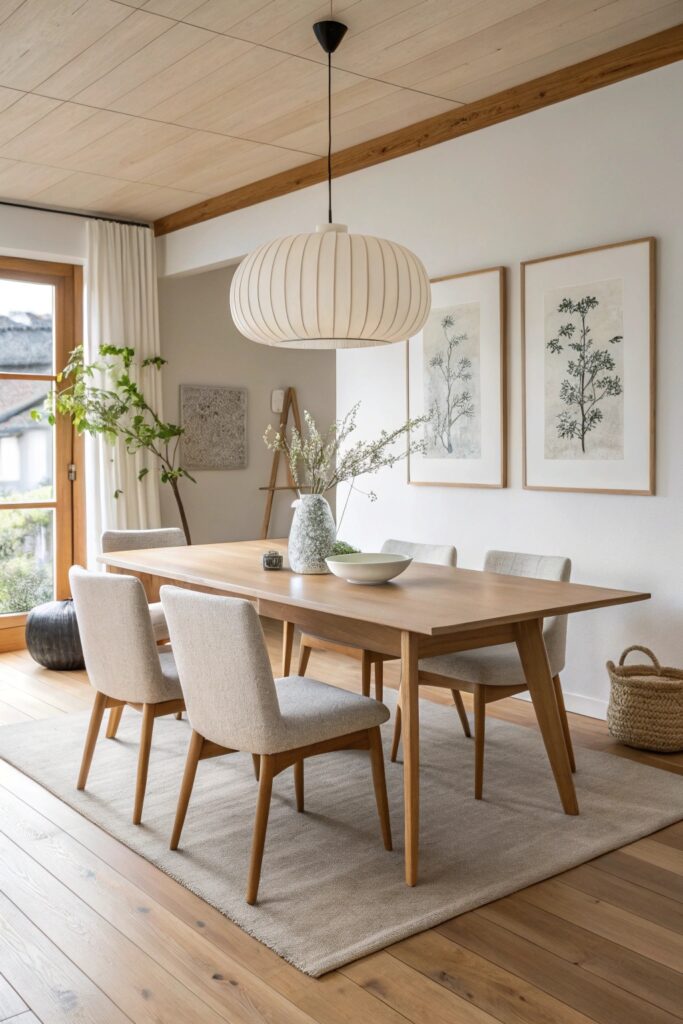
Visible, exposed joinery on dining chairs — rather than hidden fasteners — is a real design feature in this style, drawing on a Japanese woodworking tradition that treats the joint itself as something worth showing rather than concealing.
4. The Dramatic Dark Dining Room
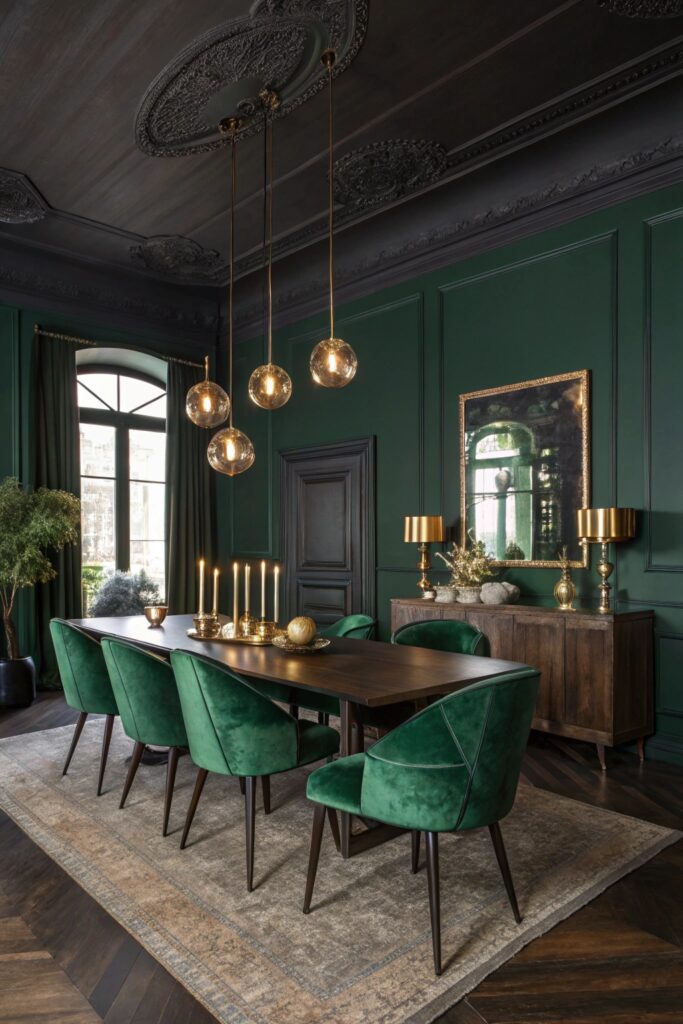
A deep, low-reflectance wall color absorbs more light than a lighter one, so layering in additional lamp or accent lighting keeps the room from feeling underlit once the darker color goes up.
5. The Minimalist White Modern Dining Room
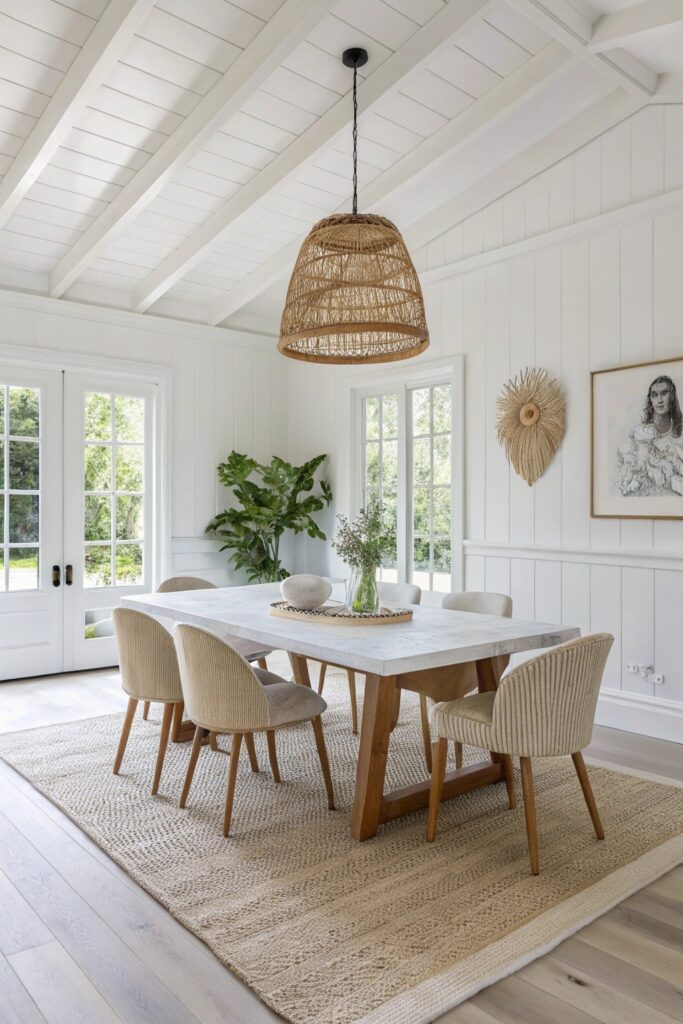
A few well-chosen pieces read as more intentional here than a fully furnished room, since white space itself becomes part of the design rather than something to fill.
6. The Mixed Material Dining Room
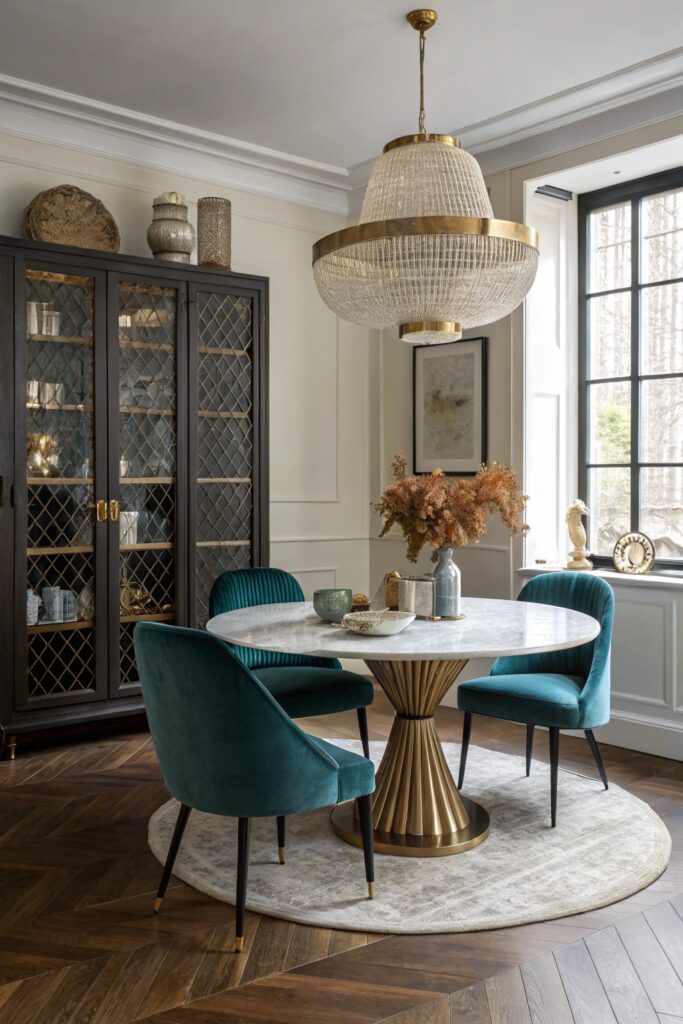
When combining materials like a metal base with a stone top, the mounting method needs to allow slight movement rather than a rigid bond, since stone and metal expand and contract at different rates with temperature changes.
7. The Banquette Dining Room
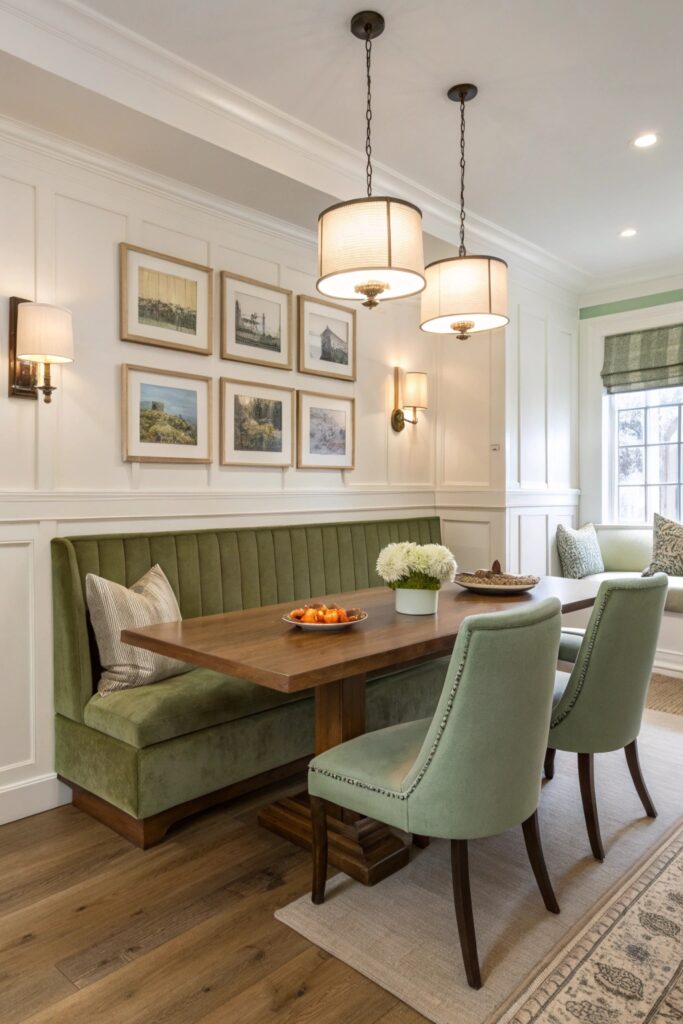
Built-in banquette seating needs real structural framing behind it, not just a decorative box, and a seat depth of 18 to 20 inches with a slightly angled backrest keeps the seating comfortable through a longer meal.
8. The Gallery Wall Dining Room
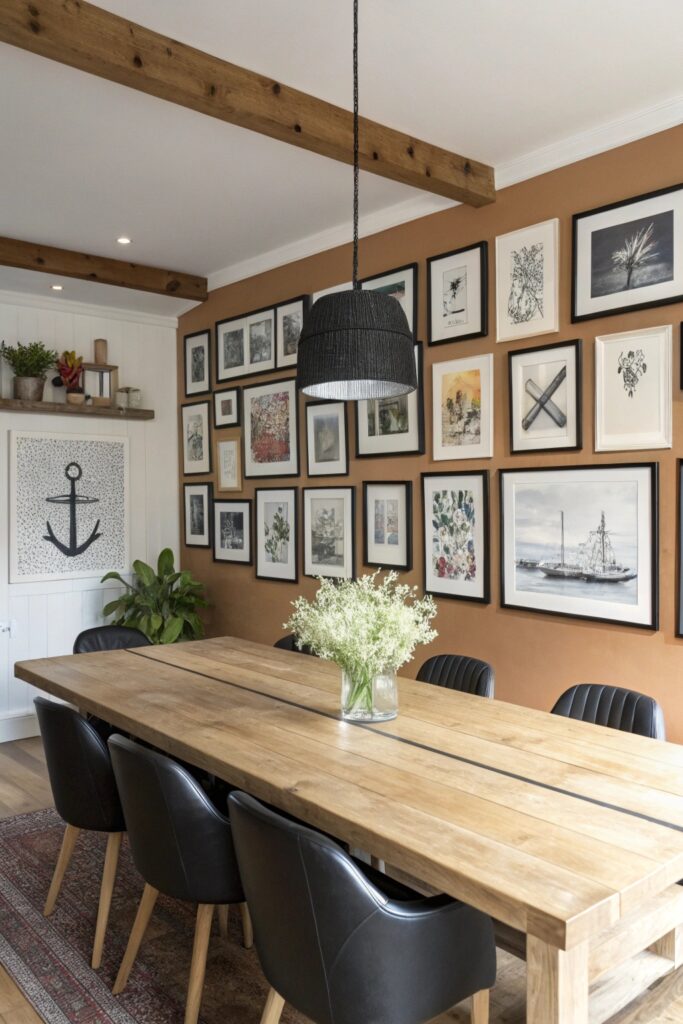
Avoid positioning key pieces directly behind where diners sit, at a height that’s hard to actually view from a seated position — most of this room’s viewing happens seated rather than standing, which changes the ideal placement compared to a hallway gallery wall.
9. The Indoor-Outdoor Modern Dining Room
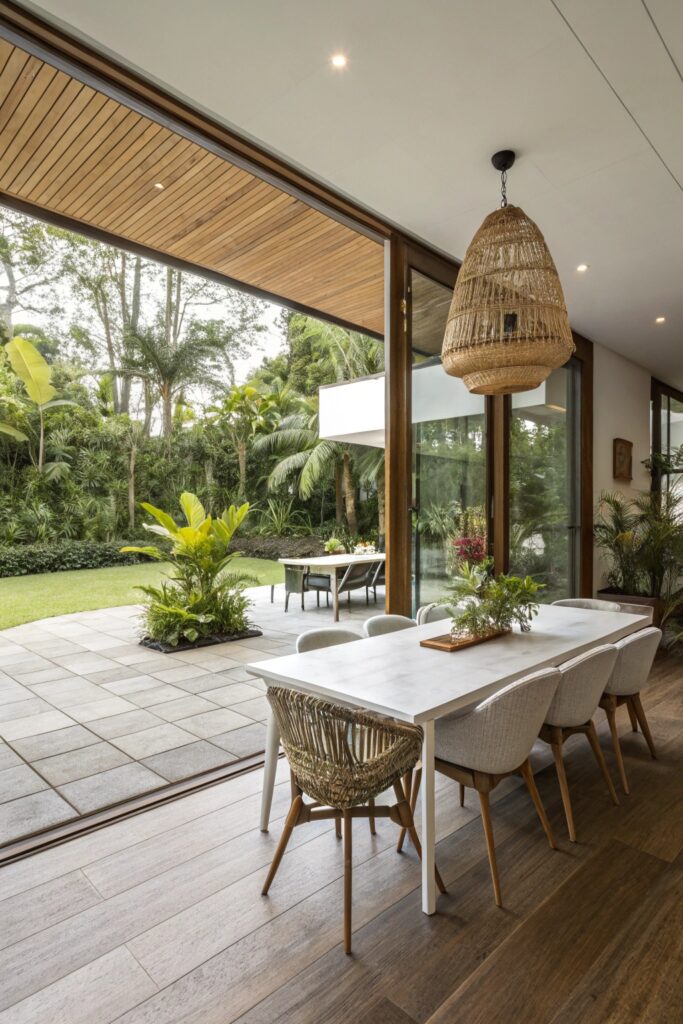
Furniture positioned near an open sliding door needs to be rated for the temperature and humidity swings that space actually experiences, even if the room otherwise reads as a fully indoor dining area.
10. The Modern Dining Room with Textured Walls
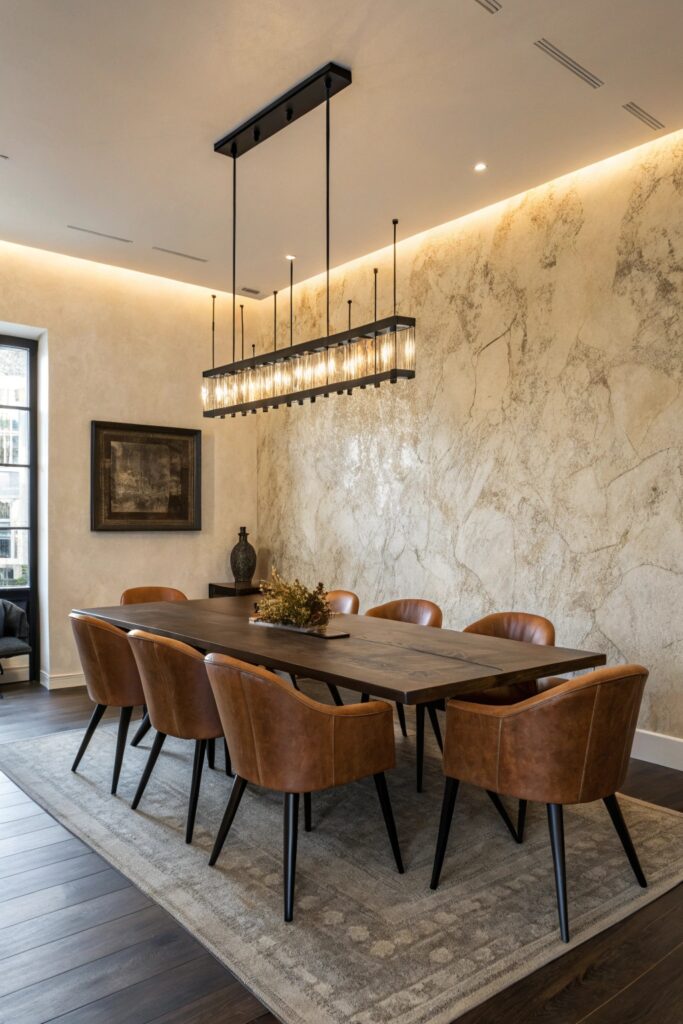
Heavily textured finishes like plaster or textured wallpaper are harder to clean of food splatter, so keeping textured treatments away from the direct area around the table, or choosing a sealed and washable finish there specifically, saves real maintenance hassle.
11. The Modern Dining Room with a Sideboard as a Design Statement
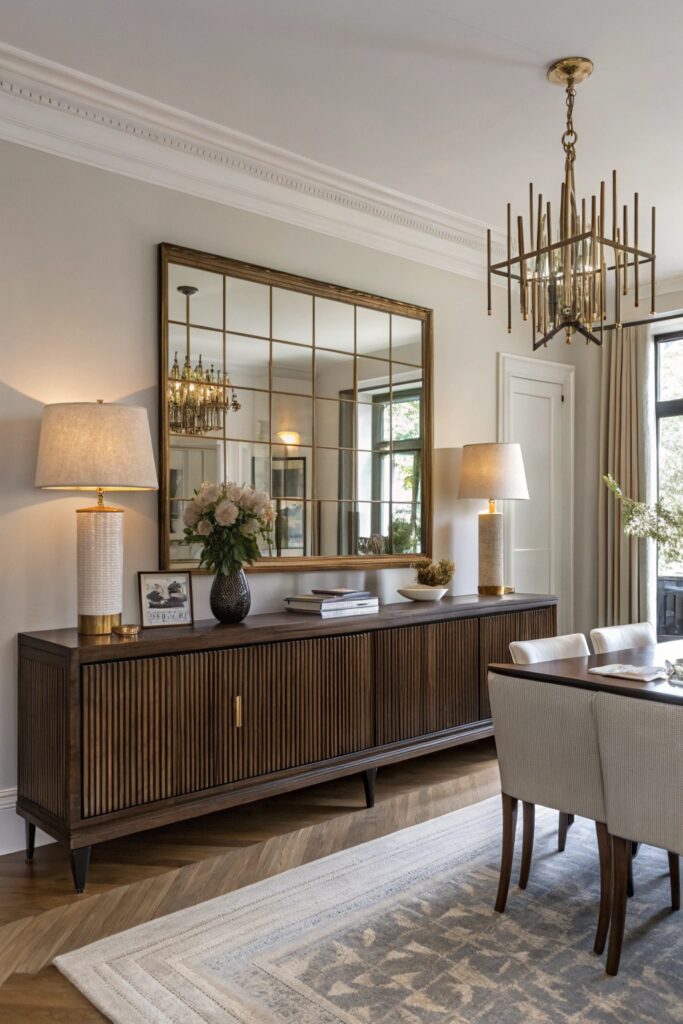
Leave at least 36 inches of clearance between the sideboard and the dining table so chairs can pull out fully and people can walk behind seated diners without squeezing past.
Choosing a Table That Actually Fits the Room
Leave at least 36 inches between the table’s edge and the nearest wall or furniture piece so chairs can be pulled out and people can walk around comfortably during a meal — this matters more in a modern room with fewer visual distractions to soften an overly tight layout.
A rectangular table typically seats guests more efficiently in a narrower room, while a round or oval table works better in a more square-shaped space, since it avoids the awkward corner gaps a rectangular table can leave in that proportion of room.
What a Modern Dining Room Refresh Costs
Updating lighting, a rug, and a few accent pieces while keeping existing furniture typically costs $500 to $1,500 depending on material quality.
A fuller refresh including a new table, chairs, and a statement fixture runs considerably higher, often $3,000 to $8,000 depending on the specific pieces chosen.
Layering Lighting Beyond the Main Fixture
A single overhead fixture, however striking, tends to create flat, uniform light that doesn’t flatter people seated at the table the way layered lighting does. Adding a dimmer to the main fixture and incorporating a wall sconce or two, or a lamp on a sideboard, creates the kind of warm, adjustable lighting that works for both a casual weeknight meal and a more formal dinner.
Candles remain one of the simplest ways to add warmth to a modern dining room specifically, since their flickering light softens what can otherwise feel like a sharp-edged, overly clean-lined space.
Rug sizing matters here too — the rug under the table should extend at least 24 inches beyond the table’s edge on all sides so chairs stay on the rug even when pulled out, which keeps the setup looking intentional rather than like an undersized rug placed as an afterthought.
A dining room this deliberately styled still needs to function for everyday use, not just for photographs, so choosing durable, easy-to-clean materials for the pieces that see the most daily contact — the table surface and chair upholstery in particular — matters as much as the overall aesthetic direction.
Whichever combination of these ideas fits your home, giving the room a chance to settle for a few weeks before adding more pieces often reveals whether it actually needs another layer or whether the current balance of clean lines and warmth is already the right stopping point.
A dining room done thoughtfully in this style tends to work for a wide range of occasions, from a quick weeknight dinner to hosting a larger group, without needing to be restyled between the two.
Photographing the finished room in your actual home lighting, rather than relying only on inspiration images taken elsewhere, gives a truer sense of how each choice reads in your own space before committing to the full plan.
Final Thoughts
The most successful modern dining rooms tend to balance clean lines with at least one warm, textural element — natural wood, a soft textile, visible material grain — rather than pursuing minimalism at the expense of warmth entirely. A room that’s purely sleek and hard-edged can feel less inviting for the long, unhurried meals a dining room is ultimately meant to host.
Whichever combination of these ideas you’re drawn to, testing furniture placement and lighting in the actual room before finalizing every detail helps confirm the space works as well functionally as it looks in inspiration photos.